Quick Recipe Version (TL;DR)
Quick Ingredients
- 12 oz (340 g) whole-wheat fettuccine
- 6 cups (about 700 g) cauliflower florets
- 3 cups (225 g) small broccoli florets
- 1½ cups (360 ml) low-sodium vegetable broth
- 1 small onion, chopped (1 cup)
- 4 garlic cloves, smashed
- 1/4 cup (15 g) nutritional yeast
- 2 tbsp extra-virgin olive oil
- 1 tbsp fresh lemon juice
- 1 tsp kosher salt, 1/2 tsp black pepper
- Pinch red pepper flakes (optional)
- 2 tbsp chopped parsley; optional 2 tbsp grated Parmesan
Do This
- 1) Simmer cauliflower, onion, and garlic in broth (covered) until very tender, 10–12 minutes.
- 2) Boil pasta in salted water; add broccoli for the last 2 minutes. Reserve 1 cup pasta water; drain.
- 3) Blend the hot cauliflower mix with nutritional yeast, olive oil, lemon juice, salt, and pepper until silky; thin with a splash of pasta water as needed.
- 4) Return pasta and broccoli to the pot; pour in sauce.
- 5) Toss over low heat, adding pasta water a little at a time until glossy and well-coated.
- 6) Finish with parsley, black pepper, red pepper flakes (optional), and Parmesan or more nutritional yeast to taste.
Why You’ll Love This Recipe
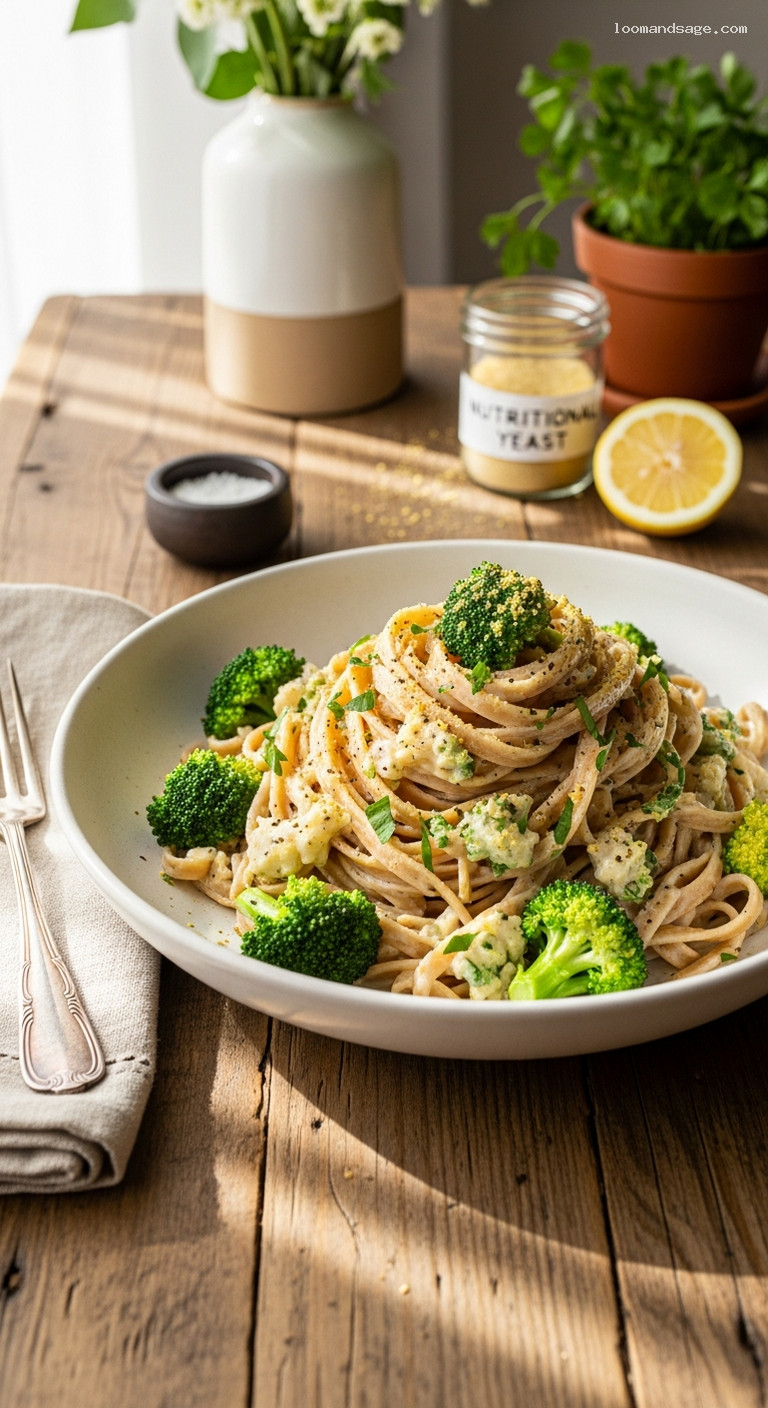
- All the cozy creaminess of Alfredo with no heavy cream or butter—thanks to silky blended cauliflower.
- Weeknight-easy: one pot for pasta, one blender for sauce, ready in about 40 minutes.
- High-fiber upgrade with whole-wheat pasta, cauliflower, and broccoli; flavorful umami from nutritional yeast.
- Flexible: dairy-optional and simple to make vegan or gluten-free.
Grocery List
- Produce: Cauliflower, broccoli, garlic, onion (or shallot), lemon, flat-leaf parsley.
- Dairy: Optional Parmesan or vegan Parmesan.
- Pantry: Whole-wheat fettuccine, low-sodium vegetable broth, nutritional yeast, extra-virgin olive oil, kosher salt, black pepper, red pepper flakes (optional).
Full Ingredients
For the cauliflower Alfredo sauce
- 6 cups (about 700 g) cauliflower florets (from 1 large head)
- 1 small yellow onion, chopped (1 cup; about 130 g)
- 4 garlic cloves, smashed
- 1½ cups (360 ml) low-sodium vegetable broth
- 1/4 cup (15 g) nutritional yeast
- 2 tbsp extra-virgin olive oil
- 1 tbsp fresh lemon juice
- 1 tsp kosher salt, plus more to taste
- 1/2 tsp freshly ground black pepper
- Optional but tasty: 1 tsp white miso paste or 1/2 tsp Dijon mustard; pinch red pepper flakes; tiny pinch freshly grated nutmeg
For the pasta and broccoli
- 12 oz (340 g) whole-wheat fettuccine (or linguine)
- 3 cups (225 g) small broccoli florets
- 1 tbsp kosher salt for the pasta water
For serving
- 2 tbsp chopped fresh flat-leaf parsley
- Optional: 2 tbsp finely grated Parmesan or vegan Parmesan, plus more to taste
Step-by-Step Instructions
Step 1: Prep your produce
Trim and break the cauliflower into small florets (the smaller they are, the faster they soften). Chop the onion and smash the garlic cloves. Cut the broccoli into small, bite-size florets so they cook quickly and evenly. Roughly chop the parsley for finishing.
Step 2: Simmer the cauliflower base
In a medium saucepan, combine cauliflower, onion, garlic, and vegetable broth. Bring to a simmer over medium-high heat, then reduce to medium, cover, and cook until the cauliflower is very tender and easily pierced with a fork, 10–12 minutes. Remove from heat and keep covered so it stays hot.
Step 3: Boil the pasta and blanch the broccoli
Bring a large pot (at least 4 quarts) of water to a rolling boil. Add 1 tbsp kosher salt. Cook the fettuccine according to package directions until al dente (usually 9–11 minutes). Add the broccoli florets to the pot for the last 2 minutes of pasta cooking. Before draining, reserve 1 cup (240 ml) of the starchy pasta water. Drain pasta and broccoli and return them to the empty pot.
Step 4: Blend the sauce until silky
Carefully transfer the hot cauliflower mixture and all its broth to a blender. Add nutritional yeast, olive oil, lemon juice, 1 tsp kosher salt, 1/2 tsp black pepper, and, if using, miso or Dijon, a pinch of red pepper flakes, and a tiny pinch of nutmeg. Vent the blender lid to release steam (cover the opening with a clean towel) and blend on high until completely smooth and creamy, 60–90 seconds. If the sauce seems too thick, blend in 1/4–1/2 cup reserved pasta water until pourable and velvety. Taste and adjust seasoning with more salt or lemon as needed.
Step 5: Toss pasta, broccoli, and sauce
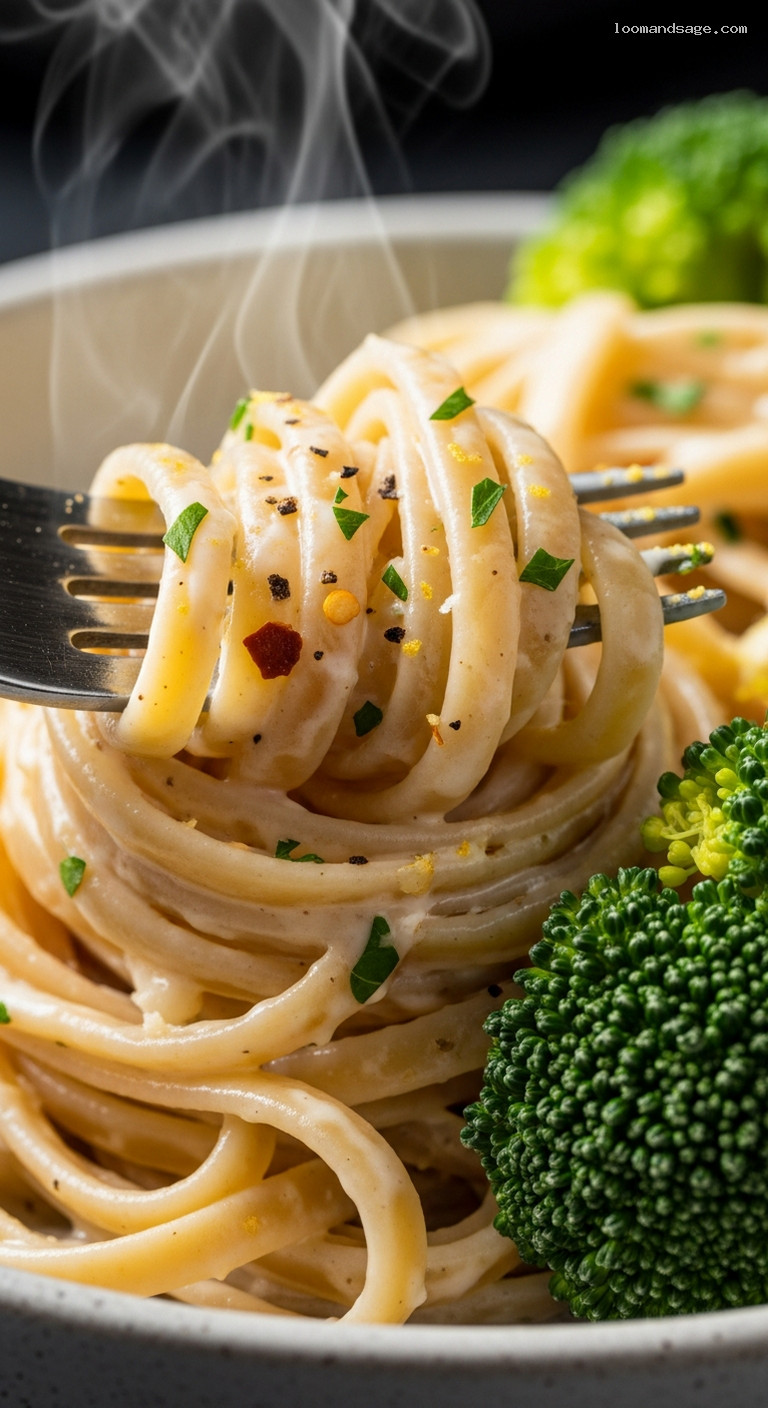
Pour the hot sauce over the pasta and broccoli in the pot. Set over low heat and toss continuously with tongs. Add reserved pasta water a splash at a time until the sauce loosens, turns glossy, and clings to the noodles, 2–3 minutes. You’re aiming for a creamy, pourable consistency that coats every strand.
Step 6: Finish and serve
Turn off the heat. Fold in the parsley and a pinch of red pepper flakes if you like a gentle kick. Plate immediately and finish with extra black pepper. Garnish with Parmesan (or more nutritional yeast) to taste. Serve with lemon wedges for brightness, if desired.
Pro Tips
- Cook the cauliflower fully tender. The softer it is, the silkier the sauce without cream or butter.
- Reserve plenty of pasta water. Its starch helps emulsify the sauce so it clings luxuriously.
- Blend hot, blend long. Vent the lid and puree until absolutely smooth; a minute longer can transform the texture.
- Season at the end. A squeeze of lemon and a final pinch of salt right before serving makes flavors pop.
- For deeper flavor, swap in roasted garlic: roast a whole head at 400°F (200°C) for 35–40 minutes, then squeeze in 4 cloves.
Variations
- Gluten-free: Use your favorite gluten-free fettuccine or spaghetti and follow the same method.
- Mushroom-pea twist: Sauté 8 oz (225 g) sliced cremini in 1 tbsp olive oil until browned; toss in 1 cup peas during the last minute and fold into the pasta before saucing.
- Lemony-peppery: Add 1 tsp finely grated lemon zest and extra coarse black pepper to the sauce for a bright cacio e pepe vibe.
Storage & Make-Ahead
Make the sauce up to 4 days ahead: cool, refrigerate in an airtight container, and reheat gently on the stovetop with a splash of water until smooth. It also freezes well for up to 2 months; thaw overnight in the fridge and re-blend if needed. Cooked pasta is best fresh, but leftovers keep 2–3 days in the fridge. Reheat over low heat with a few tablespoons of water to re-emulsify.
Nutrition (per serving)
Approximate values: 440 calories; 9 g fat (1.5 g saturated); 75 g carbohydrates; 13 g fiber; 18 g protein; 560 mg sodium. Values will vary with brand choices and optional garnishes.