
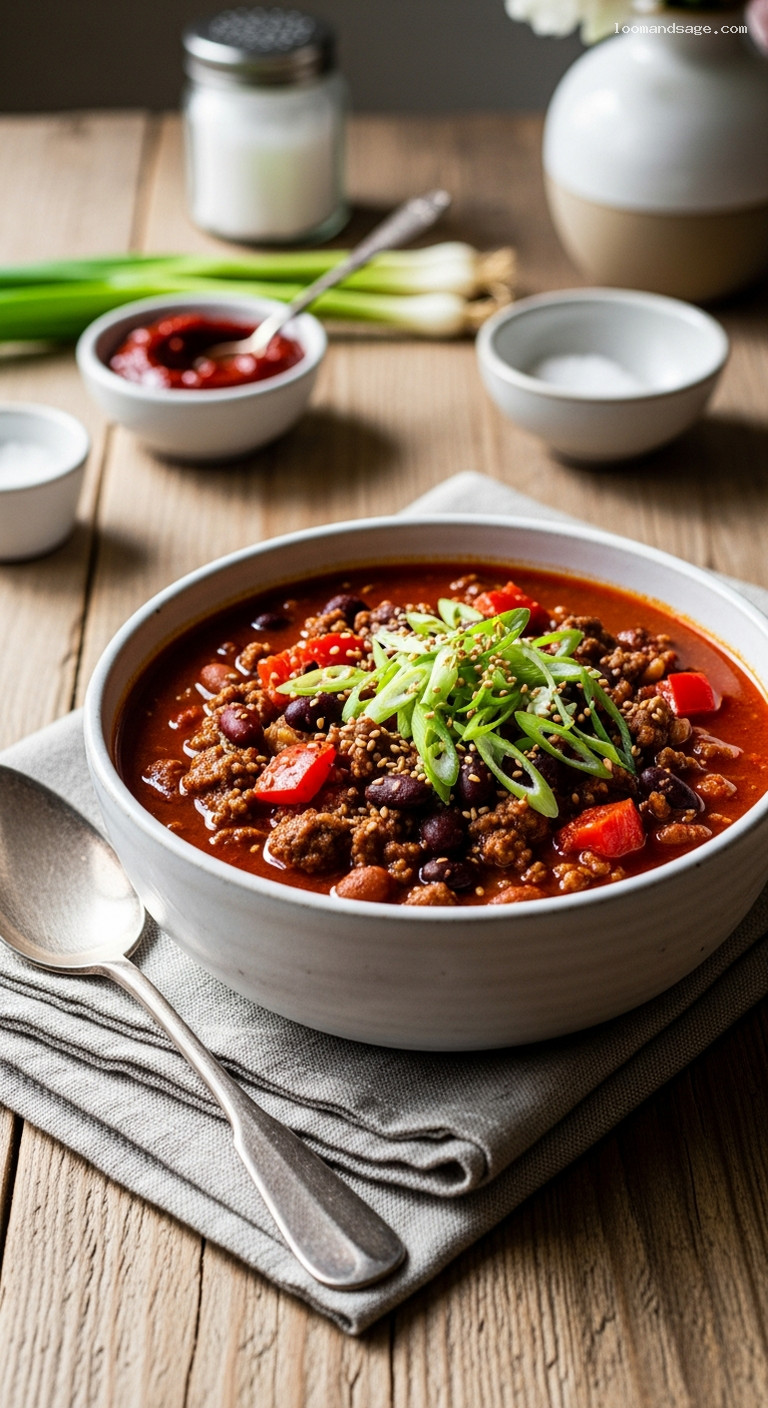
Quick Recipe Version (TL;DR)
Quick Ingredients
- 1 tbsp neutral oil
- 1 lb (450 g) ground beef (80–90% lean)
- 1 medium yellow onion, diced
- 1 red bell pepper, diced
- 4 cloves garlic, minced
- 1 tbsp fresh ginger, minced
- 3 tbsp gochujang (Korean red chili paste)
- 1 tbsp ground cumin
- 1 tsp smoked paprika
- 1 (14.5 oz / 410 g) can diced tomatoes
- 1 (8 oz / 227 g) can tomato sauce
- 1 cup (240 ml) beef or chicken broth
- 1 (15 oz / 425 g) can kidney beans, drained and rinsed
- 1 (15 oz / 425 g) can black beans, drained and rinsed
- 2 tbsp soy sauce
- 1 tbsp honey
- 1 tbsp rice vinegar
- 1 tsp toasted sesame oil
- 3 scallions, thinly sliced (for garnish)
- Salt and black pepper, to taste
- Cooked rice, for serving (optional)
Do This
- 1. Warm oil in a large pot over medium-high heat. Add ground beef, season lightly with salt and pepper, and cook 5–7 minutes, breaking it up, until browned.
- 2. Add diced onion and bell pepper. Cook 4–5 minutes until softened. Stir in garlic and ginger; cook 1 minute until fragrant.
- 3. Stir in gochujang, cumin, and smoked paprika. Cook 1–2 minutes to toast the spices and caramelize the paste slightly.
- 4. Add diced tomatoes, tomato sauce, broth, soy sauce, honey, and rice vinegar. Stir well, scraping up any browned bits from the bottom.
- 5. Stir in kidney beans and black beans. Bring to a gentle boil, then reduce heat to low and simmer uncovered 20–25 minutes, stirring occasionally.
- 6. Taste and adjust salt, pepper, and spice. Stir in toasted sesame oil. Serve hot, topped with scallions (and extra gochujang if you like) over rice or in bowls.
Why You’ll Love This Recipe
- Bold, umami-rich flavor: gochujang, soy sauce, and garlic give classic chili a Korean-inspired twist.
- Hearty and comforting: beans and ground beef make this a cozy, filling one-pot meal.
- Weeknight-friendly: about 50 minutes from start to finish, with mostly hands-off simmering time.
- Flexible and forgiving: easy to adjust the heat level, swap beans, or serve with rice, cornbread, or tortilla chips.
Grocery List
- Produce: 1 medium yellow onion, 1 red bell pepper, 4 cloves garlic, 1 small piece fresh ginger, 3 scallions
- Dairy: None required (optional sour cream or shredded cheese for serving, if desired)
- Pantry: Neutral oil, ground beef, gochujang, ground cumin, smoked paprika, canned diced tomatoes, canned tomato sauce, beef or chicken broth, canned kidney beans, canned black beans, soy sauce, honey, rice vinegar, toasted sesame oil, salt, black pepper, cooked rice (or other starch) for serving
Full Ingredients
For the Korean Gochujang Beef Chili
- 1 tbsp neutral oil (such as canola, grapeseed, or vegetable)
- 1 lb (450 g) ground beef, 80–90% lean
- 1 medium yellow onion, diced (about 1 1/2 cups)
- 1 red bell pepper, diced (about 1 cup)
- 4 cloves garlic, minced
- 1 tbsp fresh ginger, finely minced or grated
- 3 tbsp gochujang (Korean red chili paste)
- 1 tbsp ground cumin
- 1 tsp smoked paprika (or regular paprika)
- 1/2 tsp freshly ground black pepper
- 1/2 tsp kosher salt, plus more to taste
- 1 (14.5 oz / 410 g) can diced tomatoes (fire-roasted if available), with their juices
- 1 (8 oz / 227 g) can tomato sauce
- 1 cup (240 ml) beef or chicken broth (or water, in a pinch)
- 1 (15 oz / 425 g) can kidney beans, drained and rinsed
- 1 (15 oz / 425 g) can black beans, drained and rinsed
- 2 tbsp soy sauce (regular or low-sodium)
- 1 tbsp honey
- 1 tbsp rice vinegar (or apple cider vinegar)
- 1 tsp toasted sesame oil
For Serving and Garnish
- 3 scallions, thinly sliced
- Cooked white or brown rice, for serving (optional)
- Toasted sesame seeds (optional)
- Extra gochujang or hot sauce, to taste (optional)
- Lime wedges or a small squeeze of lime juice (optional, for brightness)
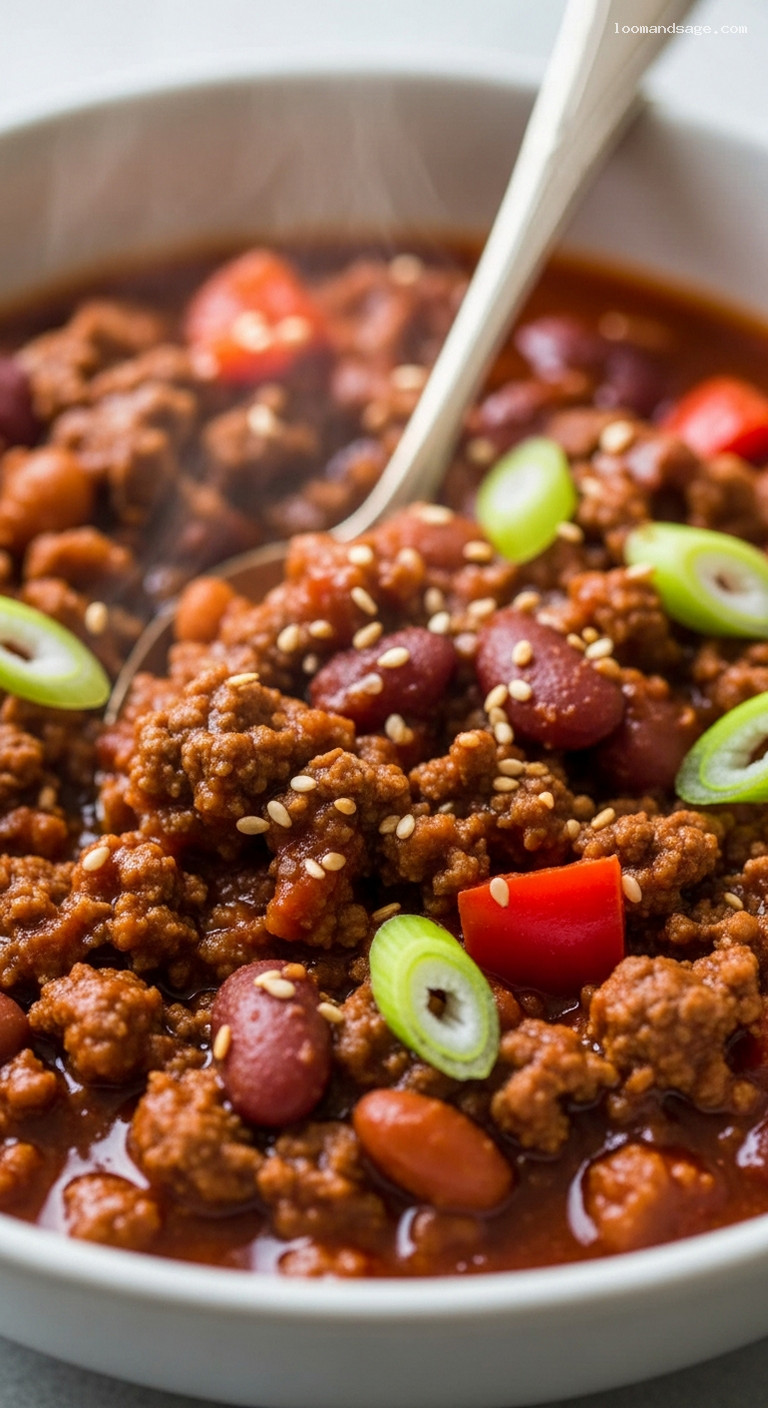
Step-by-Step Instructions
Step 1: Prep your ingredients
Before you start cooking, set yourself up for success. Dice the onion and red bell pepper into small, even pieces so they cook at the same rate. Mince the garlic and ginger finely; this helps them melt into the chili without leaving big chunks. Rinse and drain the kidney beans and black beans. Slice the scallions for garnish and set them aside in the refrigerator. Having everything ready makes the cooking process smooth and relaxed.
Step 2: Brown the beef
Heat a large, heavy-bottomed pot or Dutch oven over medium-high heat. Add the neutral oil. When the oil is shimmering, add the ground beef, breaking it up with a wooden spoon or spatula. Season lightly with about 1/4 teaspoon salt and the black pepper. Cook for 5–7 minutes, stirring occasionally, until the beef is browned and no longer pink. If there is a lot of excess fat in the pot, you can spoon off a bit, but leave some for flavor.
Step 3: Soften the aromatics
Add the diced onion and red bell pepper to the browned beef. Cook, stirring frequently, for 4–5 minutes until the onion turns translucent and the pepper softens slightly. Add the minced garlic and ginger and cook for another 1 minute, stirring constantly. You want the garlic and ginger to become fragrant but not browned, which keeps their flavor fresh and bright.
Step 4: Toast the gochujang and spices
Reduce the heat to medium. Stir in the gochujang, ground cumin, and smoked paprika, coating the beef and vegetables. Cook this mixture for 1–2 minutes, stirring frequently. This step is important: gently toasting the gochujang and spices helps deepen their flavor, brings out the chili’s smokiness, and adds a subtle caramelized note. If anything starts to stick, lower the heat slightly and keep stirring.
Step 5: Build the sauce and simmer
Pour in the diced tomatoes with their juices, tomato sauce, and broth. Stir well, scraping along the bottom of the pot to loosen any browned bits. Add the soy sauce, honey, and rice vinegar, then stir in the kidney beans and black beans. Bring the mixture up to a gentle boil over medium heat.
Once boiling, reduce the heat to low so the chili simmers with an occasional gentle bubble. Leave the pot uncovered and cook for 20–25 minutes, stirring every few minutes. The chili will thicken up, the flavors will meld, and the beans will become tender but not mushy. If it thickens too much for your liking, splash in a bit more broth or water to reach your preferred consistency.
Step 6: Finish, taste, and serve
When the chili has thickened and smells rich and spicy, turn off the heat. Stir in the toasted sesame oil for a final layer of nutty aroma. Taste and adjust the seasoning: add more salt if needed, a little extra honey if you prefer more balance against the heat, or a spoonful of additional gochujang if you want it spicier.
Ladle the hot chili into bowls. Top with plenty of sliced scallions and, if you like, a sprinkle of sesame seeds. Serve as-is, or spoon it over warm rice for an extra hearty bowl. Offer extra gochujang or hot sauce at the table so everyone can customize their own level of heat.
Pro Tips
- Control the heat: Gochujang varies by brand. Start with 3 tablespoons; if you are sensitive to spice, begin with 2 tablespoons and add more later after tasting.
- Brown, do not steam the beef: Use a wide pot and medium-high heat so the beef actually browns. Those browned bits on the bottom add deep flavor to the chili.
- Simmer uncovered: Leaving the lid off helps the chili thicken and concentrate. If you prefer it saucier, partially cover the pot or add a splash of broth near the end.
- Make it a meal bowl: Serve over rice and add crunchy toppings like shredded cabbage or radish slices for a full, balanced bowl with different textures.
- Next-day flavor: Like most chilis, this one tastes even better the next day after the flavors have had time to mingle in the fridge.
Variations
- Turkey or chicken version: Swap the ground beef for ground turkey or chicken. Add 1 extra tablespoon of oil and make sure not to overcook, as lean meats can dry out more easily.
- No-bean chili: If you prefer your chili without beans, omit them and add an extra 1/2 pound (225 g) ground beef and an additional 1/2 cup (120 ml) broth to keep the texture saucy.
- Extra veggie boost: Stir in 1–2 cups of chopped vegetables (such as zucchini, carrots, or mushrooms) along with the bell pepper, and simmer until tender.
Storage & Make-Ahead
Let the chili cool to room temperature before storing. Transfer to airtight containers and refrigerate for up to 4 days. The flavors will deepen over time, making it great for meal prep. Reheat gently on the stovetop over medium-low heat, adding a splash of water or broth if it has thickened too much, or in the microwave in 60–90 second bursts, stirring between intervals.
For longer storage, freeze in airtight containers or freezer bags for up to 3 months. Thaw overnight in the refrigerator, then reheat as above. If you plan to freeze, add the scallions fresh when serving rather than freezing them with the chili.
Nutrition (per serving)
Approximate values per serving (1/4 of the recipe, without rice or optional toppings): about 470 calories, 30 g protein, 22 g fat, 36 g carbohydrates, 11 g fiber, and 8 g sugar. Actual nutrition will vary based on the exact brands of gochujang, broth, and beans used, as well as any additional toppings or sides.