
Quick Recipe Version (TL;DR)
Quick Ingredients
- 2 1/2 cups (300 g) all-purpose flour
- 2 1/2 tsp baking powder + 1/2 tsp baking soda + 1/2 tsp fine salt
- 1/2 cup (113 g) unsalted butter, softened
- 1/2 cup (120 ml) neutral oil
- 1 3/4 cups (350 g) granulated sugar
- 4 large eggs, room temperature
- 1/2 cup (120 g) sour cream
- 1/2 cup (120 ml) whole milk
- 1/2 cup (120 ml) fresh orange juice + finely grated zest of 3 oranges
- 2 tsp vanilla extract (plus 1/2 tsp orange extract, optional)
- 12 oz (340 g) cream cheese + 3/4 cup (170 g) unsalted butter
- 4–5 cups (480–600 g) powdered sugar
- 2–3 Tbsp milk or cream, pinch of salt, extra orange zest
- Optional candied oranges: 2 oranges, 1 cup sugar, 1 cup water
Do This
- 1. Preheat oven to 350°F (175°C). Grease and line two 8-inch round pans with parchment.
- 2. Whisk flour, baking powder, baking soda, and salt. In another bowl, whisk milk and orange juice.
- 3. Cream butter, oil, and sugar until fluffy. Beat in eggs, sour cream, orange zest, vanilla, and orange extract.
- 4. Mix in dry ingredients alternately with milk–orange mixture. Divide batter between pans and bake 28–32 minutes. Cool completely.
- 5. While cakes cool, optionally simmer orange slices in sugar and water until translucent; dry on a rack. Beat cream cheese, butter, powdered sugar, vanilla, and milk/cream into a smooth frosting.
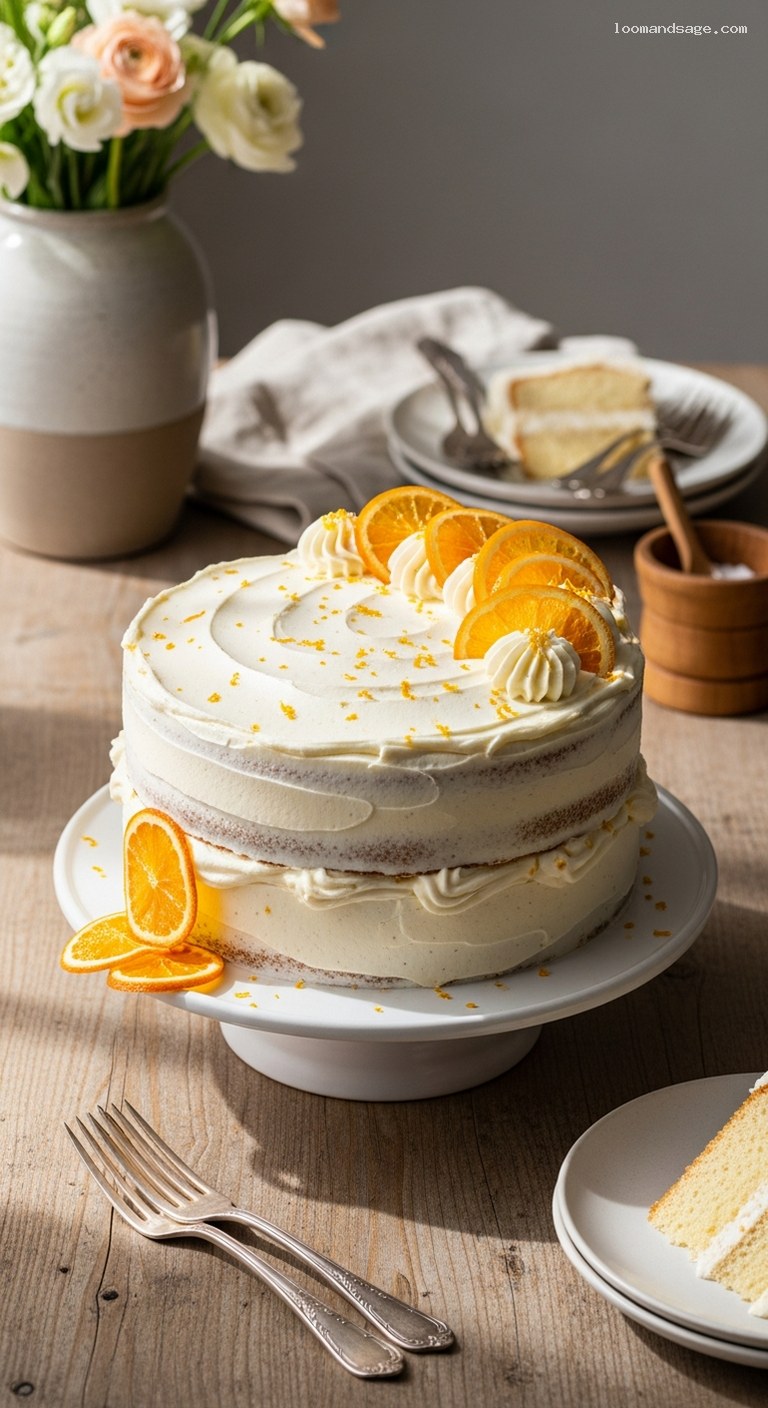
- 6. Level cooled cakes. Fill and frost with vanilla cream cheese frosting. Decorate with candied orange slices and extra zest.
Why You’ll Love This Recipe
- All the nostalgic flavors of a classic orange creamsicle, transformed into a soft, tender birthday-worthy cake.
- Bright citrus from real orange juice and zest balanced by a silky vanilla frosting.
- Flexible frosting options: a tangy vanilla cream cheese frosting or a classic vanilla buttercream.
- Beautiful to serve, especially topped with sparkling candied orange slices and fresh zest.
Grocery List
- Produce: 5–7 medium oranges (for zest, juice, and optional candied slices)
- Dairy: Unsalted butter, sour cream, whole milk, cream cheese, heavy cream or extra milk, eggs
- Pantry: All-purpose flour, granulated sugar, powdered sugar, baking powder, baking soda, fine salt, neutral oil (such as canola or vegetable), vanilla extract, optional orange extract
Full Ingredients
For the Orange Creamsicle Cake
- 2 1/2 cups (300 g) all-purpose flour, spooned and leveled
- 2 1/2 tsp baking powder
- 1/2 tsp baking soda
- 1/2 tsp fine sea salt
- 1/2 cup (113 g) unsalted butter, softened to room temperature
- 1/2 cup (120 ml) neutral oil (canola, vegetable, or sunflower)
- 1 3/4 cups (350 g) granulated sugar
- 4 large eggs, at room temperature
- 1/2 cup (120 g) sour cream, at room temperature (or full-fat plain Greek yogurt)
- 1/2 cup (120 ml) whole milk, at room temperature
- 1/2 cup (120 ml) freshly squeezed orange juice (about 2–3 oranges)
- Finely grated zest of 3 medium oranges (about 2 1/2–3 Tbsp, packed)
- 2 tsp pure vanilla extract
- Optional but recommended: 1/2 tsp orange extract for extra creamsicle flavor
Vanilla Cream Cheese Frosting (Primary Option)
- 12 oz (340 g) full-fat brick-style cream cheese, slightly cool (not warm)
- 3/4 cup (170 g) unsalted butter, softened to room temperature
- 4–5 cups (480–600 g) powdered sugar, sifted for smoothness
- 2–3 Tbsp heavy cream or milk, as needed for texture
- 2 tsp pure vanilla extract
- Pinch fine salt, to taste
Optional Vanilla Buttercream Frosting (Alternative)
If you prefer a classic vanilla buttercream instead of cream cheese frosting, use this formula:
- 1 1/2 cups (339 g) unsalted butter, softened to room temperature
- 5–6 cups (600–720 g) powdered sugar, sifted
- 1/4 cup (60 ml) heavy cream or whole milk, plus more as needed
- 2–3 tsp pure vanilla extract
- 1/4 tsp fine salt, or to taste
Optional Candied Orange Slices (Decoration)
- 2 medium oranges, well-scrubbed and very thinly sliced, seeds removed
- 1 cup (200 g) granulated sugar
- 1 cup (240 ml) water
Additional Garnish (Optional but Lovely)
- Extra finely grated orange zest
- Small orange curls made with a zesting tool or vegetable peeler
Step-by-Step Instructions
Step 1: Prep pans, oven, and oranges
Preheat your oven to 350°F (175°C) with a rack in the center. Grease two 8-inch round cake pans with butter or nonstick spray. Line the bottoms with circles of parchment paper, then lightly grease the parchment as well. This helps the tender citrus cake release cleanly.
Wash and dry your oranges thoroughly. Finely zest 3 of the oranges using a microplane or the fine side of a grater, being careful to remove only the bright orange part, not the bitter white pith. You should have about 2 1/2–3 tablespoons of zest. Juice some of the oranges until you have 1/2 cup (120 ml) of fresh orange juice. Set zest and juice aside.
Bring your eggs, sour cream, and milk to room temperature if they are not already. This helps the batter come together smoothly and bake evenly.
Step 2: Mix the dry ingredients and the orange-milk mixture
In a medium bowl, whisk together the flour, baking powder, baking soda, and salt until well combined and lump-free. Set aside.
In a measuring jug or small bowl, whisk together the whole milk and the freshly squeezed orange juice. The mixture may look slightly curdled; that is normal. Set aside. Having this liquid mixture ready makes it easy to alternate the wet and dry ingredients later on.
Step 3: Cream the fats with sugar and build the batter
In a large mixing bowl (or the bowl of a stand mixer fitted with the paddle attachment), add the softened butter, neutral oil, and granulated sugar. Beat on medium-high speed for 3–4 minutes, scraping down the sides as needed, until the mixture looks pale and fluffy.
Add the eggs one at a time, beating well after each addition until fully incorporated. Scrape down the bowl as you go. Mix in the sour cream, orange zest, vanilla extract, and optional orange extract. The batter may look slightly separated at this point; it will smooth out when flour is added.
With the mixer on low speed, add about one-third of the flour mixture, followed by half of the milk–orange mixture. Repeat with another third of the flour, the remaining liquid, and then the last third of the flour. Mix just until the batter is smooth and no dry streaks remain. Avoid overmixing, which can make the cake tough.
Step 4: Bake the orange cakes
Divide the batter evenly between the prepared cake pans. You can weigh the pans or use a measuring cup to keep the layers even. Smooth the tops with a spatula.
Bake in the preheated 350°F (175°C) oven for 28–32 minutes, rotating the pans halfway through baking, until the cakes are lightly golden, the tops spring back when gently touched, and a toothpick inserted into the center comes out clean or with a few moist crumbs.
Transfer the pans to a wire rack and let the cakes cool in the pans for 10–15 minutes. Then carefully run a knife around the edges, invert the cakes onto the rack, peel off the parchment, and let them cool completely, top side up. The cakes must be completely cool before frosting.
Step 5: Make the candied orange slices (optional but beautiful)
While the cakes bake or cool, you can prepare the candied orange slices if you are using them. In a large skillet or wide saucepan, combine the sugar and water. Bring to a simmer over medium heat, stirring until the sugar dissolves.
Reduce the heat to low and add the thinly sliced oranges in a single layer or slightly overlapping. Simmer very gently for 25–35 minutes, turning occasionally, until the peels appear translucent and the syrup has thickened slightly. Avoid boiling rapidly, or the slices can turn bitter.
Using tongs or a fork, transfer the candied slices to a wire rack set over a tray or parchment. Let them cool and dry for at least 1 hour. They will become slightly tacky and glossy. You can use them the same day or store them in an airtight container between pieces of parchment.
Step 6: Whip the vanilla cream cheese frosting
In a large bowl, beat the cream cheese on medium speed for about 30 seconds to soften and smooth it. Add the softened butter and beat together for 2–3 minutes until very smooth, creamy, and slightly lightened in color.
Add 3 cups (360 g) of the powdered sugar, the vanilla extract, and a pinch of salt. Beat on low until the sugar is mostly incorporated, then increase the speed to medium-high and beat for 1–2 minutes. Gradually add the remaining powdered sugar, 1/2 cup at a time, until the frosting is thick yet spreadable.
Add 2 tablespoons of heavy cream or milk and beat again until light and fluffy, 1–2 minutes. If the frosting is too thick, add more cream or milk, a teaspoon at a time. If it is too soft, add a little more powdered sugar. Taste and adjust the salt if needed. Chill briefly (10–15 minutes) if your kitchen is very warm.
If you prefer to use the vanilla buttercream variation, beat the butter until creamy, then gradually add powdered sugar, vanilla, salt, and cream, whipping until light and fluffy.
Step 7: Assemble, frost, and decorate the cake
Once the cake layers are completely cool, use a long serrated knife to level any domed tops, if desired. Place one layer, cut side up, on a serving plate or cake stand. Add about 1 cup of frosting and spread it evenly to the edges.
Place the second layer on top, cut side down, to give you a flat surface. Apply a thin layer of frosting all over the cake (a crumb coat) to trap any loose crumbs. Chill the cake for 15–20 minutes to set the crumb coat.
After chilling, add a thicker, final layer of frosting, swirling it decoratively over the top and sides with an offset spatula. For a creamsicle feel, you can leave the frosting softly swirled rather than perfectly smooth.
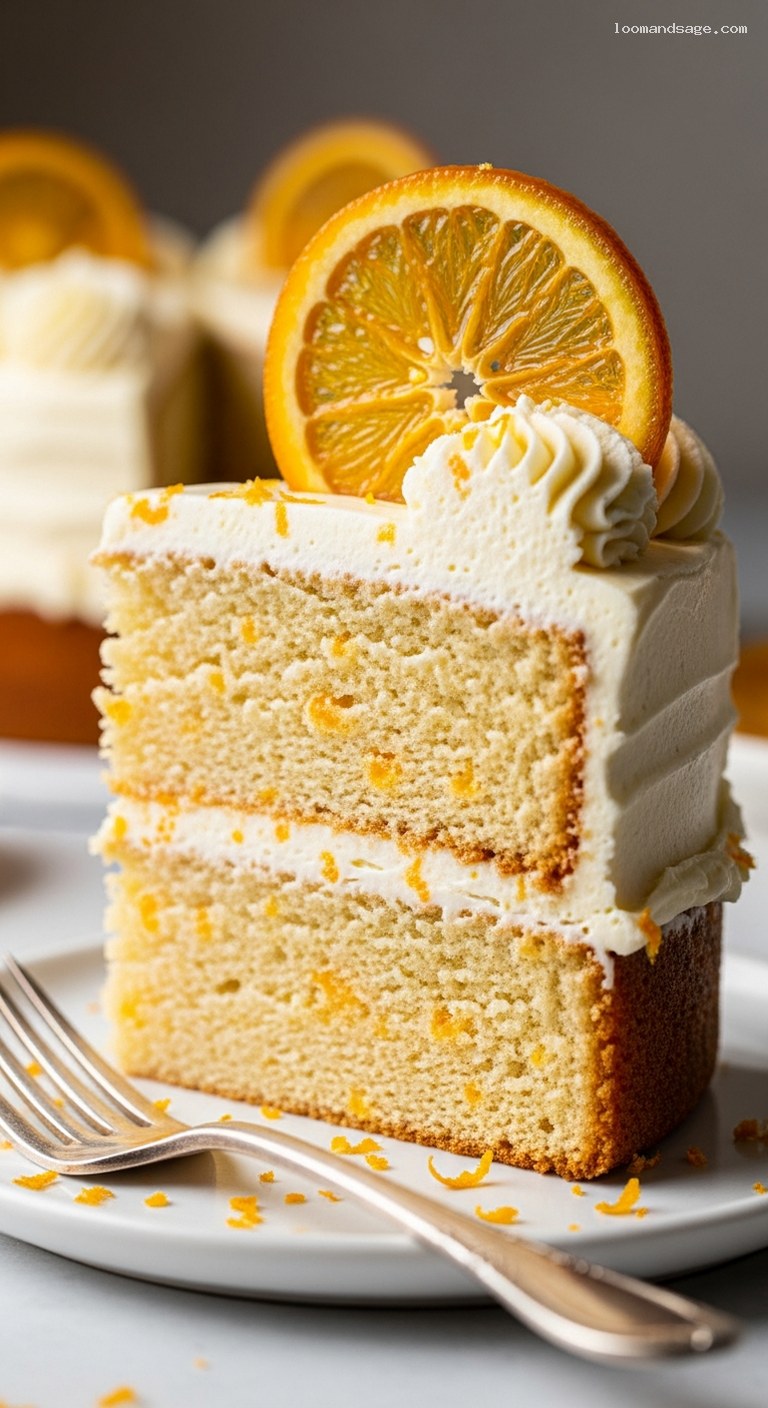
Decorate the top with candied orange slices arranged in a crescent or circle, and sprinkle with fresh orange zest or curls. Chill the finished cake for at least 20–30 minutes before slicing for the neatest cuts, then let it stand at cool room temperature for about 20 minutes before serving.
Pro Tips
- Room-temperature ingredients are key. Cold eggs, milk, or sour cream can make the batter curdle and bake unevenly. Let them sit out for 30–45 minutes before starting.
- Do not skip the orange zest. The zest carries most of the orange aroma; it is what gives the cake its nostalgic creamsicle fragrance.
- Use fresh orange juice, not bottled. Freshly squeezed juice is brighter and less bitter, giving the cake a clean, fresh citrus note.
- Go easy when mixing the flour. Once the flour is added, mix just until combined. Overmixing will develop gluten and can make the cake dense.
- Chill for clean slices. A short chill firms up the frosting and makes it much easier to cut tidy, bakery-style slices.
Variations
- Sheet cake version: Bake the batter in a greased 9×13-inch pan at 350°F (175°C) for 30–35 minutes, or until a toothpick comes out clean. Cool completely, then frost the top only and garnish with zest.
- Extra creamsicle swirl: Reserve 1/2 cup of frosting and stir in 1–2 teaspoons of orange juice and a pinch of zest. Swirl the orange-tinted frosting lightly over the top of the vanilla frosting.
- Lighter glaze option: Instead of a full frosting, make a simple orange-vanilla glaze (1 1/2 cups powdered sugar, 2–3 Tbsp orange juice, 1 tsp vanilla) and drizzle over the cooled cake.
Storage & Make-Ahead
This cake keeps well, which makes it great for birthdays and gatherings. Once assembled, store the cake covered in the refrigerator for up to 4 days. For the best texture and flavor, let slices sit at room temperature for 20–30 minutes before serving so the crumb softens and the frosting relaxes.
To make ahead, you can bake the cake layers up to 2 days in advance. Once completely cool, wrap each layer tightly in plastic wrap, then in foil, and store at room temperature or in the refrigerator. Frosting can be made 1–2 days ahead and stored in an airtight container in the refrigerator; bring it to cool room temperature and re-whip briefly before using. Candied orange slices can be made a day or two ahead and kept in an airtight container with parchment between layers.
For longer storage, unfrosted cake layers freeze very well for up to 2 months. Thaw, still wrapped, in the refrigerator overnight, then bring to room temperature before assembling and frosting.
Nutrition (per serving)
Approximate values for 1 of 12 slices, using cream cheese frosting and candied oranges: about 580 calories; 27 g fat; 15 g saturated fat; 80 mg cholesterol; 78 g carbohydrates; 1 g fiber; 55 g sugars; 6 g protein; 340 mg sodium. Actual values will vary based on specific ingredients, frosting thickness, and decorations.