
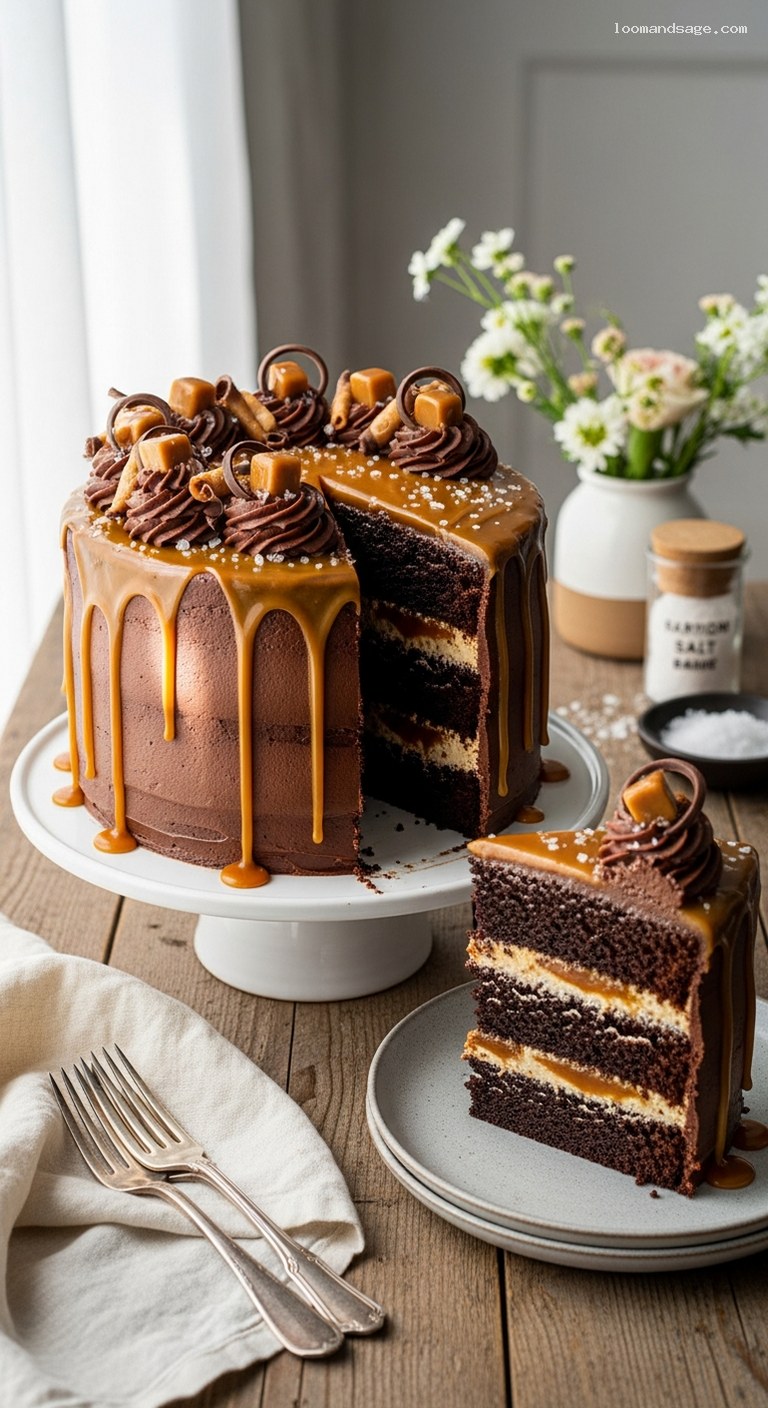
Quick Recipe Version (TL;DR)
Quick Ingredients
- 2 1/4 cups (295 g) all-purpose flour
- 2 1/4 cups (450 g) granulated sugar
- 3/4 cup (75 g) unsweetened cocoa powder
- 2 tsp baking powder, 1 1/2 tsp baking soda, 1 1/2 tsp fine sea salt
- 1 cup (240 ml) buttermilk, 1 cup (240 ml) hot coffee or water
- 1/2 cup (115 g) unsalted butter (melted), 1/2 cup (120 ml) vegetable oil
- 3 large eggs, 2 tsp vanilla extract
- For caramel: 1 1/2 cups (300 g) sugar, 1/3 cup (80 ml) water, 6 tbsp (85 g) butter, 3/4 cup (180 ml) heavy cream, flaky sea salt
- For salted caramel buttercream: 1 1/2 cups (340 g) butter, 4 1/2 cups (540 g) powdered sugar, 1/2 cup (120 ml) caramel
- For chocolate buttercream: 1 1/2 cups (340 g) butter, 5 cups (600 g) powdered sugar, 3/4 cup (75 g) cocoa powder
- Extra flaky sea salt and caramel candies for decorating
Do This
- 1. Prep three 8-inch cake pans; heat oven to 350°F (175°C). Mix dry ingredients; whisk wet ingredients; combine with hot coffee to make a thin batter.
- 2. Divide batter between pans and bake 22–26 minutes, until a toothpick comes out clean. Cool completely.
- 3. Make salted caramel by cooking sugar and water until deep amber, then whisking in butter, cream, and salt. Cool to room temperature until thickened but pourable.
- 4. Beat butter with powdered sugar to make caramel buttercream; blend in cooled caramel and a pinch of salt. Repeat process for chocolate buttercream, adding cocoa and cream.
- 5. Level cooled cakes. Spread caramel buttercream and a drizzle of caramel sauce between layers, using a buttercream “dam” so caramel does not leak out.
- 6. Crumb coat the whole cake with caramel buttercream, chill, then frost smoothly with chocolate buttercream.
- 7. Rewarm caramel slightly and drip over the chilled cake edges. Finish with flaky sea salt and caramel candies.
Why You’ll Love This Recipe
- Rich, moist chocolate cake layers that stay tender and flavorful for days.
- Homemade salted caramel sauce woven through every bite for a sweet-salty balance.
- Two different frostings: silky salted caramel buttercream inside and lush chocolate buttercream outside.
- Show-stopping presentation with caramel drips, sea salt flakes, and caramel candies that looks bakery-level but is totally doable at home.
Grocery List
- Produce: None needed.
- Dairy: Unsalted butter, buttermilk, heavy cream, eggs.
- Pantry: All-purpose flour, granulated sugar, powdered sugar, unsweetened cocoa powder, vegetable oil, vanilla extract, coffee (or instant coffee/hot water), baking powder, baking soda, fine sea salt, flaky sea salt, caramel candies (or soft caramels).
Full Ingredients
For the Chocolate Cake Layers
- Nonstick baking spray or butter, for greasing pans
- 2 1/4 cups (295 g) all-purpose flour, spooned and leveled
- 2 1/4 cups (450 g) granulated sugar
- 3/4 cup (75 g) unsweetened cocoa powder (natural or Dutch-process), sifted
- 2 tsp baking powder
- 1 1/2 tsp baking soda
- 1 1/2 tsp fine sea salt
- 1 cup (240 ml) buttermilk, at room temperature
- 1/2 cup (115 g) unsalted butter, melted and slightly cooled
- 1/2 cup (120 ml) neutral vegetable oil (such as canola or sunflower)
- 3 large eggs, at room temperature
- 2 tsp pure vanilla extract
- 1 cup (240 ml) very hot strong coffee (or very hot water)
For the Salted Caramel Sauce
- 1 1/2 cups (300 g) granulated sugar
- 1/3 cup (80 ml) water
- 6 tbsp (85 g) unsalted butter, cut into small cubes, at room temperature
- 3/4 cup (180 ml) heavy cream, at room temperature
- 1–1 1/2 tsp flaky sea salt (or 3/4 tsp fine sea salt), plus more to taste
For the Salted Caramel Buttercream (Filling & Crumb Coat)
- 1 1/2 cups (340 g) unsalted butter, very soft but not melted
- 4 1/2 cups (540 g) powdered sugar, sifted
- 1/2 cup (120 ml) cooled salted caramel sauce (from above), plus 1–2 tbsp more if desired
- 1/2 tsp pure vanilla extract
- 1/4–1/2 tsp flaky sea salt, crushed between your fingers, to taste
- 2–4 tbsp (30–60 ml) heavy cream or milk, as needed for consistency
For the Chocolate Buttercream (Outer Frosting)
- 1 1/2 cups (340 g) unsalted butter, very soft
- 5 cups (600 g) powdered sugar, sifted
- 3/4 cup (75 g) unsweetened cocoa powder, sifted
- 1/2 tsp fine sea salt
- 2 tsp pure vanilla extract
- 1/3–1/2 cup (80–120 ml) heavy cream or whole milk, as needed
- 2 tbsp (30 ml) cooled strong coffee or hot water (optional, for extra smoothness and flavor)
For Decorating
- 1/3–1/2 cup (80–120 ml) salted caramel sauce (slightly warmed) for drips and top
- Flaky sea salt, for sprinkling on top
- Caramel candies or soft caramels, halved or cut into pieces
- Optional: chocolate curls, shavings, or chocolate-covered caramels
Step-by-Step Instructions
Step 1: Prepare the pans and make the chocolate batter
Preheat your oven to 350°F (175°C). Grease three 8-inch (20 cm) round cake pans with baking spray or butter. Line the bottoms with parchment circles and lightly grease the parchment as well. This helps the layers release cleanly.
In a large mixing bowl, whisk together the flour, granulated sugar, cocoa powder, baking powder, baking soda, and fine sea salt until well combined and no cocoa lumps remain.
In a separate medium bowl, whisk the buttermilk, melted butter, vegetable oil, eggs, and vanilla until smooth. Pour the wet mixture into the dry ingredients and whisk until mostly combined; the batter will be thick at this point.
Slowly pour in the hot coffee (or hot water), whisking gently until the batter is smooth and fairly thin. Scrape the bowl to make sure everything is incorporated, but do not overmix.
Step 2: Bake and cool the cake layers
Divide the batter evenly among the three prepared pans. You can use a scale for accuracy, or pour a little at a time into each pan until they look even. Gently tap the pans on the counter to release any large air bubbles.
Bake for 22–26 minutes, or until the cakes rise, the tops spring back lightly when touched, and a toothpick inserted in the center comes out with a few moist crumbs but no wet batter.
Cool the cakes in their pans on a wire rack for 10–15 minutes. Then run a thin knife around the edges, carefully invert each layer onto the rack, and peel off the parchment. Let the layers cool completely to room temperature before frosting, at least 1 hour. For easier assembly, you can wrap the cooled layers in plastic and chill them for 30–60 minutes.
Step 3: Make the salted caramel sauce
While the cakes are baking or cooling, make the caramel. In a medium, heavy-bottomed saucepan, combine the granulated sugar and water. Stir gently just until the sugar is evenly moistened. Place over medium heat and cook without stirring, swirling the pan occasionally, until the sugar melts and turns a deep amber color, 8–12 minutes.
Watch closely toward the end, as it can go from perfect to burnt quickly. If sugar crystals form on the sides, you can brush them down with a damp pastry brush.
Once the caramel reaches a deep amber, immediately remove the pan from the heat. Carefully add the butter cubes, whisking constantly (it will bubble up vigorously). When the butter is fully melted and combined, slowly pour in the room-temperature heavy cream while whisking. If the caramel seizes or clumps, return it to low heat and keep stirring until smooth.
Stir in 1–1 1/2 teaspoons of flaky sea salt (or 3/4 teaspoon fine sea salt). Taste carefully (it is hot) and adjust salt to preference. Pour the caramel into a heat-safe jar and let it cool to room temperature. It will thicken as it cools.
Step 4: Make the salted caramel buttercream
In a large bowl (or the bowl of a stand mixer fitted with the paddle attachment), beat the softened butter on medium speed for 2–3 minutes, until very creamy and pale.
Gradually add the powdered sugar, 1 cup at a time, mixing on low speed after each addition so it does not fly everywhere. Scrape down the bowl as needed. When all the sugar is added, the mixture will be thick.
Add 1/2 cup of the cooled salted caramel sauce, the vanilla, and a pinch of flaky sea salt. Beat on medium-high for 2–3 minutes until light and fluffy. If the buttercream is too thick, add heavy cream 1 tablespoon at a time until you reach a smooth, spreadable consistency. If desired, beat in an extra 1–2 tablespoons of caramel for a stronger flavor, then add a little more powdered sugar if it becomes too soft.
Taste and add a bit more flaky sea salt if you want a more pronounced salty finish. Set aside at cool room temperature.
Step 5: Make the chocolate buttercream
In a clean large bowl or stand mixer, beat the softened butter on medium speed until creamy and light, about 2 minutes. Sift together the powdered sugar and cocoa powder in a separate bowl to remove lumps.
With the mixer on low, gradually add the powdered sugar-cocoa mixture, 1 cup at a time, mixing until mostly incorporated before adding more. Add the fine sea salt and vanilla.
Add 1/3 cup of heavy cream (or milk) and beat on medium-high for 3–4 minutes, until the frosting is fluffy and smooth. If using, beat in the cooled coffee or hot water to deepen the chocolate flavor and loosen the texture slightly.
Adjust consistency: add more cream, 1 tablespoon at a time, if the buttercream is too stiff, or a little extra powdered sugar if it is too soft. The frosting should be smooth, spreadable, and hold soft peaks.
Step 6: Level, fill, and layer the cake
If your cake layers are domed, carefully level the tops with a long serrated knife so they stack evenly. Place a small dollop of chocolate buttercream in the center of your cake board or serving plate to act as glue, then place the first cake layer, cut-side up.
Using a piping bag fitted with a large round or star tip (or simply a zip-top bag with the corner snipped), pipe a thick ring of salted caramel buttercream around the outer edge of the cake layer. This “dam” will hold in the caramel sauce.
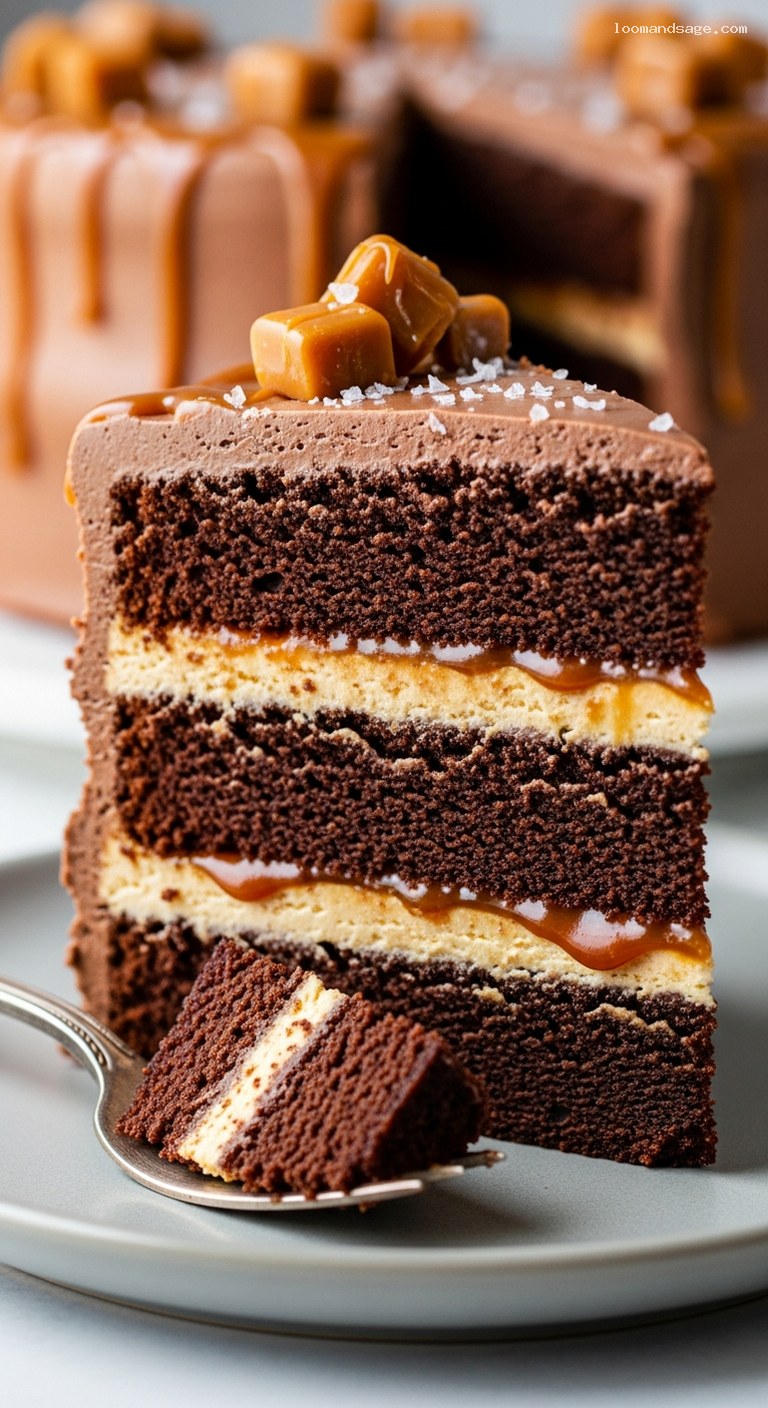
Spread a generous layer of salted caramel buttercream inside the ring (about 1/2 cup), then drizzle 2–3 tablespoons of salted caramel sauce over the buttercream. Keep the caramel away from the very edges so it does not leak out.
Top with the second cake layer and repeat: pipe a buttercream dam, fill with caramel buttercream and a drizzle of caramel sauce. Place the final cake layer on top, bottom-side up for a flat surface.
Step 7: Crumb coat and chill
Using an offset spatula, spread a thin layer of the remaining salted caramel buttercream over the top and sides of the assembled cake. This is your crumb coat; it locks in any stray crumbs so the final frosting looks smooth.
Do not worry if it looks a bit messy at this stage. Chill the crumb-coated cake in the refrigerator for at least 20–30 minutes, or until the buttercream is firm to the touch. Chilling helps the next layer of frosting glide on easily and keeps the cake stable while you work.
Step 8: Frost with chocolate buttercream and decorate with caramel drips
Once the cake is chilled and firm, apply a generous layer of chocolate buttercream to the top and sides of the cake. Use a spatula and, if you have one, a bench scraper to smooth the sides and create clean edges. Refrigerate for another 15–20 minutes so the outer frosting sets slightly.
Meanwhile, gently warm the remaining salted caramel sauce just until pourable, 5–10 seconds in the microwave. It should be fluid but not hot, or it will melt the frosting. Test a drip on the side of a chilled cake: it should slowly run down and stop before reaching the bottom. If it runs too far, let the caramel cool a bit more; if it barely moves, warm it a touch.
Using a spoon or a squeeze bottle, drip caramel around the top edge of the cake, letting it run down the sides in uneven, natural-looking drips. Spread the remaining caramel over the top center of the cake.
While the caramel is still slightly tacky, sprinkle flaky sea salt over the top and decorate with caramel candies, soft caramel pieces, and (optionally) chocolate curls or shavings. Chill briefly to set the drips, then let the cake sit at cool room temperature for 20–30 minutes before slicing and serving.
Pro Tips
- Use room-temperature ingredients. Room-temperature eggs, buttermilk, butter, and cream blend more smoothly, giving you a tender cake and silky buttercreams.
- Do not rush the caramel. Watch the color carefully and remove it from heat as soon as it is deep amber; overcooked caramel will taste bitter.
- Chill between stages. Briefly chilling the cake after layering, crumb coating, and final frosting makes it much easier to get neat layers and clean edges.
- Pipe a buttercream dam. The ring of buttercream around each layer keeps the caramel filling from oozing out and helps the cake stay stable.
- Adjust sweetness with salt. If the cake tastes too sweet, a light extra sprinkle of flaky sea salt on top will bring everything into balance.
Variations
- One-pan celebration cake: Bake the batter in a greased and lined 9×13-inch pan for 30–35 minutes. Frost the top with a mix of caramel and chocolate buttercreams, then drizzle with caramel and sprinkle with sea salt.
- Extra-dark mocha version: Use Dutch-process cocoa, replace the hot water fully with strong coffee, and add 1–2 teaspoons of instant espresso powder to the cake batter and chocolate buttercream.
- Less sweet, more salty: Reduce the powdered sugar in the caramel buttercream by 1/2 cup and add an extra pinch of flaky sea salt for a bolder salted caramel flavor.
Storage & Make-Ahead
The cake layers can be baked up to 2 days in advance. Once completely cool, wrap each layer tightly in plastic wrap and store at room temperature or in the refrigerator. The salted caramel sauce can be made up to 1 week ahead and stored in a sealed jar in the refrigerator; gently rewarm before using.
Both buttercreams can be made 1–2 days ahead and stored in airtight containers in the refrigerator. Bring them to room temperature and re-whip with a splash of cream if needed before frosting.
The fully assembled cake will keep, covered, in the refrigerator for up to 4 days. For best texture and flavor, let it sit at room temperature for 30–45 minutes before serving so the cake softens and the buttercream becomes silky again. Leftover slices can also be wrapped well and frozen for up to 2 months; thaw overnight in the refrigerator, then bring to room temperature before enjoying.
Nutrition (per serving)
Approximate values per slice (1 of 12): about 780 calories; 45 g fat; 28 g saturated fat; 98 g carbohydrates; 3 g fiber; 70 g sugars; 7 g protein; 480 mg sodium. These numbers are estimates and will vary based on exact ingredients and portion sizes.