
Quick Recipe Version (TL;DR)
Quick Ingredients
- 2 cups (260 g) all-purpose flour
- 1 ¾ cups (350 g) granulated sugar
- ¾ cup (75 g) unsweetened cocoa powder
- 2 tsp baking powder + 1 ½ tsp baking soda + ½ tsp fine salt
- 2 large eggs + 2 large egg yolks
- 1 cup (240 ml) whole milk + ½ cup (120 ml) sour cream
- ½ cup (120 ml) neutral oil + ½ cup (120 ml) hot coffee or boiling water
- 2 oranges (zest + juice), 2–3 tsp orange extract, optional orange liqueur
- 1 ½ cups (340 g) unsalted butter (soft)
- 4 ½–5 cups (540–600 g) powdered sugar
- 11 oz (310 g) dark or semisweet chocolate (chopped)
- 1 cup (240 ml) heavy cream
- Extra sugar for candied peel (about 1 cup / 200 g)
Do This
- 1. Prep: Preheat oven to 350°F (180°C). Grease and line three 8-inch (or two 9-inch) round pans.
- 2. Cake: Whisk dry ingredients; mix wet with orange zest and extract; combine, then stir in hot coffee. Divide into pans and bake 25–30 minutes.
- 3. Candied peel: Simmer strips of orange peel in sugar syrup until translucent; dry on a rack, then toss in sugar.
- 4. Buttercream: Beat butter until fluffy, add powdered sugar, cocoa, orange zest, extract, and a little orange juice to a smooth, spreadable frosting.
- 5. Ganache: Pour hot cream over chopped chocolate; stir smooth. Add orange liqueur or extract; cool to thick-but-pourable.
- 6. Assemble: Layer cakes with chocolate orange buttercream. Crumb coat, chill, then add a smooth final coat.
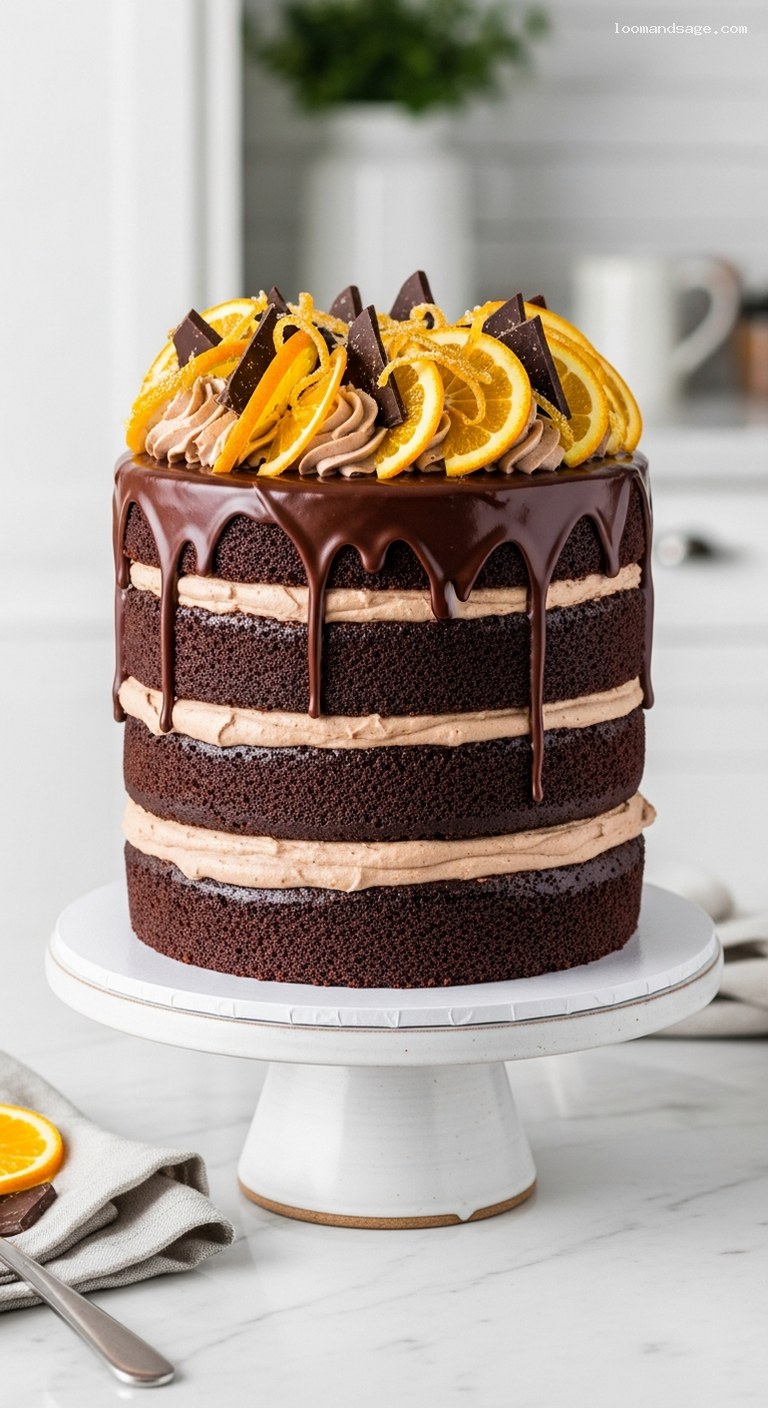
- 7. Finish: Pour ganache over top, letting it drip down sides. Decorate with candied orange peel and chocolate shavings or curls.
Why You’ll Love This Recipe
- Classic European flavor combination of deep chocolate and bright orange in every layer.
- Moist, tender cake with a rich, silky buttercream and glossy orange-scented ganache.
- Decorative candied orange peel makes it look like a bakery-style showstopper, but it is very manageable for home cooks.
- Perfect for celebrations, holidays, or whenever you want a dessert that feels truly special.
Grocery List
- Produce: 3–4 medium oranges
- Dairy: Whole milk, sour cream, unsalted butter, heavy cream, eggs
- Pantry: All-purpose flour, granulated sugar, powdered sugar, unsweetened cocoa powder, baking powder, baking soda, fine salt, neutral oil (canola, sunflower, or vegetable), vanilla extract, orange extract, instant coffee or brewed coffee (optional), dark or semisweet chocolate, granulated sugar for candying peel
- Optional (but recommended): Orange liqueur such as Cointreau or Grand Marnier, extra chocolate for curls/shavings
Full Ingredients
Chocolate Orange Cake Layers
- 2 cups (260 g) all-purpose flour
- 1 ¾ cups (350 g) granulated sugar
- ¾ cup (75 g) unsweetened cocoa powder (natural or Dutch-process)
- 2 tsp baking powder
- 1 ½ tsp baking soda
- ½ tsp fine sea salt
- 2 large eggs, room temperature
- 2 large egg yolks, room temperature
- 1 cup (240 ml) whole milk, room temperature
- ½ cup (120 ml) sour cream, room temperature
- ½ cup (120 ml) neutral oil (such as canola or sunflower)
- 1 tsp pure vanilla extract
- 2 tsp orange extract (or 2 Tbsp orange liqueur)
- Finely grated zest of 2 oranges (about 2–3 Tbsp, packed)
- ½ cup (120 ml) very hot strong coffee or boiling water
Chocolate Orange Buttercream
- 1 ½ cups (340 g) unsalted butter, softened to cool room temperature
- 4 ½–5 cups (540–600 g) powdered sugar, sifted
- ½ cup (50 g) unsweetened cocoa powder, sifted
- ¼ tsp fine salt
- Finely grated zest of 1 orange
- 1 tsp orange extract (plus more to taste)
- 1 tsp vanilla extract
- 3–5 Tbsp freshly squeezed orange juice or milk (as needed for consistency)
Orange-Spiked Chocolate Ganache
- 8 oz (225 g) dark or semisweet chocolate (60–70% cocoa), finely chopped
- 1 cup (240 ml) heavy cream
- 2 Tbsp unsalted butter, at room temperature (optional, for extra gloss)
- 1–2 Tbsp orange liqueur (such as Cointreau or Grand Marnier), or 1–1 ½ tsp orange extract for an alcohol-free version
- Pinch of fine salt (optional, but recommended)
Candied Orange Peel (for Decoration)
- 2 oranges (use ones you zested if the peel is still intact)
- 1 cup (200 g) granulated sugar, plus extra ¼–½ cup (50–100 g) for coating
- 1 cup (240 ml) water
Additional Decorations (Optional)
- Extra dark chocolate for curls, shards, or shavings
- Thin slices or wedges of fresh orange (pat dry well)
Step-by-Step Instructions
Step 1: Prepare pans and preheat the oven
Preheat your oven to 350°F (180°C), with a rack in the center. Grease three 8-inch (20 cm) round cake pans or two 9-inch (23 cm) pans with butter or nonstick spray. Line the bottoms with parchment paper circles and lightly grease the parchment as well. This helps the delicate chocolate layers release easily.
Lightly dust the sides of the pans with cocoa powder or flour, tapping out any excess. Set the pans aside. Zest the oranges first (before juicing them later for the buttercream and candied peel) and set the zest aside so it is ready for both the cake batter and frosting.
Step 2: Make the chocolate orange cake batter
In a large mixing bowl, whisk together the flour, granulated sugar, cocoa powder, baking powder, baking soda, and salt until there are no visible lumps of cocoa or flour. This helps ensure an even, tender crumb.
In a second bowl or large measuring jug, whisk together the eggs, egg yolks, milk, sour cream, oil, vanilla extract, orange extract (or liqueur), and the zest of 2 oranges until smooth and well combined.
Pour the wet ingredients into the dry ingredients and whisk gently until just combined and no dry pockets remain. Do not overmix. Finally, pour in the very hot coffee or boiling water and whisk until the batter is smooth and glossy. The batter will be fairly thin—that is exactly what you want for a moist cake.
Step 3: Bake and cool the cake layers
Divide the batter evenly between the prepared pans. If you have a kitchen scale, weigh the pans to make sure the layers are even; otherwise, use a measuring cup to portion the batter as evenly as possible. Smooth the tops gently with a spatula.
Bake for 25–30 minutes, or until the cakes are risen, the edges are pulling slightly from the sides of the pans, and a toothpick inserted in the center comes out with just a few moist crumbs, not wet batter.
Place the pans on a wire rack and let the cakes cool in their pans for 10–15 minutes. Then run a knife around the edges, invert each layer onto the rack, peel off the parchment, and turn right-side up. Allow to cool completely (at least 1 hour) before frosting. Cool layers can be wrapped and chilled if making ahead.
Step 4: Make the candied orange peel
While the cakes bake or cool, prepare the candied orange peel. Wash the oranges well. Using a sharp knife or vegetable peeler, remove the peel in wide strips, avoiding too much of the bitter white pith. Cut the peel into thin strips (about ⅛ inch / 3 mm wide).
In a small saucepan, combine 1 cup (200 g) sugar and 1 cup (240 ml) water. Bring to a gentle boil, stirring until the sugar dissolves. Add the orange peel strips, reduce to a simmer, and cook for 15–20 minutes, stirring occasionally, until the peel looks slightly translucent.
Using a slotted spoon, transfer the peel to a wire rack set over a tray and let it drip and dry for 30–45 minutes. While it is still a little tacky, toss the peel in extra granulated sugar to coat. Spread it back on the rack to dry completely. This can be done a day ahead and stored in an airtight container.
Step 5: Prepare the chocolate orange buttercream
In a stand mixer fitted with the paddle attachment (or using a large bowl and hand mixer), beat the softened butter on medium speed for 2–3 minutes until pale and creamy. Scrape down the sides of the bowl as needed.
Add half of the powdered sugar, the cocoa powder, and the salt. Mix on low speed until the sugar is mostly incorporated (to avoid a sugar cloud), then increase to medium and beat until fluffy. Add the remaining powdered sugar, orange zest, orange extract, and vanilla extract, and beat again.
With the mixer on low, add 3 Tbsp of freshly squeezed orange juice (or milk) and beat until smooth. If the buttercream is too stiff, add more liquid 1 Tbsp at a time; if too soft, add a bit more powdered sugar. You are aiming for a smooth, spreadable, medium-thick consistency that will hold soft peaks. Set aside at cool room temperature until needed.
Step 6: Make the orange-spiked ganache
Place the finely chopped chocolate in a heatproof bowl. In a small saucepan, heat the heavy cream over medium heat just until it begins to simmer and small bubbles form around the edges; do not let it boil.
Pour the hot cream over the chopped chocolate and let it sit undisturbed for 2–3 minutes to melt the chocolate. Add the butter, then gently whisk from the center outward until the mixture is glossy and completely smooth. Stir in the orange liqueur or orange extract and a tiny pinch of salt, tasting to adjust the orange intensity if needed.
Let the ganache cool at room temperature for 20–30 minutes, stirring occasionally, until it has thickened to a pourable but not runny consistency—similar to warm honey. If it thickens too much, you can gently rewarm it over a water bath or in a microwave in very short bursts.
Step 7: Assemble and decorate the cake
Once the cake layers are completely cool, level the tops with a serrated knife if they are domed. Place the first layer on a cake stand or serving plate, securing it with a small dab of buttercream underneath.
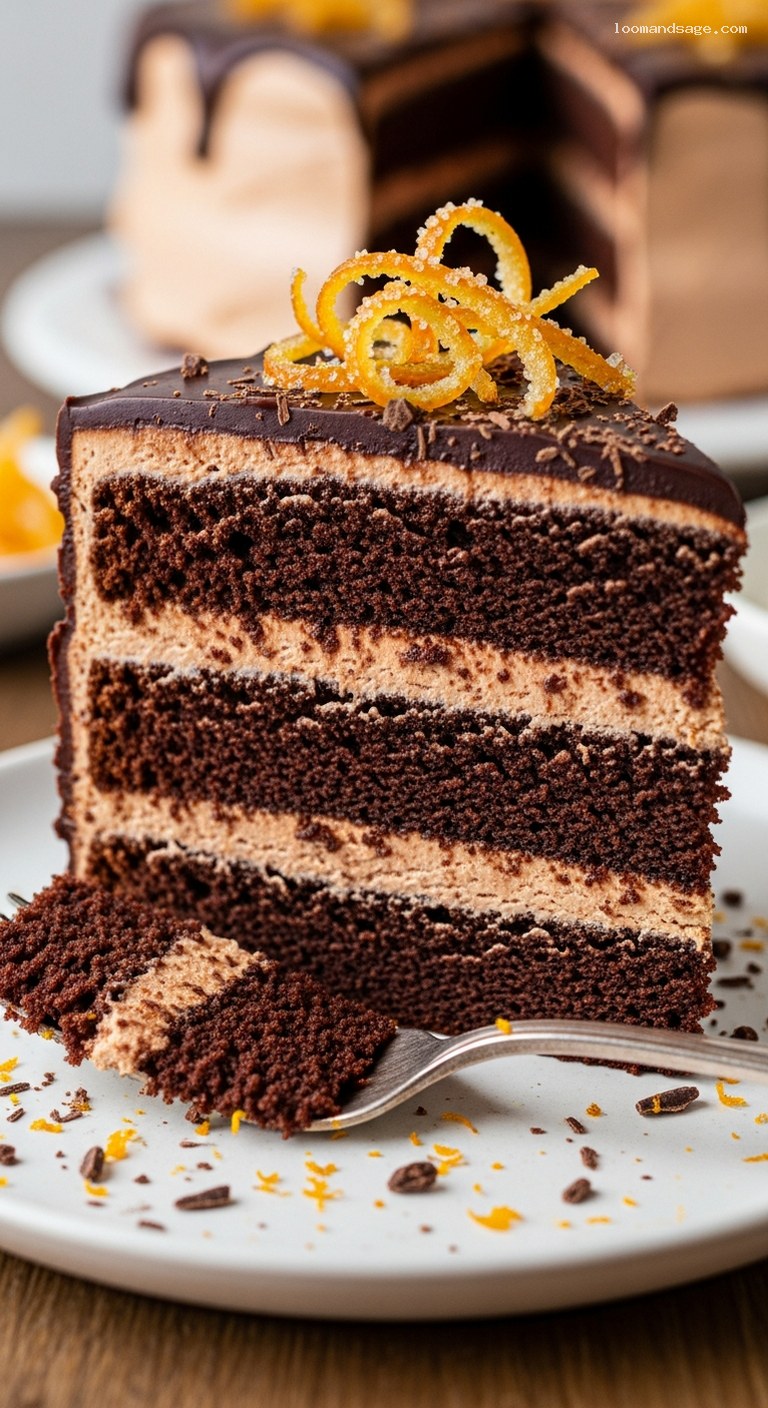
Spread a generous layer of chocolate orange buttercream (about ¾–1 cup) evenly over the first layer. Top with the second layer, repeat with buttercream, and then add the final layer. Apply a thin layer of buttercream all over the top and sides to create a crumb coat. Chill the cake for 15–20 minutes to set.
After chilling, apply a smooth final coat of buttercream, using an offset spatula or bench scraper to even out the sides and top. Chill again for 10–15 minutes to firm up the frosting.
When the ganache has cooled to a thick-but-pourable consistency, pour it onto the center of the chilled cake, gently nudging it toward the edges so it drips down the sides in attractive drips. Let the ganache set slightly (10–15 minutes), then decorate the top with curls or shards of chocolate and generous clusters of candied orange peel. Add a few thin slices of fresh orange, if desired, just before serving.
Pro Tips
- Use room-temperature ingredients for the batter and buttercream; cold eggs and dairy can cause the batter to curdle and the frosting to be lumpy.
- If you do not have coffee, use boiling water; the hot liquid helps bloom the cocoa and makes the cake extra moist.
- Make the cake layers a day ahead, wrap them tightly, and chill. Slightly cold layers are easier to frost cleanly.
- For perfect ganache drips, test a small spoonful on the chilled cake side; if it runs too far, let the ganache cool a bit more.
- Use a microplane zester for the oranges and avoid the bitter white pith; this keeps the flavor bright and fragrant.
Variations
- Alcohol-free version: Omit the orange liqueur and use orange extract in both the cake and ganache. You can also bump up the orange zest slightly for more citrus punch.
- Dark chocolate lovers: Use a higher-percentage chocolate (70–75%) in the ganache and reduce the cocoa in the buttercream to ⅓ cup (35 g) if you want the cake a bit less intense but with a very dark ganache.
- Simplified decoration: Skip the candied peel and top the cake with simple chocolate curls, grated chocolate, and a light sprinkle of finely grated orange zest right before serving.
Storage & Make-Ahead
The fully assembled cake keeps well, covered, at cool room temperature for up to 1 day. For longer storage, refrigerate it, covered, for up to 4 days. Let chilled cake sit at room temperature for 30–60 minutes before serving so the buttercream and ganache soften and the flavors bloom. Unfrosted cake layers can be wrapped tightly in plastic wrap and stored at room temperature for 1 day or in the freezer for up to 2 months. Buttercream can be made up to 3 days ahead and refrigerated; bring to room temperature and re-whip briefly before using. Ganache is best made the day you plan to use it, but leftovers can be refrigerated and gently rewarmed.
Nutrition (per serving)
Approximate values for 1 slice (1/12 of the cake): about 650–700 calories, 42–46 g fat, 22–25 g saturated fat, 75–80 g carbohydrates, 55–60 g sugar, 7–9 g protein, and 380–450 mg sodium. These numbers will vary based on the specific brands and chocolate percentage used.