Quick Recipe Version (TL;DR)
Quick Ingredients
- 1 cup whole milk, warmed (105–115°F)
- 1/3 cup granulated sugar
- 2 1/4 tsp (1 packet) active dry yeast
- 1/3 cup unsalted butter, very soft
- 2 large eggs, room temperature
- 1 tsp fine sea salt
- 4–4 1/2 cups all-purpose flour
- 1/2 cup unsalted butter, very soft (for filling)
- 1 cup packed light brown sugar
- 2 1/2 Tbsp ground cinnamon
- Pinch salt (for filling)
- 3 cups powdered sugar
- 6 Tbsp unsalted butter, melted (for glaze)
- 1/2 cup heavy cream (plus 1–3 Tbsp as needed)
- 2 tsp pure vanilla extract
- Pinch salt (for glaze)
Do This
- 1) Bloom yeast in warm milk and sugar until foamy. Mix in butter, eggs, salt, then add flour until a soft, slightly tacky dough forms.
- 2) Knead 8–10 minutes until smooth and elastic. Place in greased bowl, cover, and let rise until doubled, about 1–1 1/2 hours.
- 3) Mix filling: soft butter, brown sugar, cinnamon, and salt. Grease a 9×13-inch pan.
- 4) Roll dough to a 12×18-inch rectangle. Spread filling evenly, roll up tightly from long side, and slice into 12 thick rolls.
- 5) Arrange in pan, cover, and let rise until puffy and touching, 35–45 minutes. Preheat oven to 350°F (175°C).
- 6) Bake 22–25 minutes until lightly golden and just set in the center.
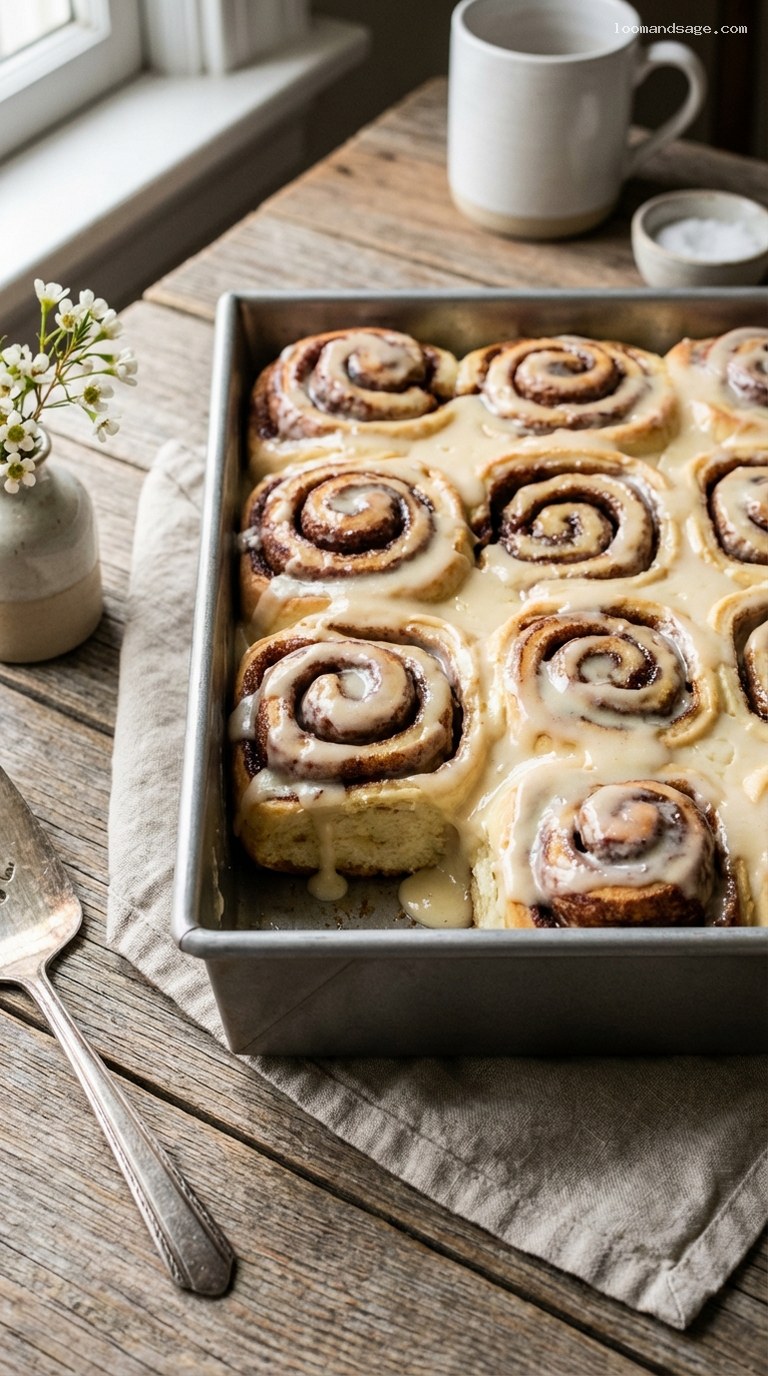
- 7) Whisk glaze ingredients until thick yet pourable. Pour generously over warm rolls so it soaks into the spirals. Serve warm.
Why You’ll Love This Recipe
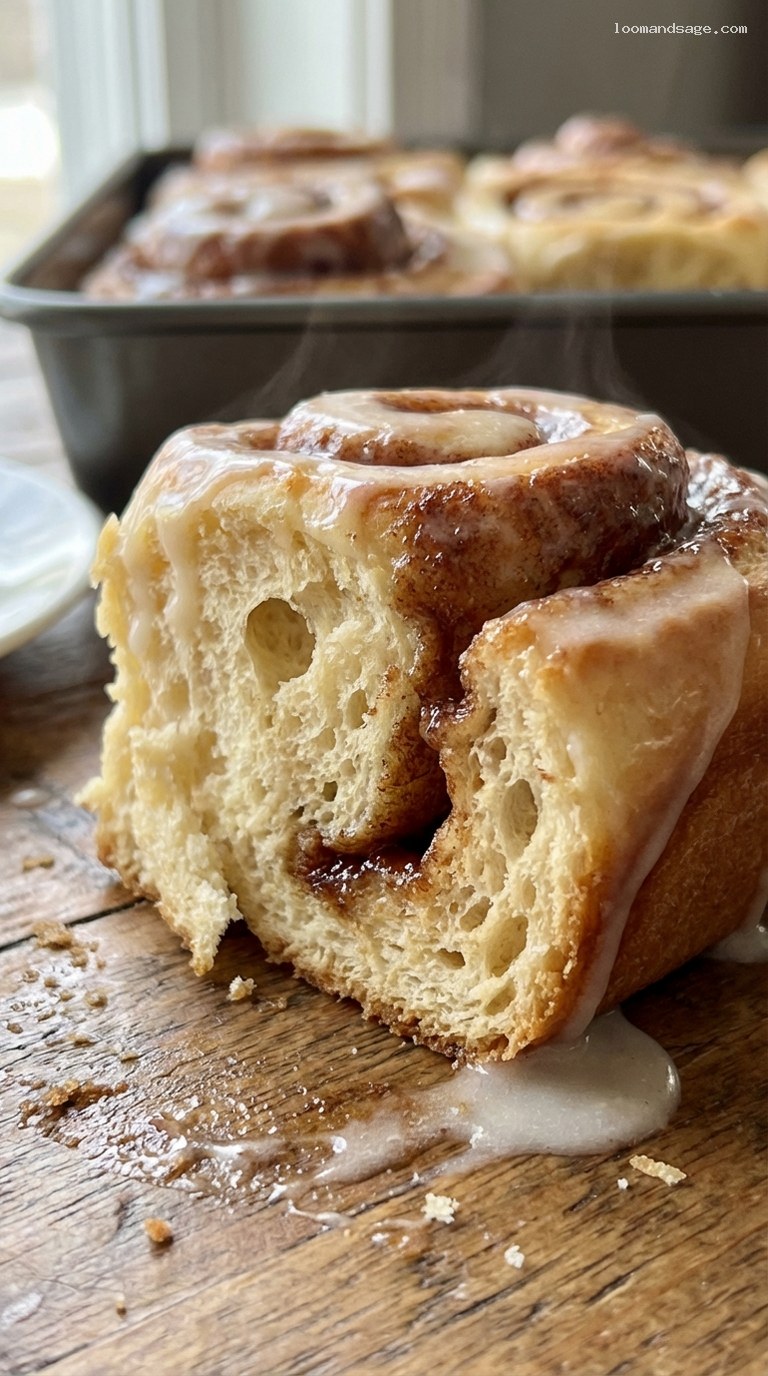
- Pillowy, cloud-soft rolls with a rich, tender, bakery-style crumb.
- A generous brown sugar–cinnamon swirl that’s gooey and fragrant in every bite.
- Thick, glossy vanilla glaze that melts down into the spirals instead of just sitting on top.
- Classic Amish-inspired simplicity: humble ingredients, warm comfort, and big farmhouse-style portions.
Grocery List
- Produce: None needed
- Dairy: Whole milk, unsalted butter, large eggs, heavy cream
- Pantry: All-purpose flour, granulated sugar, light brown sugar, powdered sugar, active dry yeast, ground cinnamon, salt, vanilla extract, nonstick spray or extra butter for greasing pan
Full Ingredients
For the Amish Cinnamon Roll Dough
- 1 cup whole milk, warmed to 105–115°F (240 ml)
- 1/3 cup granulated sugar (67 g)
- 2 1/4 tsp active dry yeast (1 standard 0.25 oz packet; 7 g)
- 1/3 cup unsalted butter, very soft but not melted (75 g)
- 2 large eggs, at room temperature
- 1 tsp fine sea salt
- 4–4 1/2 cups all-purpose flour (480–540 g), plus extra for dusting
- 1–2 tsp neutral oil or softened butter for greasing the bowl
For the Brown Sugar–Cinnamon Filling
- 1/2 cup unsalted butter, very soft (113 g)
- 1 cup packed light brown sugar (200 g)
- 2 1/2 Tbsp ground cinnamon
- 1/4 tsp fine sea salt
For the Thick, Glossy Glaze
- 3 cups powdered sugar, sifted (360 g)
- 6 Tbsp unsalted butter, melted and slightly cooled (85 g)
- 1/2 cup heavy cream, plus 1–3 Tbsp more as needed (120–180 ml total)
- 2 tsp pure vanilla extract
- 1/8 tsp fine sea salt
For the Pan
- 1–2 Tbsp softened butter or neutral oil, or nonstick baking spray, for greasing a 9×13-inch (23×33 cm) baking dish
Step-by-Step Instructions
Step 1: Bloom the yeast and start the dough
In a large mixing bowl (or the bowl of a stand mixer), combine the warm whole milk and granulated sugar. Stir to dissolve the sugar a bit, then sprinkle the active dry yeast evenly over the surface. Let it sit for 5–10 minutes, until the mixture looks foamy and slightly puffed. If it does not foam, your yeast may be inactive or the milk was too hot or too cold; start again with fresh yeast.
Once the yeast is foamy, add the very soft butter, eggs, and salt. Mix with a wooden spoon or the paddle attachment until the eggs are broken up and the butter is mostly incorporated. The mixture may look slightly lumpy or curdled at this point; that is completely fine.
Step 2: Add flour and knead until pillowy
Add 3 1/2 cups (420 g) of the flour to the bowl and mix until a shaggy, sticky dough forms. Switch to a dough hook if using a stand mixer. Gradually add more flour, 1/4 cup at a time, mixing well after each addition, until the dough starts to pull away from the sides of the bowl and is soft and slightly tacky but not wet. You may not need the full 4 1/2 cups, or you may need a bit more depending on humidity and flour brand.
Knead the dough for 8–10 minutes on medium-low speed in the mixer, or by hand on a lightly floured countertop. The finished dough should be smooth, elastic, and feel like a soft earlobe when gently pressed. If the dough is sticking fiercely to your hands or the bowl, dust in another tablespoon or two of flour and knead briefly to incorporate. Avoid adding too much flour; a slightly tacky dough bakes up especially fluffy.
Step 3: Let the dough rise until doubled
Lightly grease a large clean bowl with oil or softened butter. Shape the dough into a smooth ball and place it in the bowl, turning it once to coat all sides in the fat. This keeps the surface from drying out as it rises.
Cover the bowl tightly with plastic wrap, a lid, or a clean damp kitchen towel. Let the dough rise in a warm, draft-free place until doubled in size, about 60–90 minutes. A good spot is inside an unheated oven with the light on, or near but not directly on top of a warm appliance. The dough is ready when you can gently press two fingers into it and the indentation remains instead of springing right back.
Step 4: Make the filling and roll out the dough
While the dough rises, prepare the filling. In a medium bowl, stir together the very soft butter, brown sugar, ground cinnamon, and salt until it forms a thick, spreadable paste with no dry sugar pockets. Grease a 9×13-inch (23×33 cm) baking dish well with softened butter, oil, or baking spray. Set both aside.
When the dough has doubled, gently punch it down to release excess gas. Turn it out onto a lightly floured surface. Using a rolling pin, roll the dough into a large rectangle, about 12×18 inches (30×45 cm), with the long side facing you. Try to keep the thickness even, about 1/4 inch (6 mm) thick, for consistent rolls.
Spread the cinnamon filling evenly over the dough, leaving a 1/2-inch (1.25 cm) border along the long edge farthest from you. Take your time to spread it all the way to the sides and corners so every roll has plenty of swirl.
Step 5: Roll up, slice, and arrange the oversized rolls
Starting from the long edge closest to you, roll the dough up into a tight log, gently stretching as you go to maintain an even thickness. When you reach the far edge, pinch the seam firmly to seal so the rolls do not unwind in the oven. Turn the log so the seam side is down.
Trim about 1/2 inch from each end if they are uneven. Use a sharp serrated knife or, better yet, unflavored dental floss to cut the log into 12 thick pieces, each about 1 1/2 inches (4 cm) wide. To use floss, slide it under the log, cross the ends over the top, and pull tight to slice cleanly without squashing the spirals.
Arrange the rolls in the prepared 9×13-inch pan in four rows of three. They should have a little space between them to expand, but not too much. Cover the pan loosely with plastic wrap or a clean towel.
Step 6: Second rise and bake until just golden
Let the rolls rise a second time in a warm, draft-free place until very puffy and touching, 35–45 minutes. They should look noticeably larger and feel soft and airy if you gently tap the side of the pan.
Near the end of the rise, preheat your oven to 350°F (175°C), with a rack in the center position. Once fully preheated and the rolls are risen, bake the rolls for 22–25 minutes. They should be lightly golden on top with deeper color at the edges, but still soft in the center. The internal temperature of the middle roll should be about 190°F (88°C) if checked with an instant-read thermometer.
Do not overbake; slightly under-baked edges help keep the centers extra soft and gooey, just like classic Amish bakery rolls.
Step 7: Make the thick glaze and soak the warm rolls
While the rolls are baking, prepare the glaze. In a medium bowl, whisk together the sifted powdered sugar, melted butter, 1/2 cup heavy cream, vanilla, and salt until completely smooth. The glaze should be thick but pourable, similar to a slow ribbon when you lift the whisk. If it is too thick, add more cream 1 tablespoon at a time. If it is too thin, whisk in a little more powdered sugar.
Allow the rolls to cool for just 5–10 minutes after they come out of the oven; they should still be quite warm. Pour the glaze generously over the rolls, focusing on the centers so it runs down into the spirals. Tilt the pan slightly, if needed, to help the glaze flow into the nooks and crannies. The warmth of the rolls will thin the glaze slightly and help it soak into the dough, creating that signature soft, sticky center. Serve warm, ideally within an hour of glazing, while they are at their pillowy peak.
Pro Tips
- Temperature matters for yeast: Aim for milk that is warm like a hot bath, 105–115°F. Too cool and the yeast will be sluggish; too hot and it can kill the yeast.
- Soft, not stiff dough: A slightly tacky dough gives the fluffiest rolls. Resist the urge to add flour until the dough is dry; it should cling just a bit to your fingers.
- Use very soft butter for the filling: If the butter is too firm, it will tear the dough as you spread it. If it is melted, it will leak out and pool at the bottom instead of staying in the swirl.
- Slice clean spirals: Dental floss or thread makes neat, round rolls that bake up tall and even, unlike knife-cut rolls that can get squashed.
- Glaze while warm: Pouring the glaze on warm (not scorching hot) rolls helps it soak into the center while still leaving a glossy layer on top.
Variations
- Pecan-studded Amish rolls: Sprinkle 1 cup chopped toasted pecans over the cinnamon filling before rolling, and scatter another 1/2 cup on top right after glazing.
- Raisin cinnamon rolls: Soak 3/4 cup raisins in hot water (or warm apple juice) for 10–15 minutes, drain and pat dry, then sprinkle over the filling. Roll and bake as directed.
- Cream cheese glaze: Replace 1 cup of the powdered sugar and 2 Tbsp butter in the glaze with 4 oz softened cream cheese. Beat until smooth, then thin with cream as needed. Spread over slightly cooled rolls rather than pouring.
Storage & Make-Ahead
These cinnamon rolls are at their absolute best the day they are baked, especially within the first few hours. To store leftovers, let the rolls cool completely, then cover the pan tightly with foil or transfer rolls to an airtight container. Keep at room temperature for up to 2 days or in the refrigerator for up to 5 days. Rewarm individual rolls in the microwave for 15–25 seconds or in a low oven (300°F / 150°C) for about 8–10 minutes, covered loosely with foil to prevent drying.
For an overnight option, assemble the rolls fully and place them in the greased pan. Cover tightly with plastic wrap and refrigerate for up to 16 hours. The next morning, let the rolls sit at room temperature for 45–60 minutes until puffy, then bake as directed. You can also freeze baked, cooled rolls (without glaze) for up to 2 months; thaw overnight in the refrigerator, warm gently, and glaze before serving.
Nutrition (per serving)
Approximate values per roll (1 of 12): 520 calories; 20 g fat; 12 g saturated fat; 75 g carbohydrates; 3 g fiber; 42 g sugars; 9 g protein; 330 mg sodium. These numbers are estimates and will vary based on exact ingredients and portion sizes.