
Quick Recipe Version (TL;DR)
Quick Ingredients
- 1 whole pig’s stomach (hog maw), about 3–4 lb raw weight
- 3 tbsp kosher salt + 1/4 cup white vinegar (for cleaning)
- 2 lb russet or Yukon gold potatoes, peeled and cubed
- 1 lb bulk pork sausage (or links, casings removed)
- 1 large onion, diced
- 2 celery stalks, finely chopped
- 2 cloves garlic, minced
- 1 1/2 tsp kosher salt, 1 tsp black pepper
- 1 tsp dried marjoram or sage
- 4 tbsp melted butter or bacon drippings (divided)
- 1 cup low-sodium chicken broth or water
Do This
- 1. Rinse hog maw well. Scrub inside and out with 3 tbsp salt under cold water, then soak 30–60 minutes in cold water with 1/4 cup vinegar. Rinse again.
- 2. Parboil the stomach in simmering water for 10–15 minutes. Drain, cool slightly, and trim any excess fat; pat dry.
- 3. Preheat oven to 350°F (175°C). Toss potatoes, sausage, onion, celery, garlic, 1 1/2 tsp salt, pepper, marjoram/sage, and 2 tbsp melted butter until evenly mixed.
- 4. Stuff the stomach loosely with the potato–sausage mixture, leaving some room for expansion. Sew or tie the opening closed and prick the surface in a few spots with a skewer.
- 5. Place in a roasting pan, seam side down. Rub with remaining 2 tbsp butter and pour 1 cup broth or water into the pan. Cover tightly with a lid or foil.
- 6. Roast 2 1/2–3 hours, turning once and basting occasionally, until potatoes are tender and the stomach is browned and crisp. Rest 10–15 minutes, then slice and serve with pan juices.
Why You’ll Love This Recipe
- A deeply traditional farmhouse dish that feels rustic, comforting, and celebratory all at once.
- Simple, honest ingredients: potatoes, sausage, and onions transformed into something special with slow roasting.
- Perfect for feeding a crowd on a cool day; it slices beautifully and serves like a hearty roast.
- Great make-ahead potential: it reheats well and the flavors deepen the next day.
Grocery List
- Produce: Russet or Yukon gold potatoes, yellow onion, celery, garlic, optional fresh parsley for garnish, optional lemon.
- Dairy: Butter (or use bacon drippings or neutral oil if you prefer).
- Pantry: Kosher salt, black pepper, dried marjoram or sage, white vinegar, chicken broth or water, optional bay leaf, optional paprika.
Full Ingredients
For the Hog Maw (Stomach)
- 1 whole pig’s stomach (hog maw), about 3–4 lb (1.3–1.8 kg) raw weight, rinsed
- 3 tbsp kosher salt (for scrubbing and cleaning)
- 1/4 cup white vinegar (for soaking)
- Juice of 1/2–1 lemon (optional, helps freshen aroma)
- Cold water, as needed for soaking and parboiling
For the Potato–Sausage Filling
- 2 lb (about 900 g) russet or Yukon gold potatoes, peeled and cut into 3/4-inch (2 cm) cubes (about 6 cups)
- 1 lb (450 g) bulk pork sausage, or 1 lb sausage links with casings removed
- 1 large yellow onion, diced (about 1 1/2 cups)
- 2 celery stalks, finely chopped (about 3/4 cup)
- 2 cloves garlic, minced
- 1 1/2 tsp kosher salt (or to taste)
- 1 tsp freshly ground black pepper
- 1 tsp dried marjoram or rubbed sage
- 2 tbsp melted butter or bacon drippings
For Roasting and Serving
- 1 cup (240 ml) low-sodium chicken broth or water
- 2 tbsp melted butter, bacon drippings, or neutral oil (for rubbing the outside)
- 1 bay leaf (optional, for the roasting pan)
- 1/2 tsp paprika (optional, for extra color on the skin)
- Fresh parsley, chopped, for garnish (optional)
- Additional kosher salt and black pepper, to taste
Step-by-Step Instructions
Step 1: Clean and Freshen the Hog Maw
If your butcher has pre-cleaned the stomach, this step will go quickly, but it is still worth doing a final cleaning at home. Rinse the hog maw thoroughly under cold running water, turning it inside out so you can see the inner surface. Sprinkle about 3 tbsp kosher salt all over the inside and outside and scrub gently with your hands to remove any remaining residue or sliminess. Rinse well.
Place the stomach in a large bowl. Cover with plenty of cold water, add the 1/4 cup white vinegar and, if using, the lemon juice. Swish gently and let soak for 30–60 minutes. This helps freshen the aroma and whiten the stomach slightly. After soaking, rinse very well again under cold water. Keep the stomach inside out at this point so you can see what you are doing during the next step.
Step 2: Parboil and Trim the Stomach
Set a large pot of water on the stove and bring it to a gentle boil. Add the cleaned hog maw and reduce the heat so the water is at a lively simmer, not a rolling boil. Parboil for 10–15 minutes. This tightens the stomach, starts the cooking process, and makes it easier to handle and trim.
Using tongs, transfer the stomach to a cutting board and let cool just enough to handle. Carefully trim away any thick, excess fat or ragged edges with a sharp knife, being sure not to pierce the main pouch. Turn the stomach right side out again so the smoother outer surface faces outward; pat very dry with paper towels. Set aside while you prepare the filling.
Step 3: Mix the Potato–Sausage Filling
Preheat your oven to 350°F (175°C). Lightly grease a large roasting pan or Dutch oven (with a lid) or have heavy-duty foil ready for covering.
In a large mixing bowl, combine the cubed potatoes, sausage, diced onion, chopped celery, and minced garlic. Use your hands or a sturdy spoon to break the sausage into small pieces and distribute it evenly throughout the potatoes. Sprinkle in 1 1/2 tsp kosher salt, 1 tsp black pepper, and 1 tsp dried marjoram or sage. Drizzle with 2 tbsp melted butter or bacon drippings. Toss until everything is well coated and evenly seasoned. The mixture should feel slightly moist and well seasoned; taste a small piece of potato (raw) for salt level and adjust lightly if needed, bearing in mind the sausage is also salty.
Step 4: Stuff and Secure the Hog Maw
Locate the main opening of the stomach; this is where you will stuff it. Hold the opening wide with one hand and, using the other hand or a small cup, begin spooning the potato–sausage mixture inside. Pack the filling in fairly firmly so it holds together, but do not overstuff. Leave about 1–1 1/2 inches (2.5–4 cm) of space at the top; the filling will expand as it cooks.
Once filled, close the opening securely. You can use a large, curved trussing needle and kitchen twine to sew it shut with a simple overhand stitch, or tightly tie the opening with several loops of kitchen twine. Check the stomach for any thin spots or small openings and, if necessary, reinforce with extra twine. With a thin skewer or toothpick, prick the outer surface of the stomach 6–8 times—just shallow pinpricks—to allow steam to escape and help prevent bursting.
Step 5: Prepare the Roasting Pan
Place the stuffed hog maw seam-side down in your greased roasting pan or Dutch oven. Brush or rub the outside with the remaining 2 tbsp melted butter, bacon drippings, or oil. If you like extra color, sprinkle lightly with paprika, plus a pinch of salt and pepper.
Pour 1 cup of chicken broth or water into the bottom of the pan. Add the bay leaf, if using. The liquid should come up only about 1/4–1/2 inch on the sides of the stomach; you are roasting, not braising. Cover the pan tightly with its lid or with a double layer of heavy-duty foil, crimping well around the edges to trap steam.
Step 6: Roast Low and Slow
Place the covered pan in the preheated 350°F (175°C) oven. Roast for 1 1/2 hours without uncovering. After this time, carefully remove the lid or foil away from you to avoid steam. Baste the stomach with some of the pan juices, then gently turn it over using tongs and a spatula so it browns evenly on both sides. Cover again and return to the oven.
Continue roasting for another 1–1 1/2 hours, basting once or twice more. Total cook time will be about 2 1/2–3 hours, depending on the size of the hog maw. It is done when a sharp knife slides easily into the potatoes through the stomach, and the stomach itself is nicely browned, firm, and slightly crisp on the outside. If you want extra browning, uncover for the last 20–30 minutes, or briefly finish under the broiler, watching closely.
Step 7: Rest, Slice, and Serve
When the hog maw is cooked through and browned to your liking, remove it from the oven. Transfer carefully to a cutting board, tent loosely with foil, and let rest for 10–15 minutes. This rest helps the filling set up, making it much easier to slice cleanly.
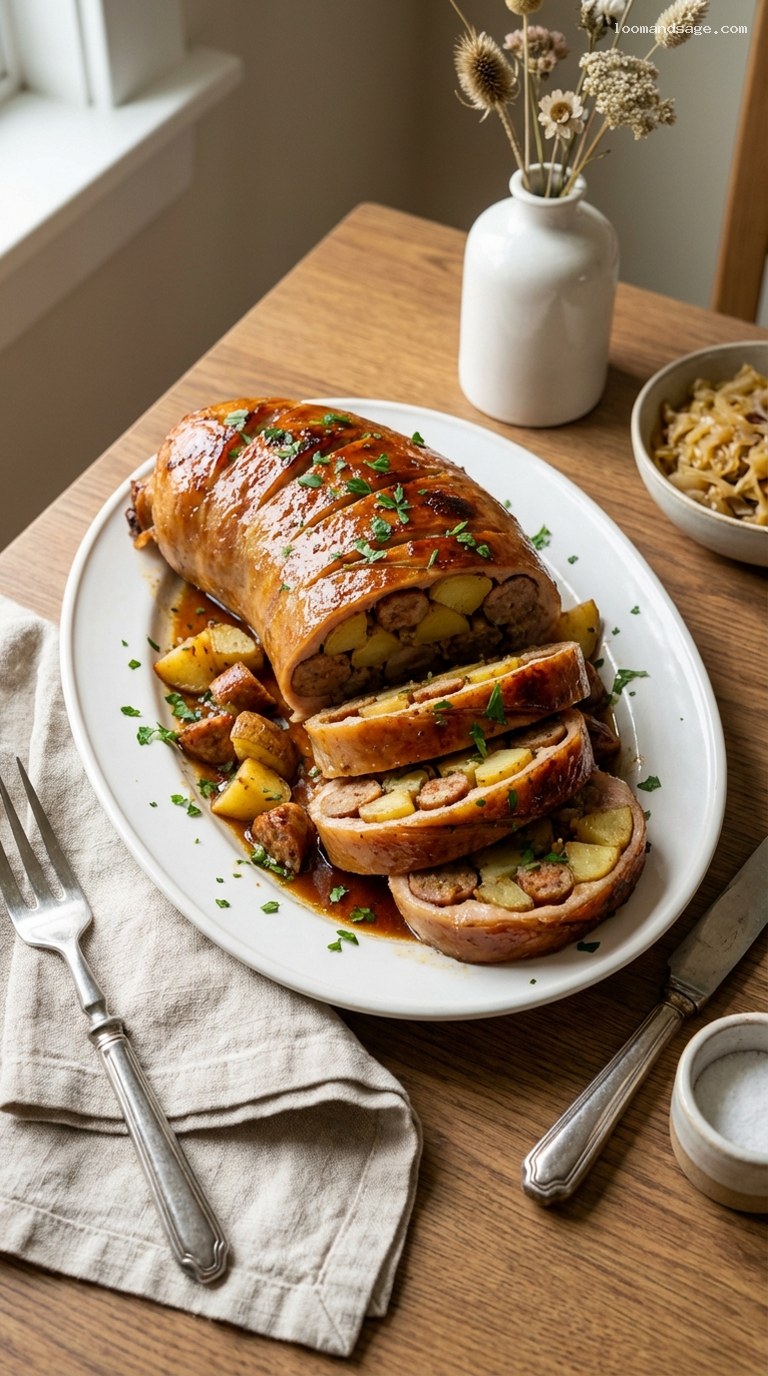
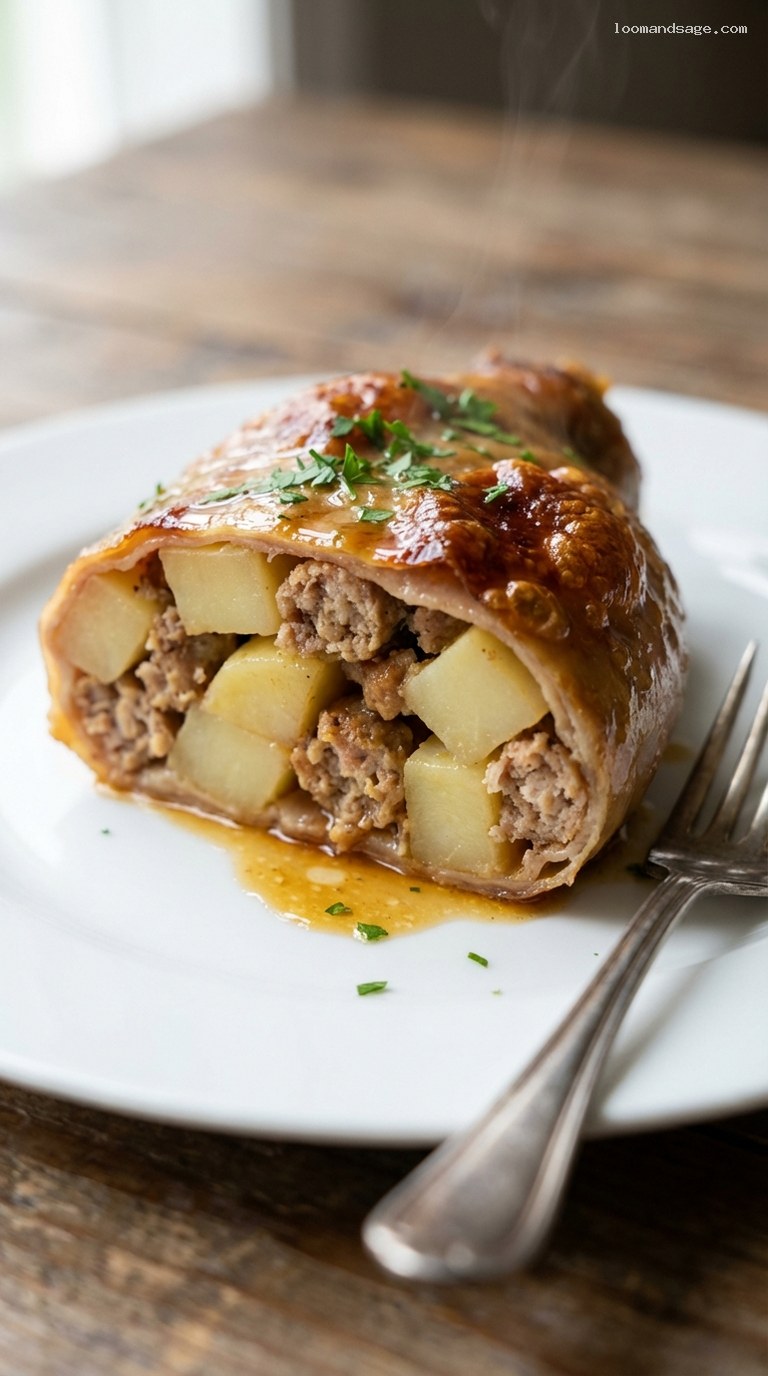
While it rests, you can skim excess fat from the pan juices and taste them, adjusting with a little salt and pepper as needed. Slice the hog maw crosswise into thick slices, about 3/4–1 inch each, so that each slice shows a cross-section of potatoes and sausage encased in the stomach. Arrange slices on a warm platter, spoon some of the pan juices over the top, and garnish with chopped fresh parsley if you like. Serve hot, with extra pan juices on the side and simple sides like braised cabbage, green beans, or sauerkraut.
Pro Tips
- Do not overstuff: Leave some room in the stomach for the potatoes and sausage to expand as they cook. Overstuffing can cause the stomach to split.
- Prick, but do not pierce deeply: Light pinpricks in the outer surface let steam escape and help prevent bursting, but avoid deep holes that would let the filling leak out.
- Keep it moist: Make sure there is always a little liquid in the roasting pan. If it evaporates, add another 1/4–1/2 cup broth or water to prevent scorching and to create tasty pan juices.
- Adjust seasoning to your sausage: Some sausages are very salty or heavily seasoned; start with the given salt amount, but taste a small raw potato cube and adjust gently before stuffing.
- Use extra filling smartly: If your hog maw is smaller and you have extra filling, bake it in a small covered dish alongside the main roast for a bonus potato–sausage side.
Variations
- With sauerkraut: Scatter 2–3 cups of drained sauerkraut around the hog maw in the roasting pan with the broth. The kraut will braise in the drippings and pan juices, giving you a classic tangy side.
- Root vegetable mix: Substitute up to 1/3 of the potatoes with diced carrots, parsnips, or rutabaga for extra sweetness and color in the filling.
- Smoky style: Use smoked sausage instead of fresh pork sausage, and add 1/2 tsp smoked paprika to the filling for a deeper, smoky flavor profile.
Storage & Make-Ahead
Hog maw stores and reheats well, making it a great make-ahead dish. Allow leftovers to cool to room temperature, then transfer slices and any remaining pan juices to an airtight container. Refrigerate for up to 3–4 days. Reheat slices gently in a covered baking dish at 325°F (165°C) with a splash of broth or water until hot all the way through, about 20–25 minutes, or in a covered skillet over low heat. You can also freeze sliced hog maw: wrap slices tightly in foil or freezer wrap, place in a freezer bag, and freeze for up to 2 months. Thaw overnight in the refrigerator before reheating. The stomach casing will be slightly softer after freezing, but the filling will still be delicious.
Nutrition (per serving)
Approximate values per serving (1/6 of recipe): about 550–600 calories; 32–36 g protein; 32–36 g fat; 35–40 g carbohydrates; 3–5 g fiber; 900–1,100 mg sodium. These numbers will vary based on the exact sausage used, how much fat is trimmed from the stomach, and how much pan fat is served with the slices.