
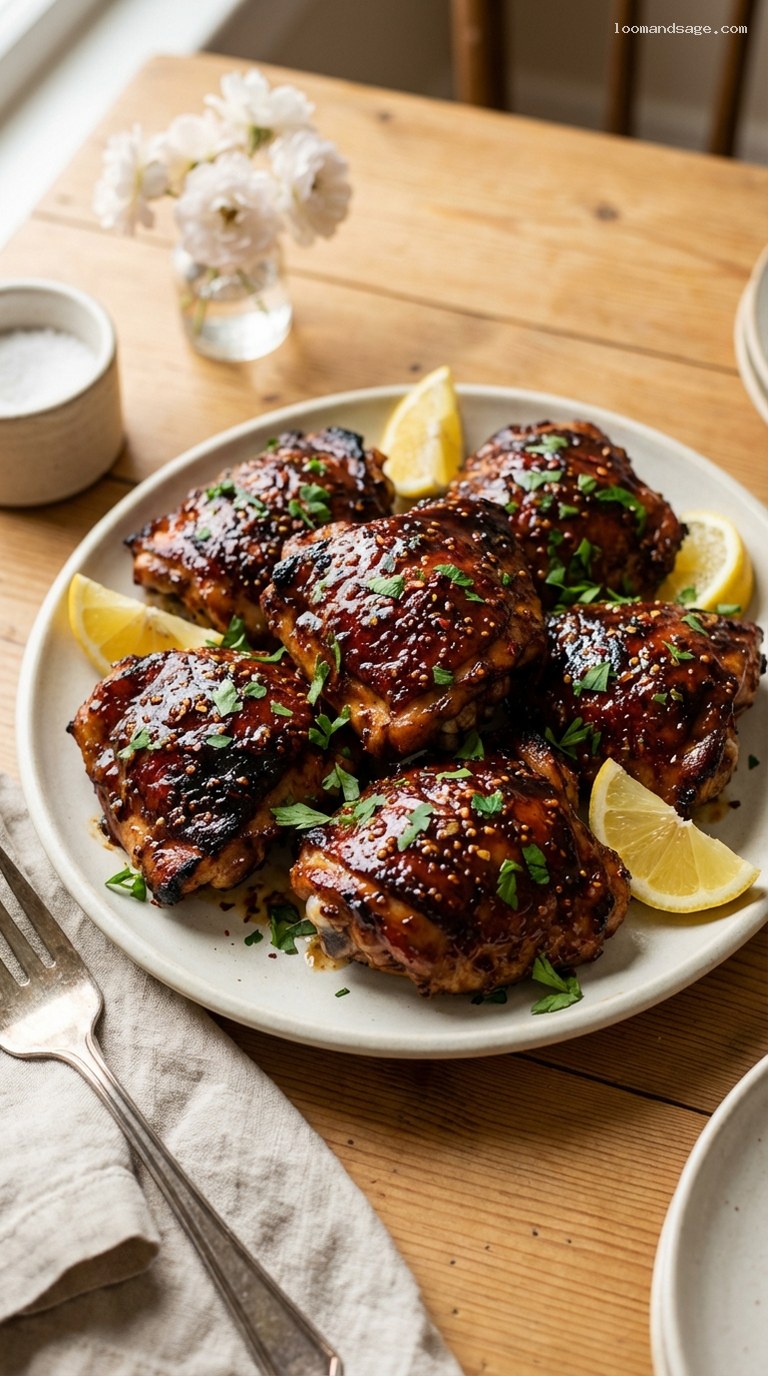
Quick Recipe Version (TL;DR)
Quick Ingredients
- 8 bone-in, skin-on chicken thighs (about 2 1/2 lb / 1.1 kg)
- 1 1/2 tsp kosher salt
- 1 tsp black pepper
- 1 tsp garlic powder
- 1 tbsp olive oil
- 1/3 cup unsulfured molasses
- 3 tbsp Dijon mustard
- 2 tbsp whole-grain mustard
- 2 tbsp apple cider vinegar
- 2 tbsp light or dark brown sugar
- 1 tbsp soy sauce or tamari
- 2 cloves garlic, finely minced
- 1 tsp smoked paprika
- 1/4 tsp red pepper flakes (optional)
- 1 tbsp unsalted butter, melted
- 2 tbsp chopped fresh parsley (for garnish)
- Lemon wedges, for serving (optional)
Do This
- 1. Heat oven to 400°F (200°C). Line a rimmed baking sheet with foil and place a wire rack on top (if you have one). Lightly oil the rack.
- 2. Pat chicken dry. Rub with olive oil, salt, pepper, and garlic powder. Arrange thighs skin-side up on the rack.
- 3. In a bowl, whisk molasses, both mustards, vinegar, brown sugar, soy sauce, garlic, smoked paprika, red pepper flakes, and melted butter.
- 4. Roast chicken for 15 minutes. Remove from oven and brush generously with about half the glaze.
- 5. Return to oven and roast 10 minutes. Brush again with remaining glaze, focusing on the tops and sides.
- 6. Roast 10 to 15 minutes more, until skin is deeply browned and sticky and chicken reaches at least 165°F (74°C). Rest 5 to 10 minutes, garnish with parsley, and serve with lemon wedges.
Why You’ll Love This Recipe
- Sticky, glossy, caramelized glaze that bakes into a sweet-savory crust around the edges.
- Hands-off oven method: minimal fuss, maximum flavor and texture.
- Uses pantry staples like molasses and mustard to create a restaurant-style finish.
- Flexible enough for weeknights, impressive enough for guests.
Grocery List
- Produce: Garlic, fresh parsley (or chives), lemons (for serving, optional).
- Dairy: Unsalted butter.
- Pantry: Bone-in, skin-on chicken thighs; kosher salt; black pepper; garlic powder; olive oil; unsulfured molasses; Dijon mustard; whole-grain mustard; apple cider vinegar; brown sugar; soy sauce or tamari; smoked paprika; red pepper flakes (optional).
Full Ingredients
For the Chicken
- 8 bone-in, skin-on chicken thighs (about 2 1/2 lb / 1.1 kg)
- 1 1/2 tsp kosher salt
- 1 tsp freshly ground black pepper
- 1 tsp garlic powder
- 1 tbsp olive oil (plus a little extra for greasing the rack or pan)
For the Molasses–Mustard Glaze
- 1/3 cup unsulfured molasses
- 3 tbsp Dijon mustard
- 2 tbsp whole-grain mustard
- 2 tbsp apple cider vinegar
- 2 tbsp light or dark brown sugar, packed
- 1 tbsp soy sauce or tamari
- 2 cloves garlic, very finely minced or grated
- 1 tsp smoked paprika
- 1/4 tsp red pepper flakes (optional, for gentle heat)
- 1 tbsp unsalted butter, melted (adds shine and richness)
For Serving (Optional but Recommended)
- 2 tbsp finely chopped fresh parsley or chives
- Lemon wedges, for squeezing over at the table
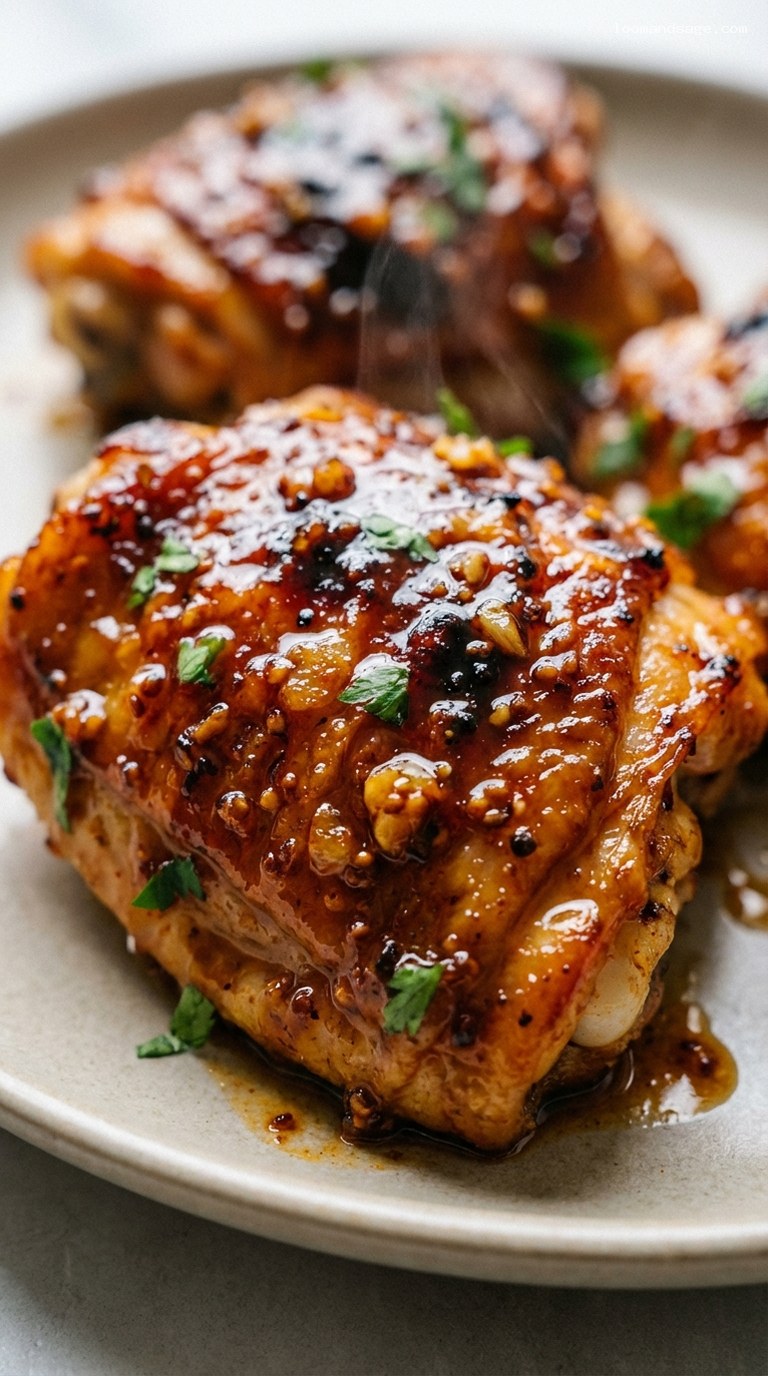
Step-by-Step Instructions
Step 1: Prep the Pan and Preheat the Oven
Heat your oven to 400°F (200°C) with a rack in the center position. Line a large rimmed baking sheet with aluminum foil for easy cleanup. If you have a wire baking rack that fits inside the sheet pan, set it on top of the foil and lightly brush or spray it with oil. Elevating the chicken helps the heat circulate and encourages beautifully crisp, evenly browned skin. If you do not have a rack, simply oil the foil well so the skin does not stick.
Step 2: Dry and Season the Chicken Thighs
Pat the chicken thighs very dry on all sides with paper towels. This step is crucial: excess moisture will steam the chicken instead of letting the skin turn crisp and caramelized. Place the thighs in a single layer, skin-side up, on the prepared rack or baking sheet.
Drizzle the thighs with 1 tbsp olive oil, then sprinkle evenly with 1 1/2 tsp kosher salt, 1 tsp black pepper, and 1 tsp garlic powder. Use your hands to rub the oil and seasonings all over, making sure some of the seasoning gets under the skin but without tearing it. Return the thighs to skin-side-up position. Let them sit at room temperature while you mix the glaze, about 5 to 10 minutes.
Step 3: Whisk Together the Molasses–Mustard Glaze
In a medium bowl, whisk together the following until smooth and glossy: 1/3 cup molasses, 3 tbsp Dijon mustard, 2 tbsp whole-grain mustard, 2 tbsp apple cider vinegar, 2 tbsp brown sugar, 1 tbsp soy sauce, 2 minced garlic cloves, 1 tsp smoked paprika, 1/4 tsp red pepper flakes (if using), and 1 tbsp melted unsalted butter. The mixture should be thick but pourable, with a deep mahogany color.
Taste a tiny bit (remember it is strong and will mellow in the oven). If you want it sweeter, add another teaspoon of brown sugar; for more tang, add a splash more vinegar. Set the glaze aside. It will thicken slightly as it sits, which is perfect for clinging to the chicken.
Optional make-ahead or marinating: You can prepare this glaze up to 3 days in advance and refrigerate it. If you have extra time, you may also toss the raw, seasoned thighs in 2 to 3 tbsp of the glaze and marinate them in the fridge for up to 8 hours, keeping the rest of the glaze separate for basting. Discard any marinade that touched raw chicken.
Step 4: Start Roasting the Chicken
Transfer the seasoned thighs to the oven and roast for 15 minutes without opening the door. This initial blast of heat begins rendering the fat under the skin and sets the surface so the glaze will adhere nicely later.
After 15 minutes, remove the pan from the oven and set it on a heatproof surface. You should see some light browning and rendered juices in the pan, but the chicken will not yet be fully cooked.
Step 5: Brush with Glaze and Bake Until Sticky
Give the glaze a quick stir. Using a pastry brush or spoon, generously coat the top and sides of each thigh with about half of the glaze. Let some drip onto the pan; those drips will caramelize into delicious sticky bits.
Return the pan to the oven and bake for another 10 minutes. Remove the pan again and brush on the remaining glaze, concentrating on the skin and exposed edges where it can caramelize. Try not to let too much pool underneath the chicken, which can burn.
Bake for a final 10 to 15 minutes, or until the chicken is deeply browned, the glaze is thick and sticky with slightly darkened edges, and an instant-read thermometer inserted into the thickest part of a thigh (not touching bone) registers at least 165°F (74°C). For extra-tender thighs, you can go up to about 175°F (80°C); dark meat stays juicy at higher temperatures.
If you want extra charred edges, you can switch the oven to broil on high for the last 2 to 3 minutes. Watch very closely to avoid burning; molasses and sugar darken quickly.
Step 6: Rest, Garnish, and Serve
Transfer the pan to a cooling rack and let the chicken rest for 5 to 10 minutes. Resting allows the juices to redistribute and the glaze to set into a shiny, clingy coat rather than running off when you cut into the meat.
If there are any flavorful juices in the pan that are not scorched, you can spoon them over the thighs or into a small bowl as a drizzle for serving. Move the thighs to a warm serving platter, spooning any thick, sticky glaze from the pan on top.
Sprinkle with 2 tbsp chopped fresh parsley (or chives) for a fresh, green contrast. Serve hot, with lemon wedges on the side for squeezing over the rich, sweet-savory chicken. This dish is wonderful alongside roasted potatoes, rice, or a simple green salad.
Pro Tips
- Dry thoroughly for crisp skin: Really take the time to blot the thighs dry. Moisture is the enemy of browning and will keep the skin from crisping under the glaze.
- Use a rack if possible: Elevating the chicken lets hot air circulate and fat drip away, so the glaze caramelizes instead of stewing in its juices. If you do not have a rack, flip the thighs once during the first 15 minutes, then return them skin-side up before glazing.
- Control the caramelization: Molasses and sugar burn quickly at very high heat. If you notice the glaze getting very dark before the meat is done, loosely tent with foil or reduce the oven temperature by 25°F (about 15°C).
- Marinate for even deeper flavor: For extra intensity, toss the raw, seasoned thighs in 2 to 3 tbsp of the glaze and marinate for 30 minutes at room temperature (or up to 8 hours in the fridge), keeping the remaining glaze separate for basting.
- Check temperature, not just color: Dark glaze can make the chicken look done before it truly is. Use an instant-read thermometer and aim for at least 165°F (74°C) in the thickest part of the thighs.
Variations
- Smoky Chipotle Version: Replace the red pepper flakes with 1 tsp finely minced canned chipotle in adobo and add a pinch of ground cumin to the glaze. This gives a deeper, smokier heat that pairs beautifully with the molasses.
- Honey–Mustard Twist: Swap half of the molasses (about 2 1/2 tbsp) for the same amount of honey. The flavor becomes lighter and floral, with a slightly less intense molasses note, great for kids or anyone who prefers a milder sweetness.
- Boneless-Skinless Adaptation: Use 2 lb (about 900 g) boneless, skinless chicken thighs. Reduce the first roasting time to 10 minutes, glaze, then roast another 10 to 15 minutes, until cooked through. You will not get crisp skin, but you will have incredibly tender, fully coated pieces ideal for rice bowls or sandwiches.
Storage & Make-Ahead
Leftover sticky baked chicken thighs keep well. Cool the chicken completely, then store in an airtight container in the refrigerator for up to 3 to 4 days. Reheat in a 325°F (165°C) oven for 15 to 20 minutes, loosely covered with foil to prevent over-browning, until warmed through and the glaze is bubbling. For a quicker option, you can reheat gently in the microwave, then pop under the broiler for 1 to 2 minutes to re-glaze the surface. The glaze can be made up to 3 days in advance and stored in the fridge; bring it to room temperature and stir well before using.
Nutrition (per serving)
Approximate values for one serving (2 glazed chicken thighs): about 480 calories, 32 g protein, 28 g fat, 18 g carbohydrates, 13 g sugar, and 860 mg sodium. Exact numbers will vary based on the size of the chicken thighs and the amount of glaze that adheres versus remains in the pan.