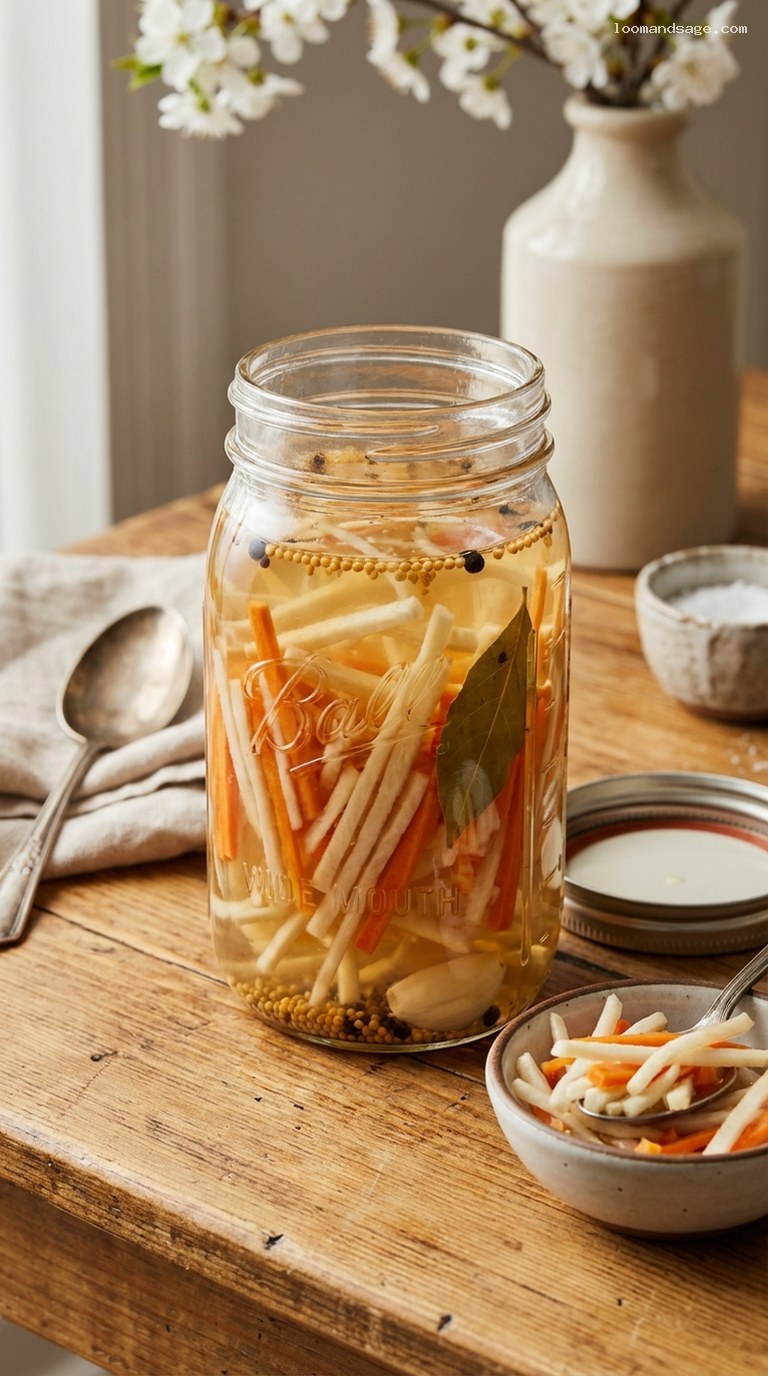
Quick Recipe Version (TL;DR)
Quick Ingredients
- 8 oz (225 g) fresh horseradish root, peeled and thinly sliced or matchsticked
- 1 small carrot, cut into matchsticks (optional, for color)
- 2 garlic cloves, halved
- 1 small bay leaf
- 1 cup (240 ml) distilled white vinegar, 5% acidity
- 1 cup (240 ml) water
- 3 tbsp granulated sugar
- 1 tbsp kosher salt (Diamond Crystal; use 2 tsp if using Morton)
- 2 tsp yellow mustard seeds
- 1/2 tsp whole black peppercorns
- 1/2 tsp coriander seeds (optional)
- 1/4 tsp ground turmeric (optional, for golden color)
Do This
- 1. Wash a 1-pint (475 ml) glass jar and lid with hot, soapy water; rinse and air-dry.
- 2. Peel horseradish root and cut into very thin slices or matchsticks; slice carrot if using.
- 3. Pack horseradish, carrot, garlic, bay leaf, mustard seeds, peppercorns, and coriander into the jar.
- 4. In a small saucepan, combine vinegar, water, sugar, salt, and turmeric (if using); heat just to a simmer, stirring to dissolve.
- 5. Let brine cool 10–15 minutes until hot but not boiling, then carefully pour over the horseradish to fully cover.
- 6. Tap jar gently to release air bubbles; top off with extra vinegar or water if needed; seal.
- 7. Cool to room temperature, then refrigerate at least 2 hours (24 hours for best flavor) before serving.
Why You’ll Love This Recipe
- It delivers bold, nose-tingling horseradish heat balanced with a bright, tangy brine and fragrant mustard seed.
- Ready to eat the same day, with flavor that only improves over a day or two in the fridge.
- Requires only basic pantry ingredients and one small saucepan, with no canning equipment needed.
- Perfect as a punchy condiment for roast beef, smoked fish, sandwiches, sausages, and cheese boards.
Grocery List
- Produce: Fresh horseradish root (about 8 oz / 225 g), 1 small carrot (optional), 2 garlic cloves, 1 small bay leaf.
- Dairy: None.
- Pantry: Distilled white vinegar (5% acidity), granulated sugar, kosher salt, yellow mustard seeds, whole black peppercorns, coriander seeds (optional), ground turmeric (optional).
Full Ingredients
Horseradish and Aromatics
- 8 oz (225 g) fresh horseradish root, peeled and very thinly sliced into coins or matchsticks
- 1 small carrot, peeled and cut into matchsticks (optional, adds color and mild sweetness)
- 2 garlic cloves, peeled and halved lengthwise
- 1 small bay leaf
- 2 tsp yellow mustard seeds
- 1/2 tsp whole black peppercorns
- 1/2 tsp coriander seeds (optional)
Pickling Brine
- 1 cup (240 ml) distilled white vinegar, 5% acidity
- 1 cup (240 ml) water
- 3 tbsp granulated sugar
- 1 tbsp kosher salt, preferably Diamond Crystal*
- If using Morton kosher salt or fine sea salt, use 2 tsp instead (it is denser and saltier).
- 1/4 tsp ground turmeric (optional, for a warm golden hue)
Step-by-Step Instructions
Step 1: Clean and Prepare Your Jar
Wash a 1-pint (475 ml) glass jar and its lid in hot, soapy water. Rinse very well so there is no soap residue, then let the jar air-dry completely or dry it with a clean kitchen towel. While this recipe is for refrigerator pickles (not shelf-stable canning), starting with a very clean jar helps your pickles stay fresh and crisp longer.
Set the empty jar on a folded kitchen towel on your counter. The towel will keep it from sliding around and help protect it when you add the warm brine later.
Step 2: Peel and Slice the Horseradish
Using a vegetable peeler, remove all the brown outer skin from the horseradish root. Trim away any fibrous or dry ends. Horseradish is pungent: once you cut into it, it can release strong fumes that may make your eyes water. If you are sensitive, crack a window and avoid leaning directly over the cutting board.
Slice the peeled horseradish into very thin coins or matchsticks, about 1–2 mm thick. Thinner pieces absorb the brine more quickly and give you a pleasantly crisp, not woody, texture. If using the carrot, peel and cut it into similar matchsticks so everything fits nicely together in the jar.
Step 3: Pack the Jar with Horseradish, Aromatics, and Seeds
Place the garlic halves and bay leaf in the bottom of the jar. Add the mustard seeds, black peppercorns, and coriander seeds (if using). These spices will float and mingle throughout the brine, but starting them in the bottom makes it easier to distribute them evenly.
Pack the sliced or matchsticked horseradish and carrot (if using) into the jar, layering and tucking them in snugly without crushing. Leave about 1/2 inch (1.25 cm) of space at the top of the jar to allow the brine to fully cover the vegetables and for a bit of expansion when the liquid heats and cools.
Step 4: Make the Quick Pickling Brine
In a small saucepan, combine the vinegar, water, sugar, kosher salt, and turmeric (if using). Place over medium heat and stir occasionally until the sugar and salt are completely dissolved and the mixture just comes to a gentle simmer. This usually takes about 3–5 minutes.
You do not need to boil the brine hard; you are simply dissolving the seasonings and slightly warming the liquid. Overheating is unnecessary and can make your kitchen extra vinegary. Once the brine reaches a gentle simmer and looks clear (no visible sugar or salt granules), remove it from the heat and let it cool for 10–15 minutes. You want it hot but no longer bubbling; this helps preserve the horseradish’s sharp bite.
Step 5: Pour the Brine and Remove Air Bubbles
Carefully pour the warm brine over the packed horseradish and aromatics in the jar. Pour slowly, pausing as needed so the liquid can work its way down through the slices. The goal is to cover all the solids completely, while still maintaining about 1/4 inch (0.5 cm) of headspace at the top.
Use a clean butter knife or chopstick to gently slide down the sides of the jar, releasing trapped air bubbles. Tap the jar on the towel a few times to help bubbles rise. If after this the horseradish is not fully submerged, top off with a little extra vinegar or water, keeping the overall ratio still very vinegary for safety and flavor. Wipe the rim of the jar with a clean, damp cloth and screw on the lid until fingertip-tight (snug, but not wrenched on).
Step 6: Cool, Chill, and Let the Flavors Develop
Let the jar sit at room temperature until the glass feels cool to the touch, about 30–45 minutes. Do not put a hot jar directly into a very cold refrigerator, as this can stress the glass and reduce its lifespan.
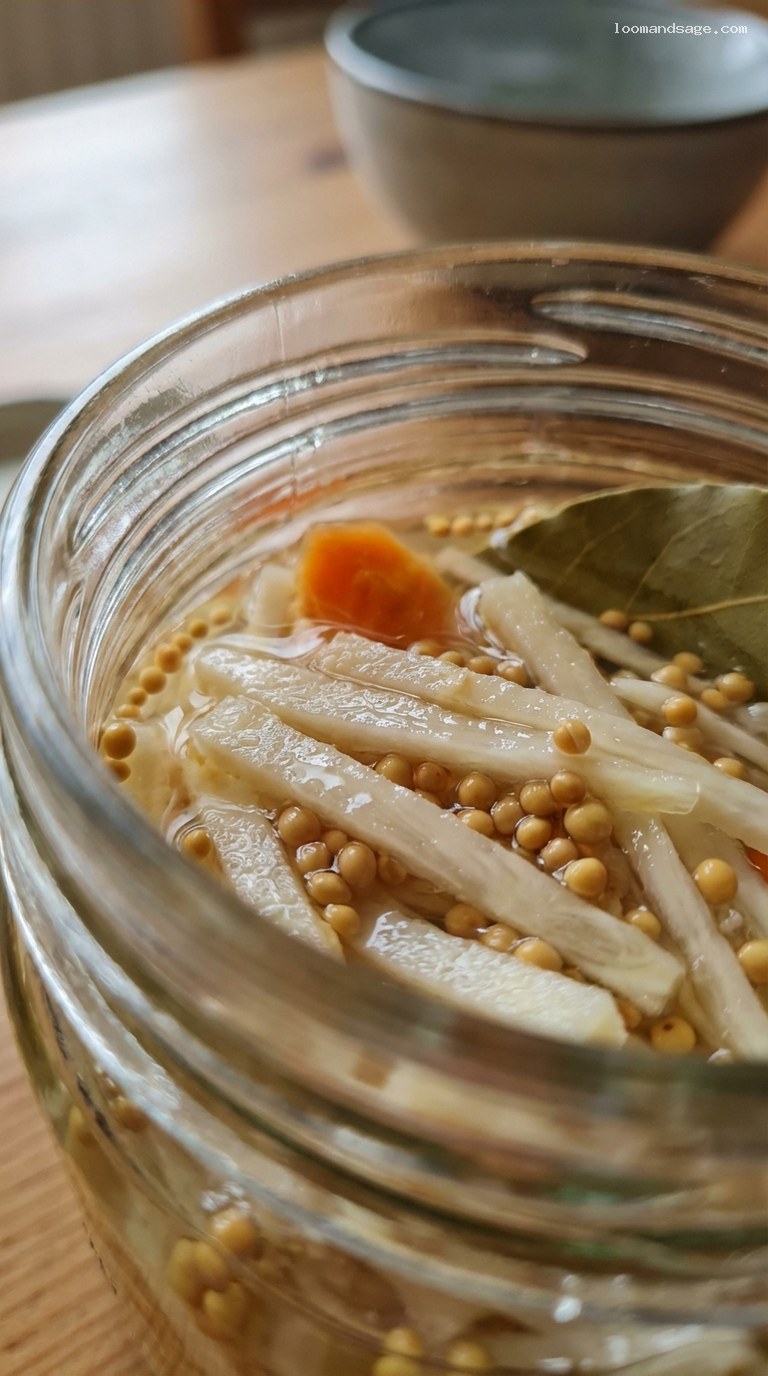
Once cool, transfer the jar to the refrigerator. The pickled horseradish will start to taste good after about 2 hours, but it is at its best after chilling for at least 24 hours. During this time, the mustard seeds swell and soften, the garlic and bay leaf infuse the brine, and the horseradish pieces absorb the tangy, lightly sweet, and spicy flavors while staying crisp.
Step 7: Serve, Enjoy, and Adjust to Your Taste
Before serving, give the jar a gentle shake to redistribute the mustard seeds and spices. Use a clean fork or spoon to lift out only what you need, leaving the rest submerged in the brine. Taste a piece: if you want more sweetness, stir in up to 1 additional tablespoon of sugar directly into the brine and let it dissolve; for a sharper bite, add a splash of straight vinegar and return the jar to the fridge for a few hours.
Serve your quick pickled horseradish alongside roasted or grilled meats, smoked fish, sausages, potato dishes, or on sandwiches and burgers. It also adds incredible character to deviled eggs, Bloody Marys, and cheese boards.
Pro Tips
- Ventilation is your friend: Freshly cut horseradish can be intense. Open a window or turn on a fan, and avoid hovering directly over the cutting board.
- Slice it thin: Very thin coins or matchsticks pickle more quickly and give you a pleasant crunch without stringy bits.
- Do not overheat the horseradish: Adding slightly cooled, not boiling-hot brine helps keep its sharp, sinus-clearing character.
- Keep everything submerged: For best quality and safety, make sure all solids stay under the brine. If needed, tuck in a small piece of carrot or onion as a “weight” on top.
- Use the brine too: The leftover liquid makes a fantastic splash in salad dressings, potato salad, or Bloody Mary mix.
Variations
- Lemon and Dill Horseradish: Add 2–3 strips of lemon zest and 2 tbsp fresh dill sprigs to the jar. Reduce sugar to 2 tbsp for a brighter, more herbal profile.
- Extra-Hot Version: Reduce the water to 3/4 cup (180 ml) and increase the vinegar to 1 1/4 cups (300 ml). Skip the carrot and turmeric for a lean, ultra-punchy flavor.
- Beet-Tinted Horseradish: Add 4–5 very thin slices of raw beet to the jar. Over a day or two, the brine and horseradish will take on a beautiful pink-red hue and a subtle earthy sweetness.
Storage & Make-Ahead
Store the pickled horseradish tightly covered in the refrigerator at all times. As this is a refrigerator pickle (not a water-bath canned product), it is not intended for room-temperature storage. Properly stored and always handled with clean utensils, it will keep its best quality for 3–4 weeks, though the texture and pungency may gradually soften over time.
This recipe is ideal for making ahead: the flavor is actually better after 24–48 hours. If you like to plan, make a batch a few days before a holiday meal, dinner party, or smoked-meat day so it has plenty of time to develop its full character.
Nutrition (per serving)
Approximate values per 1 tablespoon serving (including a bit of brine): about 10 calories; 0 g fat; 2 g carbohydrates; 0.5 g sugars; 0 g fiber; 0.3 g protein; 180 mg sodium. These numbers are estimates and will vary based on the exact brand of ingredients, how tightly you pack the jar, and how much brine you consume.