
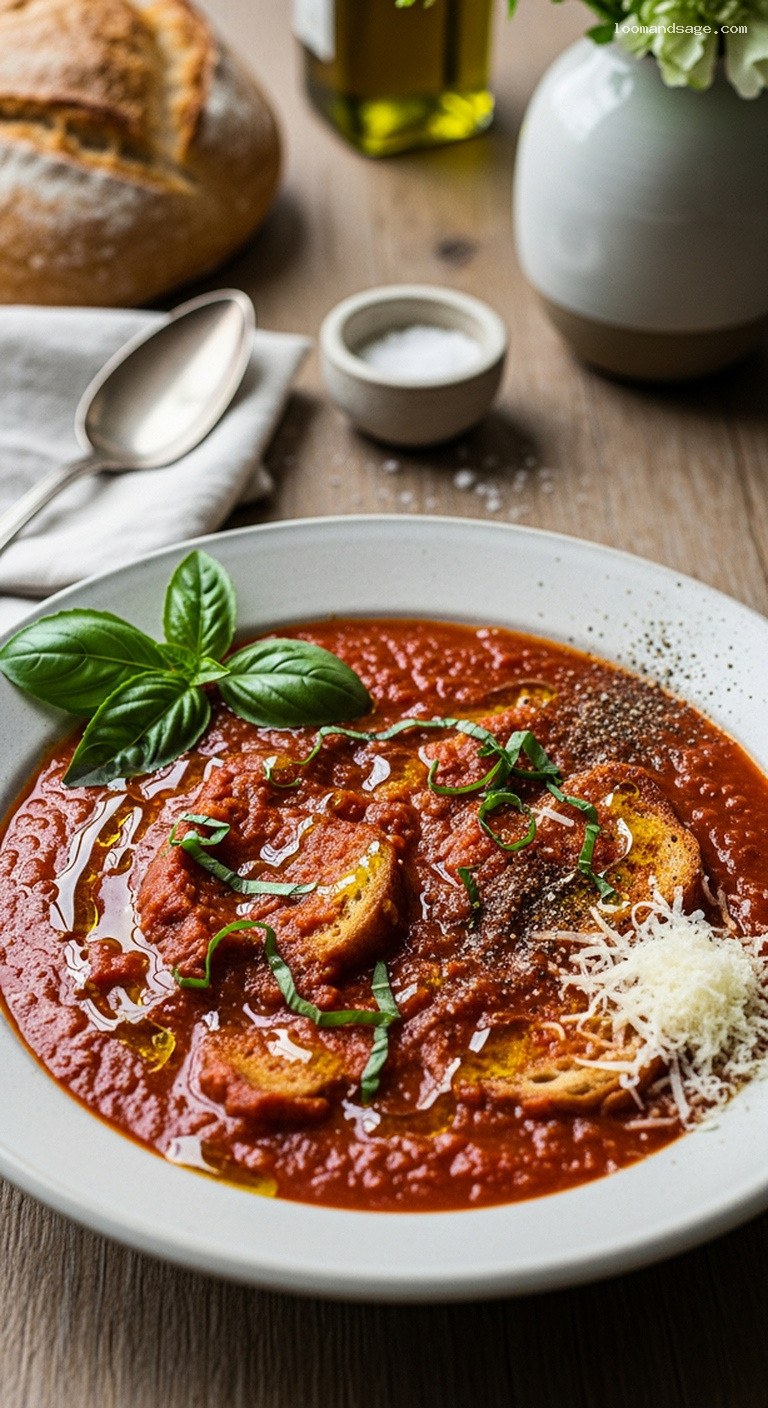
Quick Recipe Version (TL;DR)
Quick Ingredients
- 10 oz (about 300 g) day-old rustic country bread, cut in 1-inch chunks, crusts mostly removed
- 6 tbsp extra-virgin olive oil, divided, plus more for serving
- 1 medium yellow onion, finely chopped
- 1 small carrot, finely diced
- 1 small celery stalk, finely diced
- 4 garlic cloves, minced
- 1/4 tsp red pepper flakes (optional)
- 2 tbsp tomato paste
- 1 can (28 oz / 800 g) whole peeled tomatoes with juices, crushed by hand
- 3 cups (720 ml) vegetable or light chicken broth, or water
- 1 1/2 tsp kosher salt, plus more to taste
- Freshly ground black pepper
- 1/2 cup loosely packed fresh basil leaves, torn, plus extra small leaves for garnish
- Optional: Grated Parmigiano Reggiano or Pecorino Romano for serving
Do This
- 1. Prepare bread: Trim most crusts, cut bread into 1-inch chunks, and set aside to dry slightly while you start the stew.
- 2. Make soffritto: In a heavy pot, warm 4 tbsp olive oil over medium-low. Cook onion, carrot, and celery with 1/2 tsp salt until very soft and sweet, 10–12 minutes. Add garlic and red pepper flakes; cook 1–2 minutes.
- 3. Build tomato base: Stir in tomato paste and cook 2 minutes. Add crushed tomatoes and their juices, remaining 1 tsp salt, and a few grinds of pepper.
- 4. Slow cook: Add broth (or water), bring to a gentle simmer, then reduce heat to low. Cook uncovered 30–35 minutes, stirring occasionally, until thickened and flavorful.
- 5. Add bread: Stir in bread chunks and simmer on low, stirring and gently breaking them up, 15–20 minutes, until the bread is soft and the stew is thick and spoonable.
- 6. Finish: Stir in remaining 2 tbsp olive oil and torn basil. Taste and adjust seasoning. Serve warm with more olive oil, extra basil, black pepper, and cheese if using.
Why You’ll Love This Recipe
- Classic Tuscan comfort food: silky, rich tomato stew wrapped around soft, rustic chunks of bread.
- Budget-friendly yet luxurious, using simple pantry staples and day-old bread.
- Slow cooking builds deep, sweet tomato flavor with very little hands-on time.
- Perfect as a cozy main course with a salad, or as a first course for a relaxed dinner.
Grocery List
- Produce: Yellow onion, carrot, celery, garlic, fresh basil, (optional) fresh tomatoes if you want to supplement the canned ones.
- Dairy: Optional Parmigiano Reggiano or Pecorino Romano for serving.
- Pantry: Extra-virgin olive oil, day-old rustic country bread, canned whole peeled tomatoes, tomato paste, vegetable or chicken broth (or bouillon), kosher salt, black pepper, red pepper flakes (optional).
Full Ingredients
For the Tomato–Bread Stew
- 10 oz (about 300 g) day-old rustic country bread or Italian loaf, preferably unsalted Tuscan-style if you can find it
- 6 tbsp extra-virgin olive oil, divided, plus more for serving
- 1 medium yellow onion, finely chopped (about 1 cup)
- 1 small carrot, finely diced (about 1/3 cup)
- 1 small celery stalk, finely diced (about 1/3 cup)
- 4 garlic cloves, minced
- 1/4 tsp crushed red pepper flakes (optional, for gentle heat)
- 2 tbsp tomato paste
- 1 can (28 oz / 800 g) whole peeled tomatoes in juice, preferably San Marzano; tomatoes crushed by hand
- 3 cups (720 ml) vegetable or light chicken broth, or water (traditional and delicious with water)
- 1 1/2 tsp kosher salt, plus more to taste
- Freshly ground black pepper, to taste
- 1/2 cup loosely packed fresh basil leaves, torn or roughly chopped
For Serving
- Extra-virgin olive oil, for generous drizzling
- Small fresh basil leaves or extra torn basil
- Freshly ground black pepper
- Optional: 1/4–1/3 cup finely grated Parmigiano Reggiano or Pecorino Romano
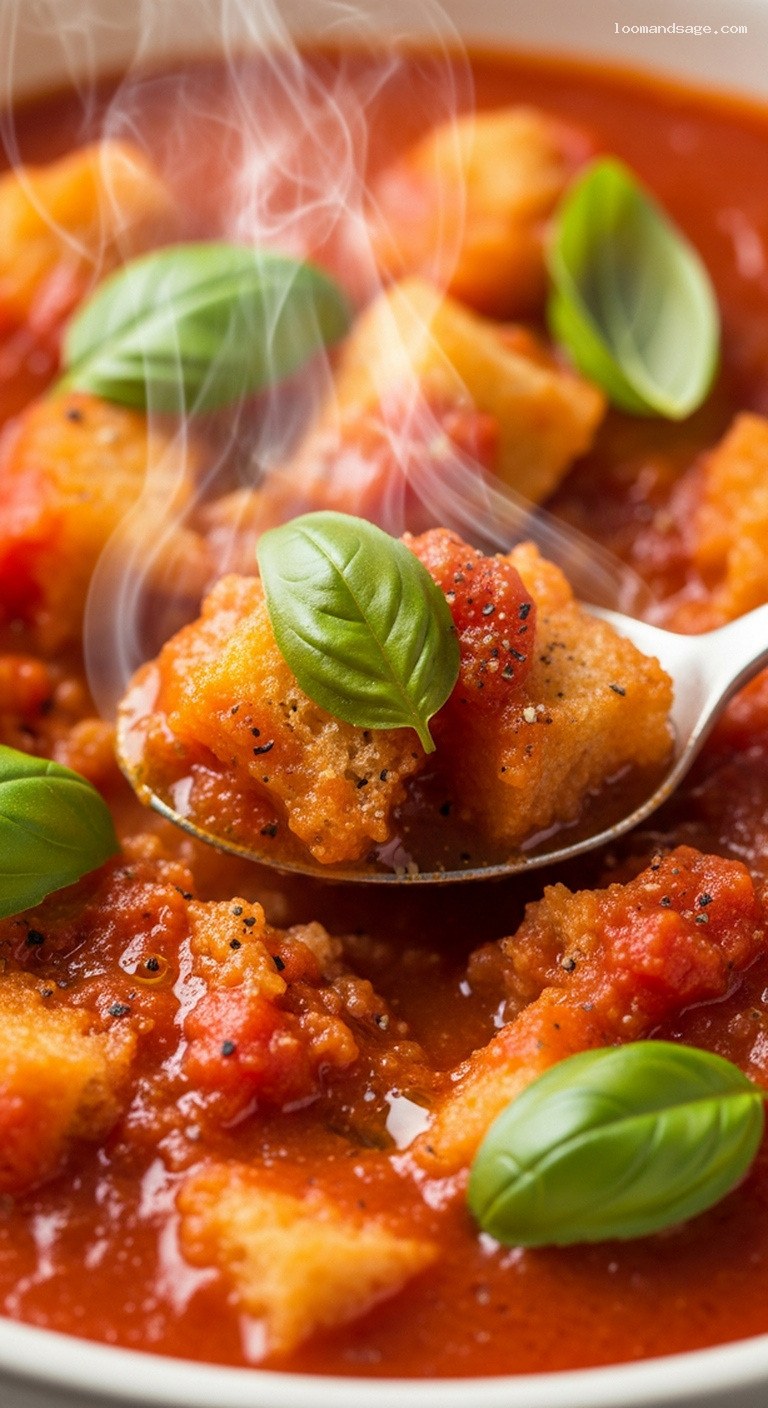
Step-by-Step Instructions
Step 1: Prep the bread
Use bread that is at least a day old so it can soak up the tomato broth without turning gluey. Trim off most of the very hard crusts, especially on the bottom and ends. Some crust is good for texture, but too much can stay chewy in the stew.
Cut the bread into rough 1-inch chunks. If the bread is still a bit soft, spread the pieces on a baking sheet and let them sit out while you start cooking, or dry them in a low oven at 250°F (120°C) for 10–15 minutes. Set aside.
Step 2: Make a gentle soffritto
Place a heavy-bottomed pot or Dutch oven (4–5 quart capacity) over medium-low heat. Add 4 tablespoons of the olive oil.
When the oil is warm (not smoking), add the chopped onion, carrot, and celery along with about 1/2 teaspoon of the kosher salt. Cook slowly, stirring occasionally, until the vegetables are very soft, sweet, and lightly golden at the edges, 10–12 minutes. This slow cooking builds a lot of flavor, so do not rush it.
Add the minced garlic and red pepper flakes (if using). Cook for 1–2 minutes more, stirring constantly, until fragrant but not browned.
Step 3: Build the tomato base
Stir in the tomato paste and cook it with the vegetables for about 2 minutes, stirring, until it darkens slightly in color and smells sweet and rich. This caramelization deepens the flavor of the stew.
Pour in the crushed tomatoes and all their juices, then add the remaining 1 teaspoon kosher salt and a few generous grinds of black pepper. Stir well, scraping up any bits from the bottom of the pot.
Step 4: Add liquid and slow-cook the tomatoes
Add the broth or water and stir to combine. You should have a loose, soup-like mixture at this stage. Bring it just up to a simmer over medium heat.
Once simmering, reduce the heat to low so the stew is barely bubbling. Cook uncovered for 30–35 minutes, stirring every 5–10 minutes. The tomatoes will soften and break down, and the liquid will reduce slightly into a rich, fragrant base.
Taste the tomato broth: it should taste sweet and full. If it tastes very sharp or acidic, you can add a tiny pinch (about 1/4 teaspoon) of sugar, but often this is not necessary if you have good tomatoes and have cooked them long enough.
Step 5: Add the bread and let it melt into the stew
Add the bread chunks to the pot, stirring them into the tomato broth so all the pieces are submerged. The mixture will look quite thick and chunky at first.
Keep the heat on low and cook, uncovered, for 15–20 minutes. Stir every few minutes, gently pressing and breaking up the bread with a wooden spoon as it softens. You are aiming for a thick, spoonable stew, not a smooth puree; small, soft bread pieces should remain visible, almost like dumplings in the tomato base.
If the mixture becomes too thick or starts to catch on the bottom, add a splash of hot water or broth, a few tablespoons at a time, and lower the heat slightly.
Step 6: Finish with olive oil and basil
Once the bread is very soft and the stew is thick and velvety, turn off the heat. Stir in the remaining 2 tablespoons of olive oil and the torn basil leaves.
Taste and adjust seasoning with more salt and black pepper as needed. The flavors should be well balanced: savory, gently sweet from long-cooked tomatoes and vegetables, with freshness from the basil and richness from the olive oil.
If you prefer a looser, more soup-like texture, stir in a bit more hot water or broth until it looks right to you.
Step 7: Serve Tuscan-style
Ladle the hot pappa al pomodoro into warm shallow bowls. Drizzle each serving generously with extra-virgin olive oil so it shines on the surface. Top with a few small basil leaves and an extra grind of black pepper.
If you like, finish with a light shower of finely grated Parmigiano Reggiano or Pecorino Romano, though the dish is traditional and wonderful even without cheese.
Serve immediately while warm, alongside a simple green salad or grilled vegetables. This stew should be thick enough that a spoon stands up in it, but still soft and luscious.
Pro Tips
- Use good bread: A rustic, open-crumb country loaf or Italian bread works best. Avoid soft sandwich bread, which can turn pasty instead of silky.
- Do not rush the soffritto: Taking the time to gently soften the onion, carrot, and celery is key to deep flavor. Think low and slow, not hot and fast.
- Crush tomatoes by hand: Hand-crushing canned whole tomatoes gives a pleasantly rustic texture and helps avoid any metallic taste from over-processing.
- Control thickness with liquid: If the stew feels too thick, add more hot water or broth a little at a time. If too thin, simmer a bit longer uncovered to reduce.
- Finish with great olive oil: Because olive oil is a prominent flavor here, use the best extra-virgin oil you have for the final drizzle.
Variations
- End-of-summer fresh tomato version: Replace the canned tomatoes with about 2 1/2 pounds (1.1 kg) ripe fresh tomatoes, peeled and chopped. You may need to cook them slightly longer in Step 4 to concentrate the flavor.
- Garlicky version: Add 1–2 extra cloves of garlic and stir in a small raw, finely grated clove right at the end for a more pronounced garlic kick.
- More protein: Serve the stew topped with a poached egg, or alongside grilled Italian sausage or roasted chickpeas to make it a heartier main course.
Storage & Make-Ahead
Pappa al pomodoro keeps well and often tastes even better the next day as the flavors continue to meld.
Allow leftovers to cool completely, then transfer to an airtight container and refrigerate for up to 3 days. The stew will thicken as it sits; when reheating on the stovetop over low heat, stir in a splash or two of water or broth to loosen it back to a creamy, spoonable consistency. Stir often to avoid sticking.
You can also freeze it for up to 2 months. Thaw overnight in the refrigerator before gently reheating. Add fresh basil and a drizzle of good olive oil after reheating to refresh the flavor.
If you are planning ahead, you can make the tomato base (through the end of Step 4) up to 2 days in advance and refrigerate it. When ready to serve, bring the base to a gentle simmer, add the bread, and continue with Steps 5–7.
Nutrition (per serving)
Approximate values for 1 of 4 servings (without cheese, using vegetable broth):
About 360–400 calories; 16–18 g fat; 3 g saturated fat; 48–52 g carbohydrates; 4–5 g fiber; 8–10 g protein; 850–900 mg sodium (will vary with broth and added salt). Adding cheese will increase protein, fat, and sodium slightly.