
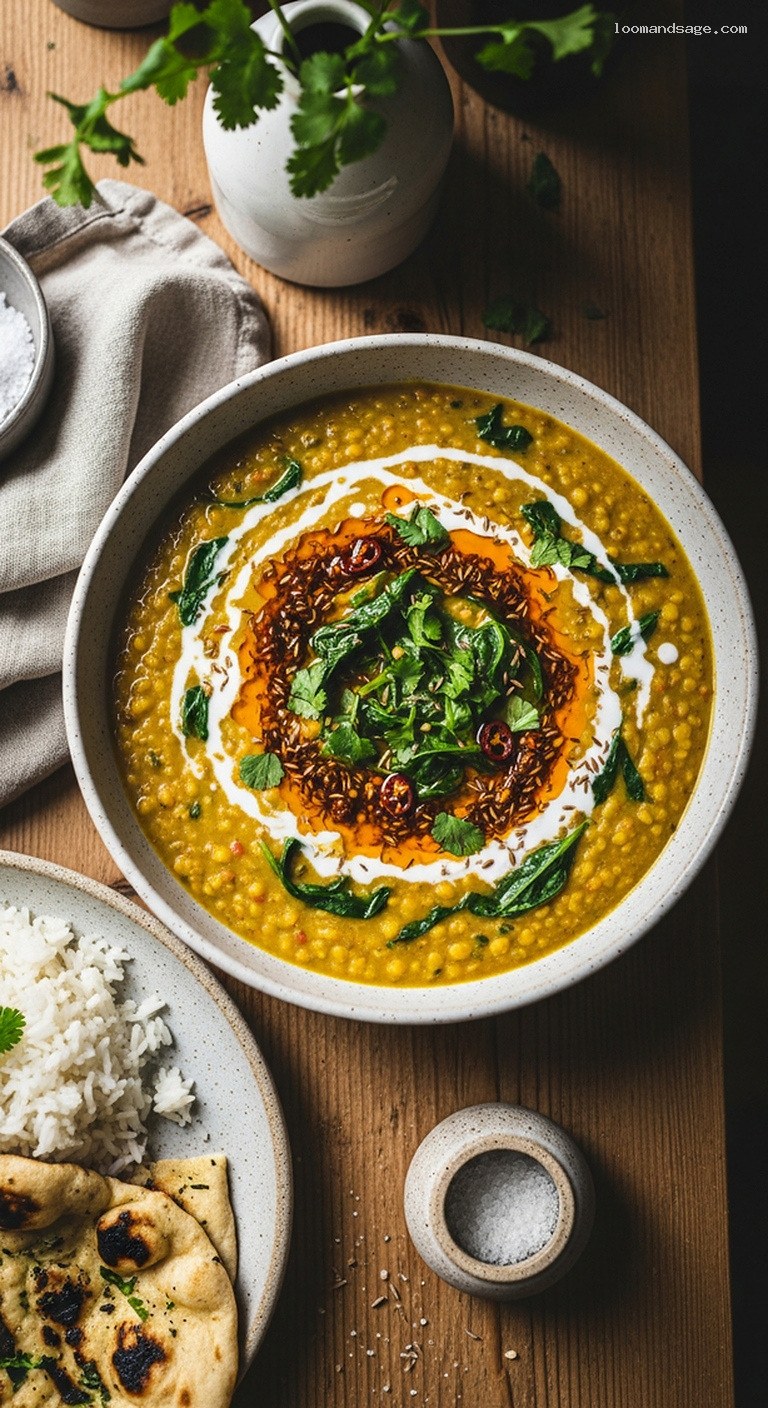
Quick Recipe Version (TL;DR)
Quick Ingredients
- 1 1/2 cups red lentils, rinsed
- 4 cups water
- 3 tbsp neutral oil or ghee
- 1 medium onion, finely diced
- 4 cloves garlic, minced
- 1 tbsp minced fresh ginger
- 2 tsp ground cumin, 2 tsp ground coriander
- 1 tsp ground turmeric, 1/4–1/2 tsp cayenne or chili powder
- 1 can (14.5 oz) diced tomatoes
- 1 can (13.5 oz) full‑fat coconut milk
- 5 oz baby spinach
- 1 1/2–2 tsp fine sea salt, to taste
- 1 tbsp fresh lemon or lime juice
- Fresh cilantro for garnish
- Cooked basmati rice or warm naan, for serving
Do This
- 1. Rinse lentils until water runs mostly clear; drain well.
- 2. In a large pot, heat oil over medium. Cook onion 6–8 minutes until soft and golden.
- 3. Stir in garlic, ginger, cumin, coriander, turmeric, and cayenne; cook 1 minute until fragrant.
- 4. Add lentils, water, tomatoes, and 1 1/2 tsp salt. Bring to a boil, reduce to low, and simmer 20–25 minutes, stirring occasionally, until lentils are very soft.
- 5. Stir in coconut milk and simmer 5 minutes to thicken and turn creamy.
- 6. Add spinach and cook 2–3 minutes until just wilted. Stir in lemon juice and adjust salt and heat.
- 7. Garnish with cilantro and serve hot over basmati rice or with warm naan.
Why You’ll Love This Recipe
- Creamy, comforting dal with rich coconut milk, bright tomatoes, and tender spinach in every bite.
- Uses pantry-friendly ingredients and one pot, perfect for cozy weeknights.
- Easily made vegan by using oil instead of ghee, and naturally gluten-free when served with rice.
- Flexible heat level: keep it mild for families or turn up the spice for chili lovers.
Grocery List
- Produce: 1 medium yellow onion, 4 cloves garlic, 1 small piece fresh ginger, 1 lemon or lime, 5 oz baby spinach, small bunch fresh cilantro, optional fresh chilies; optional fresh tomatoes if not using canned.
- Dairy: Ghee (or use more oil for a dairy-free / vegan version).
- Pantry: Red lentils, 1 can diced tomatoes, 1 can full-fat coconut milk, neutral oil (such as sunflower, canola, or avocado), basmati rice or naan, ground cumin, ground coriander, ground turmeric, cayenne or chili powder, black mustard seeds and cumin seeds (optional for tempering), dried red chilies or red pepper flakes, salt, black pepper.
Full Ingredients
Coconut-Lentil Spinach Dal
- 1 1/2 cups red lentils (masoor dal), picked over and rinsed
- 4 cups water
- 3 tablespoons neutral oil or ghee
- 1 medium yellow onion, finely diced (about 1 1/2 cups)
- 4 cloves garlic, minced
- 1 tablespoon fresh ginger, finely minced or grated
- 2 teaspoons ground cumin
- 2 teaspoons ground coriander
- 1 teaspoon ground turmeric
- 1/4 to 1/2 teaspoon cayenne pepper or mild chili powder (adjust to taste)
- 1 can (14.5 ounces / about 400 g) diced tomatoes, with juices
- 1 can (13.5 ounces / about 400 ml) full‑fat coconut milk, well shaken
- 1 1/2 to 2 teaspoons fine sea salt, plus more to taste
- Freshly ground black pepper, to taste
- 5 ounces baby spinach (about 5 lightly packed cups), roughly chopped if leaves are large
- 1 tablespoon fresh lemon or lime juice (plus extra wedges for serving)
- Small handful fresh cilantro leaves, roughly chopped, for garnish
Optional Tempering (Tadka) for Extra Flavor
- 1 1/2 tablespoons ghee or neutral oil
- 1 teaspoon black mustard seeds
- 1 teaspoon whole cumin seeds
- 1 dried red chili, broken in half, or 1/4 teaspoon red pepper flakes
- 4 to 6 fresh curry leaves (optional, if available)
- Pinch of asafoetida (hing), optional
To Serve
- 3 to 4 cups cooked basmati rice or 4 to 6 warm naan
- Lemon or lime wedges
- Extra cilantro or sliced fresh chilies, for garnish (optional)
Step-by-Step Instructions
Step 1: Rinse the lentils and prep your ingredients
Place the red lentils in a fine-mesh strainer and rinse under cold running water, using your fingers to gently rub them. Continue rinsing until the water runs mostly clear, about 30 to 60 seconds. Let the lentils drain while you prepare the aromatics.
Finely dice the onion, mince the garlic and ginger, roughly chop the spinach if the leaves are large, and chop the cilantro. Open the cans of diced tomatoes and coconut milk so they are ready to pour in when needed. Having everything prepped makes the cooking process smooth and stress-free.
Step 2: Build a flavorful aromatic base
In a large, heavy-bottomed pot or Dutch oven, heat the 3 tablespoons of oil or ghee over medium heat. When hot, add the diced onion and a pinch of salt. Cook, stirring occasionally, until the onion is soft, translucent, and starting to turn golden around the edges, about 6 to 8 minutes. Reduce the heat slightly if the onions start to brown too quickly.
Add the minced garlic and ginger. Cook, stirring constantly, for 1 minute until very fragrant but not browned. Stir in the ground cumin, ground coriander, turmeric, and cayenne or chili powder. Toast the spices gently for 30 to 60 seconds, stirring continuously, to bloom their flavors. The mixture should be very aromatic and slightly thickened.
Step 3: Add lentils, tomatoes, and simmer until tender
Add the rinsed and drained lentils to the pot and stir to coat them in the spiced onion mixture. Pour in the 4 cups of water and the entire can of diced tomatoes with their juices. Add 1 1/2 teaspoons of fine sea salt and a few grinds of black pepper. Stir well, scraping up any browned bits from the bottom of the pot.
Increase the heat to medium-high and bring the mixture to a gentle boil. Once boiling, reduce the heat to low or medium-low to maintain a steady simmer. Partially cover the pot with a lid, leaving a small gap for steam to escape. Simmer for 20 to 25 minutes, stirring every 5 minutes or so, until the lentils are very soft and starting to break down. If the dal looks too thick before the lentils are fully tender, stir in an extra 1/2 cup of water at a time as needed.
Step 4: Stir in coconut milk and cook until creamy
Once the lentils are soft and almost mushy, pour in the can of coconut milk. Stir thoroughly to incorporate it into the dal. Increase the heat slightly to bring the mixture back to a gentle simmer, then reduce the heat to low and cook for another 5 to 8 minutes, uncovered, stirring occasionally.
During this time, the dal will thicken and turn luxuriously creamy, with the coconut milk enriching the flavor and texture. If you prefer a smoother dal, you can use the back of a spoon to mash some of the lentils against the side of the pot, or briefly pulse a portion with an immersion blender (do not overblend; you want some texture).
Step 5: Add spinach and brighten with citrus
Add the chopped spinach to the pot in a few handfuls, stirring after each addition to help it wilt down into the hot dal. Cook over low heat for 2 to 3 minutes, just until the spinach is fully wilted and tender but still a bright, vibrant green.
Turn off the heat. Stir in 1 tablespoon of fresh lemon or lime juice to brighten the flavors. Taste and adjust the seasoning: add more salt if needed (dal often benefits from a bit more than you think), extra lemon or lime juice for tang, or more chili powder or cayenne if you prefer more heat. The dal should be rich, gently spiced, and pleasantly creamy, with a pourable but spoon-coating consistency. If it seems too thick, thin with a splash or two of hot water; if too thin, simmer a few more minutes.
Step 6: Make the optional tempering (tadka)
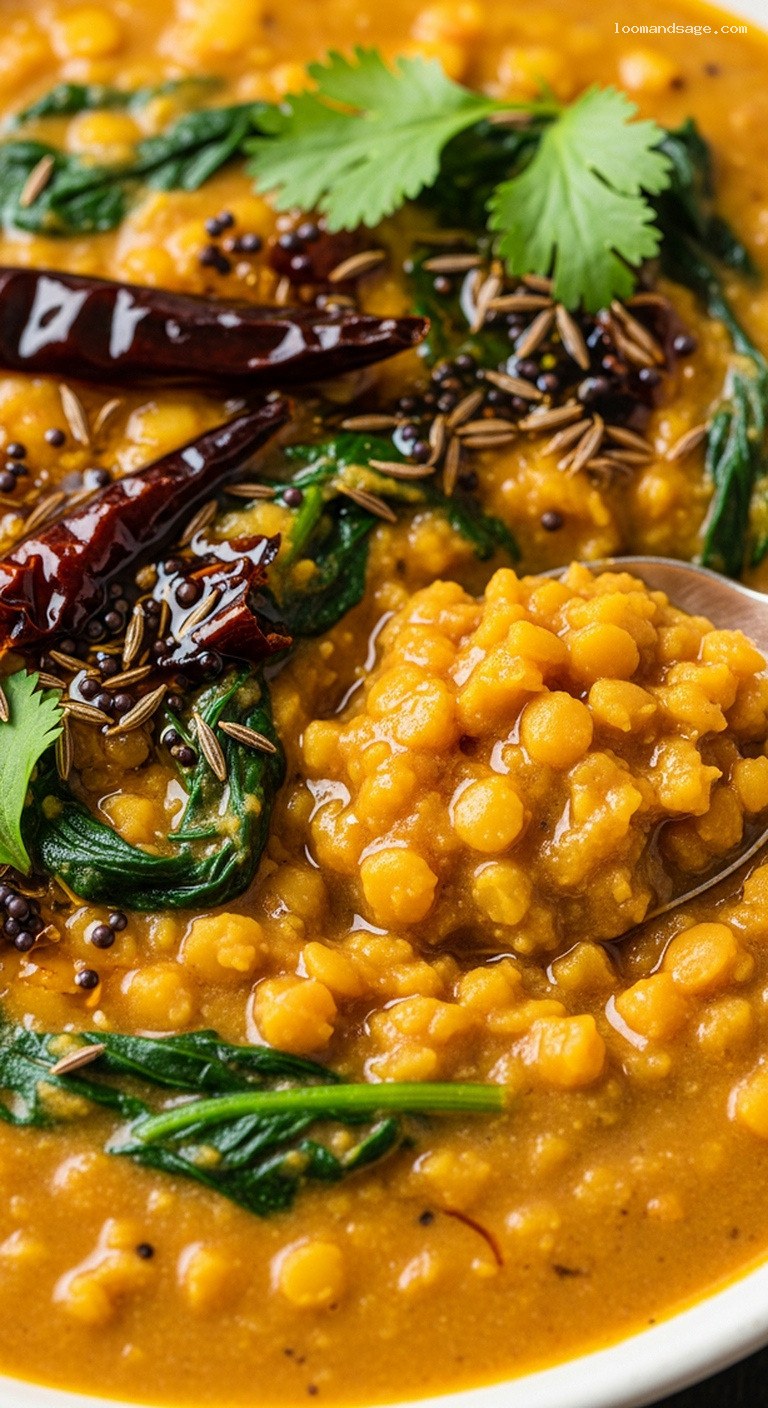
This step is optional but adds a wonderful layer of aroma and flavor. In a small skillet or tadka pan, heat 1 1/2 tablespoons of ghee or oil over medium heat. Once hot and shimmering, add the black mustard seeds. When they begin to pop and crackle (after about 20 to 30 seconds), add the cumin seeds and dried red chili or red pepper flakes. Stir constantly for 20 to 30 seconds until the spices darken slightly and smell toasty, but do not let them burn.
If using, add the curry leaves and a pinch of asafoetida; stand back slightly as the curry leaves may sputter. Swirl the pan for another 10 to 15 seconds, then immediately pour the hot spiced oil over the pot of dal. You should hear a gentle sizzle as it hits the surface. Gently swirl or stir the dal once or twice to distribute some of the tempering while still leaving some of it visible as a garnish on top.
Step 7: Garnish and serve with rice or naan
Just before serving, sprinkle the dal generously with chopped fresh cilantro. Ladle the hot coconut-lentil spinach dal into bowls. Serve with warm basmati rice or fluffy naan alongside, plus extra lemon or lime wedges for squeezing over the top. If you enjoy a bit more heat, garnish each bowl with extra red pepper flakes or sliced fresh chilies.
For the best experience, serve the dal warm and slightly thick, so it pools around the rice or clings to pieces of naan when scooped. Enjoy it as a complete, protein-rich meal in a bowl, or pair with a simple cucumber salad or roasted vegetables for a fuller spread.
Pro Tips
- Rinse the lentils well: Rinsing removes excess starch and dust, helping the dal cook more evenly and preventing it from becoming gummy.
- Adjust consistency at the end: Dal thickens as it cools. If you make it in advance, reheat gently and add a splash of water or coconut milk to loosen it before serving.
- Control the heat level: Start with the lower end of the cayenne or chili powder and add more at the end if needed. It is easier to add heat than to remove it.
- Use full-fat coconut milk: Light coconut milk will work, but full-fat gives the dal its signature velvety richness.
- Layer flavor with the tempering: If you have mustard seeds, cumin seeds, and curry leaves, do not skip the tadka. It is fast, easy, and makes the dish taste restaurant-level.
Variations
- Vegetable-packed dal: Add 1 to 2 cups of diced vegetables such as carrots, sweet potato, or cauliflower along with the lentils and water. Simmer until both the vegetables and lentils are tender before adding coconut milk.
- Extra-protein version: Stir in 1 cup of cooked chickpeas or cubed, pan-seared tofu along with the spinach for an even heartier, plant-protein-rich meal.
- Tomato-free, extra-coconut dal: Omit the diced tomatoes and replace 1 cup of the water with an extra 1/2 can of coconut milk or 1 cup of unsweetened coconut cream for a richer, milder flavor.
Storage & Make-Ahead
Allow the dal to cool to room temperature, then transfer it to airtight containers. Refrigerate for up to 4 days. The dal will thicken in the fridge; when reheating on the stovetop over low to medium-low heat, stir in a splash or two of water until it reaches your desired consistency. Stir frequently to prevent sticking. You can also reheat gently in the microwave, pausing to stir every 1 to 2 minutes.
For longer storage, freeze the dal (without the tempering, if possible) in freezer-safe containers for up to 3 months. Thaw overnight in the refrigerator, then reheat gently and add a fresh tempering on top just before serving for the best aroma. Cooked basmati rice can be refrigerated for up to 4 days or frozen for up to 1 month; sprinkle with a few drops of water and reheat covered until steaming. Naan is best fresh but can be briefly reheated on a hot skillet or directly over a gas flame for a few seconds per side.
Nutrition (per serving)
Approximate values for 1 of 4 servings of dal (without rice, naan, or optional tempering): about 500 calories; 20 g protein; 68 g carbohydrates; 30 g fat; 15 g dietary fiber; 8 g sugar; 750–900 mg sodium (depending on salt used and brand of canned tomatoes). Serving the dal with 1 cup cooked basmati rice adds approximately 200 additional calories and 4 g protein. These numbers are estimates and will vary with specific ingredient brands and exact portions.