
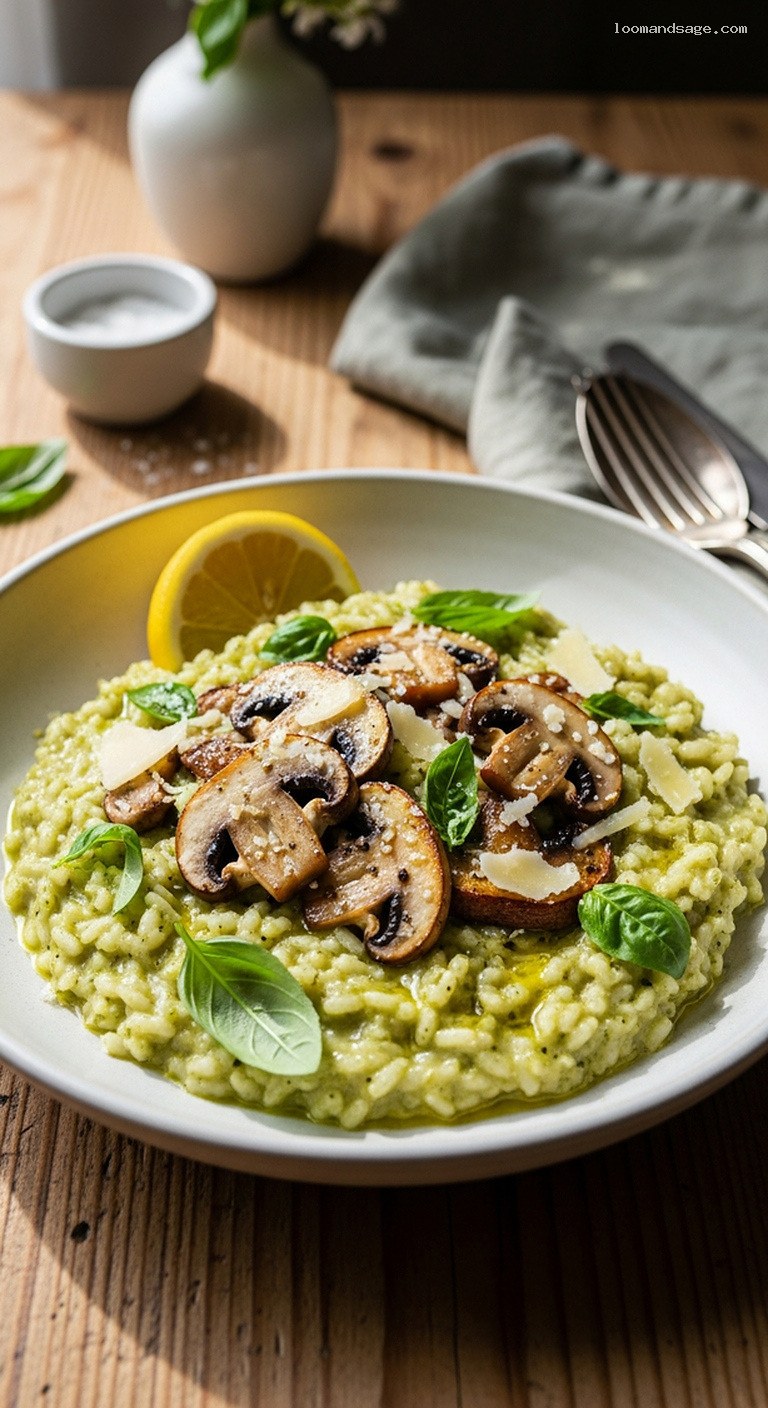
Quick Recipe Version (TL;DR)
Quick Ingredients
- 2 cups fresh basil leaves, lightly packed
- 1/3 cup raw cashews
- 2 garlic cloves (1 for pesto, 1 for mushrooms)
- 5 tbsp extra-virgin olive oil (plus extra if needed)
- 3 tbsp unsalted butter, divided
- 3/4 cup freshly grated Parmesan cheese, divided
- 1/4 cup heavy cream (optional for extra creaminess)
- 1 1/2 cups Arborio rice
- 1 small yellow onion, finely diced
- 1/2 cup dry white wine
- 4 1/2 cups vegetable broth, kept warm
- 10 oz (about 300 g) cremini or button mushrooms, sliced
- 1–2 lemons (juice and wedges for serving)
- Salt and freshly ground black pepper
Do This
- 1) Toast cashews in a dry pan until golden, then blend with basil, 1 garlic clove, 1/3 cup Parmesan, 1/3 cup olive oil, 1 tbsp lemon juice, salt, and pepper to make a smooth pesto.
- 2) Warm broth in a small pot and keep it at a very gentle simmer over low heat.
- 3) Sauté sliced mushrooms in 1 tbsp butter and 1 tbsp olive oil with 1 minced garlic clove, salt, and pepper until browned; set aside.
- 4) In a wide pan, cook onion in 1 tbsp butter until soft, add Arborio rice, and toast 2 minutes. Deglaze with white wine and let it mostly absorb.
- 5) Add hot broth, 1 ladle at a time, stirring often and letting each addition absorb before adding more, until rice is creamy and just tender, 18–20 minutes.
- 6) Off the heat, stir in remaining 1 tbsp butter, remaining Parmesan, heavy cream, and basil-cashew pesto. Season to taste and loosen with a splash of broth if needed.
- 7) Serve risotto topped with sautéed mushrooms, a squeeze of fresh lemon juice, extra basil, and more Parmesan.
Why You’ll Love This Recipe
- Classic, ultra-creamy risotto meets bright, herbal basil-cashew pesto for layers of flavor in every bite.
- Sautéed mushrooms add savory depth and meaty texture without needing any meat.
- A squeeze of lemon at the end keeps the dish rich but not heavy, with a fresh, clean finish.
- Impressive enough for guests, but simple enough for a cozy weeknight dinner.
Grocery List
- Produce: Fresh basil, yellow onion, garlic, cremini or button mushrooms, lemons.
- Dairy: Unsalted butter, Parmesan cheese (or similar hard cheese), heavy cream (optional).
- Pantry: Arborio rice, raw cashews, extra-virgin olive oil, vegetable broth, dry white wine, salt, black pepper.
Full Ingredients
Basil-Cashew Pesto
- 2 cups fresh basil leaves, lightly packed (about 50 g), rinsed and patted dry
- 1/3 cup raw cashews
- 1 small garlic clove
- 1/3 cup freshly grated Parmesan cheese (about 25 g)
- 1/3 cup extra-virgin olive oil (plus 1–2 tbsp more if needed for texture)
- 1 tbsp freshly squeezed lemon juice
- 1/4 tsp fine sea salt, plus more to taste
- Freshly ground black pepper, to taste
Risotto
- 4 1/2 cups vegetable broth (or light chicken broth), kept warm
- 1 1/2 cups Arborio rice (or Carnaroli), uncooked
- 1 small yellow onion, finely diced (about 1/2 cup)
- 2 tbsp unsalted butter, divided
- 1 tbsp extra-virgin olive oil
- 1/2 cup dry white wine (such as Pinot Grigio or Sauvignon Blanc)
- 1/2 cup freshly grated Parmesan cheese (about 40 g)
- 1/4 cup heavy cream (optional but recommended for extra creaminess)
- 1/2 tsp fine sea salt, plus more to taste (amount will vary depending on broth saltiness)
- Freshly ground black pepper, to taste
Sautéed Mushrooms
- 10 oz (about 300 g) cremini or button mushrooms, cleaned and sliced
- 1 tbsp unsalted butter
- 1 tbsp extra-virgin olive oil
- 1 garlic clove, minced
- 1/4 tsp fine sea salt, or to taste
- Freshly ground black pepper, to taste
- Optional: 1 tsp fresh thyme leaves or 1/4 tsp dried thyme
To Finish
- 1 lemon, cut into wedges (plus extra lemon juice as desired)
- Extra fresh basil leaves, sliced or torn, for garnish
- Additional grated Parmesan, for serving
Step-by-Step Instructions
Step 1: Toast the Cashews and Make the Pesto
Place the raw cashews in a small, dry skillet over medium heat. Toast, stirring frequently, for 3–5 minutes until they are fragrant and lightly golden in spots. Watch them closely so they do not burn. Transfer immediately to a plate to cool slightly.
In a food processor, combine the toasted cashews, basil leaves, 1 small garlic clove, 1/3 cup grated Parmesan, 1 tbsp lemon juice, 1/4 tsp salt, and a few grinds of black pepper. Pulse several times to roughly chop everything. With the machine running, slowly stream in 1/3 cup olive oil until the pesto is fairly smooth and creamy, scraping down the sides as needed. If it looks too thick, add 1–2 tbsp more olive oil. Taste and adjust with more salt, pepper, or lemon juice if you like. Set aside at room temperature while you make the risotto.
Step 2: Warm the Broth
Pour the vegetable broth into a small saucepan and set it over low heat. Let it come to a very gentle simmer, then keep it warm but not boiling. Warm broth helps the rice cook evenly and keeps the risotto creamy instead of gluey. If at any point the broth gets too hot and starts to boil rapidly, lower the heat.
Step 3: Sauté the Mushrooms
In a large skillet, heat 1 tbsp butter and 1 tbsp olive oil over medium-high heat. When the butter is melted and foamy, add the sliced mushrooms in an even layer. Let them cook without stirring for 2–3 minutes to develop some color, then stir and continue to cook for another 4–5 minutes until they are nicely browned and have released most of their moisture.
Add the minced garlic and thyme (if using), and cook for 30–60 seconds, just until fragrant. Season with 1/4 tsp salt and a few grinds of pepper. Taste and adjust the seasoning. Transfer the mushrooms to a bowl and keep them warm near the stove; you will use the same skillet for the risotto if it is wide enough, or use a separate wide, heavy-bottomed pan.
Step 4: Start the Risotto Base
In a wide, heavy-bottomed saucepan or deep skillet, heat 1 tbsp butter and 1 tbsp olive oil over medium heat. Add the diced onion and a small pinch of salt. Cook, stirring occasionally, for 4–5 minutes until the onion is soft and translucent but not browned.
Add the Arborio rice to the pan. Cook, stirring frequently, for 2 minutes. The grains should look glossy and slightly opaque around the edges. This toasting step helps the rice maintain a pleasant texture as it cooks.
Pour in the white wine and stir, scraping up any bits from the bottom of the pan. Let the wine simmer gently for 2–3 minutes, stirring often, until it is mostly absorbed by the rice and you can no longer smell strong alcohol fumes.
Step 5: Add the Broth Gradually and Stir
Begin adding the warm broth one ladleful (about 1/2 cup) at a time. After each addition, stir frequently and allow the rice to gently simmer until most of the liquid is absorbed and you can see the bottom of the pan when you drag your spoon through the rice. Then add the next ladle of broth.
Continue this process for 18–20 minutes. The rice should slowly swell and release starch, creating a naturally creamy sauce. Adjust the heat as needed to maintain a gentle simmer, not a rapid boil. Taste a grain of rice after about 18 minutes; it should be just tender with a slight bite in the center (al dente). If it is still quite firm, continue adding broth and cooking for a few more minutes. You may not need all of the broth, or you may need a splash of hot water if you run out.
Step 6: Make It Extra Creamy and Add the Pesto
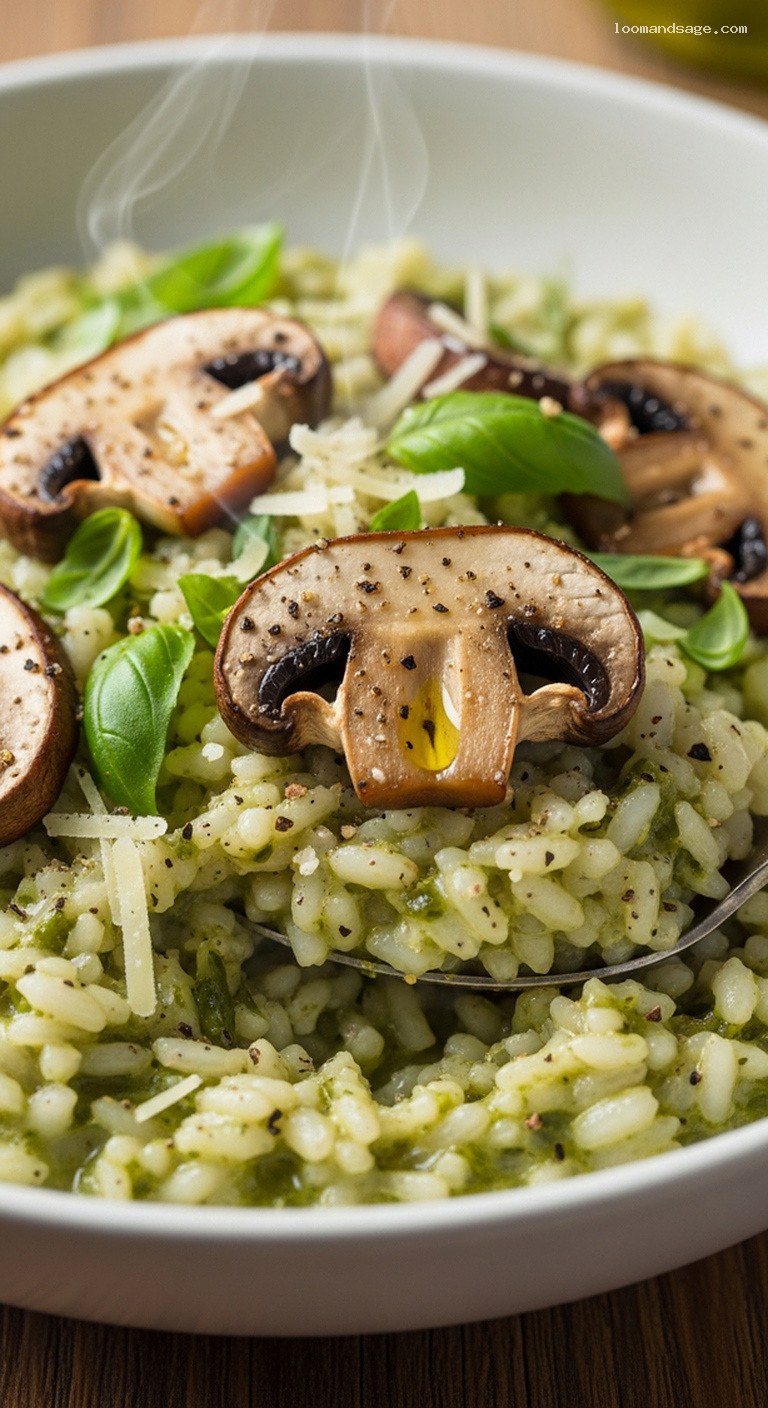
When the rice is al dente and the mixture looks loose and creamy, turn off the heat. Stir in the remaining 1 tbsp butter, 1/2 cup grated Parmesan, and the heavy cream (if using). Stir vigorously for 30–60 seconds; this agitation helps the risotto become silky and glossy. If it looks too thick, add a small splash of warm broth to loosen it. The ideal texture is like thick, flowing lava that slowly spreads when you tilt the pan, not a stiff mound.
Add 3–4 generous tablespoons of the basil-cashew pesto and fold it into the risotto until everything is a beautiful, even green. Taste and add more pesto if you want a stronger basil flavor. Season with additional salt and pepper to taste. Remember the Parmesan and broth both add salt, so adjust gently.
Step 7: Finish with Mushrooms and Lemon, Then Serve
Gently rewarm the sautéed mushrooms if needed over low heat for 1–2 minutes. Spoon the creamy pesto risotto into warm shallow bowls. Top each portion with a generous pile of mushrooms.
Squeeze a wedge of fresh lemon over each serving just before eating to brighten the flavors. Garnish with extra basil leaves and a sprinkle of Parmesan. Serve immediately while the risotto is hot and creamy, with additional lemon wedges and pesto on the side if desired.
Pro Tips
- Use a wide pan for risotto. A wide, shallow pan gives more surface area, helping the rice cook evenly and the liquid reduce to a creamy texture.
- Stir often, but not constantly. Gentle, frequent stirring releases starch for creaminess without breaking the grains down too much.
- Control the texture at the end. If the risotto sits and thickens, simply stir in a small splash of warm broth to loosen it just before serving.
- Add pesto off the heat. Stir the basil-cashew pesto in after you turn off the burner so the fresh, bright flavors and color stay vibrant.
- Season in layers. Lightly salt the onions, mushrooms, and final risotto rather than adding a lot of salt at once; this keeps the flavors balanced.
Variations
- Vegan version: Use vegan butter or extra olive oil instead of butter, replace Parmesan with a plant-based hard cheese or 3–4 tbsp nutritional yeast, and skip the heavy cream or use a splash of unsweetened cashew or oat cream.
- Spring vegetable risotto: Add 1 cup peas or blanched asparagus pieces during the last 5 minutes of cooking the rice for extra color and sweetness alongside the mushrooms.
- Protein boost: Stir in 1 1/2 cups cooked white beans or shredded rotisserie chicken during the final few minutes of cooking for a more filling main dish.
Storage & Make-Ahead
Risotto is best eaten fresh, but leftovers can still be delicious. Store leftover risotto and mushrooms in an airtight container in the refrigerator for up to 3 days. The pesto can be made up to 3–4 days in advance and kept in a small jar in the fridge, covered with a thin layer of olive oil to prevent browning, or frozen in small portions for up to 2 months.
To reheat risotto, place it in a saucepan with a splash of water or broth. Warm over low heat, stirring and adding more liquid as needed, until creamy and heated through. Avoid freezing fully cooked risotto, as the texture can become grainy, but chilled leftovers are excellent shaped into patties or balls and pan-fried for crispy risotto cakes.
Nutrition (per serving)
Approximate values per serving (1/4 of the recipe): about 740 calories, 18 g protein, 67 g carbohydrates, 4 g fiber, 45 g total fat, 15 g saturated fat, and 1050 mg sodium (will vary based on broth, cheese, and salt used). This estimate includes heavy cream and Parmesan.