
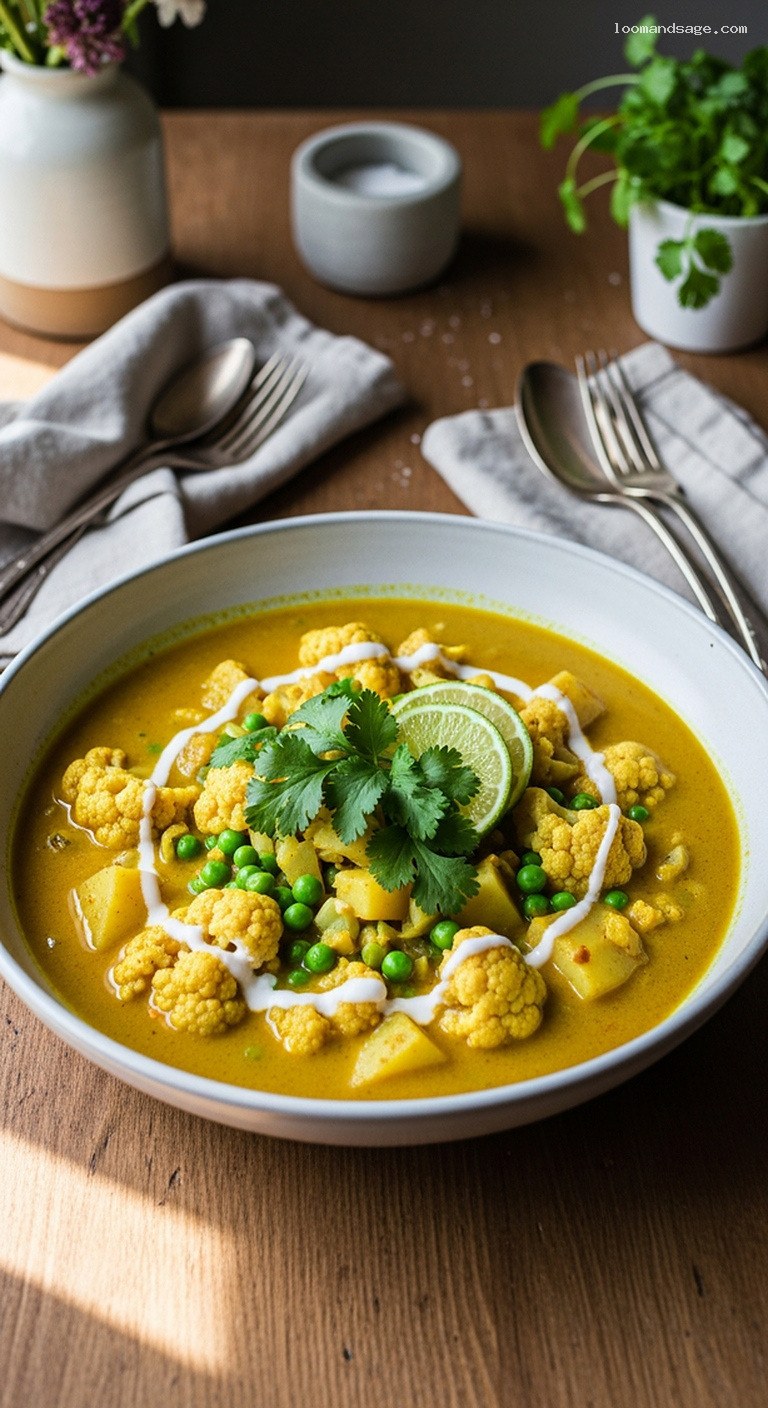
Quick Recipe Version (TL;DR)
Quick Ingredients
- 2 tbsp coconut oil (or neutral oil)
- 1 medium yellow onion, finely chopped
- 1 medium carrot, finely diced (optional but recommended)
- 3 garlic cloves, minced
- 1 tbsp fresh ginger, finely grated
- 1 small green chili, minced (optional)
- 1 1/2 tsp ground turmeric
- 1 tsp ground cumin
- 1 tsp ground coriander
- 1/4 tsp red pepper flakes or cayenne (optional)
- 2 tbsp tomato paste
- 1 (14 oz / 400 ml) can full-fat coconut milk
- 2 1/2 cups low-sodium vegetable broth or water
- 2 medium waxy potatoes, 1/2-inch cubes (about 12 oz / 340 g)
- 1 small head cauliflower, small florets (about 5–6 cups)
- 1 cup frozen green peas
- 1 1/4 tsp fine sea salt, plus more to taste
- Freshly ground black pepper
- 1–2 tbsp fresh lime juice, to taste, plus lime wedges for serving
- 1/4 cup chopped fresh cilantro (leaves and tender stems)
- 1 tsp sugar or maple syrup (optional, to balance acidity)
- 1 tsp garam masala (optional, for a warmer finish)
Do This
- 1. Prep all vegetables and aromatics: chop onion, carrot, potatoes, cauliflower, garlic, ginger, chili, and cilantro.
- 2. In a heavy pot, heat oil over medium heat. Soften onion and carrot for 5–7 minutes until translucent and lightly golden.
- 3. Stir in garlic, ginger, and chili; cook 1 minute. Add turmeric, cumin, coriander, and red pepper flakes; toast 30 seconds. Mix in tomato paste; cook 1–2 minutes.
- 4. Pour in coconut milk and vegetable broth. Add potatoes, salt, and pepper. Bring to a gentle simmer, then cook 10 minutes, partially covered.
- 5. Add cauliflower florets. Simmer 10–12 minutes more, until potatoes and cauliflower are tender but not falling apart.
- 6. Stir in peas and most of the cilantro. Simmer 3–4 minutes. Off the heat, add lime juice, optional sugar, and garam masala if using. Adjust salt and acidity.
- 7. Serve hot in bowls, topped with remaining cilantro and lime wedges. Pair with steamed rice, quinoa, or warm flatbread.
Why You’ll Love This Recipe
- Comforting and vibrant: a golden, coconut-based stew that is both cozy and bright with lime and ginger.
- Hearty but light: potatoes and cauliflower make it satisfying, while peas and citrus keep it fresh.
- Weeknight-friendly: one pot, no special equipment, and ready in under an hour.
- Naturally vegan and gluten-free, with easy swaps for different spice levels and add-ins.
Grocery List
- Produce: 1 head cauliflower, 2 medium potatoes, 1 medium yellow onion, 1 medium carrot, garlic, fresh ginger, 1 small green chili (optional), 2 limes, fresh cilantro.
- Dairy: None required (recipe is dairy-free). Optional: plain yogurt or coconut yogurt for serving.
- Pantry: Coconut oil or neutral oil, 1 can full-fat coconut milk (14 oz / 400 ml), vegetable broth or bouillon, frozen green peas, tomato paste, ground turmeric, ground cumin, ground coriander, red pepper flakes or cayenne, garam masala (optional), sugar or maple syrup (optional), fine sea salt, black pepper.
Full Ingredients
For the Coconut-Ginger Cauliflower Stew
- 2 tbsp coconut oil (or other neutral oil such as avocado or canola)
- 1 medium yellow onion, finely chopped (about 1 cup)
- 1 medium carrot, finely diced (about 1/2 cup; optional but recommended)
- 3 garlic cloves, minced
- 1 tbsp fresh ginger, finely grated (or 2 tsp ginger paste)
- 1 small green chili (serrano or jalapeño), seeded and minced (optional, to taste)
- 1 1/2 tsp ground turmeric
- 1 tsp ground cumin
- 1 tsp ground coriander
- 1/4 tsp red pepper flakes or cayenne pepper (optional, for heat)
- 2 tbsp tomato paste
- 1 (14 oz / 400 ml) can full-fat coconut milk, well shaken
- 2 1/2 cups low-sodium vegetable broth or water
- 2 medium waxy potatoes (about 12 oz / 340 g total), peeled if desired and cut into 1/2-inch cubes
- 1 small head cauliflower (about 1 1/2 lb / 680 g), cut into small florets (about 5–6 cups)
- 1 cup frozen green peas (no need to thaw)
- 1 1/4 tsp fine sea salt, plus more to taste
- Freshly ground black pepper, to taste
For Finishing & Serving
- 1–2 tbsp fresh lime juice (from about 1–2 limes), plus extra lime wedges for serving
- 1/4 cup fresh cilantro, roughly chopped (leaves and tender stems), divided
- 1 tsp sugar or maple syrup (optional, to softly round the flavors)
- 1 tsp garam masala (optional, stirred in at the end for warmth and aroma)
- Cooked basmati rice, quinoa, or warm flatbread, for serving (optional but excellent)
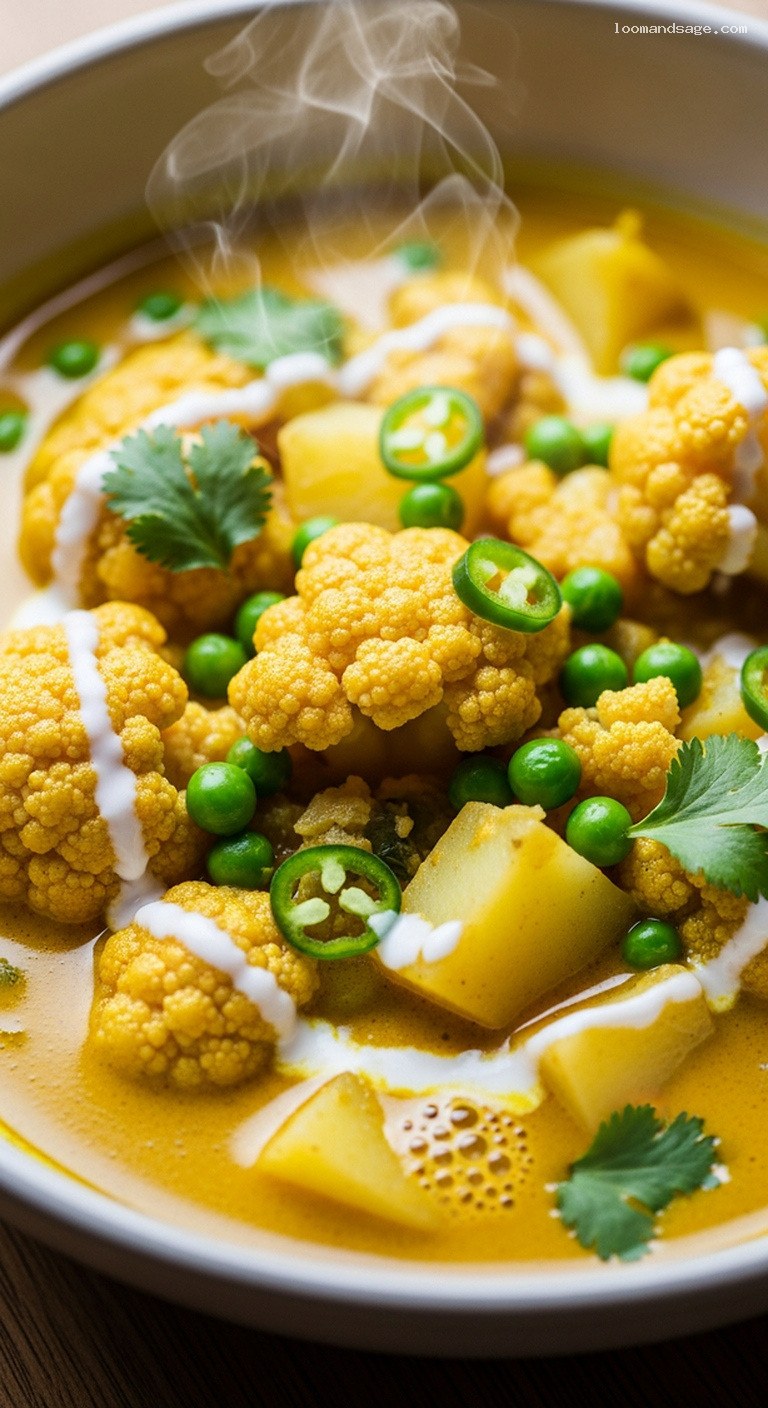
Step-by-Step Instructions
Step 1: Prep all your vegetables and aromatics
Gather and prepare your ingredients before you start cooking. Finely chop the onion and dice the carrot. Peel and cube the potatoes into roughly 1/2-inch pieces so they cook evenly. Cut the cauliflower into small, bite-size florets; avoid oversized pieces so they become tender in about the same time as the potatoes. Mince the garlic and green chili (if using), and finely grate the ginger. Roughly chop the cilantro, keeping the leaves and tender stems; you will divide it between cooking and garnish. Juice 1 lime and cut the second lime into wedges for serving. Having everything ready will make the cooking process smooth and relaxed.
Step 2: Soften the onion and carrot
Place a heavy-bottomed pot or Dutch oven over medium heat. Add the coconut oil and let it melt and shimmer, about 1 minute. Add the chopped onion and carrot along with a small pinch of salt. Cook, stirring occasionally, until the onion is soft, translucent, and just starting to turn golden at the edges, 5–7 minutes. Adjust the heat as needed to prevent scorching; you want gentle browning, not dark caramelization. This step builds a sweet, savory base that will carry the flavors of the spices and coconut.
Step 3: Add garlic, ginger, chili, and toast the spices
Stir in the minced garlic, grated ginger, and minced green chili (if using). Cook, stirring constantly, for 30–60 seconds, just until fragrant. Add the turmeric, cumin, coriander, and red pepper flakes or cayenne (if using). Stir continuously for another 30 seconds to toast the spices; they should smell very aromatic but not burnt. Sprinkle in a teaspoon or two of water if the pan looks too dry. Add the tomato paste and cook, stirring, for 1–2 minutes. The paste should darken slightly in color and lose its raw, sharp taste, forming a thick, richly colored base.
Step 4: Build the coconut broth and start simmering
Pour in the coconut milk and vegetable broth, stirring to fully dissolve the tomato-spice mixture into the liquid. Add the cubed potatoes, 1 1/4 tsp fine sea salt, and several grinds of black pepper. Increase the heat to medium-high and bring the mixture just up to a gentle boil, then immediately reduce the heat to maintain a steady simmer (medium-low to low). Partially cover the pot with a lid and simmer for 10 minutes, stirring once or twice, until the potatoes begin to soften but are not yet fully tender. The broth will turn a deep golden color from the turmeric and begin to thicken slightly from the starch in the potatoes and the richness of the coconut milk.
Step 5: Add the cauliflower and cook until tender
After the potatoes have simmered for 10 minutes, stir in the cauliflower florets, making sure they are mostly submerged in the coconut broth. Maintain a gentle simmer, partially covered, for another 10–12 minutes. Stir occasionally to prevent sticking and ensure even cooking. The stew is ready for the next step when both the potatoes and cauliflower are tender when pierced with the tip of a knife but still hold their shape. If the stew seems too thick at this point, add a splash of broth or water; if it seems thin, you can continue simmering uncovered for a few extra minutes to reduce and thicken.
Step 6: Finish with peas, lime, and cilantro
Stir in the frozen peas and about two-thirds of the chopped cilantro, reserving the rest for garnish. Simmer for 3–4 minutes, just until the peas are bright green and heated through. Turn off the heat. Add 1 tbsp of fresh lime juice and the optional sugar or maple syrup, then stir well. Taste the broth and adjust: add more salt if it tastes flat, more lime juice for brightness, or a touch more sugar if it is too sharp. If you like a warmer, slightly sweeter spice finish, stir in the garam masala now. Let the stew sit off the heat for 2–3 minutes; the flavors will meld and deepen during this short rest.
Step 7: Serve and garnish
Ladle the coconut-ginger cauliflower stew into warm bowls. The broth should be a rich golden yellow with tender cauliflower, soft potatoes, and bright green peas peeking through. Scatter the remaining cilantro over the top for a fresh, herbal note. Serve with lime wedges on the side so everyone can add extra acidity to taste. Offer basmati rice, quinoa, or warm flatbread to soak up the flavorful coconut broth. For extra richness, you can add a small spoonful of plain yogurt or coconut yogurt on top, or a drizzle of chili oil for those who love more heat. Enjoy the stew hot, while the aroma of ginger, coconut, and lime is at its most vibrant.
Pro Tips
- Cut vegetables evenly: Keep potatoes and cauliflower florets similar in size (about 1/2–3/4 inch) so they cook through at the same time and you avoid mushy or undercooked pieces.
- Use full-fat coconut milk: Light coconut milk will work, but full-fat gives the creamiest texture and best flavor. Shake the can well before opening to combine the cream and liquid.
- Control thickness: For a thinner, soupier stew, add up to 1/2 cup extra broth. For a thicker, almost curry-like consistency, simmer uncovered for a few extra minutes at the end.
- Bloom the spices properly: Do not skip the short toasting step for the spices and tomato paste. This deepens color and flavor and removes any raw, powdery taste.
- Optional roasted cauliflower twist: For a deeper, nutty flavor, toss the cauliflower with 1 tbsp oil, 1/2 tsp salt, and a pinch of turmeric and roast at 425°F (220°C) for 20–25 minutes, then add to the stew in the last 5 minutes of cooking.
Variations
- Chickpea boost: Add 1 can (15 oz / 425 g) of drained and rinsed chickpeas along with the potatoes for extra protein and a heartier stew.
- Leafy greens version: Stir in 2–3 cups of baby spinach, chopped Swiss chard, or kale during the last 3–4 minutes of cooking to add more color and nutrients.
- Extra-spicy coconut stew: Double the green chili and cayenne, and finish with a drizzle of chili oil or a spoonful of your favorite hot sauce just before serving.
Storage & Make-Ahead
Let the stew cool to room temperature before storing. Transfer to airtight containers and refrigerate for up to 4 days. The flavors often deepen and improve by the next day, making this an excellent make-ahead meal. The stew will thicken as it chills; thin it out with a splash of water or broth when reheating. Reheat gently on the stovetop over low to medium-low heat, stirring occasionally, until hot throughout (about 8–10 minutes). Alternatively, microwave individual portions in 1-minute bursts, stirring between each, until steaming. The stew also freezes well: portion into freezer-safe containers, leaving a little headspace, and freeze for up to 2 months. Thaw overnight in the refrigerator before reheating. Add fresh lime juice and cilantro after reheating to refresh the flavors.
Nutrition (per serving)
Approximate values per serving (without rice or bread): 380 calories; 8 g protein; 30 g carbohydrates; 7 g dietary fiber; 26 g fat (18 g saturated fat); 0 mg cholesterol; about 720 mg sodium (will vary with broth and added salt). These figures are estimates and will vary based on specific brands and any optional ingredients you include.