Quick Recipe Version (TL;DR)
Quick Ingredients
- 2 1/2 cups (500 g) long-grain rice, rinsed and soaked
- 2 lb (900 g) lamb shoulder or leg, 1-inch cubes
- 4 tbsp neutral oil (or lamb fat) for frying
- 2 large onions, thinly sliced
- 4 medium carrots, cut into matchsticks
- 6 garlic cloves (2 minced, 4 whole unpeeled)
- 2 tsp whole cumin seeds, lightly crushed
- 1 1/2 tsp ground coriander
- 1 tsp paprika
- 1/2 tsp turmeric (or 1/4 tsp saffron threads soaked in 2 tbsp hot water)
- 1 bay leaf
- 2–3 tbsp barberries or golden raisins (optional)
- 1 1/2–2 tsp fine sea salt, plus more to taste
- 1 tsp ground black pepper
- 3 3/4 cups (900 ml) hot water or stock
- Fresh parsley or cilantro for garnish
Do This
- 1. Rinse rice until water runs clear, then soak in cold water for 20–30 minutes while you prep everything else; drain before using.
- 2. In a heavy pot (5–6 qt), heat oil over medium-high, season lamb with salt and pepper, and brown in batches until well caramelized; set aside.
- 3. In the same pot, cook onions until deep golden, add carrots and minced garlic, and sauté until softened and slightly sweet.
- 4. Stir in cumin, coriander, paprika, turmeric (or saffron), bay leaf, barberries/raisins, browned lamb, and enough hot water/stock to cover; simmer 35–40 minutes until lamb is tender and flavorful.
- 5. Taste and adjust salt, then spread drained rice in an even layer on top without stirring; tuck in whole garlic cloves, add enough hot water to just cover the rice by about 1/2 inch, and boil over medium-high until most liquid is absorbed.
- 6. Poke a few holes through the rice to the bottom, reduce heat to low, cover tightly, and steam 20 minutes; rest 10 minutes off heat, then fluff, garnish with herbs, and serve.
Why You’ll Love This Recipe
- Tender, juicy chunks of lamb nestled in fragrant, fluffy rice with sweet carrots and golden onions.
- Aromatic spices like cumin and coriander make the kitchen smell incredible, without being hard to find or use.
- One-pot cooking: everything simmers together for deep flavor and easy cleanup.
- Great for feeding a crowd, weekly meal prep, or cozy family dinners.
Grocery List
- Produce: 2 large onions, 4 medium carrots, 1 head garlic, fresh parsley or cilantro, optional lemon wedges.
- Dairy: None required (optional: plain yogurt for serving).
- Pantry: Long-grain rice (basmati or similar), neutral oil, whole cumin seeds, ground coriander, paprika, turmeric or saffron, bay leaves, barberries or golden raisins (optional), fine sea salt, black pepper, stock or bouillon (optional).
Full Ingredients
Main Pilaf
- 2 1/2 cups (500 g) long-grain rice (basmati or other long-grain), thoroughly rinsed
- Cold water for soaking rice
- 2 lb (900 g) lamb shoulder or leg, trimmed of excess hard fat and cut into 1-inch (2.5 cm) cubes
- 1 1/2 tsp fine sea salt, plus more to taste
- 1 tsp freshly ground black pepper
- 4 tbsp neutral oil (such as sunflower, canola, or grapeseed; or a mix of oil and rendered lamb fat)
- 2 large yellow onions (about 14 oz / 400 g), cut in half then thinly sliced
- 4 medium carrots (about 12 oz / 350 g), peeled and cut into thin matchsticks (about 2 inches long)
- 6 garlic cloves:
- 2 cloves, finely minced
- 4 cloves, left whole and unpeeled
- 3 3/4 cups (900 ml) hot water or low-sodium stock (lamb, beef, or chicken)
- 2–3 tbsp barberries or golden raisins (optional, for a subtle tart-sweet note)
- Fresh parsley or cilantro, roughly chopped, for garnish
- Optional for serving: lemon wedges, plain yogurt, extra black pepper
Spice Blend
- 2 tsp whole cumin seeds, lightly crushed in a mortar or with the bottom of a pan
- 1 1/2 tsp ground coriander
- 1 tsp sweet or smoked paprika
- 1/2 tsp ground turmeric or 1/4 tsp saffron threads, soaked in 2 tbsp hot water for 10 minutes
- 1 bay leaf
Equipment
- 5–6 quart (4.5–5.5 L) heavy-bottomed pot or Dutch oven with a tight-fitting lid
- Fine-mesh sieve for rinsing rice
- Cutting board and sharp knife
- Wooden spoon or heat-proof spatula
- Measuring cups and spoons
Step-by-Step Instructions
Step 1: Rinse and soak the rice
Place the rice in a bowl and cover with plenty of cold water. Swirl it with your hand, then drain the cloudy water through a fine-mesh sieve. Repeat this rinsing process 3–4 times, until the water runs mostly clear. This removes excess surface starch and helps the grains stay separate and fluffy.
Once rinsed, cover the rice again with cold water and let it soak for 20–30 minutes while you start the lamb and vegetables. Just before you need it, drain the rice very well in the sieve so there is no excess water clinging to the grains.
Step 2: Prep the lamb and vegetables
Trim off any large, hard pieces of fat from the lamb, but leave some marbling for flavor and tenderness. Cut the meat into roughly 1-inch (2.5 cm) cubes and pat dry with paper towels. Season all over with 1/2 teaspoon of the salt and the black pepper.
Peel and halve the onions, then cut them into thin slices. Peel the carrots and cut them into thin matchsticks, about 2 inches long and 1/4 inch thick. Mince 2 garlic cloves and leave 4 cloves whole and unpeeled. Lightly crush the cumin seeds, measure out the other spices, and have the water or stock ready and hot (a kettle works well).
Step 3: Brown the lamb
Heat the oil in your heavy pot over medium-high heat until shimmering. Working in 2 batches if necessary to avoid overcrowding, add the lamb in a single layer. Let it sear undisturbed for 3–4 minutes on the first side, until a deep brown crust forms, then turn the pieces and brown on all sides. Browning develops rich flavor, so take your time with this step.
Once the lamb is well browned (it does not need to be cooked through yet), transfer it to a plate, leaving the fat and browned bits in the pot. If the pot looks very dry, add another 1 tablespoon of oil before moving on.
Step 4: Build the onion-carrot base (zirvak)
Reduce the heat to medium. Add the sliced onions to the pot with a pinch of salt. Cook, stirring often, for 8–10 minutes, scraping up any browned bits from the bottom. The onions should become soft, golden, and slightly caramelized. If they start to brown too quickly, lower the heat a bit.
Add the carrot matchsticks and continue to cook for another 5–7 minutes, stirring frequently, until the carrots have softened slightly and picked up a bit of color. Stir in the minced garlic and cook for 30–60 seconds, just until fragrant.
Now add the crushed cumin seeds, ground coriander, paprika, turmeric (or saffron with its soaking liquid), bay leaf, and the barberries or raisins if using. Stir well to coat the vegetables in the spices and cook for 1–2 minutes. The mixture should smell deeply aromatic.
Step 5: Simmer the lamb with aromatics
Return the browned lamb and any accumulated juices to the pot, stirring to combine with the onion-carrot mixture. Pour in 3 cups (720 ml) of the hot water or stock. The liquid should just cover the lamb and vegetables; if needed, add a little more, a splash at a time.
Season with another 1 teaspoon of salt (you can adjust later), stir, and bring the mixture to a gentle boil. Reduce the heat to low, cover partially (lid slightly ajar), and simmer for 35–40 minutes. The lamb should become tender and the liquid will turn into a rich, flavorful broth called zirvak.
After simmering, taste the broth and adjust the seasoning. It should be slightly saltier than you want the final dish, because the rice will absorb and balance it. If it tastes flat, add a bit more salt.
Step 6: Layer in the rice without stirring
Remove the lid and increase the heat to medium. Carefully spoon the drained rice evenly over the lamb and vegetables, forming a flat layer that completely covers them. Do not stir; the layered structure is important for the texture of pilaf.
Gently smooth the rice with the back of a spoon. Nestle the 4 whole, unpeeled garlic cloves into the rice so they are partially buried. Pour in enough of the remaining hot water or stock so that the liquid just covers the rice by about 1/2 inch (1.25 cm). This will usually be about 3/4 cup (180 ml), depending on how much liquid reduced earlier.
Sprinkle a small pinch of salt over the surface of the rice. Bring the pot back to a lively simmer over medium-high heat and cook uncovered for 8–10 minutes, until most of the liquid has been absorbed and you can see steam pockets forming on the surface. You will notice small holes forming in the rice as it simmers.
Step 7: Steam until fluffy, then rest and serve
Once the surface of the rice looks mostly dry and only small bubbles are visible at the edges, use the handle of a wooden spoon or a chopstick to poke 5–7 vertical holes all the way down through the rice to the bottom of the pot. This allows steam to circulate evenly.
Reduce the heat to low. Cover the pot tightly with the lid. If your lid is loose, you can place a clean kitchen towel under it (making sure the towel ends are well away from the heat) to trap steam. Steam the pilaf on very low heat for 20 minutes without lifting the lid.
After 20 minutes, turn off the heat and let the pot rest, still covered, for 10 minutes. Then uncover, remove the bay leaf, and gently fluff the rice with a fork or spatula, folding the lamb and vegetables up from the bottom so everything is evenly mixed, but without mashing the grains. Taste and adjust salt and pepper if needed.
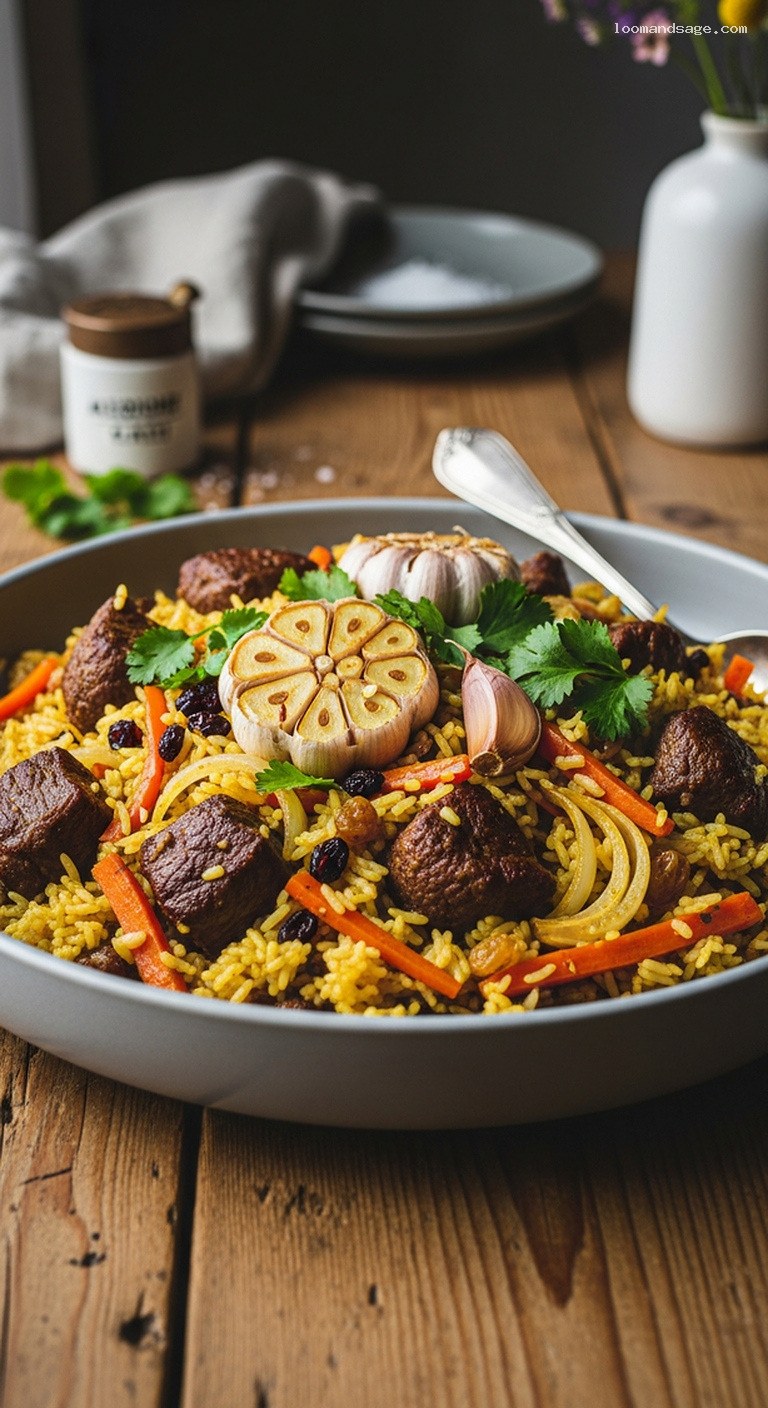
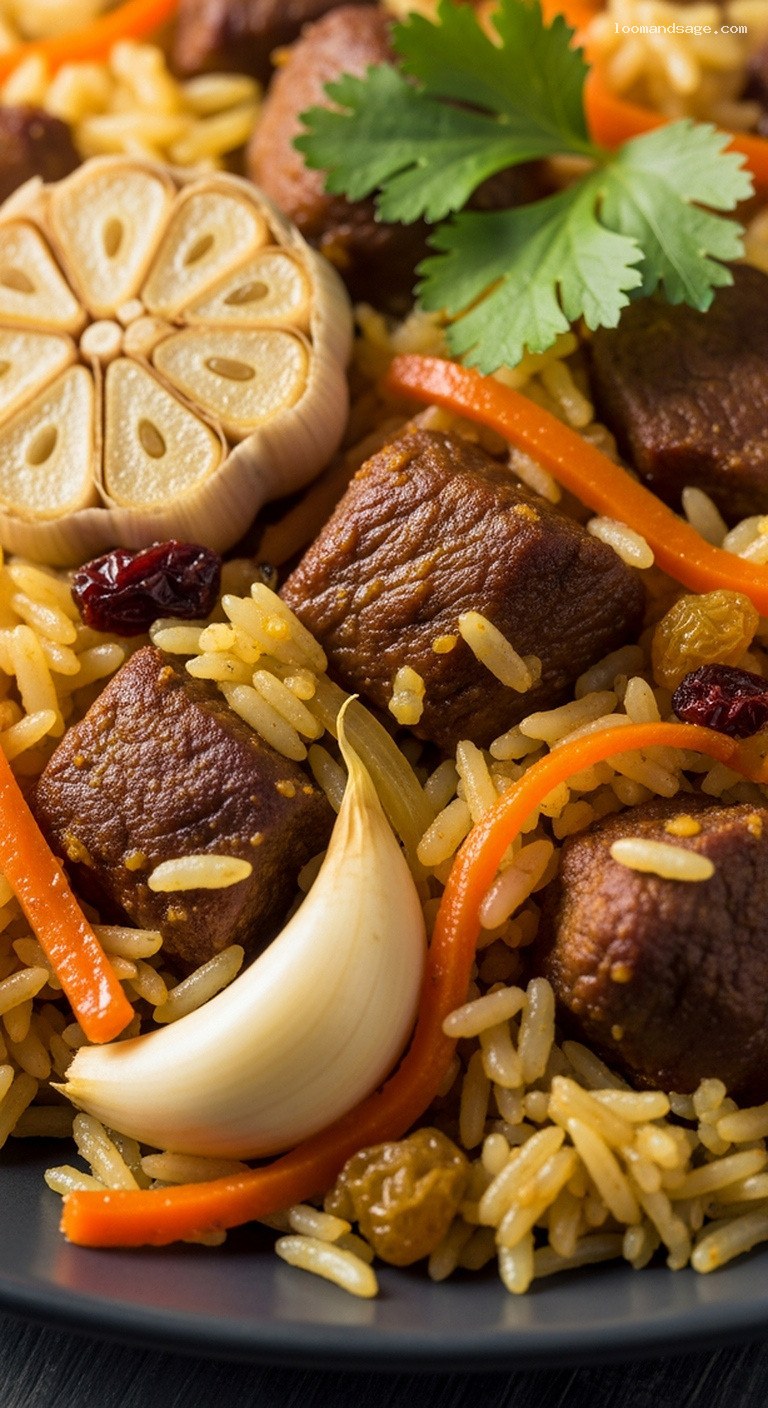
Transfer the lamb pilaf to a warm serving platter or leave it in the pot. Scatter with chopped parsley or cilantro, add the soft, sweet garlic cloves on top, and serve hot with lemon wedges or a spoonful of plain yogurt if you like.
Pro Tips
- Choose the right rice: Long-grain varieties like basmati or Uzbek-style rice work best. Avoid short-grain or sticky rice, which will turn mushy.
- Rinse thoroughly: Rinsing until the water is nearly clear is essential for fluffy, separate grains. Soaking helps the rice cook evenly and more quickly.
- Do not stir after adding rice: Layer the rice on top of the lamb and resist stirring while it cooks. Stirring can break the grains and release starch, making the pilaf gummy.
- Control the heat: A strong simmer is helpful when the rice is first added, but the final steaming must be on very low heat to avoid scorching the bottom.
- Flavor the broth well: Before you add the rice, the broth should taste a bit saltier and more intense than you would eat on its own. That flavor will mellow once the rice absorbs it.
Variations
- Chickpea plov: Add 1 cup (about 160 g) cooked chickpeas to the pot along with the lamb in Step 5. They add extra protein and a lovely nutty texture.
- Whole-garlic Uzbek style: Instead of individual cloves, nestle 1–2 whole small heads of garlic (top trimmed, unpeeled) into the rice in Step 6. They will steam until soft and spreadable.
- Chicken or beef version: Substitute boneless, skin-on chicken thighs or stewing beef for the lamb, adjusting the simmering time in Step 5 until the meat is tender (about 25–30 minutes for chicken, 40–50 for beef).
Storage & Make-Ahead
Cool the pilaf to room temperature within 1–2 hours of cooking. Transfer leftovers to airtight containers and refrigerate for up to 4 days. For longer storage, freeze in portioned containers for up to 2–3 months. To reheat, sprinkle a tablespoon or two of water over the rice, then warm gently in a covered skillet over low heat or in the microwave, covered, until hot throughout, fluffing halfway. The flavors often deepen by the next day, making this an excellent make-ahead dish for meal prep or entertaining. If the pilaf seems a bit dry when reheated, a drizzle of olive oil or a spoonful of broth perks it right up.
Nutrition (per serving)
Approximate values per serving (1/6 of the recipe): about 620 calories; 32 g protein; 70 g carbohydrates; 22 g fat; 7 g saturated fat; 4 g fiber; 2 g sugar; 680 mg sodium (will vary based on salt used and stock). These values are estimates and can change with different ingredients or portion sizes.