Quick Recipe Version (TL;DR)
Quick Ingredients
- 4 medium vine-ripened tomatoes (about 750 g), cut into chunky wedges
- 1 English cucumber (about 300 g), partially peeled, sliced into thick half-moons
- 1 small red onion (about 100 g), thinly sliced
- 1 green bell pepper (about 150 g), thinly sliced into rings
- 180 g (6 oz) block Greek feta, cut into 4 thick slabs
- 1/2 cup (80 g) Kalamata olives, whole or pitted
- 3 tbsp extra-virgin olive oil, plus a little more for drizzling
- 1 tbsp red wine vinegar
- 1 tsp dried oregano (ideally Greek), divided
- 1/4 tsp fine sea salt, 1/4 tsp freshly ground black pepper
- 1 tbsp capers and a handful of fresh parsley or oregano leaves (optional)
Do This
- 1. Chop tomatoes and cucumber into chunky pieces; place in a wide serving bowl and season lightly with a pinch of salt.
- 2. Thinly slice red onion and green bell pepper; add to the bowl along with capers, if using.
- 3. In a small bowl, whisk olive oil, red wine vinegar, 1/2 tsp dried oregano, salt, and pepper.
- 4. Pour dressing over vegetables and toss gently so the tomatoes start releasing their juices.
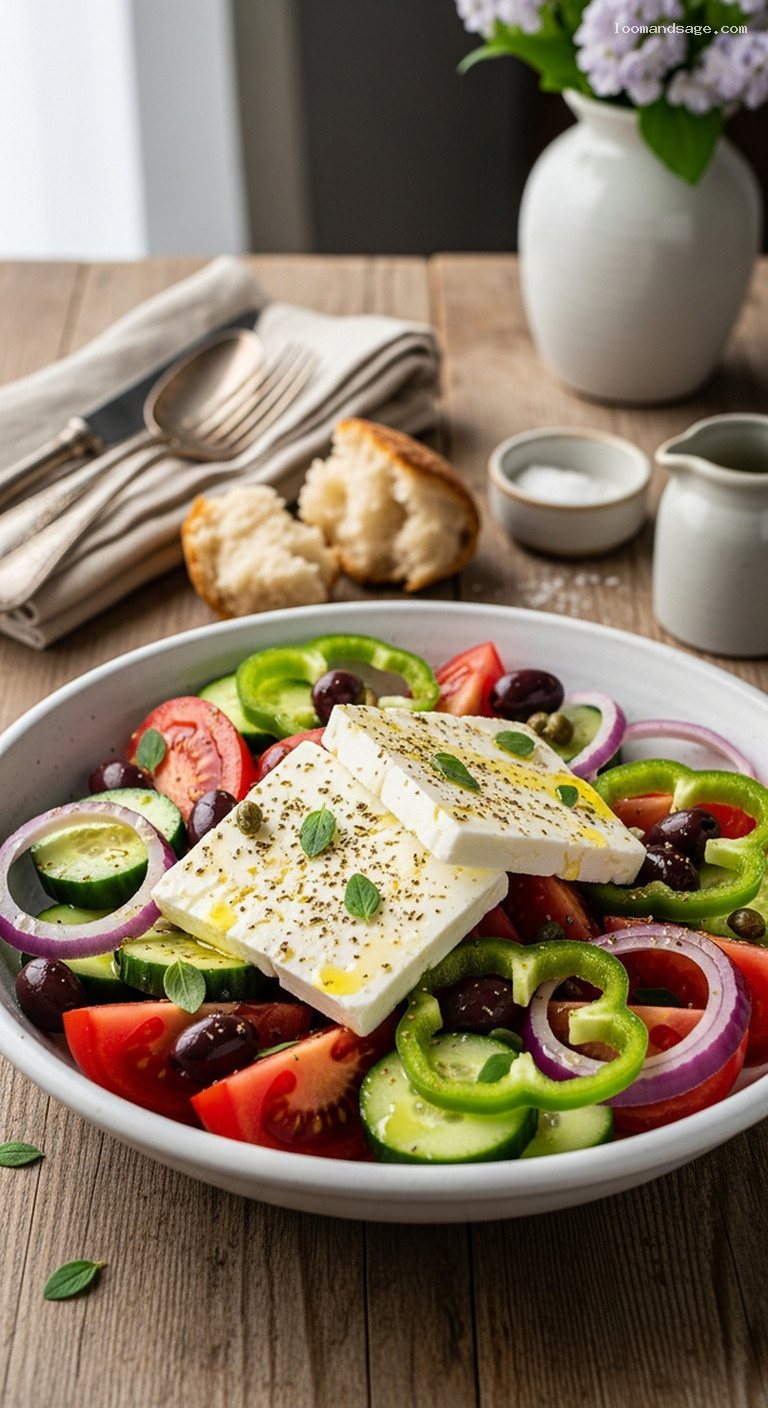
- 5. Arrange the salad so the colorful vegetables are visible; place feta slabs on top and tuck in the Kalamata olives.
- 6. Drizzle a little extra olive oil over the feta, sprinkle with remaining 1/2 tsp oregano, taste, and adjust seasoning.
- 7. Let sit 10 minutes (or chill briefly) so flavors meld, then serve with crusty bread to soak up the juices.
Why You’ll Love This Recipe
- Classic, authentic Greek village salad with no lettuce and big, rustic chunks of vegetables.
- Zero cooking required and ready in about 20 minutes, perfect for hot days or busy nights.
- Bright, briny, and refreshing, yet satisfying thanks to creamy feta and olives.
- Works beautifully as a light lunch, a starter, or a side for grilled meats, fish, or bread.
Grocery List
- Produce: Vine-ripened tomatoes, English cucumber, red onion, green bell pepper, fresh flat-leaf parsley or fresh oregano (optional), lemon wedges for serving (optional).
- Dairy: Block Greek feta cheese (preferably sheep’s milk or sheep-and-goat blend).
- Pantry: Extra-virgin olive oil, red wine vinegar, dried oregano (ideally Greek), fine sea salt, black pepper, Kalamata olives, capers (optional), crusty bread for serving (optional).
Full Ingredients
For the Salad
- 4 medium vine-ripened tomatoes (about 750 g), cored and cut into chunky wedges or large bite-sized pieces
- 1 English cucumber (about 300 g), partially peeled in stripes and sliced into 1 cm (1/2-inch) thick half-moons
- 1 small red onion (about 100 g), very thinly sliced into half-moons
- 1 green bell pepper (about 150 g), cored and sliced into thin rings
- 180 g (6 oz) block Greek feta cheese, cut into 4 thick slabs or large rectangles
- 1/2 cup (80 g) Kalamata olives, whole or pitted, drained
- 1 tbsp capers, drained (optional but traditional in some regions)
- 2 tbsp fresh flat-leaf parsley or fresh oregano leaves, roughly chopped, for garnish (optional)
For the Dressing
- 3 tbsp extra-virgin olive oil
- 1 tbsp red wine vinegar
- 1 tsp dried oregano, ideally Greek, divided (1/2 tsp for the dressing, 1/2 tsp for sprinkling on top)
- 1/4 tsp fine sea salt, plus more to taste
- 1/4 tsp freshly ground black pepper
Step-by-Step Instructions
Step 1: Prep the tomatoes and cucumber
Rinse the tomatoes and cucumber under cool running water and pat them dry. Core the tomatoes and cut them into chunky wedges or large, rustic bite-sized pieces; you want them substantial enough to hold their shape once dressed.
Partially peel the cucumber in lengthwise stripes, leaving some peel for color and texture. Slice into thick half-moons about 1 cm (1/2 inch) wide. Add the tomatoes and cucumber to a wide salad bowl or shallow serving dish and sprinkle lightly with a pinch of the sea salt. This helps draw out their juices, which will mingle with the dressing and become the delicious “sauce” at the bottom of the bowl.
Step 2: Slice the onion and pepper
Peel the red onion and slice it as thinly as you comfortably can into half-moons. If you are sensitive to raw onion, you can soak the slices in a bowl of very cold water for 5 minutes while you prep the pepper, then drain and pat dry; this softens the bite without losing the flavor.
Core the green bell pepper, remove the seeds and white ribs, and slice into thin rings or strips. Add the onion and pepper to the bowl with the tomatoes and cucumber. Sprinkle in the capers, if using.
Step 3: Gently arrange the salad base
Using clean hands or a large spoon, very gently toss the tomatoes, cucumber, onion, and pepper together in the bowl so the ingredients are evenly distributed but the tomato pieces stay intact. Aim for a slightly mounded salad in the center of the bowl so that it looks abundant and colorful, with red tomatoes, green cucumber and pepper, and purple onion all clearly visible.
Taste a piece of tomato and cucumber and add a tiny bit more salt if needed, keeping in mind that the feta and olives will add more saltiness later.
Step 4: Mix the simple dressing
In a small bowl or jar, combine the extra-virgin olive oil, red wine vinegar, 1/2 tsp of the dried oregano, 1/4 tsp fine sea salt, and 1/4 tsp black pepper. Whisk or shake well until the mixture looks slightly thickened and glossy.
Taste the dressing; it should be bright and tangy but well balanced. If you like a sharper bite, add another teaspoon of vinegar. If it feels too sharp, add 1 tsp more olive oil. Remember that the juicy tomatoes will mellow the acidity once everything is combined.
Step 5: Dress the vegetables, then add feta and olives
Pour the dressing evenly over the vegetables in the bowl. Toss gently from the bottom up so everything is lightly coated and the tomatoes start releasing some of their juices into the dressing. Try not to crush the tomatoes as you mix.
Now nestle the feta slabs on top of the salad rather than tossing them in. This is typical of horiatiki: the cheese sits proudly on top. Tuck the Kalamata olives around the feta and over the vegetables so every scoop of salad gets some olives.
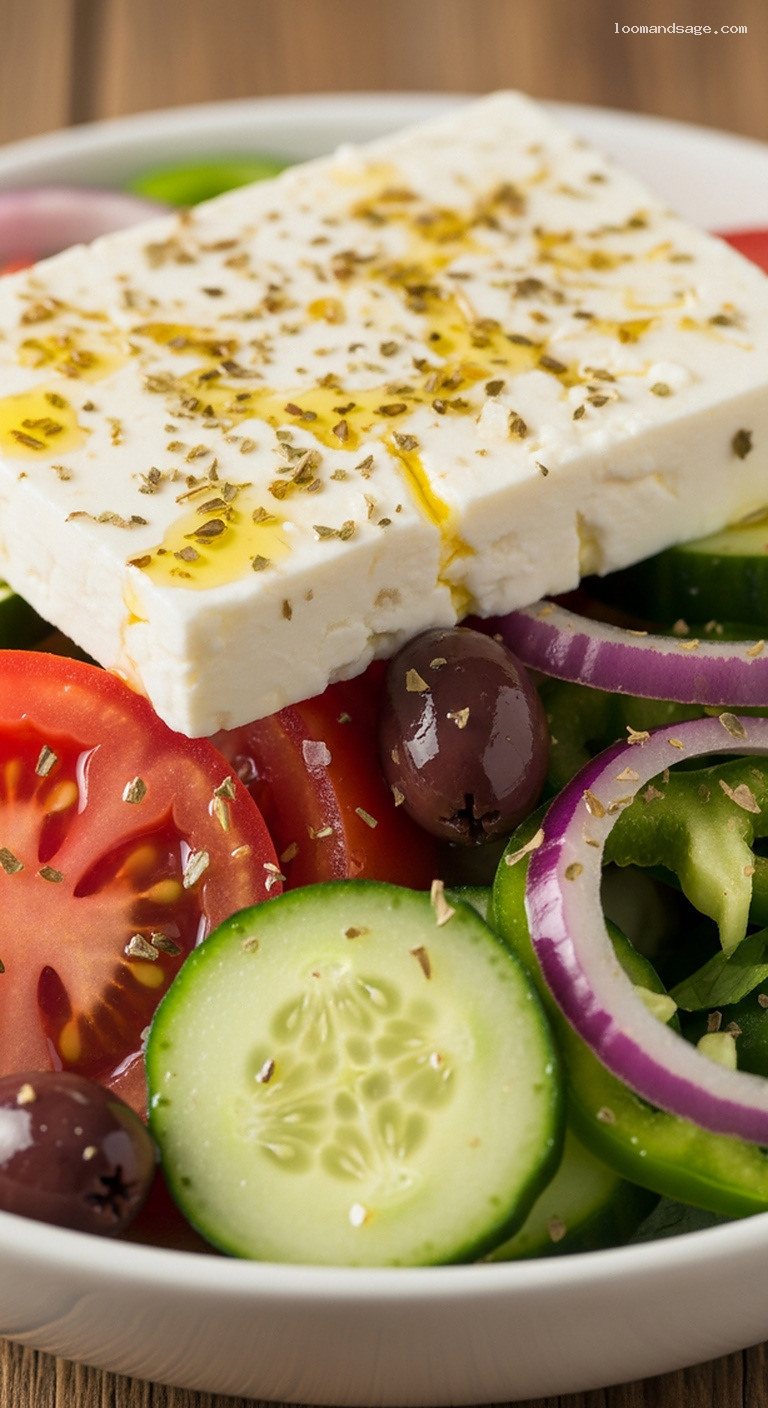
Drizzle a little extra olive oil (about 1 tsp) directly over the feta, then sprinkle the remaining 1/2 tsp dried oregano over the cheese and salad. If your feta is not very salty, you can add a tiny pinch of salt just on top of the cheese.
Step 6: Let the flavors meld and serve
Let the salad rest for at least 10 minutes at cool room temperature, or chill it lightly in the refrigerator for 10–15 minutes if you prefer it more chilled. During this time, the tomatoes will release more juice and the flavors will come together.
Just before serving, taste a tomato piece and adjust salt and pepper if needed. Scatter over the fresh parsley or oregano leaves, if using, for a burst of color and freshness. Serve the salad slightly cool (not icy cold) with plenty of crusty bread to soak up the flavorful juices at the bottom of the bowl. Enjoy as a starter, side dish, or a light meal on its own.
Pro Tips
- Choose really ripe tomatoes: This salad is all about the tomatoes. Use in-season, fragrant, ripe ones for the best flavor and natural sweetness.
- Use block feta, not crumbled: Authentic horiatiki uses thick slabs of feta on top, not pre-crumbled cheese. Blocks are usually creamier and higher quality.
- Do not over-salt: Remember that feta, olives, and capers (if using) are salty. Start with less salt and adjust at the end.
- Keep the cuts rustic and chunky: Larger pieces of tomato and cucumber release their juices more slowly and give the salad its traditional, hearty look and feel.
- Serve in a wide, shallow bowl: A low, wide dish shows off the colors, protects the tomato chunks from being crushed, and lets everyone scoop some of the delicious juices.
Variations
- Island-style with extra brine: Add 1–2 tbsp more capers and a few anchovy fillets, and replace 1 tsp of the red wine vinegar with olive or caper brine for a bolder, seaside flavor.
- Hearty main-dish salad: Add grilled shrimp, chicken, or a cup of cooked chickpeas (rinsed and drained) to turn this into a more filling meal.
- With grains: Toss the dressed salad gently with 1–1 1/2 cups cooked and cooled farro, barley, or orzo for a Mediterranean grain salad twist.
Storage & Make-Ahead
This salad is at its absolute best within 30 minutes of making it, when the vegetables are still crisp and the juices are just starting to pool in the bottom of the bowl.
Short-term storage: If you have leftovers, cover and refrigerate them for up to 24 hours. The vegetables will soften and release more liquid, but the flavors will still be good. Stir gently before serving and adjust seasoning with a pinch of salt or a drizzle of olive oil if needed.
Make-ahead: For the best texture, prep the components up to 1 day ahead: cut the vegetables, store them separately in airtight containers in the fridge, and keep the chopped onion wrapped in a damp paper towel to keep it crisp. Whisk the dressing and store it in a jar in the refrigerator. Just before serving, assemble the salad, add the feta and olives, pour over the dressing, and let rest for about 10 minutes so everything comes together.
Do not freeze this salad; the fresh vegetables and feta do not thaw well.
Nutrition (per serving)
Approximate values per serving (1/4 of the recipe): about 310 calories; 24 g fat; 15 g carbohydrates; 4 g fiber; 8 g protein; sodium around 900 mg (will vary depending on the saltiness of your feta, olives, and added salt). These numbers are estimates and will change with exact brands and portion sizes.