
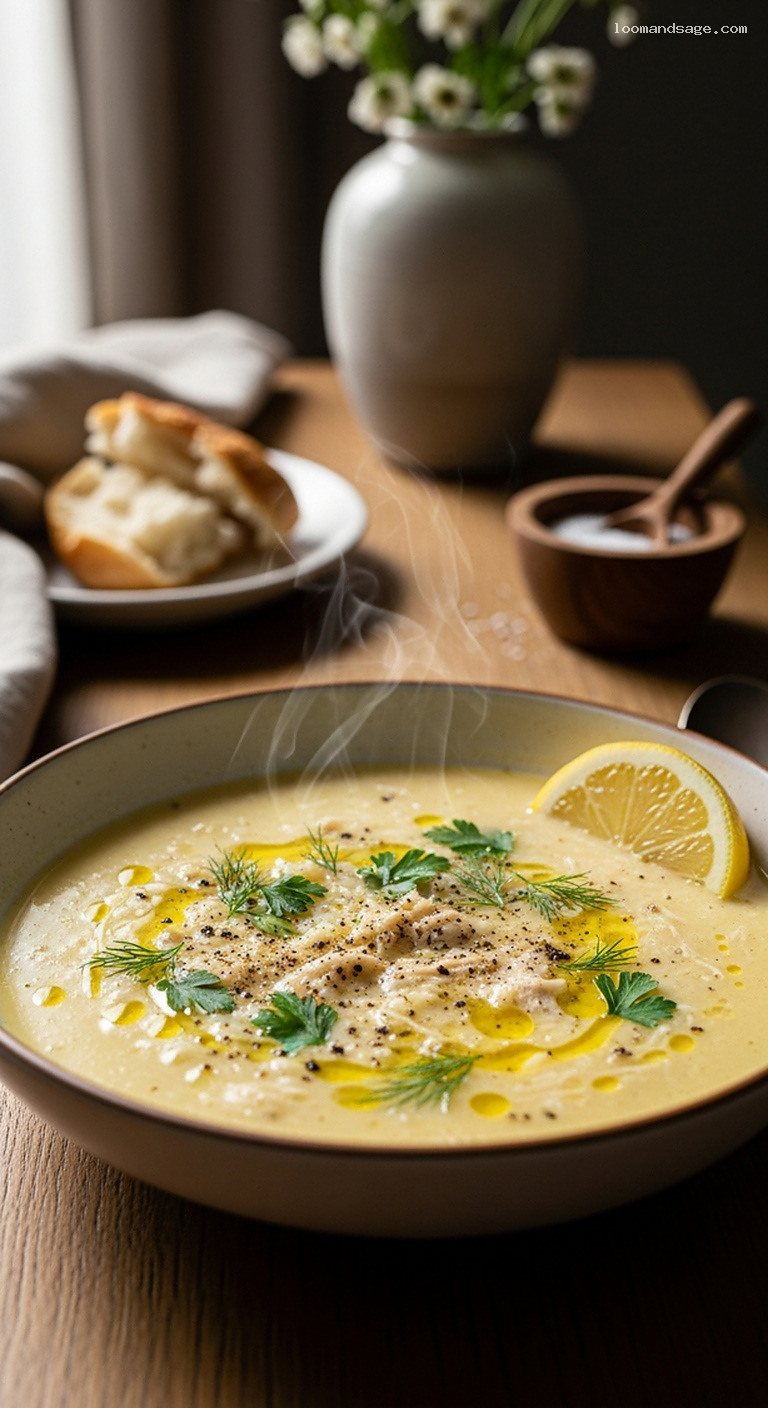
Quick Recipe Version (TL;DR)
Quick Ingredients
- 6 cups (1.4 L) low-sodium chicken or vegetable broth
- 1 cup (140 g) cooked shredded chicken or cooked chickpeas
- 1/2 cup (95 g) uncooked white rice or orzo
- 2 tbsp extra-virgin olive oil
- 1 small onion, finely chopped
- 1 small carrot, finely chopped
- 1 celery stalk, finely chopped
- 1 garlic clove, minced
- 1 bay leaf
- 3 large eggs
- 6 tbsp (90 ml) fresh lemon juice (about 2 lemons)
- 1–2 tbsp chopped fresh dill or parsley, plus extra for garnish
- Salt and freshly ground black pepper
Do This
- 1. Sauté onion, carrot, celery, and garlic in olive oil in a pot over medium heat until softened, 5–7 minutes.
- 2. Add broth and bay leaf; bring to a gentle boil. Stir in rice or orzo, reduce to a simmer, and cook until tender, 12–15 minutes.
- 3. Stir in cooked chicken or chickpeas and simmer 3–4 minutes to heat through. Turn heat to low, then remove and discard bay leaf.
- 4. In a bowl, whisk eggs until frothy, then slowly whisk in lemon juice.
- 5. Temper: very slowly drizzle 2–3 ladles of hot broth into the egg-lemon mixture, whisking constantly, until warm and slightly thickened.
- 6. Off the heat, slowly stir the egg-lemon mixture back into the pot, stirring gently until the soup becomes pale, silky, and slightly thickened. Do not boil.
- 7. Season with salt, plenty of black pepper, and fresh dill or parsley. Serve hot, garnished with more herbs and lemon wedges.
Why You’ll Love This Recipe
- Silky, creamy texture with no cream at all – just eggs and lemon worked into a classic Greek emulsion.
- Deeply comforting yet bright and tangy, perfect for chilly evenings or when you need something soothing.
- Easily made with either chicken or a completely vegetarian base using vegetable broth and chickpeas.
- One pot, simple ingredients, and on the table in under an hour.
Grocery List
- Produce: 2 lemons, 1 small onion, 1 carrot, 1 celery stalk, 1 garlic clove, fresh dill or parsley
- Dairy/Eggs: 3 large eggs
- Pantry: Chicken or vegetable broth, olive oil, white rice or orzo, bay leaf, salt, black pepper
- Protein (optional): Cooked shredded chicken or cooked chickpeas
Full Ingredients
For the Broth and Base
- 2 tbsp extra-virgin olive oil
- 1 small yellow onion, finely chopped
- 1 small carrot, finely chopped
- 1 celery stalk, finely chopped
- 1 garlic clove, minced
- 6 cups (1.4 L) low-sodium chicken broth or vegetable broth
- 1 bay leaf
- 1/2 cup (95 g) uncooked white rice (short- or medium-grain works best) or 1/2 cup (90 g) orzo pasta
For the Chicken or Vegetarian Protein
- 1 cup (140 g) cooked shredded chicken (rotisserie or leftover) or
- 1 cup (165 g) cooked chickpeas, drained and rinsed if canned, for a vegetarian version
For the Avgolemono (Egg-Lemon Emulsion)
- 3 large eggs, at room temperature if possible
- 6 tbsp (90 ml) freshly squeezed lemon juice (about 2 large lemons)
To Finish and Garnish
- 1–2 tbsp fresh dill or flat-leaf parsley, finely chopped, plus extra for serving
- 1/2–3/4 tsp fine sea salt (or to taste)
- 1/4–1/2 tsp freshly ground black pepper (or to taste)
- Lemon wedges, for serving (optional but highly recommended)
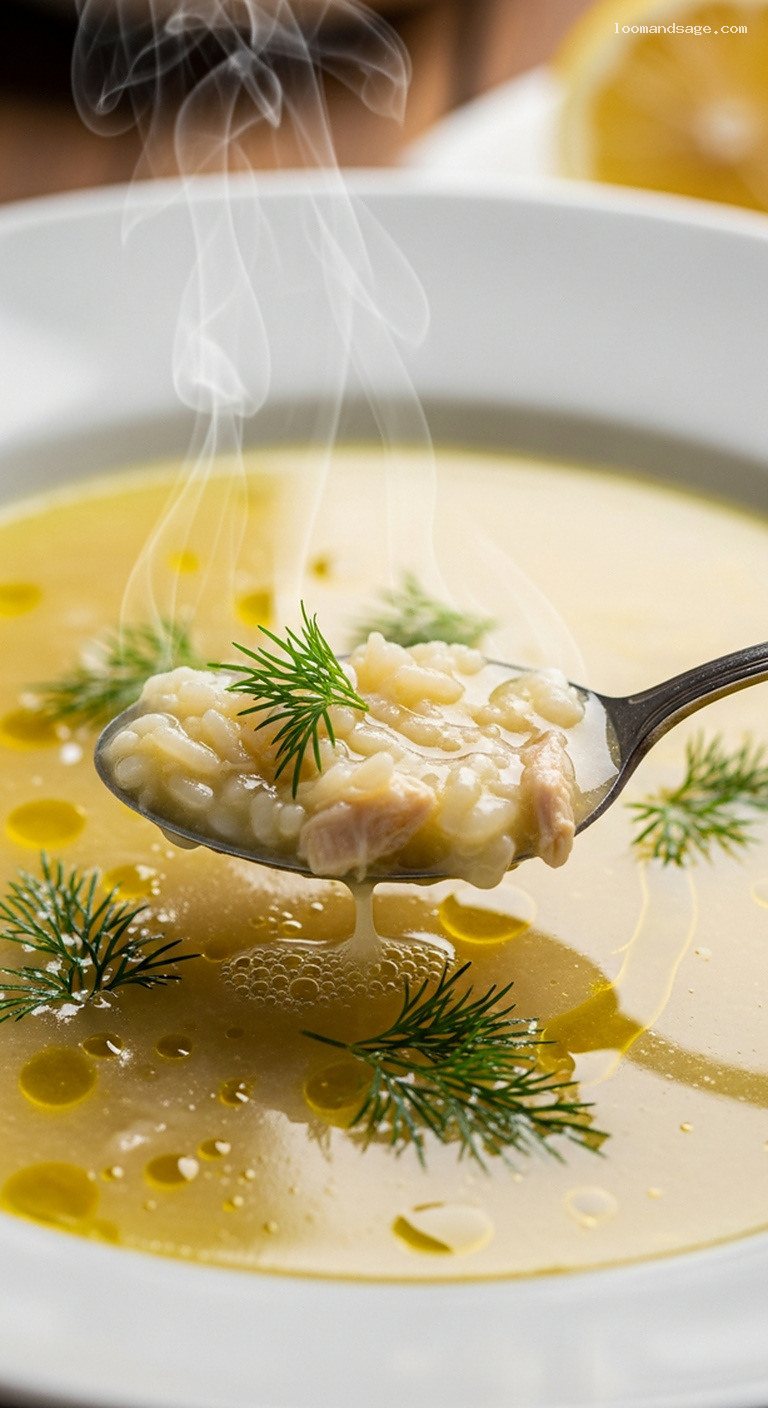
Step-by-Step Instructions
Step 1: Prep and Sauté the Aromatics
Finely chop the onion, carrot, and celery, and mince the garlic. This small, even dice helps them melt into the soup without large chunks.
In a medium to large heavy-bottomed pot (at least 4-quart / 3.8 L capacity), heat the olive oil over medium heat. Add the onion, carrot, and celery with a pinch of salt. Cook, stirring occasionally, until the vegetables are softened and the onion is translucent, about 5–7 minutes. Do not let them brown deeply; you want gentle sweetness, not strong caramelization.
Add the minced garlic and cook for 30 seconds to 1 minute, just until fragrant. If anything starts to brown too quickly, lower the heat.
Step 2: Build the Broth and Cook the Rice or Orzo
Pour in the broth and add the bay leaf. Stir to combine, scraping up any bits from the bottom of the pot. Increase the heat to medium-high and bring to a gentle boil.
Once boiling, stir in the uncooked rice or orzo. Reduce the heat to maintain a steady simmer (small, steady bubbles rather than a rolling boil). Partially cover the pot with a lid to reduce evaporation but allow some steam to escape.
Simmer, stirring occasionally to prevent sticking, until the rice or orzo is just tender:
- White rice: about 15–18 minutes
- Orzo: about 10–12 minutes
Keep an eye on the liquid level; the soup should stay brothy, not too thick. If it starts to look crowded with starch, you can add up to 1/2 cup (120 ml) hot water or extra broth.
Step 3: Add the Chicken or Chickpeas
Once the rice or orzo is almost cooked, stir in the shredded cooked chicken or the cooked chickpeas. Simmer for another 3–4 minutes to warm through and allow flavors to mingle.
Taste a grain of rice or piece of orzo to ensure it is fully tender but not mushy. Remove and discard the bay leaf.
Turn the heat down to the lowest setting, or briefly turn it off while you prepare the avgolemono mixture. The soup should be very hot but not boiling when you combine it with the eggs later.
Step 4: Make the Egg-Lemon Mixture
In a medium mixing bowl, crack in the 3 eggs. Whisk vigorously until the eggs are well combined, lightened in color, and slightly frothy, 30–60 seconds. This helps create a smoother, silkier emulsion.
Slowly whisk in the freshly squeezed lemon juice until fully incorporated. The mixture will look pale and slightly thickened from the air you have whisked in.
Set the bowl near the stove so you can easily ladle hot broth into it in the next step.
Step 5: Temper the Eggs So They Do Not Curdle
Tempering is the key to a velvety soup that does not scramble.
With one hand, whisk the egg-lemon mixture constantly. With the other hand, slowly drizzle in a ladleful (about 1/2 cup / 120 ml) of the hot broth from the pot. Pour in a thin stream while whisking vigorously so the eggs warm gradually instead of cooking in clumps.
Repeat this process with 2–3 more ladlefuls of hot broth, always whisking nonstop. The mixture should become warm, slightly thicker, and very smooth. This is your avgolemono base.
Step 6: Finish the Soup with the Avgolemono
Turn the heat under the soup pot to the lowest setting, or even turn it off if the pot retains heat well. You want the soup hot but not boiling when you add the eggs.
Slowly pour the tempered egg-lemon mixture back into the pot in a thin stream, stirring the soup gently and constantly with a wooden spoon or heatproof spatula as you pour. You will see the broth gradually turn a creamy, pale yellow and thicken slightly.
Continue to stir gently for 2–3 minutes over very low heat. Do not let the soup come to a boil now, or the eggs may curdle. If you see steam and tiny bubbles at the edges, that is fine; if the surface starts to tremble or bubble vigorously, remove the pot from the heat.
Step 7: Season, Rest Briefly, and Serve
Stir in 1–2 tbsp chopped fresh dill or parsley. Taste the soup and add salt and black pepper to taste. Expect to use about 1/2–3/4 tsp salt (depending on your broth) and 1/4–1/2 tsp pepper.
If you like a brighter flavor, you can whisk in another 1–2 tbsp lemon juice, to taste. Let the soup sit off the heat for 3–5 minutes; this brief rest allows the flavors to meld and the texture to fully set into that classic silky consistency.
Ladle into warm bowls. Garnish with more herbs, a drizzle of olive oil if you like, and lemon wedges on the side for squeezing at the table. Serve immediately while hot and velvety.
Pro Tips
- Control the heat: Once eggs enter the picture, keep the heat low and never let the soup boil. Gentle heat equals silky results.
- Whisk like you mean it: Vigorous whisking during tempering is what prevents scrambled egg bits. Do not rush the ladling of hot broth into the egg mixture.
- Rice versus orzo: Rice gives a slightly thicker, cozier soup; orzo stays a bit looser and more brothy. Both are delicious, so choose based on your preferred texture.
- Adjust the tang: Start with the measured lemon juice, then add more at the end if you like a sharper, more pronounced lemon flavor.
- Use good broth: Because there are so few ingredients, a flavorful homemade or quality store-bought broth makes a big difference in the final soup.
Variations
- Herb-forward version: Add a small handful of finely chopped dill and parsley at the end, plus a sprinkle of fresh mint for a brighter, more aromatic twist.
- Vegetarian chickpea avgolemono: Use vegetable broth and chickpeas instead of chicken. For extra body, lightly mash a few chickpeas against the side of the pot before adding the egg-lemon mixture.
- From-scratch chicken broth: Simmer 1–1.5 lb (450–680 g) bone-in chicken with onion, carrot, celery, and bay leaf in 8 cups (1.9 L) water for 45–60 minutes; strain and use 6 cups of this broth plus the shredded chicken for a deeper homemade flavor.
Storage & Make-Ahead
Avgolemono soup is best enjoyed fresh, as the egg-thickened broth can separate slightly when reheated. However, you can store leftovers:
- Refrigerator: Cool completely, then store in an airtight container for up to 3 days.
- Reheating: Warm gently in a pot over low heat, stirring often. Do not let it boil. If it thickens too much, thin with a splash of broth or water. You can also reheat individual portions in the microwave at 50% power in short intervals, stirring between each.
- Freezer: Due to the eggs and starch, this soup does not freeze well; the texture becomes grainy. Freeze only the broth and chicken base (without eggs, lemon, or rice/orzo), then add fresh rice/orzo and make the avgolemono mixture when you are ready to serve.
- Make-ahead tip: You can cook the broth with rice/orzo and chicken or chickpeas up to 1 day ahead. Reheat until hot but not boiling, then prepare and add the egg-lemon mixture just before serving.
Nutrition (per serving)
Approximate values for 1 of 4 servings, made with chicken broth, rice, and shredded chicken:
- Calories: ~320
- Protein: ~20 g
- Carbohydrates: ~26 g
- Fat: ~14 g
- Fiber: ~2 g
- Sodium: varies by broth, approximately 850–1000 mg if using low-sodium stock
Using chickpeas and vegetable broth will slightly lower the protein from chicken and may increase fiber, depending on the exact amounts used.