
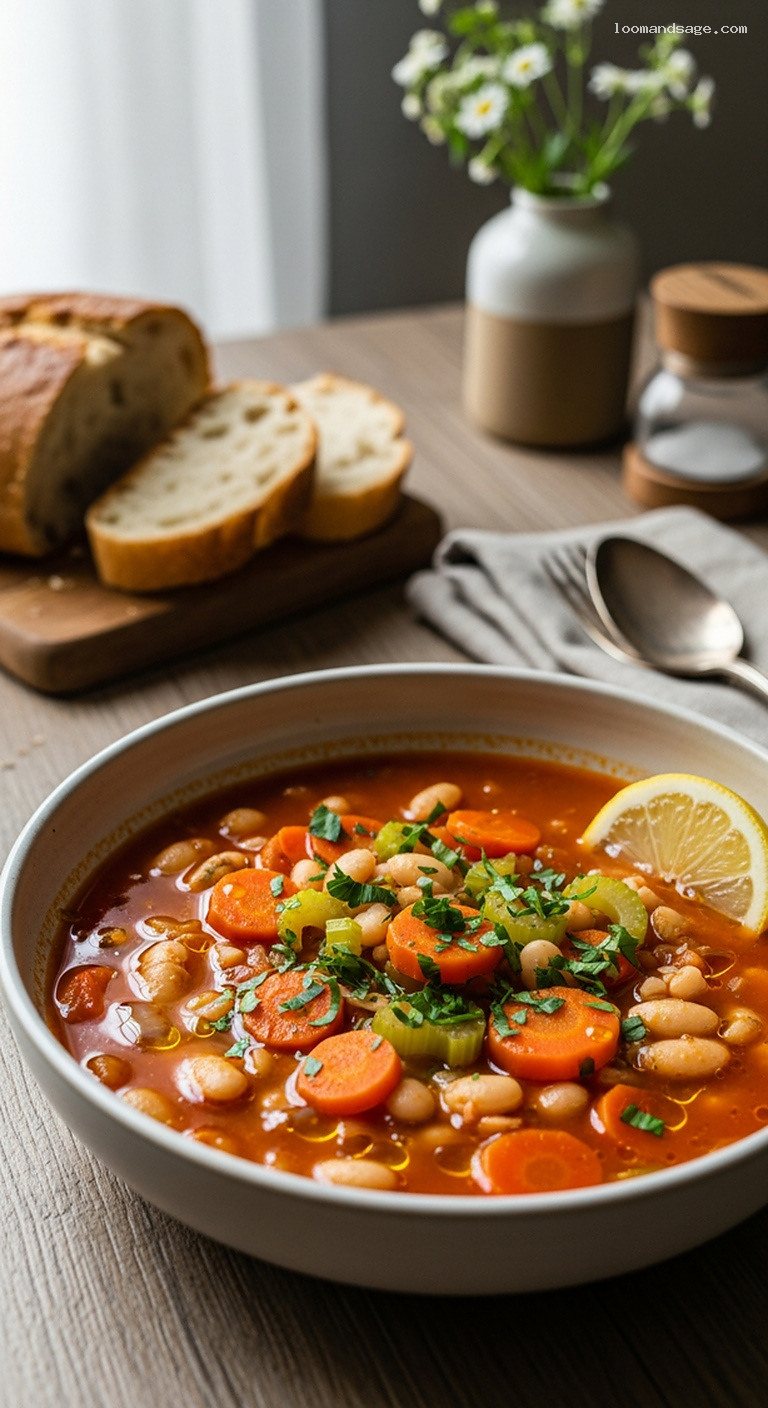
Quick Recipe Version (TL;DR)
Quick Ingredients
- 1 lb (450 g) dried white beans, soaked overnight and drained
- 1/4 cup + 2 tbsp extra-virgin olive oil, divided
- 1 large onion, finely chopped
- 2 medium carrots, sliced into 0.5 cm coins
- 3 celery stalks, sliced
- 3–4 garlic cloves, minced
- 2 tbsp tomato paste
- 1 can (14.5 oz / 400 g) crushed tomatoes or tomato passata
- 2 bay leaves, 1 tsp dried oregano, 1/2 tsp dried thyme (optional)
- 6 cups (1.4 L) water or low-sodium vegetable broth
- 1–1 1/4 tsp fine sea salt, 1/2 tsp black pepper
- Juice of 1 lemon, plus extra lemon wedges
- 2–3 tbsp chopped fresh parsley
- Crusty bread, to serve
Do This
- 1. Soak beans in plenty of water for 8–12 hours; drain and rinse.
- 2. Add beans and 6 cups fresh water/broth to a large pot. Bring to a boil, reduce to a gentle simmer, and cook 30 minutes uncovered, skimming foam.
- 3. In a separate pan, heat 1/4 cup olive oil over medium heat. Sauté onion, carrots, and celery for 8–10 minutes until softened; add garlic and tomato paste, cook 1–2 minutes.
- 4. Stir in crushed tomatoes, bay leaves, oregano, thyme, salt, and pepper. Simmer 5 minutes, then pour this mixture into the bean pot.
- 5. Simmer gently 40–50 minutes, partially covered, until beans are very tender and broth is slightly thickened. Add a splash of hot water if it gets too thick.
- 6. Turn off heat. Stir in remaining 2 tbsp olive oil, lemon juice, and parsley. Adjust salt, pepper, and lemon to taste.
- 7. Rest 10 minutes, then serve warm with extra olive oil, lemon wedges, and plenty of crusty bread.
Why You’ll Love This Recipe
- Classic Greek comfort food: simple ingredients transformed into a rich, velvety, deeply flavorful soup.
- Budget-friendly and nourishing, packed with plant-based protein and fiber from white beans.
- Make-ahead friendly: tastes even better the next day and freezes beautifully.
- Customizable: keep it traditional and vegan or adapt with extra veggies and spices.
Grocery List
- Produce: 1 large onion, 2 medium carrots, 3 celery stalks, 3–4 garlic cloves, 1 lemon (plus extra for serving if desired), small bunch of fresh parsley
- Dairy: None
- Pantry: 1 lb (450 g) dried white beans (cannellini, navy, or great northern), extra-virgin olive oil, tomato paste, 1 can (14.5 oz / 400 g) crushed tomatoes or tomato passata, bay leaves, dried oregano, dried thyme (optional), fine sea salt, black pepper, optional red pepper flakes, crusty bread for serving
Full Ingredients
For the Beans
- 1 lb (450 g) dried white beans (cannellini, navy, or great northern)
- Cold water, for soaking (at least 3 times the volume of the beans)
For the Soup Base
- 1/4 cup (60 ml) extra-virgin olive oil
- 1 large yellow onion, finely chopped (about 1 1/2 cups)
- 2 medium carrots, peeled and sliced into 0.5 cm coins (about 1 1/2 cups)
- 3 celery stalks, sliced (about 1 1/2 cups)
- 3–4 garlic cloves, minced
- 2 tbsp tomato paste
- 1 can (14.5 oz / 400 g) crushed tomatoes or smooth tomato passata
- 6 cups (1.4 L) water or low-sodium vegetable broth
- 2 bay leaves
- 1 tsp dried oregano
- 1/2 tsp dried thyme (optional, but traditional in many versions)
- 1–1 1/4 tsp fine sea salt, to taste
- 1/2 tsp freshly ground black pepper
- Pinch of sugar (optional, to balance acidity if your tomatoes are very sharp)
- Pinch of red pepper flakes (optional, for gentle heat)
To Finish the Soup
- 2 tbsp extra-virgin olive oil (for finishing)
- Juice of 1 medium lemon (about 3 tbsp), plus more to taste
- 2–3 tbsp finely chopped fresh parsley
For Serving
- Crusty bread (such as a rustic sourdough or country loaf), sliced
- Extra lemon wedges
- Extra virgin olive oil, for drizzling
Step-by-Step Instructions
Step 1: Soak the Beans
Pick through the dried white beans and remove any small stones or shriveled beans. Rinse them well under cold running water. Place the beans in a large bowl and cover with plenty of cold water; the water should be at least 5–7 cm above the beans, as they will expand. Let them soak at room temperature for 8–12 hours or overnight.
When you are ready to cook, drain the beans in a colander and rinse again under cold water. This step helps the beans cook more evenly and can make them easier to digest.
Step 2: Start Cooking the Beans
Transfer the soaked, drained beans to a large, heavy-bottomed pot or Dutch oven (at least 5–6 liters capacity). Add 6 cups (1.4 L) fresh water or low-sodium vegetable broth. Place the pot over medium-high heat and bring to a boil.
As the beans come to a boil, foam may rise to the surface. Skim this off with a spoon and discard. Once boiling, reduce the heat to low so that the beans simmer gently. Partially cover the pot and cook for about 30 minutes. At this stage, the beans should be starting to soften but not yet fully tender. Do not add salt yet, as it can toughen the skins early on.
Step 3: Sauté the Aromatics
While the beans simmer, prepare the flavor base. In a large skillet or saucepan, heat 1/4 cup (60 ml) extra-virgin olive oil over medium heat. Add the chopped onion, sliced carrots, and sliced celery. Cook, stirring occasionally, for 8–10 minutes, until the vegetables soften and the onion turns translucent with just a hint of golden color. You are building sweetness and depth here, so do not rush this step.
Add the minced garlic and cook for 1 minute more, stirring frequently so it does not brown. Stir in the tomato paste and cook it with the vegetables for 1–2 minutes. This helps caramelize the tomato paste and gives the soup a richer, more complex flavor.
Step 4: Build the Tomato Base
Pour the crushed tomatoes (or passata) into the pan with the sautéed vegetables. Add the bay leaves, dried oregano, dried thyme (if using), black pepper, and a pinch of red pepper flakes if you like a gentle heat. If your tomatoes taste very sharp, add a small pinch of sugar to round out the acidity.
Stir well and let this mixture simmer over medium-low heat for about 5 minutes. It should thicken slightly and become fragrant. This step concentrates the tomato flavor before it meets the beans.
Step 5: Combine and Simmer Until Creamy
After the beans have simmered for about 30 minutes, add the tomato-vegetable mixture to the pot with the beans, scraping in every bit of flavor from the pan. Stir gently to combine, being careful not to break up the beans.
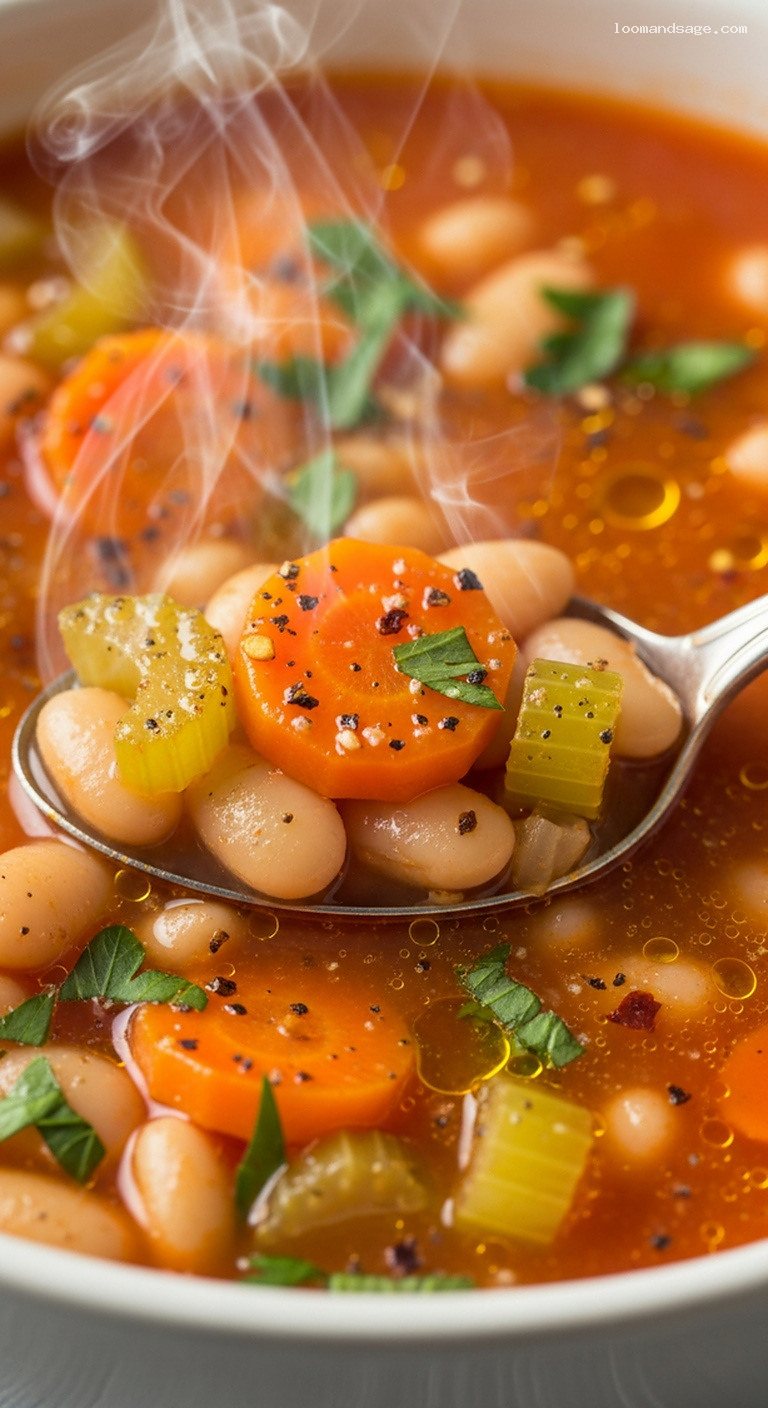
Bring the pot back to a gentle simmer over medium heat, then reduce to low. Partially cover and cook for another 40–50 minutes, stirring occasionally, until the beans are fully tender and the broth has thickened to a lightly creamy, stew-like consistency. Fasolada should be brothy enough to be a soup, but substantial enough that a spoon will stand in it briefly before tipping.
During this time, if the soup looks too thick or the beans are not yet tender, add a splash of hot water (about 1/4 cup / 60 ml at a time) and continue cooking. Towards the end of cooking, stir in 1–1 1/4 tsp fine sea salt, then taste and adjust.
Step 6: Finish with Lemon, Olive Oil, and Herbs
When the beans are completely tender and the soup has reached your desired texture, turn off the heat. Remove and discard the bay leaves.
Stir in 2 tbsp extra-virgin olive oil, the juice of 1 lemon, and the chopped fresh parsley. Taste and adjust seasoning: add more salt if needed, an extra squeeze of lemon for brightness, and more black pepper to your liking. The soup should taste rich, gently tangy, and well-seasoned, with the olive oil adding a silky finish.
Step 7: Rest and Serve with Crusty Bread
Let the fasolada rest in the pot for about 10 minutes before serving. This short rest allows the flavors to settle and the soup to thicken slightly more.
Ladle the soup into warm bowls. Drizzle each portion with a little extra olive oil and garnish with a sprinkle of fresh parsley. Serve with lemon wedges on the side so everyone can add more brightness to taste. Partner the soup with thick slices of crusty bread for dipping into the tomatoey, olive-oil-rich broth. This dish is meant to be humble, comforting, and generous.
Pro Tips
- Do not rush the simmer: Gentle, patient cooking is what makes the beans creamy and the broth silky. A rapid boil can split the beans and make the broth cloudy.
- Season at the right time: Add salt only after the beans have started to soften (towards the second half of cooking). This helps them cook evenly and become tender.
- Adjust thickness to your taste: If you prefer a soupier fasolada, add a bit more hot water or broth near the end. For a thicker, stew-like texture, simmer uncovered for the last 10–15 minutes.
- Use good olive oil: Because olive oil is a key flavor, finish the soup with a fruity, good-quality extra-virgin oil. It makes a noticeable difference.
- Better the next day: Like many bean soups, fasolada is often even more flavorful after resting overnight in the fridge as the beans absorb more of the broth.
Variations
- Quick canned-bean version: Replace the dried beans with 4 cans (about 15 oz / 425 g each) of white beans, drained and rinsed. Skip the soaking and long simmer; instead, simmer everything together for about 25–30 minutes, adding water or broth as needed.
- Smoky paprika fasolada: Add 1/2–1 tsp smoked paprika along with the dried herbs in Step 4 for a subtle smoky depth. This pairs beautifully with the tomato and olive oil.
- Veggie-packed version: Stir in a couple of handfuls of chopped spinach or kale during the last 5–10 minutes of cooking, just until wilted. You can also add a diced red bell pepper when sautéing the onion for extra sweetness and color.
Storage & Make-Ahead
Allow the soup to cool to room temperature, then transfer to airtight containers. Store in the refrigerator for up to 4 days. Fasolada thickens as it sits; when reheating on the stovetop over low to medium heat, add a splash of water or broth to loosen it to your preferred consistency and stir gently. For longer storage, freeze in portions for up to 3 months. Thaw overnight in the refrigerator, then reheat gently, adjusting seasoning and lemon juice as needed. This makes an excellent make-ahead meal for busy weeks or for stocking the freezer with wholesome, ready-to-heat lunches.
Nutrition (per serving)
Approximate values per serving (1/6 of the recipe): about 390–410 calories, 16–18 g protein, 48–52 g carbohydrates, 14–16 g fat, 12–15 g fiber, and very low in saturated fat and cholesterol-free. Actual values will vary depending on the exact beans, broth, and amount of olive oil used for finishing.