Quick Recipe Version (TL;DR)
Quick Ingredients
- 2 lb (900 g) boneless lamb shoulder or leg, cut in 1.5-inch cubes
- 1 ½ tsp kosher salt, plus more to taste
- 1 tsp freshly ground black pepper, plus more to taste
- 5 tbsp extra-virgin olive oil, divided
- 1 medium yellow onion, finely chopped
- 5 scallions, white and green parts separated and sliced
- 4 garlic cloves, minced
- 1 tbsp tomato paste
- ½ cup dry white wine (or extra stock)
- 2 ½ cups low-sodium chicken or lamb stock
- 1 bay leaf
- 1 tsp dried oregano
- 2 lb (900 g) fresh spinach, large stems removed
- 1 cup fresh dill fronds, finely chopped
- ½ cup fresh flat-leaf parsley, chopped
- Zest of 1 lemon + juice of 2 lemons (about 6 tbsp)
- Optional: pinch red pepper flakes, fresh mint, crumbled feta, rice or orzo to serve
Do This
- 1. Pat lamb dry, season with salt and pepper, and brown in 3 tbsp olive oil over medium-high heat until well colored on all sides. Remove to a plate.
- 2. In the same pot, soften onion and scallion whites, then add garlic and tomato paste; cook until fragrant and lightly caramelized.
- 3. Deglaze with white wine, scraping up browned bits. Add stock, bay leaf, oregano, and return lamb (plus juices) to the pot.
- 4. Bring to a gentle simmer, cover, and cook on low heat 60–75 minutes, until the lamb is very tender.
- 5. Add spinach by big handfuls, letting it wilt, then stir in scallion greens, dill, and parsley. Simmer uncovered 10–15 minutes.
- 6. Remove from heat; stir in remaining 2 tbsp olive oil, lemon zest, and lemon juice. Taste and adjust salt, pepper, and lemon.
- 7. Serve warm over rice or orzo, with extra herbs and optional crumbled feta or a spoon of Greek yogurt.
Why You’ll Love This Recipe
- Classic Greek comfort food with a bright, lemony, herb-packed twist that feels perfect for spring.
- Slow-braised lamb comes out incredibly tender, nestled in silky spinach and fresh dill.
- Great make-ahead stew that tastes even better the next day as the flavors meld.
- Flexible serving options: ladle it over rice, orzo, mashed potatoes, or simply serve with crusty bread.
Grocery List
- Produce: Yellow onion, scallions, garlic, fresh dill, fresh flat-leaf parsley, optional fresh mint, lemons, fresh spinach (about 2 lb).
- Dairy: Optional: feta cheese, Greek yogurt (for serving).
- Pantry: Boneless lamb shoulder or leg, extra-virgin olive oil, tomato paste, dry white wine, low-sodium chicken or lamb stock, bay leaf, dried oregano, kosher salt, black pepper, optional red pepper flakes, rice/orzo/bread for serving.
Full Ingredients
Lamb and Braising Base
- 2 lb (900 g) boneless lamb shoulder or leg, trimmed and cut into 1.5-inch (4 cm) cubes
- 1 ½ tsp kosher salt, plus more to taste
- 1 tsp freshly ground black pepper, plus more to taste
- 5 tbsp extra-virgin olive oil, divided (3 tbsp for browning, 2 tbsp for finishing)
- 1 medium yellow onion, finely chopped (about 1 cup)
- 5 scallions, white and green parts separated and thinly sliced
- 4 garlic cloves, minced
- 1 tbsp tomato paste
- ½ cup (120 ml) dry white wine (such as Sauvignon Blanc or Pinot Grigio; or use more stock)
- 2 ½ cups (600 ml) low-sodium chicken or lamb stock
- 1 bay leaf
- 1 tsp dried oregano
- Pinch red pepper flakes (optional, for gentle heat)
Greens and Herbs
- 2 lb (900 g) fresh spinach, large stems removed and leaves roughly torn if very large
- 1 cup fresh dill fronds, lightly packed, finely chopped
- ½ cup fresh flat-leaf parsley leaves, chopped
- ¼ cup fresh mint leaves, chopped (optional but lovely)
Lemon Finish and Serving
- Zest of 1 large lemon (about 1 tsp packed zest)
- Juice of 2 large lemons (about 6 tbsp), plus extra lemon wedges for serving if desired
- Extra kosher salt and black pepper to finish
- Cooked rice, orzo, mashed potatoes, or crusty bread, for serving
- Optional toppings: crumbled feta cheese, thick Greek yogurt, extra chopped dill or parsley
Step-by-Step Instructions
Step 1: Season and Brown the Lamb
Pat the lamb cubes very dry with paper towels; this helps them brown instead of steam. In a large bowl, toss the lamb with 1 ½ teaspoons kosher salt and 1 teaspoon black pepper until evenly seasoned.
Heat 3 tablespoons olive oil in a heavy-bottomed pot or Dutch oven (about 5–6 quarts) over medium-high heat. When the oil is hot and shimmering, add the lamb in a single layer, working in 2 batches if necessary to avoid crowding. Brown the lamb on all sides, turning occasionally, for 8–10 minutes total per batch, until deeply golden in spots.
Transfer browned lamb to a plate, leaving the flavorful fat in the pot. Do not wipe out the pot; those browned bits on the bottom are pure flavor.
Step 2: Build the Aromatic Base
Reduce the heat to medium. Add the chopped onion and the sliced white parts of the scallions to the pot with a small pinch of salt. Cook, stirring often, until softened and lightly golden, about 5–7 minutes.
Stir in the minced garlic and cook for 30–60 seconds, just until fragrant. Add the tomato paste and cook, stirring constantly, for 1–2 minutes until it darkens slightly in color and begins to stick a bit to the bottom of the pot. This gentle caramelization deepens the flavor of the stew.
Step 3: Deglaze and Start the Braise
Pour in the white wine and immediately scrape the bottom of the pot with a wooden spoon to release all the browned bits. Simmer for 2–3 minutes, allowing the alcohol to cook off and the liquid to reduce slightly.
Add the stock, bay leaf, dried oregano, and optional pinch of red pepper flakes. Return the browned lamb and any accumulated juices on the plate to the pot, stirring to combine. The liquid should nearly cover the lamb; if it does not, add a little more stock or water.
Increase the heat to bring the pot just to a gentle boil, then immediately reduce to a low simmer. Partially cover with a lid, leaving it slightly ajar so a bit of steam can escape.
Step 4: Simmer Until the Lamb Is Tender
Simmer the lamb gently over low heat for 60–75 minutes, stirring occasionally, until the meat is very tender when pierced with a fork. Adjust the heat as needed to maintain a soft, lazy bubble rather than a rolling boil; low and slow keeps the lamb juicy.
If at any point the liquid reduces too much and the stew seems dry, add a splash more stock or water. You want a brothy, silky sauce that will later mingle with the spinach and herbs.
Step 5: Add Spinach and Fresh Herbs
Once the lamb is tender, remove and discard the bay leaf. Add the spinach in large handfuls, stirring after each addition to help it wilt before adding more. It will look like far too much spinach at first, but it collapses down quickly as it cooks.
When all the spinach has wilted into the stew, stir in the sliced green parts of the scallions, the chopped dill, parsley, and optional mint. Simmer uncovered over low heat for 10–15 minutes. The spinach should be tender but still a vibrant green, and the broth will turn a beautiful, herb-flecked green-gold color.
Step 6: Brighten with Lemon and Final Seasoning
Turn off the heat. Stir in the remaining 2 tablespoons of olive oil, the lemon zest, and the lemon juice. Mix well to distribute the lemon and oil through the broth.
Taste and adjust seasoning generously: add more salt if the flavors seem flat, more lemon juice if you want extra brightness, and a bit more black pepper to deepen the savory notes. The stew should taste lively and lemony, not heavy.
Step 7: Serve and Garnish
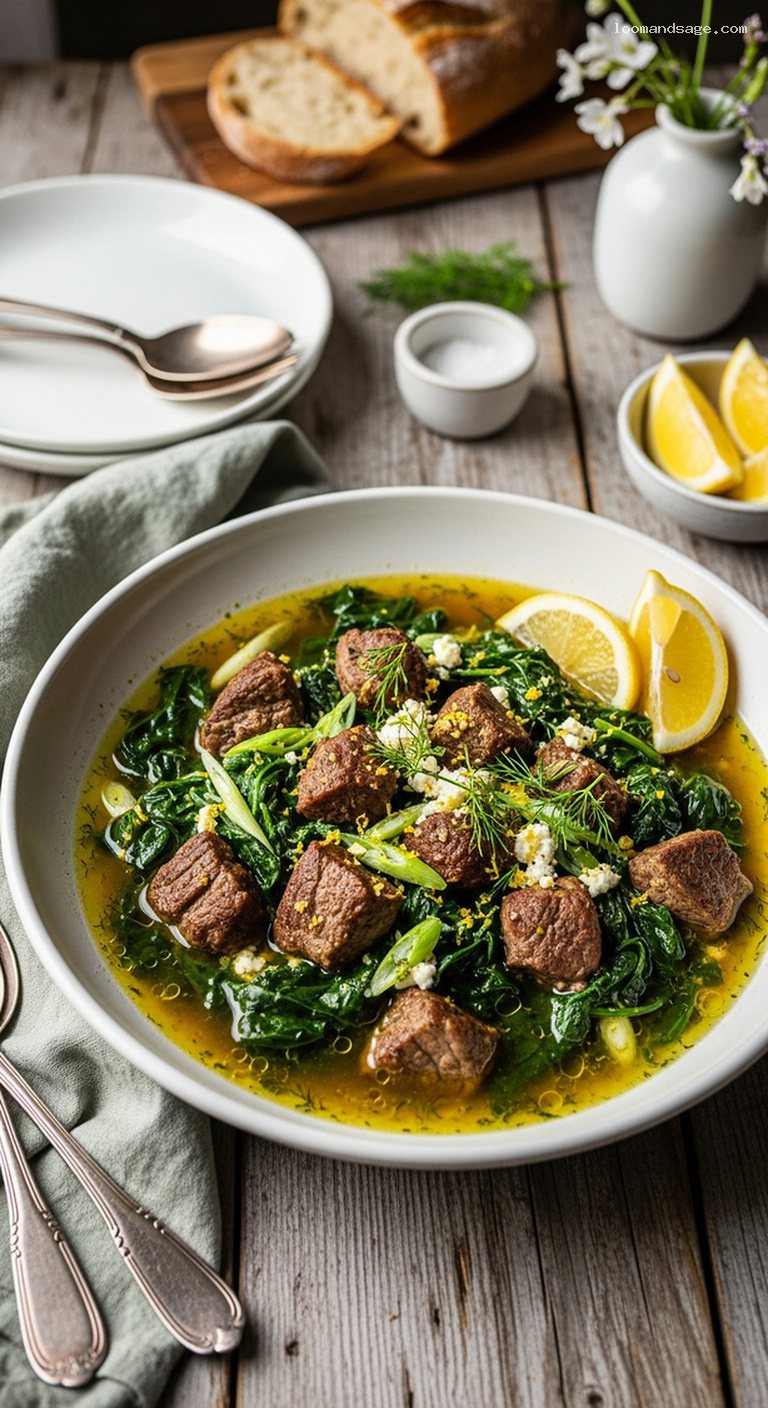
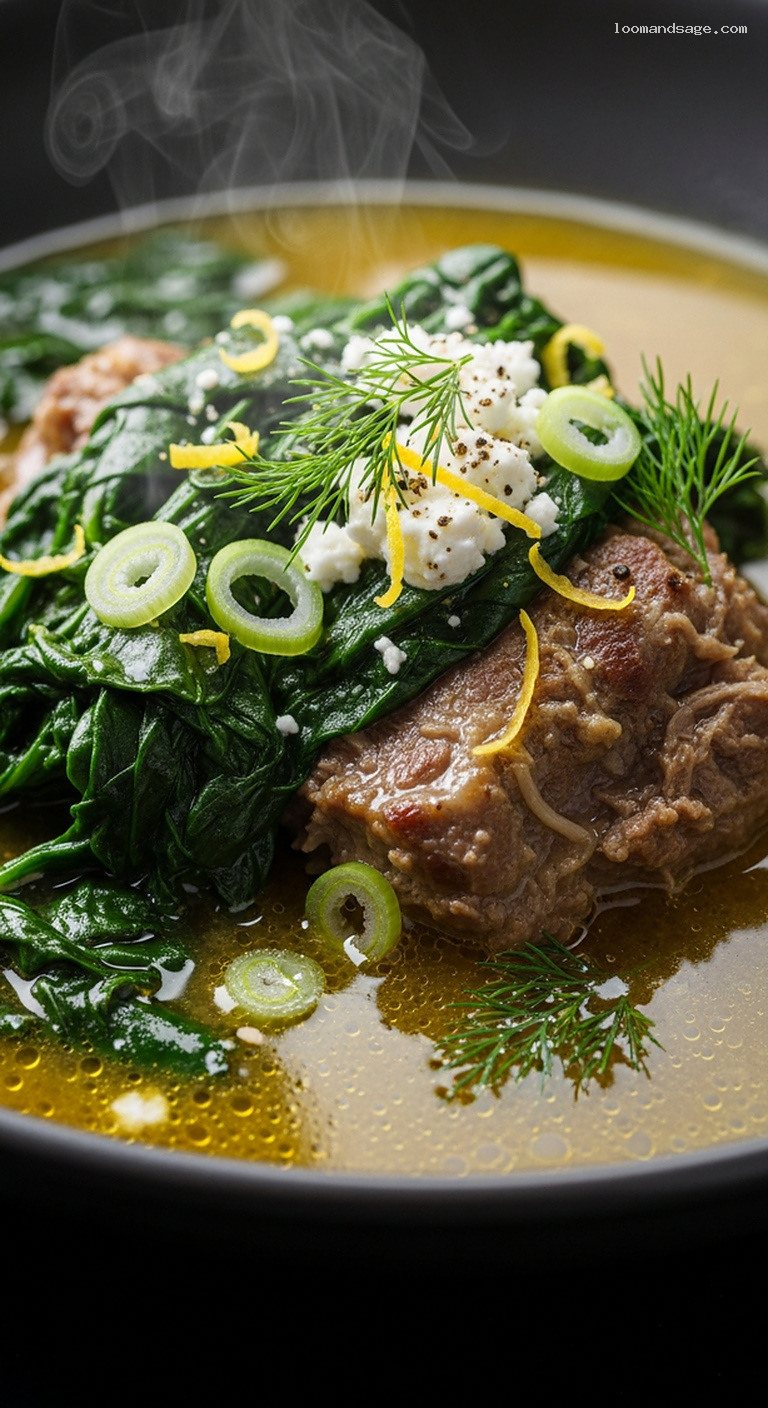
Spoon the lamb and spinach stew into warm shallow bowls, making sure each portion has plenty of lamb, greens, and broth. Serve over or alongside cooked rice, orzo, mashed potatoes, or with plenty of crusty bread for dipping into the juices.
Garnish with extra chopped dill or parsley. If you like, crumble a little feta over the top or add a small spoonful of thick Greek yogurt for a creamy contrast. Serve with lemon wedges on the side for anyone who loves even more citrus.
Pro Tips
- Brown in batches: Crowding the pot will steam the lamb instead of browning it. Take the time to sear in 2 batches for the best flavor.
- Keep the braise gentle: A low, steady simmer gives you tender, juicy lamb. If it boils hard, the meat can tighten and become tough.
- Add spinach in stages: Stir in the spinach by big handfuls, letting each batch wilt before adding the next. It is easier to manage and cooks more evenly.
- Do not overcook the greens: Once the spinach is tender and bright and the herbs are fragrant, turn off the heat. Overcooking dulls the color and flavor.
- Adjust lemon at the end: Different lemons vary in acidity. Always taste after adding lemon and adjust to your preferred level of brightness.
Variations
- Avgolemono-style finish: For a silkier, more traditional Greek touch, temper 2 beaten eggs with some hot broth, then whisk the egg mixture back into the pot off the heat along with the lemon juice. Do not let it boil or the eggs may curdle.
- With artichokes: Add 2 cups quartered artichoke hearts (fresh, frozen, or well-drained from a jar) during the last 20 minutes of braising, before adding spinach. They pair beautifully with lamb, lemon, and dill.
- Lighter version with chicken: Substitute bone-in, skinless chicken thighs for the lamb and reduce initial simmering time to about 35–40 minutes, until the chicken is cooked through and tender.
Storage & Make-Ahead
Let the stew cool to room temperature, then transfer to airtight containers. Refrigerate for up to 4 days. The flavors deepen nicely overnight, so this is an excellent make-ahead meal.
Reheat gently on the stovetop over low to medium-low heat until hot, adding a splash of water or stock if the sauce has thickened too much. Avoid boiling hard, which can overcook the greens. Taste and refresh with a squeeze of lemon and a drizzle of olive oil just before serving.
For longer storage, you can freeze the lamb and braising liquid (without spinach and fresh herbs) for up to 2 months. Thaw overnight in the fridge, reheat, then add fresh spinach and herbs and cook as directed in Steps 5 and 6.
Nutrition (per serving)
Approximate values for one of 6 servings, without rice, orzo, bread, feta, or yogurt:
Calories: ~450 kcal; Protein: ~27 g; Fat: ~30 g; Saturated Fat: ~9 g; Carbohydrates: ~9 g; Fiber: ~3 g; Sugars: ~3 g; Sodium: ~520 mg. These values are estimates and will vary based on exact ingredients and any added garnishes or sides.