Quick Recipe Version (TL;DR)
Quick Ingredients
- 1 1/2 cups (300 g) yellow split peas, rinsed
- 1 large yellow onion, chopped
- 2 cloves garlic, sliced (optional)
- 4 1/2 cups (1.1 L) water, plus more as needed
- 1 bay leaf
- 1/4 cup (60 ml) extra-virgin olive oil, plus 3–4 tbsp for serving
- 1–1 1/4 tsp fine sea salt, to taste
- Freshly ground black pepper
- 2–3 tbsp capers, rinsed and drained
- 1/4 medium red onion, very thinly sliced
- 1 large lemon (2 tbsp juice + wedges for serving)
- Pinch dried oregano or fresh thyme leaves (optional garnish)
Do This
- 1. Rinse yellow split peas under cold water until it runs mostly clear; drain well.
- 2. In a pot, gently cook chopped onion (and garlic, if using) in 1/4 cup olive oil over medium heat for 5–7 minutes until soft but not browned.
- 3. Add split peas, bay leaf, and 4 1/2 cups water. Bring to a boil, skim foam, then simmer gently for 30–35 minutes, stirring occasionally, until peas are very soft.
- 4. Remove bay leaf. Season with salt and pepper. If there is a lot of liquid, simmer uncovered a few more minutes until thick but still loose.
- 5. Purée hot mixture with an immersion blender or in batches in a blender until completely smooth and velvety. Stir in 2 tbsp lemon juice and 2–3 tbsp extra olive oil.
- 6. Rest 10 minutes; the purée will thicken. Adjust seasoning and consistency with a splash of hot water if needed.
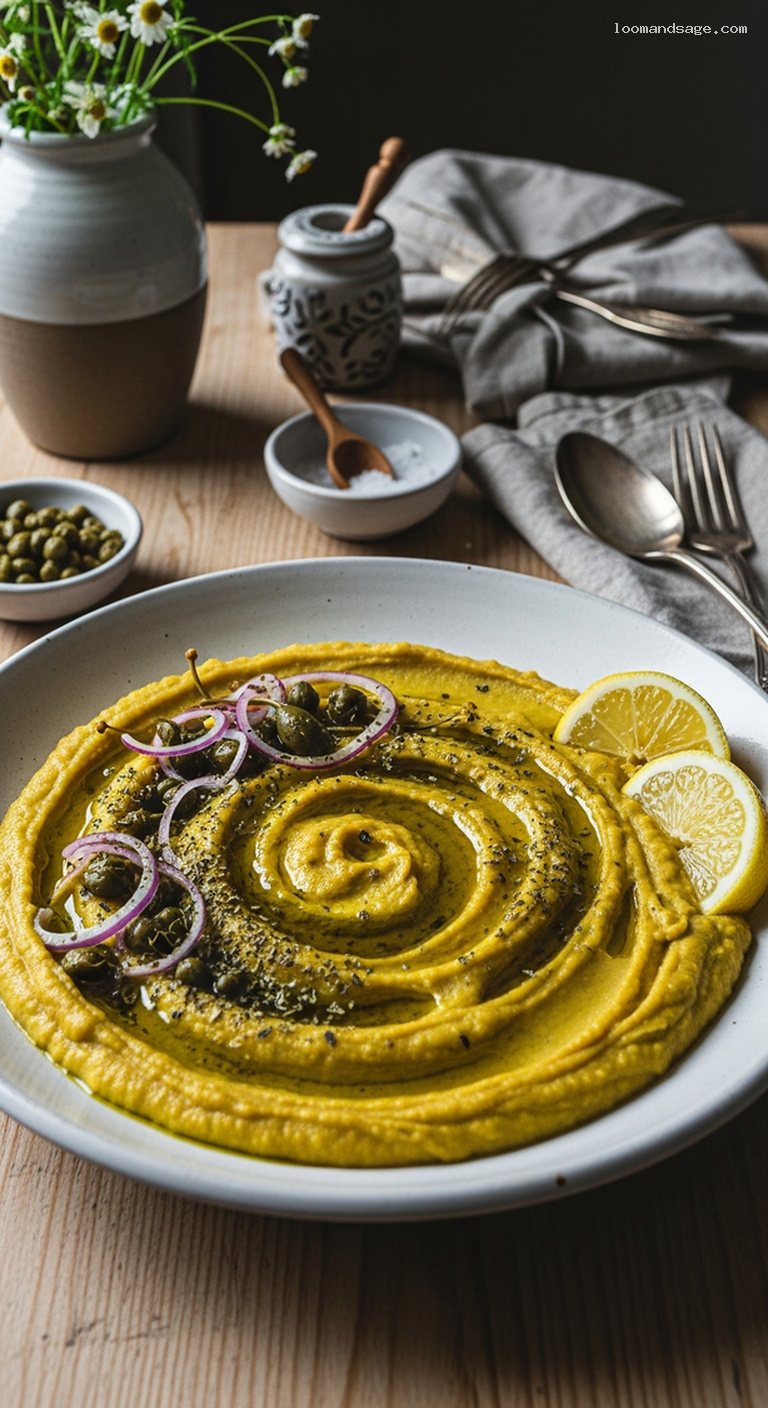
- 7. Spread warm or room-temperature fava on a plate, swirl the top, drizzle with more olive oil, and finish with capers, raw red onion, oregano, and lemon wedges.
Why You’ll Love This Recipe
- Classic Cycladic flavor: creamy, sunny-yellow purée topped with briny capers, sharp onion, and bright lemon.
- Made from pantry staples, yet impressive enough for a dinner party mezze platter.
- Vegan, naturally gluten-free, and high in plant protein and fiber.
- Excellent make-ahead dish that tastes even better after the flavors mingle.
Grocery List
- Produce: 1 large yellow onion, 1 small red onion, 1–2 lemons, 2 garlic cloves (optional), fresh thyme or parsley (optional)
- Dairy: None required (optional: feta cheese for serving, if you like)
- Pantry: Yellow split peas, extra-virgin olive oil, bay leaf, capers, dried oregano, fine sea salt, black pepper
Full Ingredients
For the Fava Santorinis Base
- 1 1/2 cups (300 g) yellow split peas, picked over and rinsed
- 1 large yellow onion, roughly chopped
- 2 cloves garlic, sliced (optional but traditional in many homes)
- 4 1/2 cups (1.1 L) water, plus more as needed
- 1 bay leaf
- 1/4 cup (60 ml) extra-virgin olive oil
- 1–1 1/4 tsp fine sea salt, or to taste
- 1/4 tsp freshly ground black pepper, or to taste
- 2 tbsp freshly squeezed lemon juice (from about 1/2–1 lemon)
- 2–3 tbsp extra-virgin olive oil, for stirring in after blending
For Serving and Garnish
- 2–3 tbsp capers, rinsed and drained
- 1/4 medium red onion, very thinly sliced or finely diced
- 2–3 tbsp extra-virgin olive oil, for drizzling on top
- Lemon wedges, from the remaining lemon
- Pinch dried oregano, or a few fresh thyme leaves, for sprinkling
Optional Extras
- Crusty bread, pita, or baked pita chips, for scooping
- Crumbled feta cheese, for a non-vegan topping
- Chopped fresh parsley, for extra color and freshness
Step-by-Step Instructions
Step 1: Prep and rinse the split peas
Spread the yellow split peas on a tray or your countertop and quickly pick through them, discarding any small stones or debris. Place the peas in a fine-mesh strainer and rinse thoroughly under cold running water, using your hands to swish them around. Continue rinsing until the water runs mostly clear. Drain well and set aside.
Roughly chop the yellow onion and slice the garlic (if using). The vegetables will be blended later, so there is no need for perfect cutting—just keep pieces relatively even so they cook at the same rate.
Step 2: Soften the onion in olive oil
In a medium heavy-bottomed pot (2.5–3 L capacity), warm 1/4 cup (60 ml) extra-virgin olive oil over medium heat. Add the chopped yellow onion and a pinch of salt. Cook, stirring occasionally, for 5–7 minutes until the onion is soft and translucent but not browned. If using garlic, add it for the last 1–2 minutes and stir gently so it softens without burning.
Softening the onion in oil first builds sweetness and depth, which is essential for the simple, clean flavor of classic Fava Santorinis.
Step 3: Simmer the peas until very tender
Add the rinsed yellow split peas to the pot along with the bay leaf. Pour in 4 1/2 cups (1.1 L) water. Stir, then raise the heat to high and bring to a gentle boil. As the pot comes to a boil, a grayish foam will rise to the surface; skim this off with a spoon and discard. Skimming makes the purée lighter and easier to digest.
Once boiling, reduce the heat to low or medium-low to maintain a gentle simmer. Partially cover the pot with a lid, leaving it slightly ajar, and cook for 30–35 minutes, stirring every 5 minutes or so to prevent sticking. The peas are done when they are extremely soft and starting to fall apart when stirred. If they look dry before they are tender, add hot water 1/4 cup at a time.
Step 4: Adjust consistency, season, and remove aromatics
When the peas are very tender, check the pot. You want a thick, porridge-like mixture: soft and loose but not soupy. If there is a lot of liquid on top, simmer uncovered for another 3–5 minutes, stirring often, until it thickens slightly—the mixture will thicken more as it cools.
Remove and discard the bay leaf. Season the mixture with 1–1 1/4 tsp salt and 1/4 tsp black pepper to start; you can adjust later after blending. Take the pot off the heat and let it sit for 2–3 minutes so it stops bubbling vigorously before blending.
Step 5: Purée to a velvety texture
For easiest cleanup, use an immersion blender directly in the pot. Blend the hot peas and onions for 1–3 minutes, moving the blender around and scraping the bottom occasionally, until the mixture is completely smooth and silky. If you prefer, transfer in batches to a countertop blender (do not overfill; vent the lid slightly and cover with a towel to release steam safely).
Once smooth, stir in 2 tbsp lemon juice and 2–3 tbsp extra-virgin olive oil. The lemon adds brightness, while the extra oil gives that luxurious, velvety texture. Taste and adjust with more salt, pepper, or lemon juice as needed. If the fava seems too thick, whisk in a splash of hot water until it reaches a soft, spreadable consistency.
Step 6: Let it rest, garnish, and serve
Allow the fava to rest for about 10 minutes; it will thicken slightly as it cools. If it becomes firmer than you like, loosen it with a bit more hot water and whisk until smooth again. For a traditional presentation, spoon the warm or room-temperature purée onto a shallow plate or platter and use the back of a spoon to swirl the surface into gentle waves or a small well in the center.
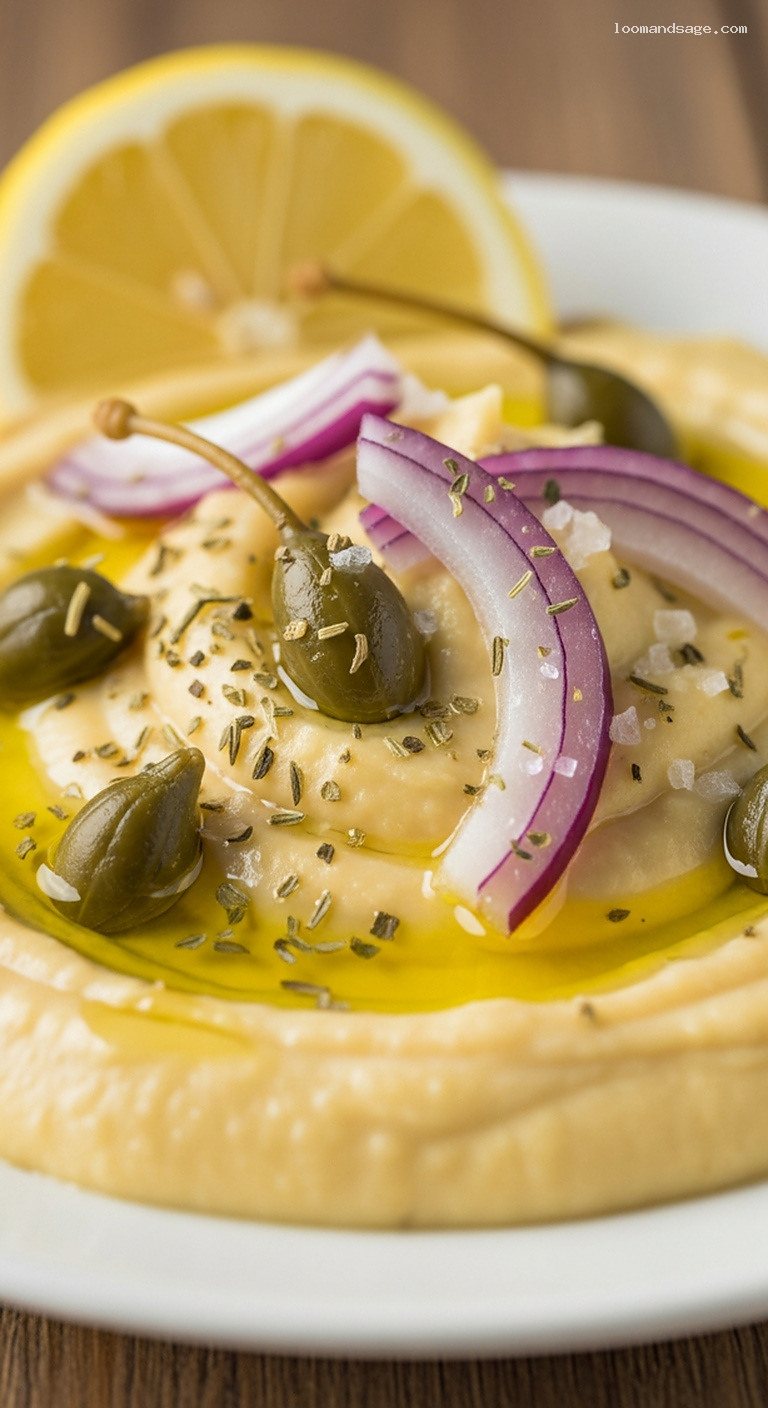
Drizzle generously with more extra-virgin olive oil. Scatter the capers and thinly sliced red onion over the top. Finish with a pinch of dried oregano or a few fresh thyme leaves. Serve with lemon wedges on the side and plenty of crusty bread or pita for scooping.
Pro Tips
- Control the thickness: Fava should be thick yet soft and spoonable. If it is too runny after cooking, simmer a bit longer uncovered. If it is too stiff after resting, whisk in hot water a tablespoon at a time.
- Blend thoroughly: Take your time with the blender. The longer you blend (within reason), the silkier the purée. Any small unblended bits will make the texture feel less luxurious.
- Season at the end: Salt and lemon can taste muted while the fava is very hot. Always taste and adjust right before serving, when it has cooled slightly.
- Serve warm or room temperature: This dish is best when just warm or at cool room temperature; if it is piping hot, the flavors of capers, onion, and lemon will be less pronounced.
- Rinse the capers: Quickly rinsing capers under cold water tones down excess brininess so they complement rather than overpower the delicate purée.
Variations
- Caramelized onion topping: Instead of raw red onion, slowly caramelize a sliced yellow onion in olive oil until deeply golden and sweet, then pile it on top of the fava with capers.
- Herb and chili version: Stir a handful of finely chopped fresh parsley or dill into the purée and finish with a light sprinkle of red pepper flakes for gentle heat.
- Roasted tomato fava: Top the plated fava with slow-roasted cherry tomatoes, a drizzle of their roasting juices, and a crumble of feta for a more substantial appetizer (not vegan).
Storage & Make-Ahead
Fava Santorinis stores beautifully and is even better the next day as the flavors meld. Allow the purée to cool to room temperature, then transfer it to an airtight container. Refrigerate for up to 4–5 days. To reheat, warm gently in a saucepan over low heat or in the microwave, stirring occasionally. Add a splash of water or olive oil if it has thickened too much, and whisk until smooth and creamy again.
For longer storage, you can freeze the purée (without the toppings) in airtight containers or freezer bags for up to 3 months. Thaw overnight in the refrigerator, then reheat and adjust the consistency and seasoning before serving. Always add capers, raw onion, and lemon fresh at serving time for the best texture and brightness.
Nutrition (per serving)
Approximate values for 1 of 4 servings, without optional feta or bread: about 480 calories, 18 g protein, 48 g carbohydrates, 15 g fiber, 23 g fat (of which about 3 g saturated), 0 mg cholesterol, and around 400 mg sodium (will vary with your salt and capers). These numbers are estimates and will change based on exact ingredients and portion sizes.