
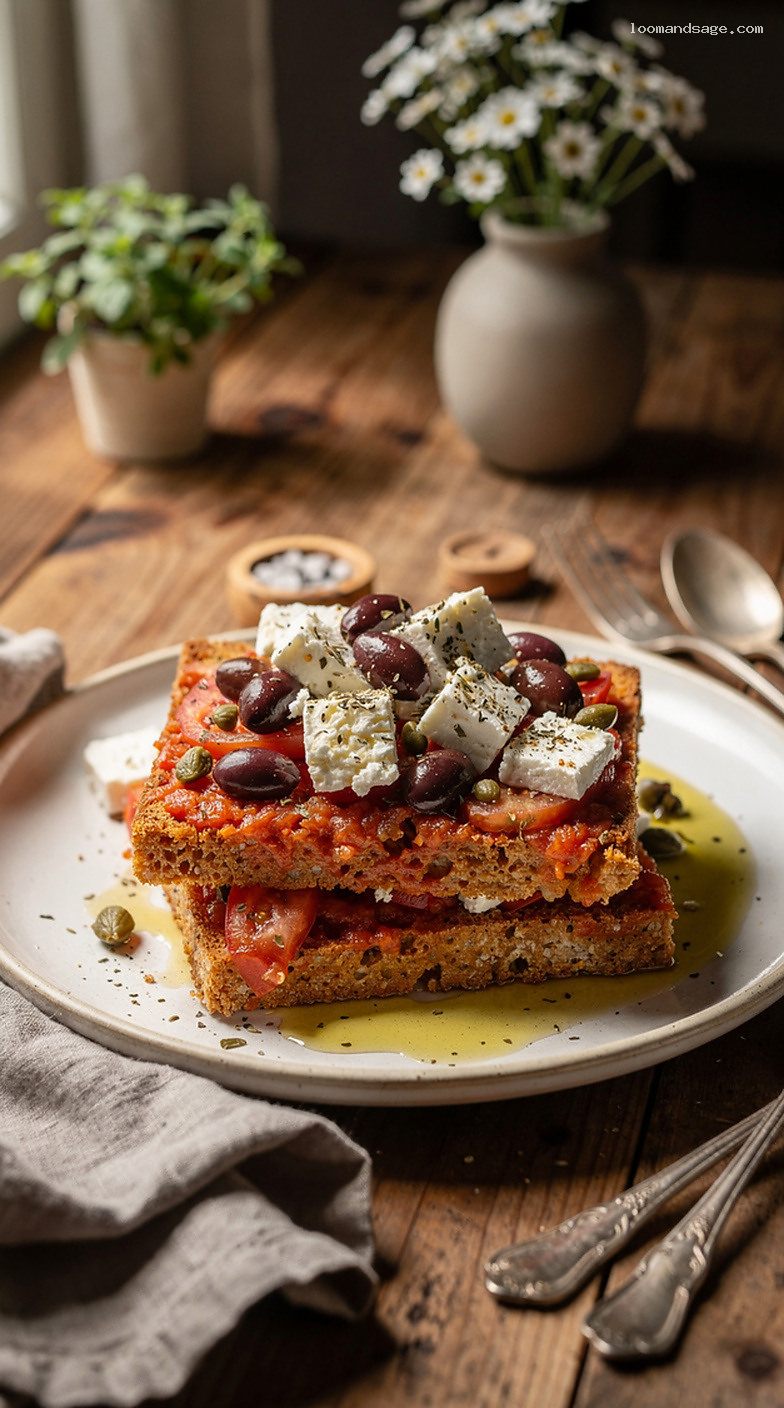
Quick Recipe Version (TL;DR)
Quick Ingredients
- 4 Cretan barley rusks (about 120 g / 4 oz total)
- 80 ml (1/3 cup) cool water (for quick soaking)
- 2 large ripe tomatoes (about 400 g / 14 oz), grated
- 60 ml (1/4 cup) extra-virgin olive oil, plus more to finish
- 15 ml (1 tbsp) red wine vinegar (optional but traditional)
- 1/2 tsp fine salt, plus more to taste
- 1/4 tsp black pepper
- 120 g (4 oz) feta, crumbled (or mizithra, if available)
- 60 g (1/3 cup) Kalamata olives, pitted and halved
- 1 tbsp capers, drained
- 2 tsp dried oregano
Do This
- 1. Grate tomatoes on a box grater; discard skins.
- 2. Lightly moisten rusks with water (don’t soak to mushy); rest 3–5 minutes.
- 3. Stir tomato with olive oil, vinegar (if using), salt, and pepper.
- 4. Spoon tomato mixture over each rusk so it seeps into the cracks.
- 5. Pile on crumbled feta (or mizithra), olives, and capers.
- 6. Finish with oregano and a final drizzle of olive oil.
- 7. Serve right away while the base is still pleasantly crunchy.
Why You’ll Love This Recipe
- Big flavor, zero cooking: ripe tomato, olive oil, oregano, and salty cheese do all the work.
- Perfect texture contrast: crunchy barley rusk softens just enough to be biteable while staying toothsome.
- Fast and flexible: great as a meze, light lunch, or an easy appetizer for guests.
- Authentic Mediterranean vibe: simple, rustic ingredients that taste like summer.
Grocery List
- Produce: 2 large ripe tomatoes; (optional) 1 small lemon for serving wedges
- Dairy: feta (or mizithra)
- Pantry: Cretan barley rusks; extra-virgin olive oil; red wine vinegar (optional); dried oregano; capers; Kalamata olives; fine salt; black pepper
Full Ingredients
For the Dakos Base
- 4 Cretan barley rusks (about 120 g / 4 oz total)
- 80 ml (1/3 cup) cool water, for lightly moistening the rusks
For the Tomato Mixture
- 2 large ripe tomatoes (about 400 g / 14 oz)
- 60 ml (1/4 cup) extra-virgin olive oil, plus 15–30 ml (1–2 tbsp) more to finish
- 15 ml (1 tbsp) red wine vinegar (optional, but brightens the tomato)
- 1/2 tsp fine salt, plus more to taste
- 1/4 tsp freshly ground black pepper
For Topping & Finishing
- 120 g (4 oz) feta, crumbled (or mizithra, crumbled)
- 60 g (1/3 cup) Kalamata olives, pitted and halved
- 1 tbsp capers, drained
- 2 tsp dried oregano
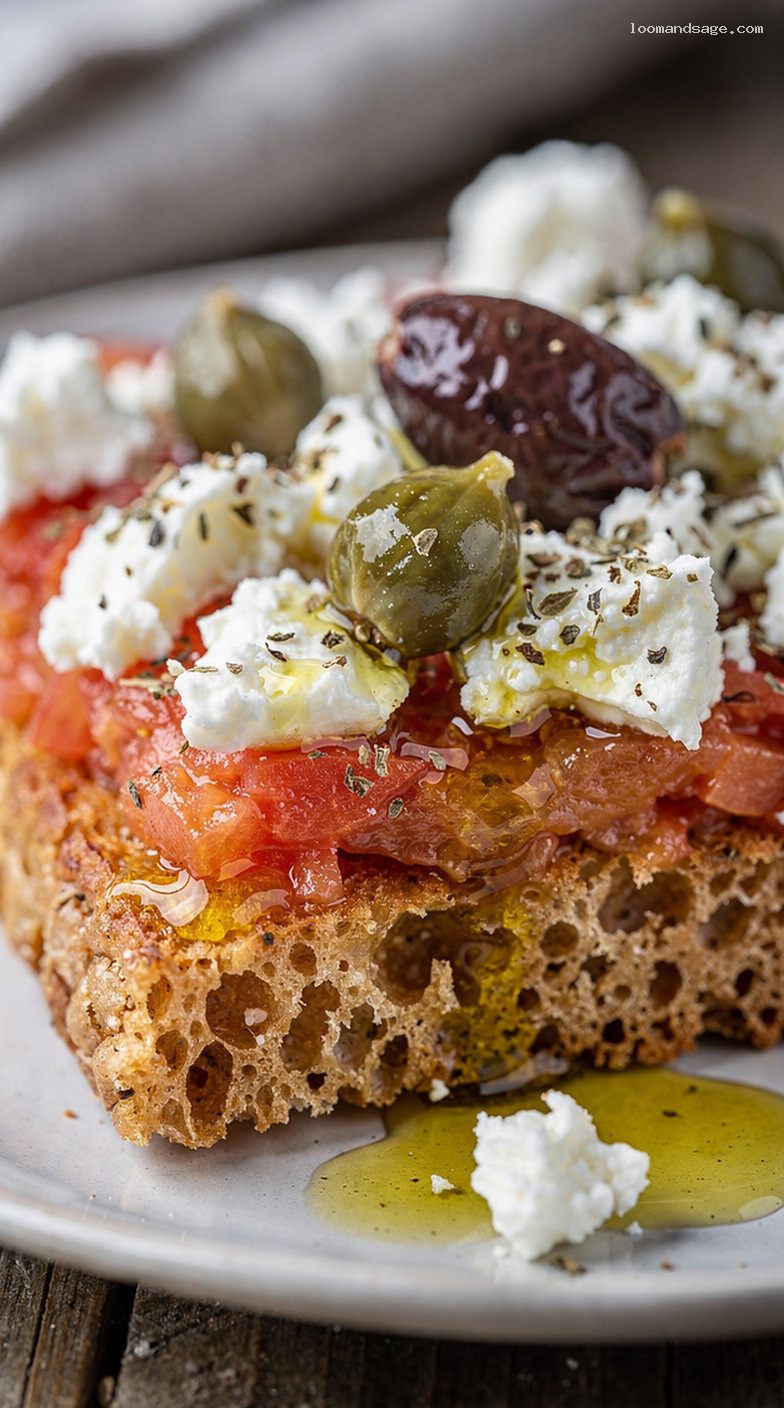
Step-by-Step Instructions
Step 1: Grate the tomatoes
Set a box grater over a medium bowl. Cut the tomatoes in half crosswise. Grate the cut side against the large holes, pressing firmly, until you’re left with mostly skin in your hand. Discard the skins.
You should end up with a juicy, pulpy tomato mixture. If it seems extremely watery, you can tip the bowl slightly and spoon off 1–2 tablespoons of the thinnest liquid, but keep most of the juice (it’s what soaks into the rusks).
Step 2: Season the tomato mixture
Add 60 ml (1/4 cup) extra-virgin olive oil, 15 ml (1 tbsp) red wine vinegar (if using), 1/2 tsp fine salt, and 1/4 tsp black pepper to the grated tomatoes. Stir well and taste.
The mixture should taste boldly seasoned and a little punchy; once it hits the rusks and cheese, it will mellow out. Adjust with a pinch more salt if needed.
Step 3: Lightly moisten the barley rusks
Place the barley rusks on a serving platter (or individual plates). Drizzle or sprinkle each rusk with a little cool water from the 80 ml (1/3 cup), using just enough to take the edge off the hardness.
Let the rusks rest for 3–5 minutes. The goal is lightly softened but still crunchy—they should not turn soggy or fall apart.
Step 4: Spoon tomato over the rusks
Divide the tomato mixture evenly over the rusks. Use the back of a spoon to spread it across the surface so it can seep into the cracks and crevices.
If you like a softer dakos, let it sit for an additional 2 minutes before adding the toppings.
Step 5: Add cheese, olives, and capers
Pile 120 g (4 oz) crumbled feta (or mizithra) over the tomatoes, dividing it evenly. Scatter over the halved Kalamata olives and drained capers.
Try to distribute the toppings so every bite gets a bit of everything: tomato, cheese, and briny accents.
Step 6: Finish with oregano and olive oil
Sprinkle 2 tsp dried oregano over the top. Drizzle with an additional 15–30 ml (1–2 tbsp) extra-virgin olive oil, depending on how lush you like it.
Serve immediately for maximum crunch, or let it sit 5 minutes for a more tender, soaked-through texture.
Pro Tips
- Pick tomatoes that smell like tomatoes: ripe, fragrant tomatoes make this dish. If your tomatoes are bland, add the vinegar and a pinch more salt.
- Control the crunch: for crunchier dakos, use less water and serve right away; for softer dakos, use a touch more water and rest an extra 5 minutes.
- Use great olive oil: with so few ingredients, the flavor of the extra-virgin olive oil really shows. Choose a peppery, fruity one if possible.
- Season in layers: the tomato mix should be well seasoned before it hits the rusks; it’s harder to fix later without over-salting the cheese.
- Don’t overmix the tomatoes: you want a juicy, rustic pulp, not a smooth sauce.
Variations
- With fresh herbs: add 2 tablespoons chopped fresh oregano or parsley (or a mix) on top for extra brightness.
- With cucumber: add 100 g (about 1 cup) diced cucumber for extra crunch and a cool, fresh bite.
- With a little heat: sprinkle on 1/4 tsp Aleppo pepper or red pepper flakes to complement the sweet tomato and briny capers.
Storage & Make-Ahead
Dakos is best eaten soon after assembling so the rusks stay pleasantly crunchy. If you want to prep ahead, grate and season the tomatoes up to 12 hours in advance and refrigerate in an airtight container. Bring the tomato mixture back to room temperature for 15 minutes before serving, then assemble right before eating. Leftovers can be refrigerated for up to 24 hours, but the rusks will soften considerably (still tasty, just not crunchy).
Nutrition (per serving)
Approximate, based on 4 servings: 340 calories, 22 g fat, 26 g carbohydrates, 10 g protein, 4 g fiber, 820 mg sodium.