
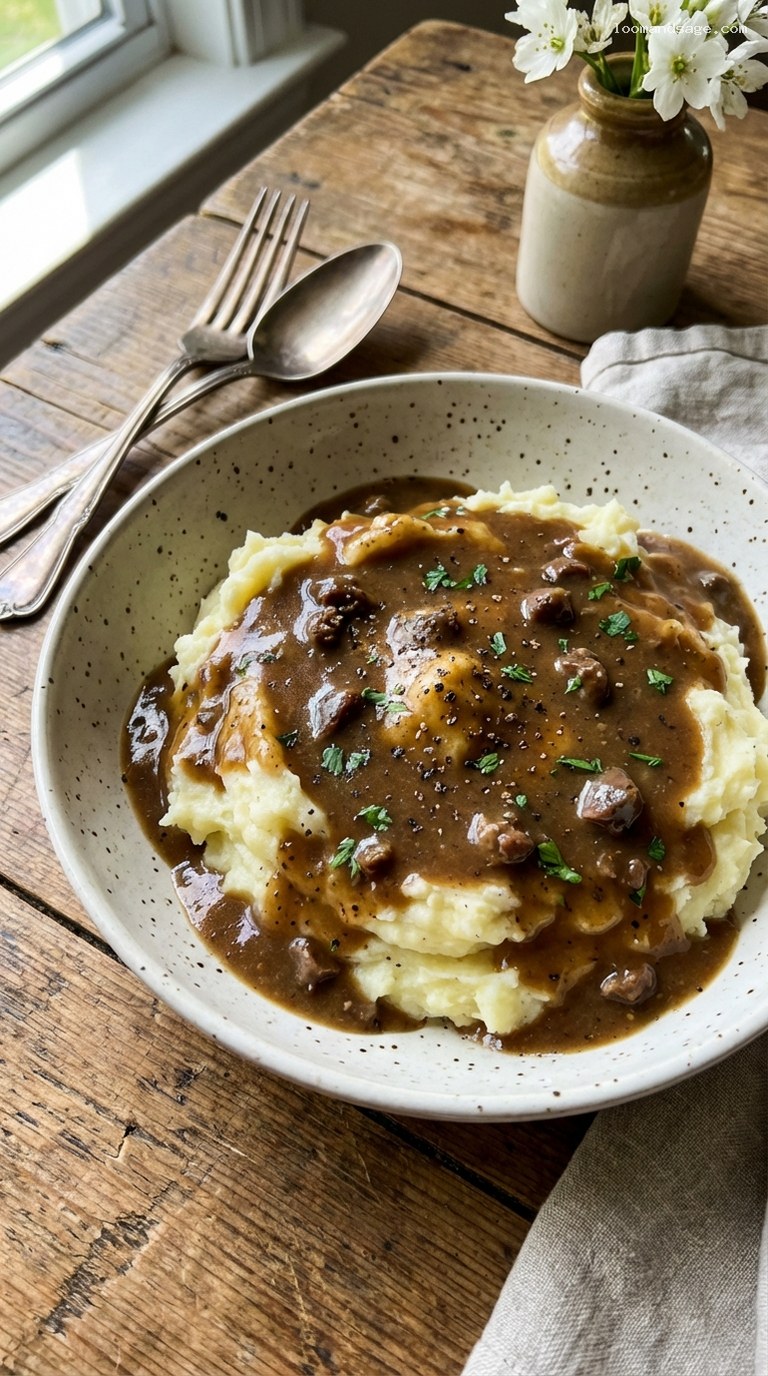
Quick Recipe Version (TL;DR)
Quick Ingredients
- 1 1/2 lb chicken gizzards, trimmed and rinsed
- 4 cups low-sodium chicken broth + 1 cup water
- 1 small onion, 1 carrot, 1 rib celery, 2 garlic cloves, 1 bay leaf
- 4 Tbsp unsalted butter
- 6 Tbsp all-purpose flour
- 2 1/2–3 cups reserved gizzard broth
- 1/4 cup heavy cream or whole milk (optional)
- Kosher salt and plenty of black pepper
- Mashed potatoes or buttered egg noodles, for serving
Do This
- 1. Trim and rinse gizzards. Add to a pot with broth, water, onion, carrot, celery, garlic, bay leaf, salt, and peppercorns.
- 2. Bring to a gentle simmer, then cook on low, covered, 1 1/2–2 hours until gizzards are very tender.
- 3. Strain and reserve 2 1/2–3 cups broth. Discard aromatics. Finely chop the tender gizzards.
- 4. In a saucepan, melt butter over medium heat. Stir in flour and cook 3–4 minutes, stirring, until light golden and nutty.
- 5. Gradually whisk in reserved hot broth until smooth and thickened; simmer 5–10 minutes. Stir in cream if using.
- 6. Add chopped gizzards, lots of black pepper, and salt to taste. Simmer 5 minutes more and serve over mashed potatoes or noodles.
Why You’ll Love This Recipe
- Old-fashioned Amish-style comfort food: simple ingredients, slow-cooked to deep, savory flavor.
- Transforms humble chicken gizzards into a rich, peppery gravy perfect for ladling over mashed potatoes or noodles.
- Budget-friendly and hearty enough to stretch into several satisfying meals.
- Great make-ahead dish: the flavor actually improves as it rests and reheats beautifully.
Grocery List
- Produce: 1 small yellow onion, 1 small carrot, 1 rib celery, 2 cloves garlic, fresh parsley (optional)
- Dairy: Unsalted butter, heavy cream or whole milk (optional), butter and milk/cream for mashed potatoes (if making from scratch)
- Pantry: 1 1/2 lb chicken gizzards, low-sodium chicken broth, all-purpose flour, kosher salt, black pepper, bay leaf, poultry seasoning or dried thyme (optional), potatoes or egg noodles
Full Ingredients
For the tender gizzards and broth
- 1 1/2 lb (680 g) chicken gizzards, trimmed of excess fat and rinsed well
- 4 cups (960 ml) low-sodium chicken broth
- 1 cup (240 ml) water
- 1 small yellow onion, quartered (no need to peel fully)
- 1 small carrot, cut into large chunks
- 1 rib celery, cut into large chunks
- 2 cloves garlic, smashed
- 1 bay leaf
- 1 tsp kosher salt
- 1/2 tsp whole black peppercorns (or 1/4 tsp ground black pepper)
For the peppery gizzard gravy
- 4 Tbsp (56 g) unsalted butter
- 6 Tbsp (45 g) all-purpose flour
- 2 1/2–3 cups (590–710 ml) hot, strained gizzard broth (from above)
- 1/4 cup (60 ml) heavy cream or whole milk (optional, for a silkier gravy)
- 1–1 1/2 tsp kosher salt, to taste
- 1–1 1/2 tsp freshly ground black pepper, or to taste (Amish-style gravy is nicely peppery)
- 1/4 tsp poultry seasoning or dried thyme (optional, for a hint of herbal flavor)
For serving (highly recommended)
- Mashed potatoes, hot and fluffy
- or buttered egg noodles, cooked according to package directions
- Chopped fresh parsley, for garnish (optional)
Step-by-Step Instructions
Step 1: Trim and rinse the gizzards
Unpack the chicken gizzards and place them in a colander. Rinse under cold running water, using your fingers to rub away any grit. Trim off any large yellow fat deposits or tough silver skin with a small sharp knife. You do not have to cut them up yet; leaving them whole while they simmer keeps them moist and easier to chop later.
Set the cleaned gizzards aside to drain while you gather and roughly chop the onion, carrot, celery, and garlic.
Step 2: Start the broth and slow-simmer the gizzards
Place the trimmed gizzards into a medium to large heavy-bottomed pot. Add the onion, carrot, celery, garlic, bay leaf, 1 tsp kosher salt, and the peppercorns. Pour in the chicken broth and water. The liquid should just cover the gizzards; if not, add a splash more water.
Set the pot over medium-high heat and bring it just to a boil. As soon as it reaches a boil, turn the heat down to low so the liquid is at a very gentle simmer with only small bubbles. Cover with a lid, leaving it slightly ajar, and simmer for 1 1/2 to 2 hours. Stir every 20–30 minutes, making sure nothing sticks. The gizzards are done when they are very tender and can be easily pierced with a fork.
Step 3: Strain the broth and chop the gizzards
When the gizzards are fork-tender, turn off the heat. Use a slotted spoon to lift the gizzards onto a cutting board. Let them cool just enough to handle safely. Meanwhile, place a fine-mesh strainer over a large bowl or measuring jug and carefully pour the cooking liquid and vegetables through it.
Discard the vegetables and bay leaf; their work is done. You should have at least 3 cups of flavorful broth. Measure out 2 1/2–3 cups for the gravy and keep it hot (you can return it to a small saucepan over low heat). Finely chop the gizzards into small, bite-sized pieces; traditional Amish gravy often uses a fairly fine chop so the meat is distributed evenly throughout the sauce.
Step 4: Make a buttery roux for the gravy
In a clean medium saucepan, melt the 4 Tbsp butter over medium heat. Once melted and gently bubbling, sprinkle in the 6 Tbsp flour while stirring constantly with a wooden spoon or heatproof spatula. Cook this mixture, stirring, for 3–4 minutes until it turns a light golden color and smells nutty and toasty. This cooked butter–flour mixture is your roux and will give the gravy body and flavor.
Do not let the roux get too dark; for this style of country gravy, a pale golden roux is perfect. If it starts to brown quickly, lower the heat.
Step 5: Whisk in the broth and season well
Switch to a whisk. Slowly pour in about 1/2 cup of the hot gizzard broth while whisking constantly to form a smooth paste. Gradually add the remaining broth, a ladle at a time, whisking well after each addition to avoid lumps. Start with 2 1/2 cups broth; you can always add more later if you prefer a thinner gravy.
Bring the mixture to a gentle simmer over medium heat. As it heats, the gravy will thicken. Reduce the heat to medium-low and let it bubble softly for 5–10 minutes, stirring often so it does not scorch. Stir in the optional cream or milk if using. Season with 1 tsp kosher salt, 1 tsp freshly ground black pepper, and the poultry seasoning or thyme, if using. Taste and adjust with additional salt and pepper; this gravy is meant to be nicely peppery.
Step 6: Add the chopped gizzards and finish the gravy
Stir the finely chopped gizzards into the simmering gravy. Continue to cook on low for another 5–10 minutes, stirring occasionally, so the flavors mingle and the meat warms through. If the gravy becomes thicker than you like, whisk in a bit more hot broth or a splash of water until it reaches your preferred consistency.
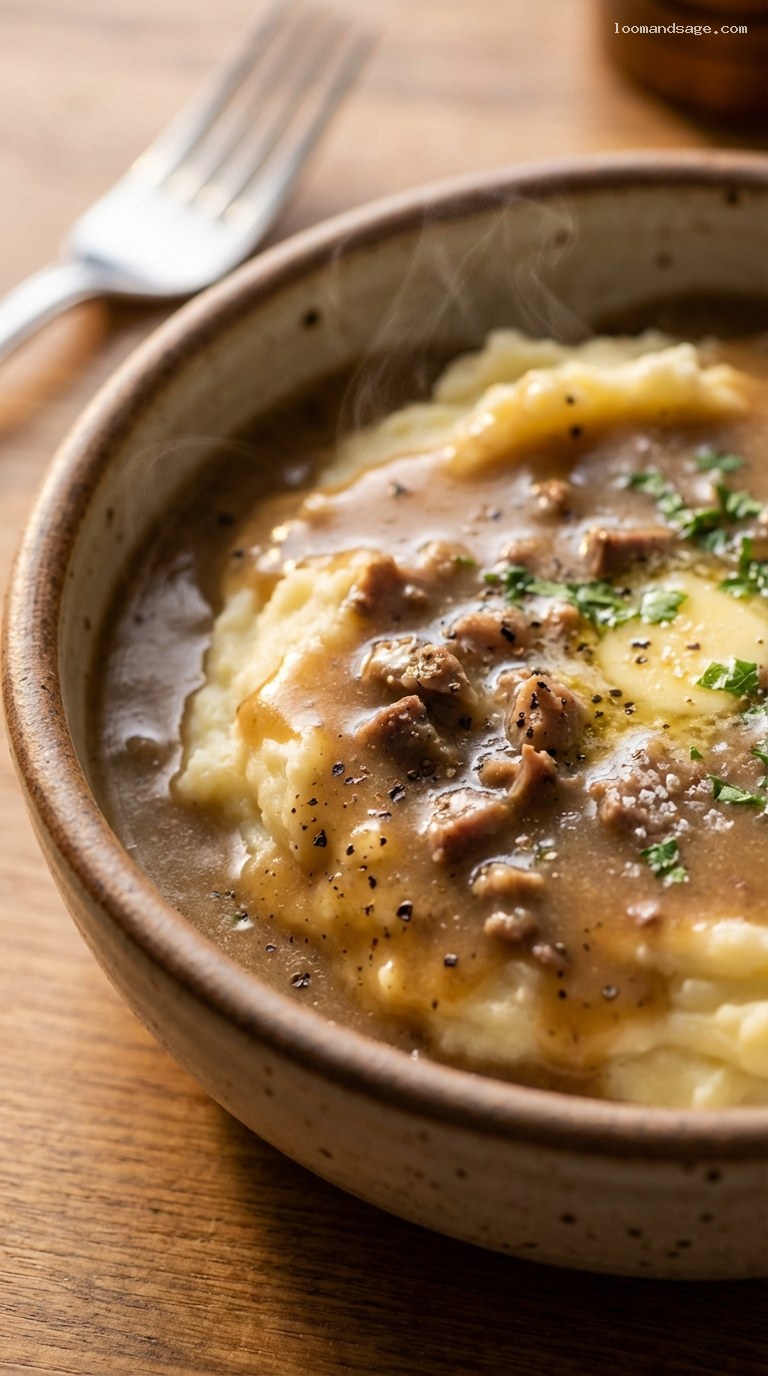
Taste once more and adjust the seasoning. Add more black pepper if you want that classic, assertive Amish-style peppery bite. The finished gravy should be glossy, spoon-coating, and generously studded with tender pieces of gizzard.
Step 7: Serve over mashed potatoes or noodles
Keep the gizzard gravy warm on the lowest heat while you prepare your base, or reheat leftover mashed potatoes or cooked egg noodles. For mashed potatoes, pile them into shallow bowls or onto plates, making a small well in the center. For noodles, toss them with a bit of butter and salt, then spread them out in a warm bowl.
Ladle the hot, peppery gizzard gravy generously over the potatoes or noodles. If you like, sprinkle with chopped fresh parsley for a touch of color. Serve immediately, with extra black pepper at the table for anyone who wants a little more bite.
Pro Tips
- Low and slow is key: Keep the gizzards at a gentle simmer, not a rolling boil. Vigorous boiling can make them tough; slow cooking makes them fork-tender.
- Chop gizzards finely for the best texture: Small, even pieces distribute evenly throughout the gravy and make every bite meaty and satisfying.
- Adjust thickness to your liking: For thicker gravy, let it simmer uncovered a bit longer. For thinner gravy, whisk in additional hot broth or water a little at a time.
- Season at the end: The broth reduces and intensifies as it simmers. Always taste and adjust salt and pepper right before serving.
- Use hot broth in the roux: Warm or hot broth blends more smoothly into the roux, helping you avoid lumps and ensuring a silky gravy.
Variations
- Classic giblet gravy: Add chicken hearts and neck (if you have them) to the pot with the gizzards. Simmer together, then chop and stir into the gravy for a traditional holiday-style giblet gravy.
- Mushroom gizzard gravy: Sauté 1 cup sliced mushrooms in 1 Tbsp butter until browned, then stir them into the finished gravy along with the gizzards for an earthier flavor.
- Extra-creamy version: Replace 1 cup of the broth with additional cream or whole milk and simmer gently, stirring often, for a richer, cream-style gravy.
Storage & Make-Ahead
This Amish chicken gizzard gravy is an excellent make-ahead dish. Once cooled to room temperature, transfer it to an airtight container and refrigerate for up to 3–4 days. It will thicken as it chills; on reheating, stir in a splash of water, broth, or milk to loosen it back to a silky consistency. Reheat gently over low heat on the stovetop, stirring often, until piping hot. You can also freeze the gravy for up to 2–3 months; thaw overnight in the refrigerator before reheating. For longer prep, you can simmer and chop the gizzards a day ahead, store them in their strained broth, then make the roux and finish the gravy right before serving for maximum freshness and flexibility.
Nutrition (per serving)
Approximate values for 1 of 6 servings of gizzard gravy (without mashed potatoes or noodles): about 230 calories; 20 g protein; 14 g fat; 6 g carbohydrates; 0–1 g fiber; 1 g sugar; 540 mg sodium. Actual values will vary based on the exact broth, amount of salt, and whether you include the cream.