
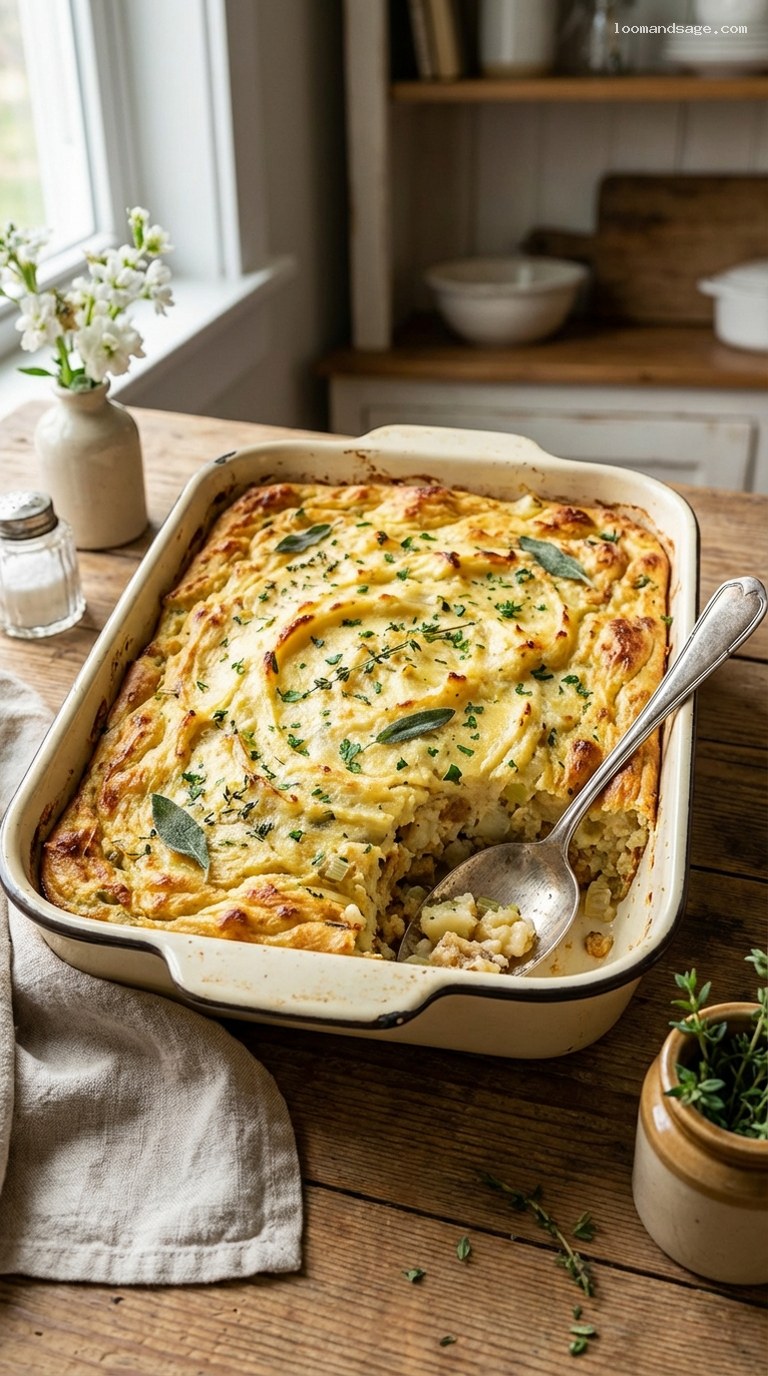
Quick Recipe Version (TL;DR)
Quick Ingredients
- 3 lb russet or Yukon Gold potatoes, peeled and cubed
- 10 cups (about 10 oz / 285 g) day-old white or potato bread, 1/2-inch cubes
- 10 tbsp unsalted butter, divided
- 2 cups diced yellow onion (about 2 medium)
- 1 1/2 cups diced celery (3–4 ribs)
- 1 cup whole milk
- 3/4 cup chicken or vegetable broth
- 2 large eggs, lightly beaten
- 2 tsp dried rubbed sage
- 1 tsp dried thyme
- 1/4 cup chopped fresh parsley (or 1 tbsp dried)
- 2 1/4 tsp kosher salt, divided (plus more to taste)
- 1/2 tsp black pepper (plus more to taste)
Do This
- 1. Boil potatoes in well-salted water until very tender, 15–20 minutes; drain well.
- 2. While potatoes cook, spread bread cubes on a sheet pan and toast at 300°F (150°C) for 10–15 minutes to dry; increase oven to 350°F (175°C).
- 3. In a large skillet, melt 6 tbsp butter; sauté onion and celery with sage, thyme, 1/2 tsp salt, and pepper until soft and fragrant, 8–10 minutes.
- 4. Mash hot potatoes with warm milk, 3 tbsp butter, 3/4 tsp salt, and parsley until smooth and creamy.
- 5. In a large bowl, gently combine mashed potatoes, dried bread cubes, sautéed vegetables, beaten eggs, and 1/2–3/4 cup broth until evenly moistened.
- 6. Spread mixture in a greased 9×13-inch baking dish, dot with remaining 1 tbsp butter.
- 7. Bake at 350°F (175°C) for 30–35 minutes, until puffed, lightly golden on top, and creamy inside.
Why You’ll Love This Recipe
- Classic Pennsylvania Dutch comfort: rustic, hearty, and deeply satisfying.
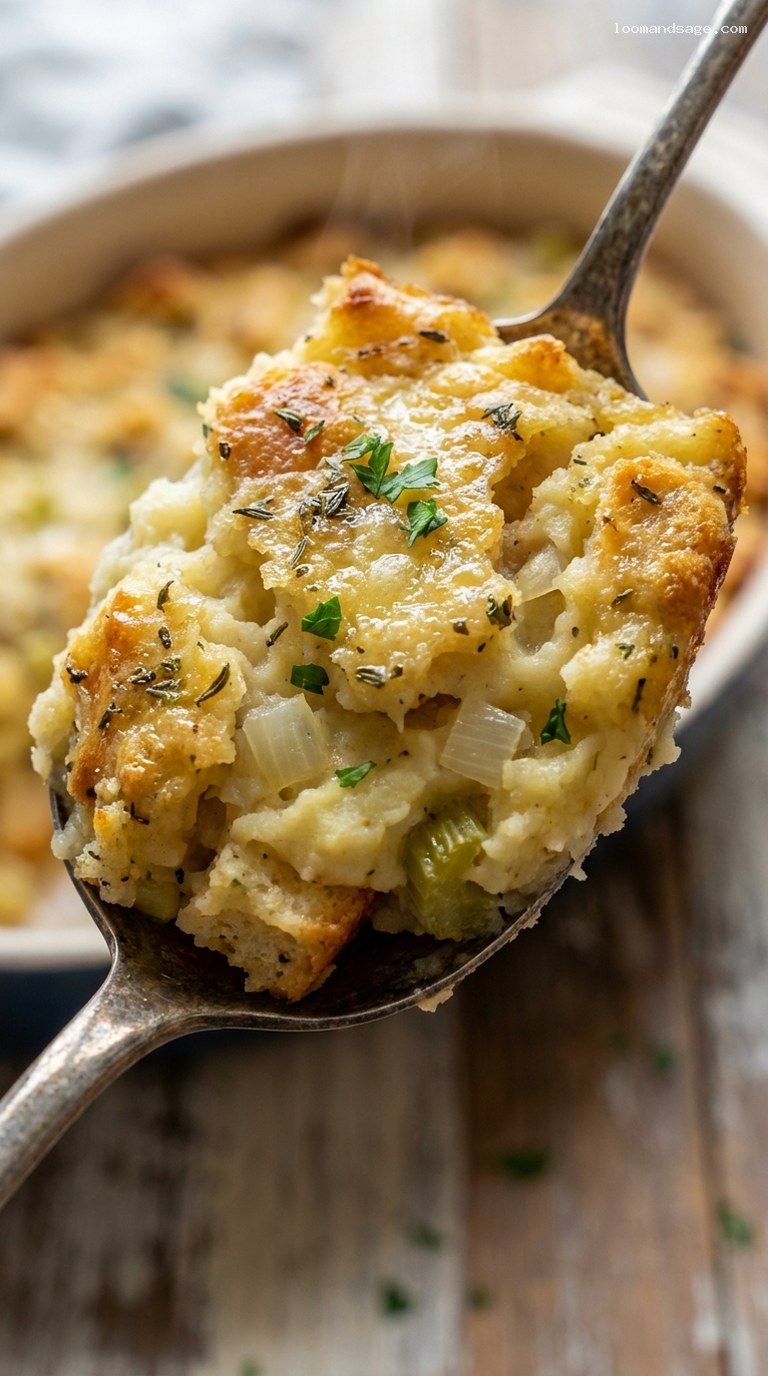
- Perfect balance of textures: golden, lightly crisp top with a creamy, mashed-potato interior and soft bread cubes.
- Make-ahead friendly and ideal for holidays, potlucks, or Sunday dinners.
- Simple ingredients, big flavor: butter, onions, celery, and herbs do all the work.
Grocery List
- Produce: Russet or Yukon Gold potatoes, yellow onions, celery, fresh parsley (optional but recommended)
- Dairy: Unsalted butter, whole milk, eggs
- Pantry: Day-old white or potato bread, chicken or vegetable broth, dried sage, dried thyme, kosher salt, black pepper
Full Ingredients
Potatoes
- 3 lb russet or Yukon Gold potatoes, peeled and cut into 1 1/2-inch chunks
- 1 tbsp kosher salt (for the potato cooking water)
Bread Base
- 10 cups day-old white or potato bread, cut into 1/2-inch cubes (about 10 oz / 285 g, roughly 10 slices)
- 1 tbsp unsalted butter (for greasing the baking dish)
Aromatics & Seasoning
- 6 tbsp unsalted butter
- 2 cups finely diced yellow onion (about 2 medium onions)
- 1 1/2 cups finely diced celery (3–4 ribs)
- 2 tsp dried rubbed sage
- 1 tsp dried thyme
- 1/4 cup finely chopped fresh flat-leaf parsley (or 1 tbsp dried parsley)
- 3/4 tsp kosher salt (for seasoning the aromatics)
- 1/2 tsp freshly ground black pepper (plus more to taste)
Creamy Binding Mixture
- 1 cup whole milk
- 3 tbsp unsalted butter
- 3/4 tsp kosher salt (for the potatoes)
- 2 large eggs, lightly beaten
- 3/4 cup chicken or vegetable broth (you may not need all of it)
Step-by-Step Instructions
Step 1: Prep and boil the potatoes
Peel the potatoes and cut them into roughly 1 1/2-inch chunks so they cook evenly. Place them in a large pot and cover with cold water by about 1 inch. Add 1 tablespoon kosher salt to the water. Bring to a boil over high heat, then reduce to a steady simmer.
Cook the potatoes for 15–20 minutes, or until they are very tender when pierced with a fork and nearly starting to break apart. While the potatoes cook, you can start drying the bread and preparing the aromatics to save time.
Step 2: Dry the bread and preheat the oven
While the potatoes are coming to a boil, spread the bread cubes in an even layer on a large baking sheet. Place them in a 300°F (150°C) oven for 10–15 minutes, stirring once, until the bread feels dry to the touch but not deeply browned. This helps the bread soak up flavor without turning mushy.
Remove the dried bread cubes from the oven and set aside to cool slightly. Increase the oven temperature to 350°F (175°C). Generously grease a 9×13-inch (3-quart) baking dish with 1 tablespoon of butter.
Step 3: Sauté the onions, celery, and herbs
In a large skillet over medium heat, melt 6 tablespoons butter. Add the diced onion and celery, along with the sage, thyme, 3/4 teaspoon kosher salt, and 1/2 teaspoon black pepper. Cook, stirring frequently, for 8–10 minutes, until the vegetables are very soft, translucent, and fragrant but not browned. This slow cooking builds a sweet, savory base.
Stir in the chopped parsley and cook for 1 more minute. Turn off the heat and set the skillet aside to cool slightly while you finish the potatoes.
Step 4: Make the creamy mashed potatoes
When the potatoes are very tender, drain them thoroughly in a colander and let them sit for 2–3 minutes so excess steam can escape. This keeps the stuffing from becoming watery.
In the now-empty pot, add 1 cup whole milk and 3 tablespoons butter. Warm gently over low heat just until the butter melts and the milk is hot, but not boiling. Return the drained potatoes to the pot. Add 3/4 teaspoon kosher salt.
Mash the potatoes until smooth and creamy, leaving just a few small lumps if you like a rustic texture. Taste and adjust salt if needed. You want well-seasoned potatoes at this stage, because the bread will mellow the flavors later.
Step 5: Combine potatoes, bread, aromatics, eggs, and broth
Place the dried bread cubes in a very large mixing bowl. Add the warm mashed potatoes and the sautéed onion-celery mixture. Gently fold everything together with a sturdy spatula or wooden spoon, being careful not to completely smash the bread cubes.
In a small bowl, whisk the eggs. Add about 2 tablespoons of the slightly cooled potato mixture to the eggs while whisking to temper them. Then pour the eggs over the stuffing mixture and fold to combine.
Gradually drizzle in the broth, starting with 1/2 cup, folding gently after each addition. You want the mixture to be evenly moistened and scoopable, but not soupy. Use up to the full 3/4 cup broth if the mixture seems dry. The bread should be hydrated and soft, and the stuffing should hold together when pressed with a spoon.
Step 6: Bake until puffed and lightly crisp
Transfer the stuffing mixture to the prepared 9×13-inch baking dish, spreading it into an even layer and gently patting the top to level it. Dot the surface with a few small pieces of butter if you like an extra-golden finish (you can use an additional 1–2 teaspoons if desired).
Bake at 350°F (175°C) for 30–35 minutes, until the edges are lightly golden, the top looks just a bit crisp in spots, and the stuffing is hot all the way through. It should puff slightly but remain creamy underneath the crust.
Step 7: Rest and serve
Remove the baking dish from the oven and let the stuffing rest for 10 minutes before serving. This brief rest helps the mixture set just enough so it scoops neatly while staying soft and creamy inside.
Serve warm, scooped with a large spoon or cut into squares. It pairs beautifully with roasted meats, holiday turkey, gravy, and simple vegetables.
Pro Tips
- Use day-old bread: Slightly stale bread dries more easily and absorbs flavor without becoming gummy. If your bread is very fresh, do not skip the oven-drying step.
- Drain potatoes well: Letting them steam off excess moisture after draining keeps the stuffing rich and creamy instead of watery.
- Season in layers: Salt the potato water, the aromatics, and the mashed potatoes. This builds deep flavor rather than relying on a lot of salt at the end.
- Adjust moisture thoughtfully: Add broth gradually; the mixture should be moist and cohesive but not soupy. Different breads soak up liquid differently.
- Let it rest before serving: A 10-minute rest after baking allows the stuffing to firm slightly while staying luxuriously creamy inside.
Variations
- Sausage Amish potato stuffing: Brown 8–10 oz mild pork sausage in the skillet before adding the onions and celery. Drain excess fat if necessary, then proceed with the recipe. This adds a savory, meaty depth.
- Herb and leek version: Substitute 1 thinly sliced leek (white and light green parts) for one of the onions, and add extra fresh herbs such as rosemary or marjoram for a more aromatic, herb-forward stuffing.
- Vegetarian-friendly: Use vegetable broth instead of chicken broth, and be sure to use a vegetarian-friendly bread. The butter and eggs still provide plenty of richness.
Storage & Make-Ahead
To make ahead (unbaked): Assemble the stuffing through Step 5, then transfer to the greased baking dish. Cover tightly with plastic wrap and refrigerate for up to 24 hours. Before baking, let the dish sit at room temperature for 20–30 minutes while the oven preheats. If the mixture seems a little dry, gently fold in a splash or two of warm broth, then bake as directed, adding 5–10 extra minutes if needed.
To store leftovers: Cool completely, then cover the baking dish or transfer leftovers to an airtight container. Refrigerate for up to 3–4 days. Reheat individual portions in the microwave or rewarm larger amounts in a 325°F (165°C) oven, covered with foil, until hot through (20–25 minutes).
To freeze: For best texture, freeze after baking and cooling. Wrap tightly and freeze for up to 2 months. Thaw overnight in the refrigerator, then reheat covered at 325°F (165°C) until hot. The top may not be quite as crisp as freshly baked, but the flavor and creamy interior will still be excellent.
Nutrition (per serving)
Approximate values for 1 of 8 servings: about 340 calories, 13 g fat, 50 g carbohydrates, 3 g fiber, 9 g protein, and 660 mg sodium. Actual values will vary based on specific products and any variations or additions you use.