
Quick Recipe Version (TL;DR)
Quick Ingredients
- 3¼ cups (390 g) bread flour
- 1 cup (240 ml) warm whole milk
- ½ cup (120 ml) unsulphured molasses, divided
- ¼ cup (50 g) granulated sugar
- ⅓ cup (70 g) light brown sugar
- 5 tbsp (70 g) unsalted butter (melted + cold)
- 2¼ tsp (7 g) instant or active dry yeast
- 1 large egg
- ¾ cup (about 65 g) all-purpose flour (for crumbs)
- Ground cinnamon, salt, vanilla (optional), warm water
Do This
- 1. Warm milk to 105–110°F and mix with sugar and yeast; let stand until foamy.
- 2. Add molasses, egg, melted butter, salt, vanilla, and most of the bread flour; mix, then knead in remaining flour until smooth and elastic.
- 3. Let dough rise in a greased bowl, covered, until doubled, 60–75 minutes.
- 4. Stir remaining molasses with a little hot water. Make crumbs by rubbing all-purpose flour, brown sugar, cinnamon, salt, and cold butter together.
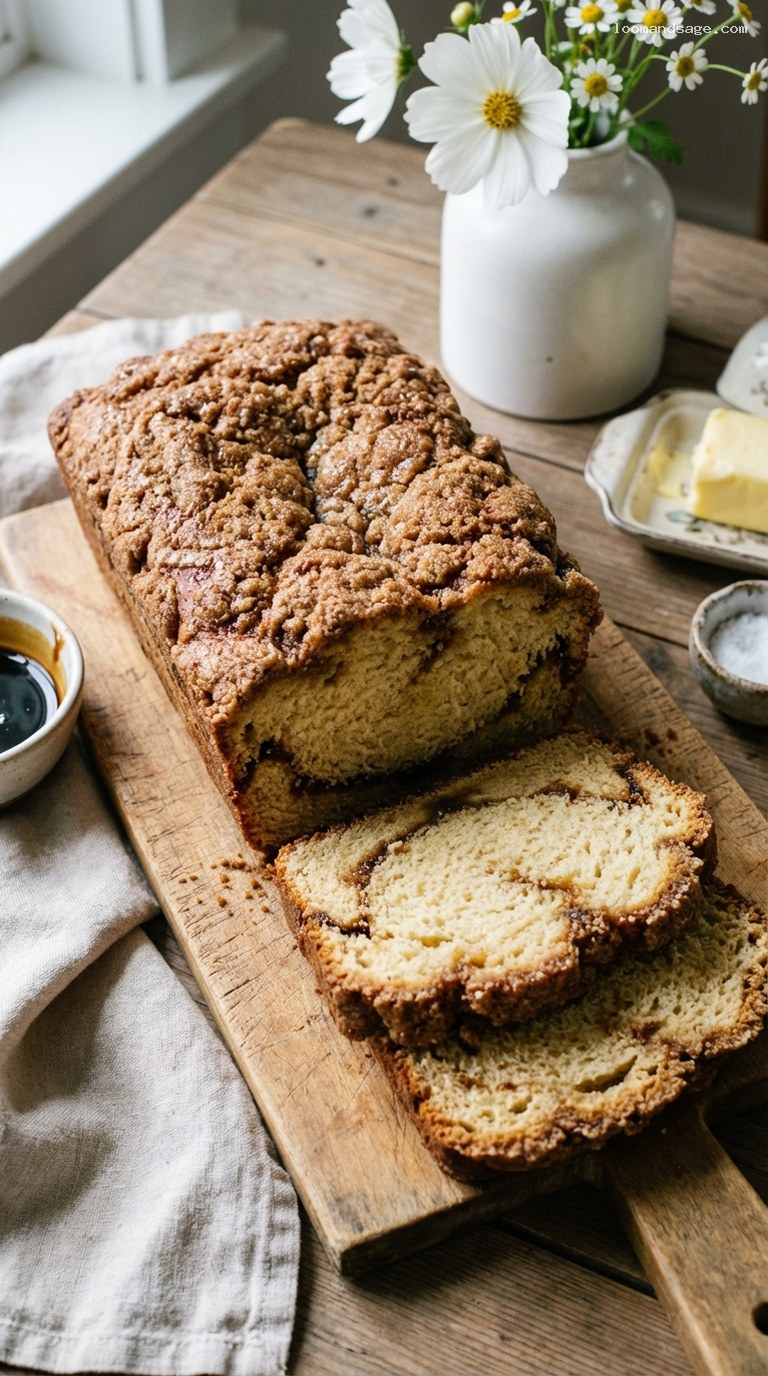
- 5. Press dough into a greased 9×5-inch loaf pan, drizzle with molasses mixture, and sprinkle most of the crumbs, gently pressing them in. Top with remaining crumbs.
- 6. Let rise until puffy and crowned over the pan, 30–40 minutes. Bake at 350°F (175°C) for 30–40 minutes, tenting with foil if browning too quickly.
- 7. Brush warm loaf with a little melted butter (optional), cool in pan 10 minutes, then cool completely on a rack before slicing.
Why You’ll Love This Recipe
- All the cozy molasses flavor of Amish shoofly pie, baked into a tender, sliceable yeast bread.
- Lightly sweet with a soft crumb and buttery streusel, perfect for breakfast, snacks, or gifting.
- Simple pantry ingredients and straightforward steps, even if you are new to baking with yeast.
- Delicious plain, toasted with butter, or turned into unforgettable French toast.
Grocery List
- Produce: None required.
- Dairy: Whole milk, unsalted butter, 1 large egg.
- Pantry: Bread flour, all-purpose flour, unsulphured molasses, granulated sugar, light brown sugar, instant or active dry yeast, fine salt, ground cinnamon, vanilla extract (optional).
Full Ingredients
For the Shoofly Bread Dough
- 1 cup (240 ml) whole milk, warmed to 105–110°F (40–43°C)
- ¼ cup (50 g) granulated sugar
- 2¼ tsp (7 g) instant or active dry yeast (1 standard packet)
- ¼ cup (60 ml) unsulphured molasses
- 1 large egg, at room temperature
- ¼ cup (56 g) unsalted butter, melted and slightly cooled
- 1 tsp vanilla extract (optional but lovely)
- 1 tsp fine sea salt or table salt
- 3¼ cups (390 g) bread flour, plus 2–4 tbsp extra as needed for kneading
For the Molasses Drizzle
- ¼ cup (60 ml) unsulphured molasses
- 2 tbsp (30 ml) hot water
For the Shoofly Crumb Topping and Filling
- ¾ cup (about 65 g) all-purpose flour
- ⅓ cup (70 g) packed light brown sugar
- ½ tsp ground cinnamon
- ⅛ tsp fine salt
- 3 tbsp (42 g) unsalted butter, cold and cut into small cubes
Optional Finishing
- 1 tbsp (14 g) unsalted butter, melted, for brushing the warm loaf
- 1–2 tsp granulated sugar, for a light sparkling finish
Step-by-Step Instructions
Step 1: Warm the milk and activate the yeast
In a small saucepan or microwave-safe measuring cup, gently warm the milk until it reaches 105–110°F (40–43°C). It should feel warm but not hot to the touch. Pour the warm milk into a large mixing bowl (or the bowl of a stand mixer). Stir in the granulated sugar until mostly dissolved.
Sprinkle the yeast over the warm, sweetened milk. Let it sit for 5–10 minutes, until the surface looks foamy and slightly thickened. If there is no foaming at all after 10 minutes, your yeast may be inactive or the milk was too hot; start over with fresh yeast.
Step 2: Mix the dough
To the foamy yeast mixture, add the ¼ cup molasses, egg, melted butter, vanilla (if using), and salt. Whisk or stir until the egg is fully broken up and the mixture looks mostly smooth.
Add about 2¾ cups (330 g) of the bread flour and stir with a sturdy spoon (or use a stand mixer fitted with the dough hook on low speed) until a thick, shaggy dough forms. Gradually add the remaining ½ cup (60 g) flour, a few tablespoons at a time, until the dough comes together in a soft ball that is just slightly tacky but not overly sticky. You may not need every last tablespoon of flour, or you may need a couple of extra tablespoons, depending on humidity and the flour you use.
Step 3: Knead until smooth and elastic
Turn the dough out onto a lightly floured surface. Knead by hand for 8–10 minutes, adding only enough flour to keep it from sticking too much, until the dough is smooth, elastic, and slightly springy. If using a stand mixer, knead with the dough hook on medium-low speed for 6–8 minutes.
The dough is ready when it can be stretched gently between your fingers into a thin “windowpane” without tearing immediately, and it feels soft and supple. Shape it into a smooth ball by tucking the edges underneath.
Step 4: First rise (proof the dough)
Lightly grease a clean bowl with a little butter or oil. Place the dough ball in the bowl and turn it once to coat it lightly in the fat. Cover the bowl with plastic wrap, a lid, or a clean kitchen towel.
Let the dough rise in a warm, draft-free spot until doubled in size, about 60–75 minutes. A slightly warm oven (turned off) or a sunny counter works well. While the dough is rising, grease a 9×5-inch (23×13 cm) loaf pan and set it aside.
Step 5: Prepare the molasses drizzle and crumbs
While the dough finishes its first rise, make the molasses drizzle. In a small bowl, stir together ¼ cup molasses and 2 tbsp hot water until smooth and pourable. Set aside to cool slightly.
For the crumb mixture, combine the all-purpose flour, brown sugar, cinnamon, and salt in a medium bowl. Add the cold butter cubes. Using your fingertips, a fork, or a pastry cutter, rub the butter into the dry ingredients until the mixture forms clumps and pea-sized crumbs. You want a mix of fine sandy crumbs and larger chunks, just like the topping of a shoofly pie. Refrigerate the crumbs while you shape the dough so the butter stays firm.
Step 6: Shape the loaf and add the shoofly layers
Once the dough has doubled, gently punch it down to release excess gas. Turn it out onto a lightly floured surface and pat or roll it into a rough rectangle about 8×12 inches (20×30 cm). You do not need to be exact; aim for an even thickness.
Transfer the dough to the prepared loaf pan, pressing it gently to reach the corners. Use your fingers to dimple the top of the dough all over, creating small wells (this helps the molasses soak in instead of running off).
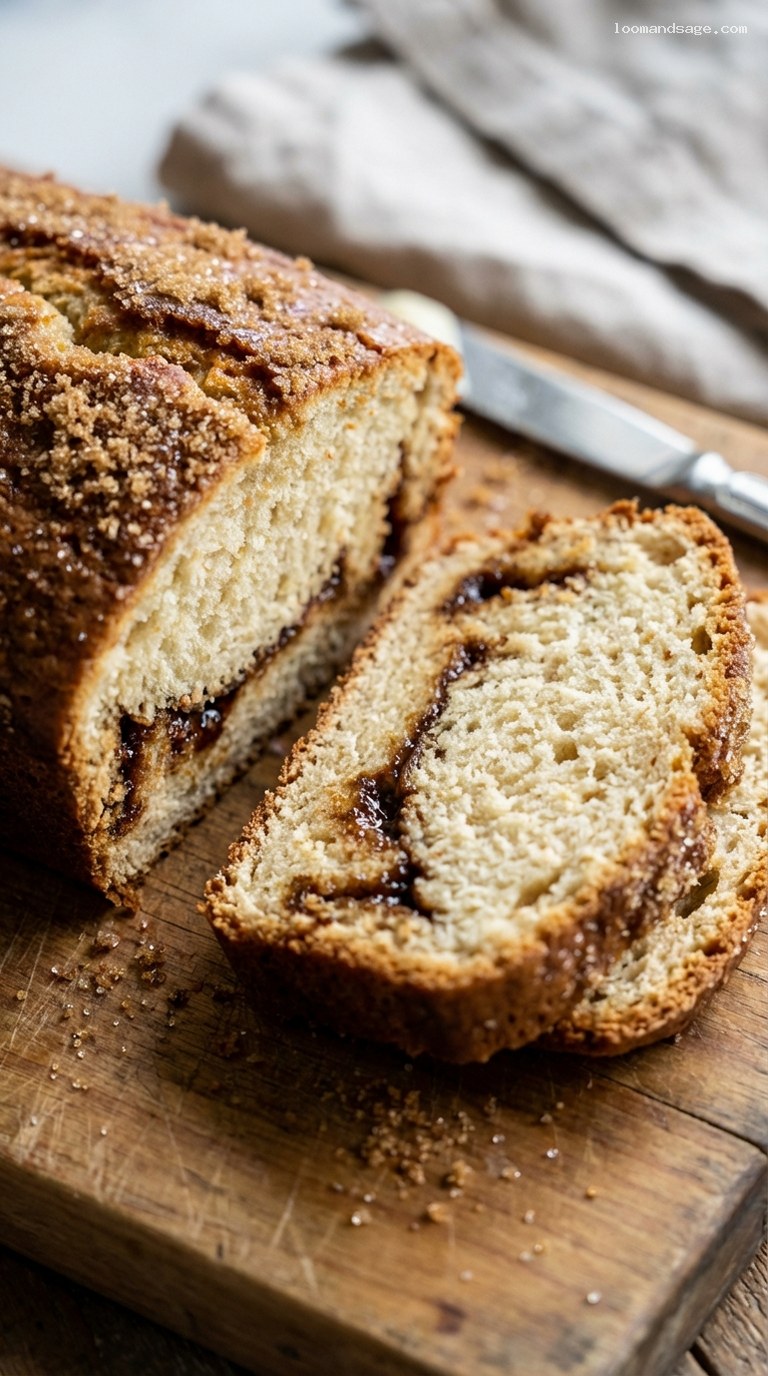
Drizzle most of the molasses mixture evenly over the surface of the dough, reserving 1–2 tablespoons. Sprinkle about two-thirds of the crumb mixture over the top, lightly pressing it into the dough so it adheres and some crumbs sink just below the surface, creating a shoofly-like vein through the loaf. Drizzle the remaining molasses over the crumbs, then scatter the remaining crumbs evenly on top.
Step 7: Second rise, bake, and cool
Cover the loaf pan loosely with lightly greased plastic wrap or a kitchen towel. Let the dough rise again in a warm place until puffy and crowned 1–1½ inches above the rim of the pan, about 30–40 minutes.
Near the end of the rise, preheat your oven to 350°F (175°C). Place the loaf on the center rack and bake for 30–40 minutes, until the top is deep golden brown and a skewer or thin knife inserted in the center comes out mostly clean (a few moist crumbs are fine, but no wet dough). If the crumb topping is browning too quickly, tent the loaf loosely with foil for the last 10–15 minutes.
Remove the pan from the oven. If you like, immediately brush the top with 1 tbsp melted butter and sprinkle lightly with 1–2 tsp granulated sugar for a gentle sparkle. Cool in the pan for 10–15 minutes, then carefully turn out onto a wire rack and let cool completely before slicing. This helps set the crumb and keeps the molasses pockets from feeling gummy.
Pro Tips
- Check your molasses: Use unsulphured molasses (often labeled “original” or “mild”) rather than blackstrap, which is much stronger and can make the bread bitter.
- Mind the dough texture: This is a soft, enriched dough. It should feel slightly tacky but not sticky. Add flour gradually so you do not end up with a dense loaf.
- Warm spot hack: To create a cozy proofing spot, turn your oven on for 1–2 minutes, then switch it off and place the covered bowl inside with the light on.
- Do not rush cooling: The molasses and crumb layers firm up as the bread cools. Slicing while very hot can compress the crumb and make the interior seem underbaked.
- Slice with a serrated knife: A gentle sawing motion keeps the tender crumb and crumb topping intact.
Variations
- Spiced shoofly bread: Add ½ tsp ground ginger and ¼ tsp ground nutmeg to the crumb mixture, and ½ tsp cinnamon directly to the dough for a warmly spiced loaf.
- Raisin shoofly bread: Gently knead ½–¾ cup (75–110 g) plump raisins into the dough after the first rise for bursts of sweetness that pair beautifully with the molasses.
- Mini loaves: Divide the dough and crumbs between two smaller 8×4-inch (20×10 cm) loaf pans. Start checking for doneness around 25–28 minutes.
Storage & Make-Ahead
Once completely cool, store Amish shoofly bread in an airtight container or well-wrapped in plastic wrap at room temperature for up to 3 days. For longer storage, wrap the loaf (or individual slices) tightly in plastic wrap, then in foil, and freeze for up to 2 months. Thaw at room temperature in the wrapping to prevent drying. To refresh, warm slices in a low oven (300°F / 150°C) for 5–8 minutes or toast lightly. The dough can also be made ahead through the first rise: after kneading, let it rise just until slightly puffy (about 30 minutes), then refrigerate tightly covered for up to 12 hours. Bring back to room temperature, then shape, add molasses and crumbs, and continue with the recipe.
Nutrition (per serving)
Approximate values for 1 slice (1/12 of the loaf): about 220 calories, 4 g protein, 36 g carbohydrates, 7 g fat, 4 g saturated fat, 1 g fiber, 13 g sugars, 170 mg sodium. Values will vary based on exact ingredients and slice size.