Quick Recipe Version (TL;DR)
Quick Ingredients
- 2 small lobsters (600–700 g / 1¼–1½ lb each), preferably pre-split by your fishmonger
- 6–7 tbsp extra-virgin olive oil, divided
- 1 medium onion, 5 garlic cloves, 1 small red chili or ½ tsp red pepper flakes
- 1 tbsp tomato paste; 2 cups (480 ml) passata or crushed tomatoes
- ¼ cup (60 ml) ouzo; ½ cup (120 ml) dry white wine (or water)
- 1 cup (240 ml) water or mild seafood stock
- 1 tsp sugar; 1 tsp dried oregano; ½ tsp sweet paprika; salt and black pepper
- 400 g (14 oz) linguine or spaghetti
- 2 tbsp unsalted butter
- Zest of ½ lemon; 2 tbsp chopped fresh parsley; 1 tbsp chopped fresh dill (optional)
Do This
- 1. Pat lobster pieces dry. In a wide pot, heat 2 tbsp olive oil over medium-high and quickly sear lobster halves and claws on both sides until shells are bright red. Transfer to a plate.
- 2. In the same pot, add 2 tbsp more oil and sauté onion until soft. Add chili and garlic for 1 minute, then tomato paste. Deglaze with ouzo and white wine.
- 3. Stir in tomatoes, water/stock, sugar, oregano, paprika, salt, and pepper. Simmer, then nestle lobster pieces into the sauce, shell-side down. Cover and gently simmer 10–12 minutes until meat is just cooked. Remove lobster to cool slightly.
- 4. Meanwhile, cook pasta in well-salted boiling water until just shy of al dente. Reserve 1 cup pasta water; drain.
- 5. Pull lobster meat from shells, keeping a few attractive pieces in shell for garnish if you like. Roughly chop the rest.
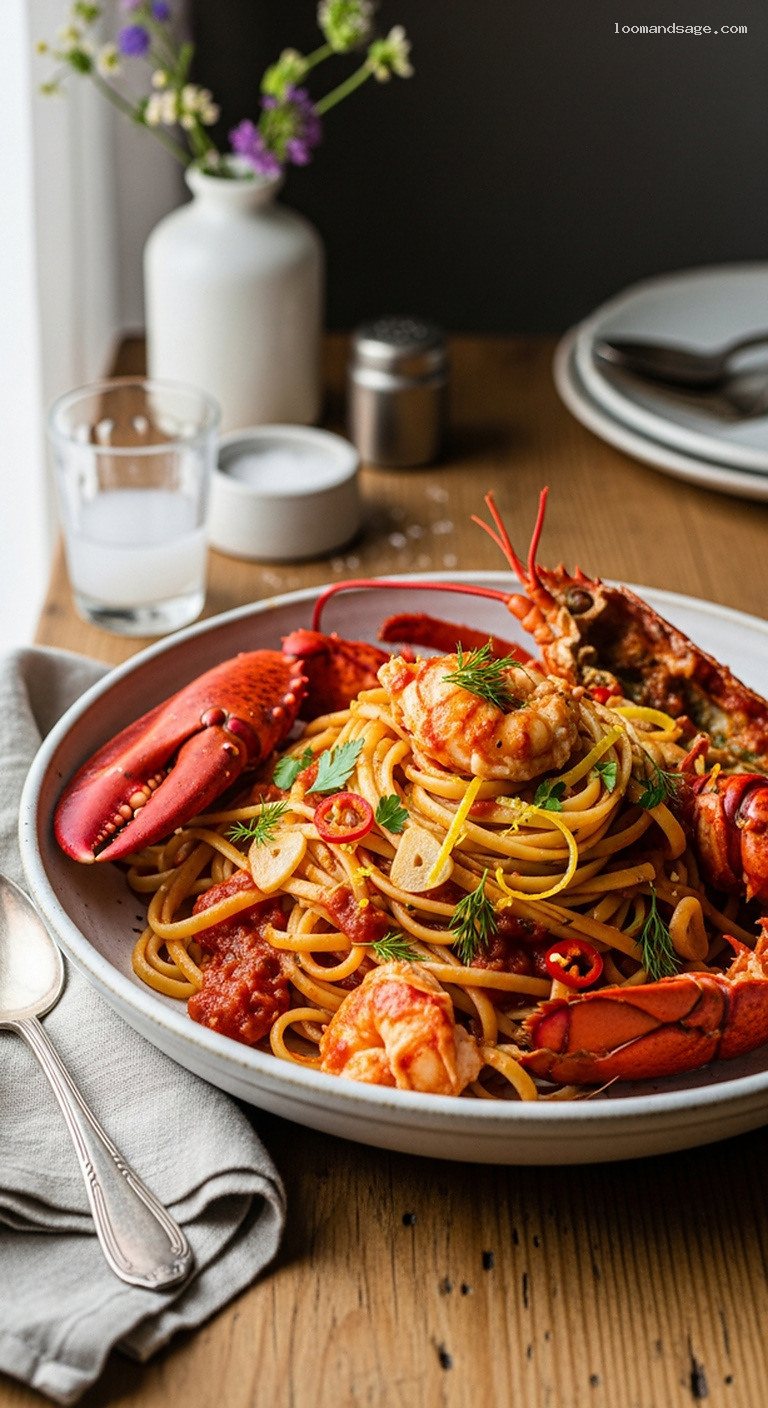
- 6. Bring sauce to a gentle simmer, stir in butter, then return chopped lobster meat and warm through. Toss in pasta with a splash of pasta water until glossy. Finish with remaining olive oil, lemon zest, parsley, and dill. Serve immediately with reserved shell pieces on top.
Why You’ll Love This Recipe
- Luxurious yet approachable: restaurant-style lobster pasta with clear, home-cook-friendly steps.
- Pure Greek island flavor: ouzo, tomato, garlic, and olive oil create a soulful, seaside-style sauce.
- One-pan elegance: the lobster simmers right in the sauce, infusing it with deep shellfish flavor.
- Perfect for celebrations: dramatic to present but easy to prep mostly in advance.
Grocery List
- Produce: 2 medium onions, 1 head garlic, 1 small fresh red chili (or dried chili flakes), 1 lemon, small bunch flat-leaf parsley, small bunch fresh dill (optional).
- Dairy: Unsalted butter.
- Pantry: 2 small live lobsters (from the seafood counter), extra-virgin olive oil, tomato paste, tomato passata or crushed canned tomatoes, ouzo, dry white wine, dried oregano, sweet paprika, sugar, fine sea salt, black pepper, long pasta (linguine, spaghetti, or bucatini).
Full Ingredients
Lobster
- 2 small live lobsters (600–700 g / 1¼–1½ lb each; about 3 lb total), ideally killed and split lengthwise by your fishmonger
Tomato–Ouzo Sauce
- 4 tbsp extra-virgin olive oil, divided (2 tbsp for searing lobster, 2 tbsp for the sauce)
- 1 medium onion, finely diced
- 5 garlic cloves, thinly sliced
- 1 small fresh red chili, finely sliced, or ½ tsp red pepper flakes (to taste)
- 1 tbsp tomato paste
- ¼ cup (60 ml) ouzo
- ½ cup (120 ml) dry white wine (or use water if you prefer)
- 2 cups (480 ml) tomato passata or finely crushed canned tomatoes
- 1 cup (240 ml) water or mild seafood stock
- 1 tsp sugar
- 1 tsp dried oregano
- ½ tsp sweet paprika
- ¾–1 tsp fine sea salt, or to taste
- ½ tsp freshly ground black pepper
- 2 tbsp unsalted butter
Pasta & Finishing
- 400 g (14 oz) long pasta such as linguine, spaghetti, or bucatini
- Fine sea salt, for pasta water
- 2–3 tbsp extra-virgin olive oil, for finishing
- Zest of ½ lemon, finely grated
- 2 tbsp chopped fresh flat-leaf parsley, plus extra to garnish
- 1 tbsp chopped fresh dill (optional but very Greek)
- Lemon wedges, to serve (optional)
Step-by-Step Instructions
Step 1: Prep the lobster and your ingredients
If possible, ask your fishmonger to humanely kill and split each lobster lengthwise and crack the claws. At home, rinse the lobster pieces under cold water and pat very dry with paper towels. Lightly crack the claws further with the back of a knife so the sauce can seep in, but keep the shells mostly intact.
Finely dice the onion, thinly slice the garlic, and chop the chili (or measure out red pepper flakes). Chop the parsley and dill, and zest the lemon. Keep everything ready near the stove; once you start, the recipe moves quickly.
Step 2: Sear the lobster for maximum flavor
In a large, wide, heavy pan or Dutch oven with a lid, heat 2 tbsp of the olive oil over medium-high heat. When the oil is shimmering, add the lobster halves cut-side down, along with the claws. Work in batches if needed to avoid crowding.
Sear for about 2–3 minutes per side, just until the shells turn bright red and patches of the meat turn opaque. You are not cooking the lobster through yet, only building flavor and color. Transfer the lobster pieces and any juices to a large plate and set aside.
Step 3: Build the garlicky tomato–ouzo base
Lower the heat to medium. In the same pan, add the remaining 2 tbsp olive oil and the diced onion. Cook, stirring often, for 5–7 minutes until the onion is soft and translucent, scraping up any browned bits from the lobster.
Add the chili and cook for 1 minute, then add the sliced garlic and cook another 30–60 seconds just until fragrant; do not let the garlic brown. Stir in the tomato paste and cook for 1 minute to caramelize it slightly.
Pour in the ouzo. Let it bubble for 1–2 minutes, scraping the bottom of the pan as you go, so the alcohol cooks off and the anise aroma softens. Add the white wine (or water) and simmer another 2–3 minutes until reduced by about half.
Stir in the tomatoes, water or seafood stock, sugar, oregano, paprika, salt, and black pepper. Bring to a gentle simmer.
Step 4: Simmer the lobster in the sauce
Return the lobster halves and claws to the pan, shell-side down if possible, nestling them into the sauce. Pour in any juices that have collected on the plate. Spoon some sauce over the exposed meat.
Cover with a lid and simmer very gently over low heat for 10–12 minutes, turning the lobster pieces once halfway through. The meat should become fully opaque and just firm, but still juicy.
When done, use tongs to transfer the lobster pieces to a cutting board or tray to cool slightly. Leave the sauce in the pan on the lowest heat so it stays hot but does not aggressively boil.
Step 5: Cook the pasta
While the lobster is simmering (or cooling), bring a large pot of water to a rolling boil. Salt it generously; it should taste pleasantly salty, like the sea.
Add the pasta and cook according to package directions until just shy of al dente (usually 1 minute less than the suggested time). Before draining, scoop out about 1 cup (240 ml) of the starchy pasta cooking water and reserve it. Drain the pasta well.
Step 6: Pick the lobster meat and enrich the sauce
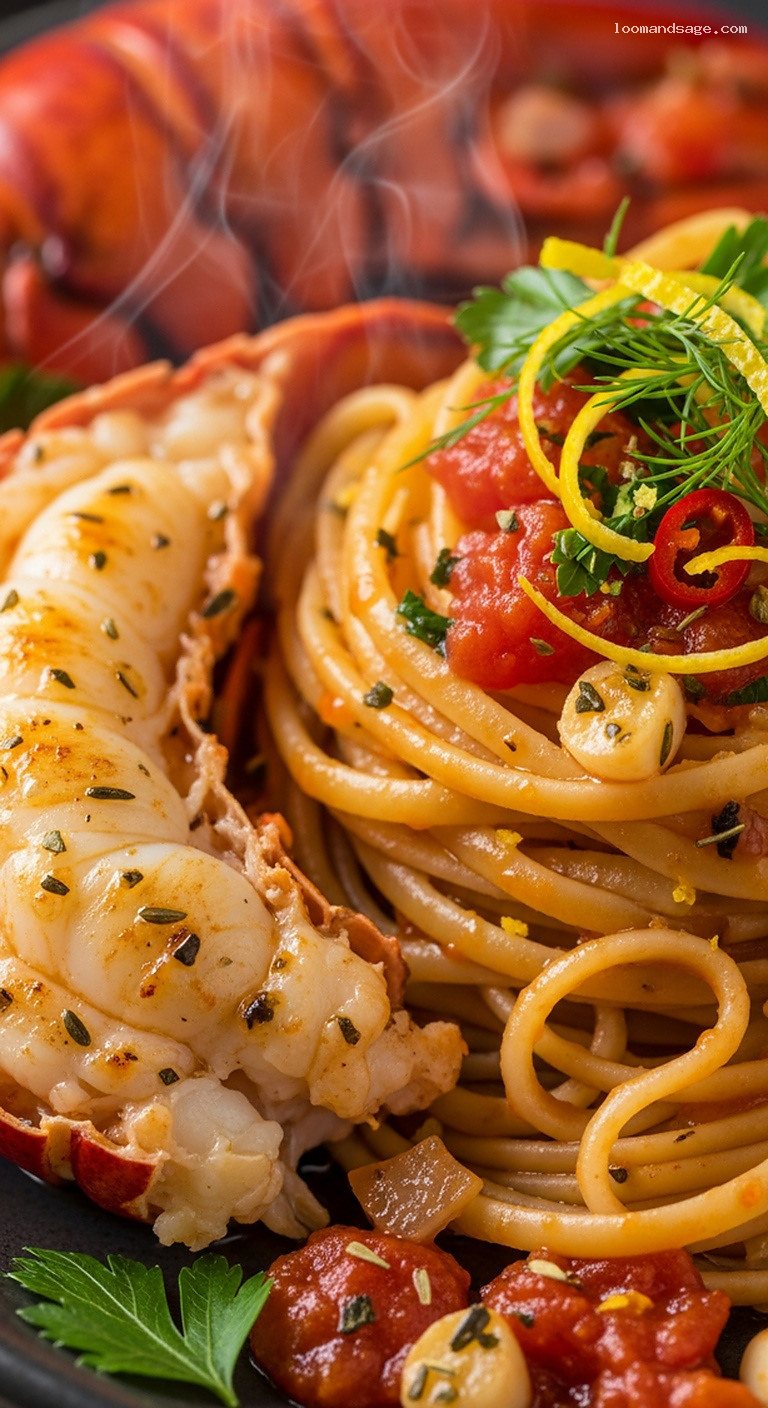
When the lobster is cool enough to handle, pull the meat from the tail and claws, keeping the pieces as large and intact as you can. If you like a dramatic presentation, reserve one or two tail halves and claws in their shells for each serving bowl.
Roughly chop the remaining meat into large, bite-sized chunks. Set aside.
Bring the tomato–ouzo sauce back to a gentle simmer over medium-low heat. If it looks very thick, loosen it with a splash of water or reserved pasta cooking water. Taste and adjust the seasoning with additional salt or pepper if needed.
Stir in the butter until it melts and the sauce looks slightly glossy and velvety. Return the chopped lobster meat to the pan (reserve any decorative shell-on pieces), and warm gently for 1–2 minutes. Do not boil vigorously or the lobster can become tough.
Step 7: Marry the pasta and sauce, then serve
Add the drained pasta directly into the pan with the lobster and sauce. Toss gently but thoroughly over medium heat for 1–2 minutes, adding a splash of the reserved pasta water as needed until every strand is coated and the sauce clings rather than pools.
Turn off the heat. Stir in the lemon zest, chopped parsley, and dill, along with 2 tbsp of extra-virgin olive oil. Toss again and taste; adjust salt, pepper, or lemon to your liking.
Twirl generous nests of pasta into warm shallow bowls. Spoon extra sauce over each portion, then top with the lobster meat and any reserved shell-on pieces for drama. Finish with a final drizzle of olive oil and a sprinkle of fresh herbs. Serve immediately with lemon wedges on the side.
Pro Tips
- Let the fishmonger help: If you are not comfortable handling live lobster, ask your fishmonger to humanely kill, split, and crack the lobsters for you. You will save time and stress.
- Do not overcook the lobster: Lobster turns rubbery quickly. Aim to sear briefly, then simmer gently in the sauce just until opaque. It will cook a touch more when you rewarm it in the sauce with the pasta.
- Use a wide pan: A broad, shallow pan lets the lobster pieces sit in the sauce without stacking and helps the pasta toss easily and coat evenly.
- Adjust sauce thickness with pasta water: The starchy pasta water is your secret weapon for a silky, restaurant-style sauce. Add it a little at a time until the pasta looks glossy and lightly sauced.
- Warm the serving bowls: A quick rinse with hot water or a few minutes in a low oven keeps the pasta and lobster hot and luxurious at the table.
Variations
- Weeknight shortcut: Use 500–600 g (1–1⅓ lb) raw lobster tails instead of whole lobsters. Sear them in the same way, then cut into medallions after simmering in the sauce. You will miss the dramatic shells, but the flavor is still wonderful and the prep is faster.
- Creamy astakomakaronada: For a slightly richer dish, stir ¼–⅓ cup (60–80 ml) heavy cream into the sauce at the same time as the butter. Simmer briefly to thicken, then proceed with adding the lobster and pasta.
- Extra-spicy island style: Increase the chili or red pepper flakes, and finish the dish with a drizzle of spicy olive oil for a more fiery, taverna-style kick.
Storage & Make-Ahead
Seafood pasta is at its very best straight from the pan, so plan to serve astakomakaronada as soon as it is finished. Leftovers can be refrigerated in an airtight container for up to 1 day, but the lobster will lose some of its tenderness.
If you do have leftovers, reheat gently in a wide pan over low heat with a splash of water or broth, tossing frequently just until warmed through. Avoid boiling or microwaving on high, as this can overcook the lobster.
For make-ahead prep, you can chop all the aromatics (onion, garlic, chili) and herbs, zest the lemon, and measure your liquids a few hours in advance. You can also sear the lobsters and build the tomato–ouzo base earlier in the day, then cool, cover, and refrigerate the sauce. When ready to serve, bring the sauce back to a gentle simmer, simmer the lobster pieces in it as directed, and proceed with cooking the pasta and finishing the dish.
Nutrition (per serving)
Approximate values per serving (1 of 4): about 720 calories; 30 g protein; 75 g carbohydrates; 30 g fat; 4 g fiber; 6 g sugar. Sodium will vary depending on how much salt you use in the pasta water and sauce. These numbers are estimates and will change with ingredient brands and portion sizes.