
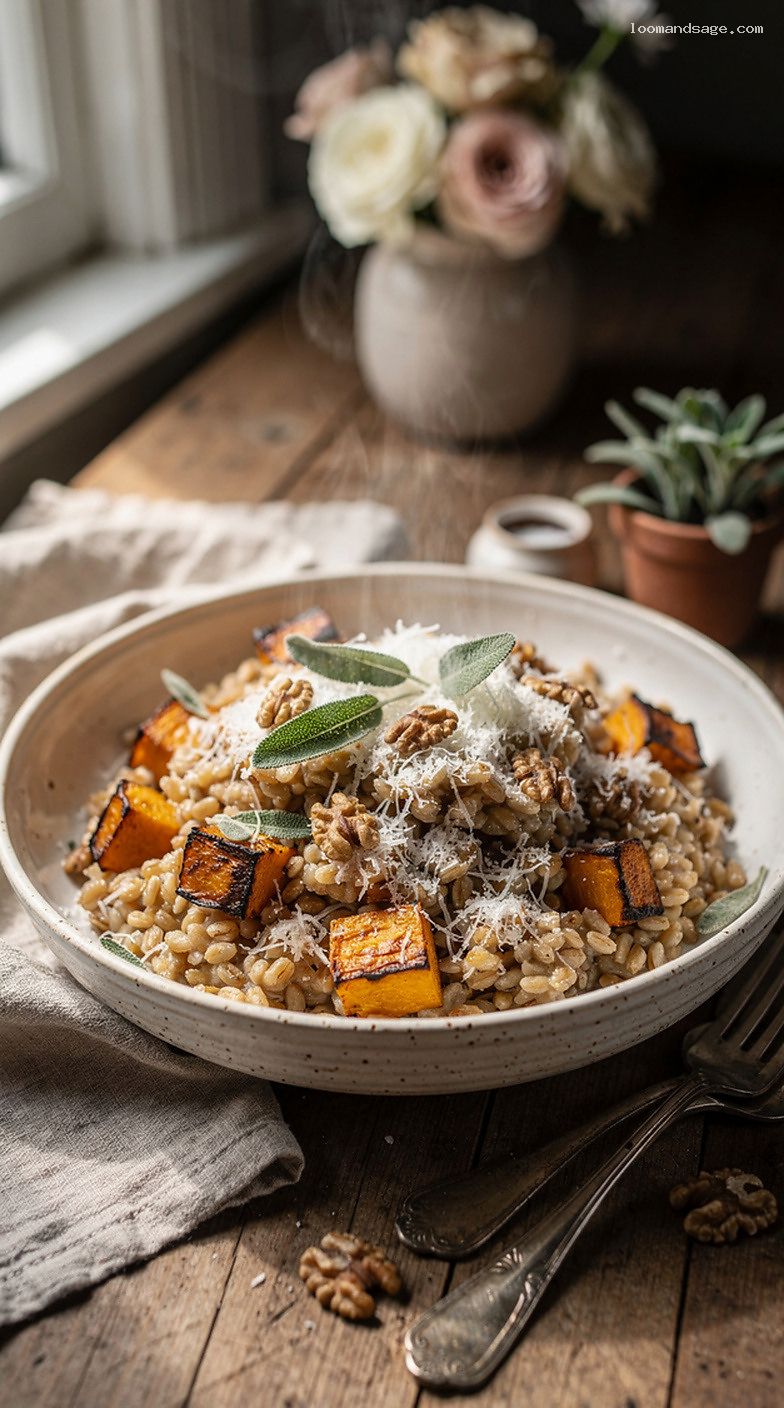
Quick Recipe Version (TL;DR)
Quick Ingredients
- 1 medium butternut squash (about 2 lb / 900 g), peeled, seeded, cut into 1/2-inch cubes (about 4 cups)
- 3 tbsp extra-virgin olive oil, divided
- 1 1/4 tsp kosher salt, divided
- 1/2 tsp black pepper, divided
- 6 cups low-sodium vegetable broth, kept warm
- 1 cup pearled farro (about 190 g)
- 1 medium yellow onion, finely chopped (about 1 1/2 cups)
- 3 garlic cloves, minced
- 2 tbsp fresh sage, finely chopped (plus 8–10 small whole leaves for garnish, optional)
- 1/2 cup dry white wine
- 1/2 cup finely grated Parmesan cheese (about 2 oz / 55 g), plus more to serve
- 2 tbsp unsalted butter
- 1 tsp lemon juice
- 1/2 cup walnuts, roughly chopped and toasted (about 2 oz / 55 g)
Do This
- 1. Roast squash at 425°F (220°C) with olive oil, salt, and pepper for 25–30 minutes.
- 2. Warm broth in a saucepan; keep at a gentle simmer.
- 3. Sauté onion in olive oil 6–8 minutes; add garlic and chopped sage 30 seconds.
- 4. Stir in farro 1 minute; add wine and simmer until mostly absorbed.
- 5. Add warm broth 1/2 cup at a time, stirring often, until farro is tender-chewy and creamy (about 25–30 minutes).
- 6. Fold in roasted squash, butter, Parmesan, and lemon; adjust salt/pepper.
- 7. Serve topped with toasted walnuts (and extra Parmesan; fried sage leaves optional).
Why You’ll Love This Recipe
- All the cozy creaminess of risotto, with the hearty chew of farro.
- Roasted butternut squash adds natural sweetness and velvety texture.
- Fresh sage and Parmesan make it taste restaurant-level with simple ingredients.
- Toasted walnuts bring crunch so every bite has contrast.
Grocery List
- Produce: 1 medium butternut squash, 1 medium yellow onion, 3 garlic cloves, fresh sage, 1 lemon
- Dairy: Parmesan cheese, unsalted butter
- Pantry: pearled farro, low-sodium vegetable broth, extra-virgin olive oil, dry white wine, walnuts, kosher salt, black pepper
Full Ingredients
For the roasted squash
- 1 medium butternut squash (about 2 lb / 900 g), peeled, seeded, and cut into 1/2-inch cubes (about 4 cups)
- 2 tbsp extra-virgin olive oil
- 1/2 tsp kosher salt
- 1/4 tsp black pepper
For the risotto-style farro
- 6 cups low-sodium vegetable broth (or chicken broth), kept warm
- 1 cup pearled farro (about 190 g)
- 1 tbsp extra-virgin olive oil
- 1 medium yellow onion, finely chopped (about 1 1/2 cups)
- 3 garlic cloves, minced
- 2 tbsp fresh sage, finely chopped
- 1/2 cup dry white wine (such as Pinot Grigio or Sauvignon Blanc)
- 1/2 tsp kosher salt, plus more to taste
- 1/4 tsp black pepper, plus more to taste
To finish and serve
- 2 tbsp unsalted butter
- 1/2 cup finely grated Parmesan cheese (about 2 oz / 55 g), plus more for serving
- 1 tsp fresh lemon juice
- 1/2 cup walnuts, roughly chopped
- Optional garnish: 8–10 small fresh sage leaves, 1 tsp olive oil (for quick-frying)
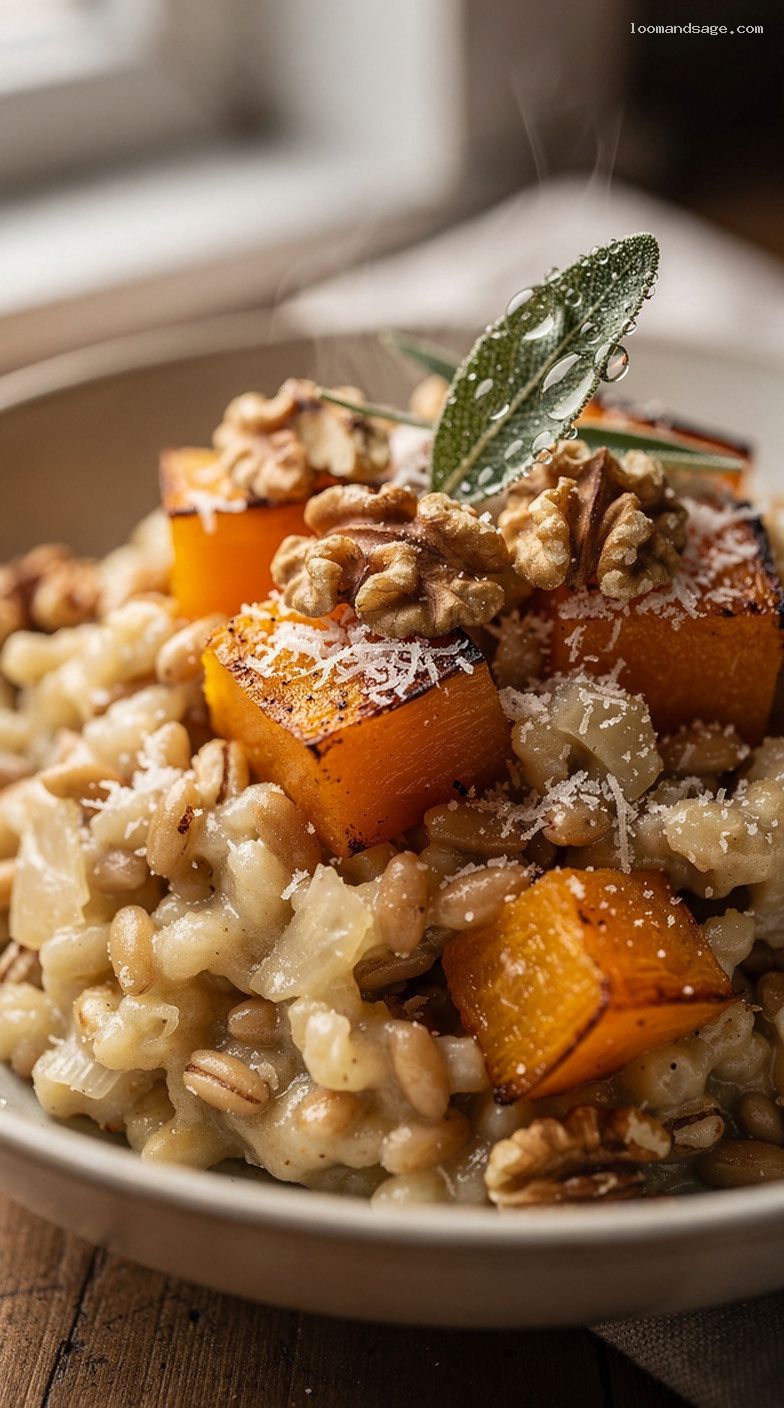
Step-by-Step Instructions
Step 1: Roast the butternut squash
Preheat the oven to 425°F (220°C). Line a rimmed sheet pan with parchment paper (optional, for easy cleanup).
Toss the cubed squash with 2 tablespoons olive oil, 1/2 teaspoon kosher salt, and 1/4 teaspoon black pepper. Spread into an even layer (give it space so it roasts instead of steaming).
Roast for 25–30 minutes, tossing once halfway through, until tender and deeply golden on the edges. Keep it on the pan while you cook the farro so it stays warm.
Step 2: Warm the broth
Pour 6 cups broth into a medium saucepan and bring it just to a simmer over medium heat. Reduce heat to low to keep it hot while you cook. (Adding cold broth slows cooking and makes the texture less creamy.)
Step 3: Toast the walnuts (and optionally fry sage leaves)
While the squash roasts or the broth warms, toast the walnuts in a dry skillet over medium heat for 4–6 minutes, stirring often, until fragrant and lightly browned. Transfer to a small bowl.
If you’d like crispy sage leaves: add 1 teaspoon olive oil to the skillet, heat over medium, then fry 8–10 small sage leaves for 20–30 seconds per side until crisp. Transfer to a paper towel-lined plate and sprinkle with a tiny pinch of salt.
Step 4: Sauté onion, garlic, and sage
In a wide, heavy-bottomed pot or Dutch oven, heat 1 tablespoon olive oil over medium heat. Add the chopped onion and cook for 6–8 minutes, stirring occasionally, until softened and translucent (a little golden is fine).
Add the minced garlic and chopped sage and cook for 30 seconds, stirring constantly, just until fragrant. Avoid browning the garlic.
Step 5: Toast the farro, then add wine
Add the farro to the pot and stir for 1 minute to coat the grains in the oil and aromatics. This quick toasting step boosts nutty flavor.
Pour in the white wine. Simmer, stirring, for 1–2 minutes, until the wine is mostly absorbed and the pot smells less “boozy.”
Step 6: Cook the farro “risotto-style” with warm broth
Add warm broth in increments of about 1/2 cup, stirring often. Let each addition simmer until most of the liquid is absorbed before adding the next. Keep the mixture at a gentle, steady simmer (not a hard boil) and scrape the bottom of the pot as you stir.
After about 20 minutes, start tasting. Continue adding broth and stirring until the farro is tender but still pleasantly chewy and the mixture looks creamy and loose (like risotto). Total cook time is typically 25–30 minutes for pearled farro.
Stir in 1/2 teaspoon kosher salt and 1/4 teaspoon black pepper during the last few minutes, then adjust later to taste (broth and Parmesan vary in saltiness).
Step 7: Fold in squash, enrich, and serve
Gently fold in the roasted butternut squash. Some pieces will break down and help make the farro extra creamy; that’s a good thing.
Turn off the heat. Stir in the butter, Parmesan, and lemon juice until melted and glossy. If the farro thickens too much (it often does as it sits), stir in a splash of warm broth to loosen it.
Taste and adjust with more salt, pepper, and/or Parmesan. Serve hot topped with toasted walnuts and (if using) crispy sage leaves.
Pro Tips
- Warm broth matters: Keeping the broth hot helps the farro cook evenly and encourages a creamy texture.
- Stir often, not nonstop: Frequent stirring releases some starch and builds creaminess, but you can take short breaks.
- Dial in the final texture: “Risotto-style” farro should look saucy in the pot; it will thicken on the plate.
- Use finely grated Parmesan: Microplane-style grating melts quickly and gives the smoothest finish.
- Roast squash until browned: Those caramelized edges add depth and keep the dish from tasting one-note sweet.
Variations
- Make it vegetarian but richer: Swap 1 cup of broth for 1 cup whole milk, added near the end, for extra creaminess (keep the heat low so it doesn’t scorch).
- Add greens: Stir in 3 cups baby spinach or 2 cups chopped kale during the last 2 minutes of cooking, just until wilted.
- Different crunch: Replace walnuts with toasted pepitas or hazelnuts; both pair beautifully with squash and sage.
Storage & Make-Ahead
Refrigerate leftovers in an airtight container for up to 4 days. Farro will thicken as it cools; reheat gently on the stovetop over medium-low heat with a splash of broth or water (start with 2–4 tablespoons per serving) until creamy again. You can roast the squash up to 2 days ahead and refrigerate; warm it briefly in a 350°F (175°C) oven for 8–10 minutes or stir it straight into the hot farro to heat through. For best texture, toast the walnuts right before serving (or refresh them in a dry skillet for 1–2 minutes).
Nutrition (per serving)
Approximate, based on 4 servings: 560 calories; 20 g fat; 78 g carbohydrates; 14 g protein; 12 g fiber; 700 mg sodium.