
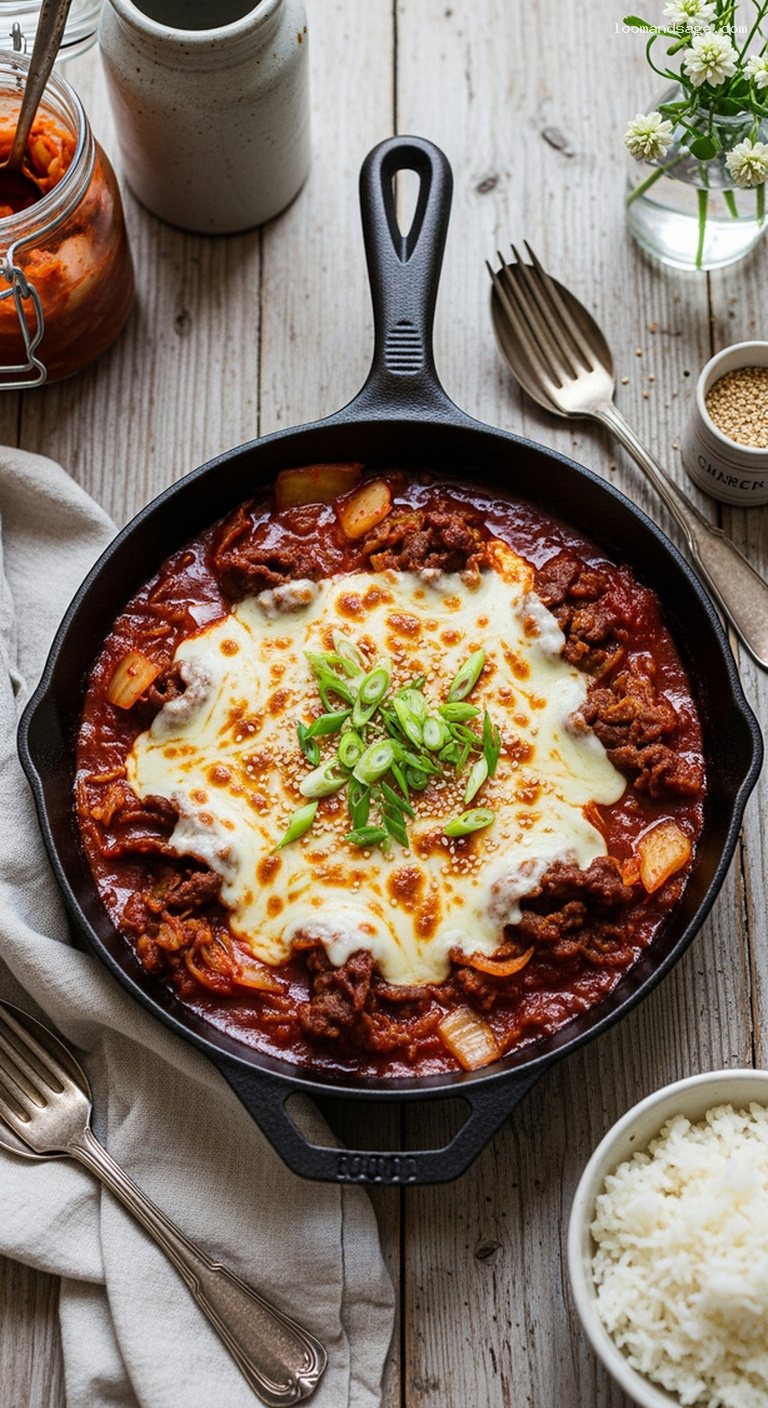
Quick Recipe Version (TL;DR)
Quick Ingredients
- 1 1/4 lb (570 g) thinly sliced beef ribeye or sirloin
- 3 tbsp soy sauce (divided)
- 2 tbsp brown sugar
- 2 tbsp grated Asian pear or apple
- 2 cloves garlic, minced; 1 tsp grated ginger
- 1 tbsp mirin (optional); 2 tsp sesame oil (divided)
- 2 tbsp gochujang; 2 tbsp tomato paste
- 1/2 cup water; 1 tbsp rice vinegar; 1 tbsp honey or sugar
- 1 tbsp neutral oil
- 1 cup chopped, well-drained napa cabbage kimchi + 2 tbsp kimchi juice
- 2 cups (8 oz / 225 g) shredded low-moisture mozzarella
- 1 tbsp sesame seeds
- 2 scallions, thinly sliced
- Cooked white rice, for serving
Do This
- 1. Marinate beef 15–30 minutes in 2 tbsp soy sauce, brown sugar, grated pear, garlic, ginger, mirin (if using), 1 tsp sesame oil, and black pepper.
- 2. Preheat oven to 425°F (220°C). In a bowl mix gochujang, tomato paste, 1/2 cup water, 1 tbsp soy sauce, rice vinegar, honey, and 1 tsp sesame oil.
- 3. Toast sesame seeds in a dry pan over medium heat until golden; set aside. Chop kimchi, shred mozzarella, slice scallions.
- 4. Heat neutral oil in an oven-safe skillet over medium-high. Sear marinated beef in 1–2 batches until browned but not fully cooked; remove to a plate.
- 5. Pour sauce into skillet, simmer 2 minutes, then add beef (with juices), kimchi, and kimchi juice. Simmer 3–4 minutes until slightly thickened.
- 6. Spread mixture evenly, top with mozzarella, and bake 8–10 minutes until cheese is melted and bubbling (broil 1–2 minutes to brown). Garnish with sesame seeds and scallions; serve hot over rice.
Why You’ll Love This Recipe
- Bold Korean flavors meet cozy, cheesy comfort in one skillet.
- Sweet-savory bulgogi beef, tangy kimchi, and a rich gochujang-tomato sauce make every bite layered and exciting.
- All cooked in a single oven-safe pan, perfect for weeknights but impressive enough for guests.
- Easy to customize: adjust spice level, use different cuts of beef, or turn it into a pizza or rice bake.
Grocery List
- Produce: Asian pear or apple, garlic, fresh ginger, scallions, napa cabbage kimchi
- Dairy: Low-moisture mozzarella cheese
- Pantry: Beef ribeye or sirloin, soy sauce, brown sugar, honey or granulated sugar, gochujang, tomato paste, rice vinegar, mirin (optional), sesame oil, neutral oil (canola, grapeseed, or vegetable), sesame seeds, white rice, black pepper, salt
Full Ingredients
Bulgogi Beef
- 1 1/4 lb (570 g) boneless beef ribeye or sirloin, very thinly sliced across the grain
- 3 tbsp soy sauce, divided (2 tbsp for marinade, 1 tbsp for sauce)
- 2 tbsp packed light brown sugar
- 2 tbsp finely grated Asian pear or sweet apple (such as Gala or Fuji)
- 2 cloves garlic, minced
- 1 tsp finely grated fresh ginger
- 1 tbsp mirin (optional, for extra sweetness and aroma)
- 1 tsp toasted sesame oil
- 1/4 tsp freshly ground black pepper
- 1 tbsp neutral oil (canola, grapeseed, or vegetable), for searing
Gochujang-Tomato Sauce
- 2 tbsp gochujang (Korean red chili paste)
- 2 tbsp tomato paste
- 1/2 cup (120 ml) water
- 1 tbsp soy sauce (from the divided amount)
- 1 tbsp rice vinegar
- 1 tbsp honey or granulated sugar
- 1 tsp toasted sesame oil
Kimchi & Cheesy Topping
- 1 cup (about 160 g) napa cabbage kimchi, well-drained and roughly chopped
- 2 tbsp kimchi juice (from the jar), optional but recommended
- 2 cups (about 8 oz / 225 g) shredded low-moisture mozzarella cheese
- 1 tbsp sesame seeds (raw or untoasted)
- 2 scallions, thinly sliced on the diagonal
For Serving (Optional but Recommended)
- 4 cups cooked white rice (short- or medium-grain preferred), hot
- Extra kimchi on the side
- Crushed roasted seaweed (gim / nori), for sprinkling
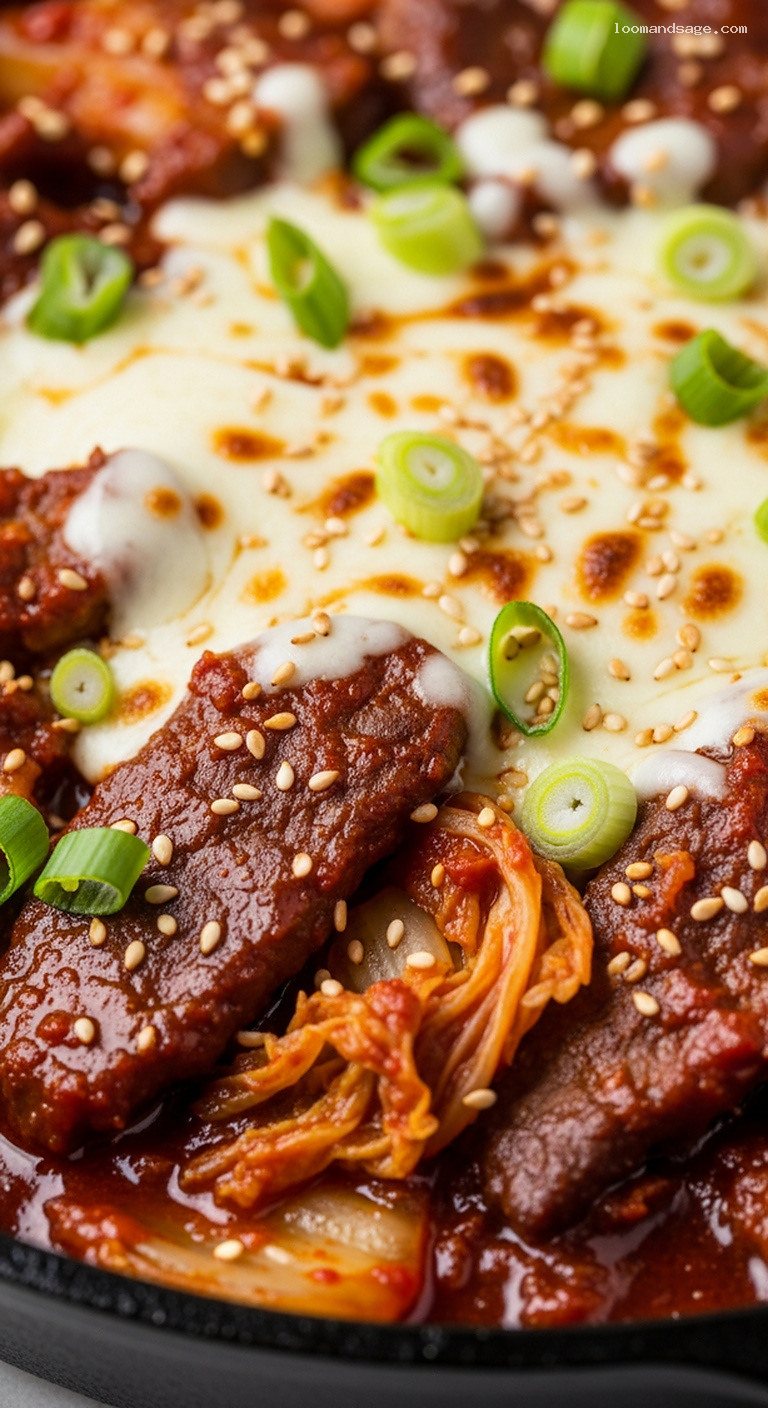
Step-by-Step Instructions
Step 1: Prep and Marinate the Bulgogi Beef
Place the thinly sliced beef in a medium mixing bowl. If your beef is not yet sliced, partially freeze the whole piece for 20–30 minutes, then slice it very thinly across the grain with a sharp knife.
In a separate small bowl, whisk together 2 tbsp soy sauce, brown sugar, grated Asian pear or apple, minced garlic, grated ginger, mirin (if using), sesame oil, and black pepper until the sugar is mostly dissolved. Pour this marinade over the beef and use your hands or tongs to massage it into the meat, making sure every slice is coated.
Cover and let the beef marinate at room temperature for 15–30 minutes while you prepare the rest of the ingredients. If you plan to marinate longer (up to 24 hours), refrigerate, then bring the beef back toward room temperature for about 15 minutes before cooking.
Step 2: Make the Gochujang-Tomato Sauce
In a medium bowl, combine the gochujang, tomato paste, remaining 1 tbsp soy sauce, water, rice vinegar, honey or sugar, and 1 tsp sesame oil. Whisk until the mixture is completely smooth and no clumps of gochujang or tomato paste remain. Taste a small amount: it should be sweet, savory, and moderately spicy. Adjust sweetness or vinegar to your liking, keeping in mind the flavors will mellow slightly once mixed with the beef and cheese.
Set the sauce aside. Chop the kimchi into bite-size pieces if it is not already cut, and measure out about 2 tbsp of kimchi juice from the jar, if you like an extra punch of flavor.
Step 3: Prep Toppings and Toast the Sesame Seeds
Preheat your oven to 425°F (220°C), with a rack placed in the upper-middle position. Make sure your cooking vessel is an oven-safe 10–12 inch skillet, preferably cast iron or a heavy stainless-steel pan.
Shred the mozzarella if it is not pre-shredded, and thinly slice the scallions on a diagonal for garnish. In a small dry skillet over medium heat, add the sesame seeds and toast, shaking the pan often, for 2–4 minutes until they turn light golden and fragrant. Immediately transfer the seeds to a small bowl to cool so they do not continue to toast and burn.
Step 4: Sear the Marinated Beef
Heat 1 tbsp neutral oil in your large oven-safe skillet over medium-high heat until shimmering but not smoking. Working in 1–2 batches to avoid overcrowding, add the marinated beef in a single layer. Let it sear undisturbed for 1–2 minutes so it develops some caramelization, then stir or flip and cook for another 1–2 minutes until just browned on the outside. The beef does not need to be fully cooked through yet.
Transfer the browned beef and any juices to a plate or bowl and repeat with the remaining beef, adding a touch more oil if needed. When all the beef has been seared, pour off any excess fat from the skillet, leaving behind about 1–2 tsp plus any browned bits stuck to the pan (those bits add flavor).
Step 5: Simmer with Sauce and Kimchi
Reduce the heat to medium. Pour the prepared gochujang-tomato sauce into the same skillet. Stir, scraping up any browned bits from the bottom, and bring to a gentle simmer. Let the sauce bubble for about 2 minutes to slightly thicken and meld.
Return the seared beef and any accumulated juices to the skillet, stirring to coat every piece in the sauce. Add the chopped kimchi and kimchi juice (if using), and stir again. Simmer for 3–4 minutes more, letting the beef cook through and the flavors blend. The sauce should be glossy and thick enough to coat the beef without being soupy; if it seems too thick, add 1–2 tbsp water; if too thin, simmer another minute.
Step 6: Add the Mozzarella and Bake Until Bubbly
Turn off the stove burner and use a spatula to spread the beef-kimchi mixture into an even layer in the skillet. Sprinkle the shredded mozzarella evenly over the top, covering the beef and kimchi but allowing a few pockets of sauce to peek through for visual interest.
Transfer the skillet to the preheated oven and bake at 425°F (220°C) for 8–10 minutes, or until the cheese is fully melted and bubbling around the edges. For browned, slightly blistered spots on the cheese, switch the oven to broil on high for an additional 1–2 minutes, watching very closely to prevent burning.
Step 7: Garnish and Serve
Carefully remove the hot skillet from the oven and place it on a heatproof surface. Let it stand for about 5 minutes so the cheese sets slightly and the sauce thickens a bit more. Sprinkle the toasted sesame seeds and sliced scallions evenly over the top.
Serve generous spoonfuls of the cheesy kimchi bulgogi beef over hot white rice, or offer crusty bread to dip into the sauce. Garnish with extra kimchi or crushed roasted seaweed if you like. Enjoy right away while the cheese is still melty and stretchy and the sauce is hot and fragrant.
Pro Tips
- Slice the beef very thin: Partially freezing the beef for 20–30 minutes makes it much easier to slice into paper-thin pieces, which is key for tender bulgogi.
- Drain the kimchi well: Excess liquid can water down the sauce. Squeeze or press the kimchi gently, then add kimchi juice separately so you control the consistency.
- Use low-moisture mozzarella: Fresh mozzarella can make the dish watery. Shredded, low-moisture mozzarella gives the best stretch and browning.
- Control the heat level: Gochujang varies by brand. Start with 2 tbsp for a medium heat; if you like it spicier, add up to 1 extra tbsp when you make the sauce.
- Do not overcook the beef in the sear: Aim for deep browning on the outside only. The beef finishes cooking as it simmers in the sauce, staying tender instead of dry.
Variations
- Kimchi Bulgogi Beef Pizza: Spread the gochujang-tomato sauce over a par-baked pizza crust, top with marinated (uncooked) bulgogi beef, chopped kimchi, and mozzarella. Bake at 475°F (245°C) for 10–12 minutes until the crust is crisp and cheese is bubbly; finish with sesame seeds and scallions.
- Ground Beef Shortcut: Swap the sliced beef for 1 1/4 lb (570 g) ground beef. Brown it with the marinade ingredients (no need to marinate first), then proceed with the sauce, kimchi, and cheese as written.
- Rice Casserole Bake: Spread 3–4 cups cooked rice in a lightly oiled baking dish, spoon the cooked bulgogi-kimchi mixture over the rice, top with cheese, and bake at 400°F (205°C) for 12–15 minutes for a hearty one-pan casserole.
Storage & Make-Ahead
Store leftovers in an airtight container in the refrigerator for up to 3 days. Reheat gently in a skillet over medium-low heat or in a 350°F (175°C) oven, covered with foil, until hot and the cheese is remelted (about 10–15 minutes). You can also microwave individual portions in short bursts, though the cheese may not stay as stretchy.
For make-ahead prep, you can marinate the beef up to 24 hours in advance and keep it refrigerated. The gochujang-tomato sauce can be mixed and refrigerated for up to 3 days. When ready to cook, simply sear the beef, combine with the sauce and kimchi, then top with mozzarella and bake as directed. This makes the dish very weeknight-friendly.
Nutrition (per serving)
Approximate values for 1 of 4 servings (without rice): about 560 calories; 36 g protein; 34 g fat; 22 g carbohydrates; 3 g fiber; 12 g sugar; 1,250 mg sodium. Values will vary based on exact ingredients, brand of gochujang, and how much extra kimchi juice or salt you add, as well as your portion of rice or other sides.