
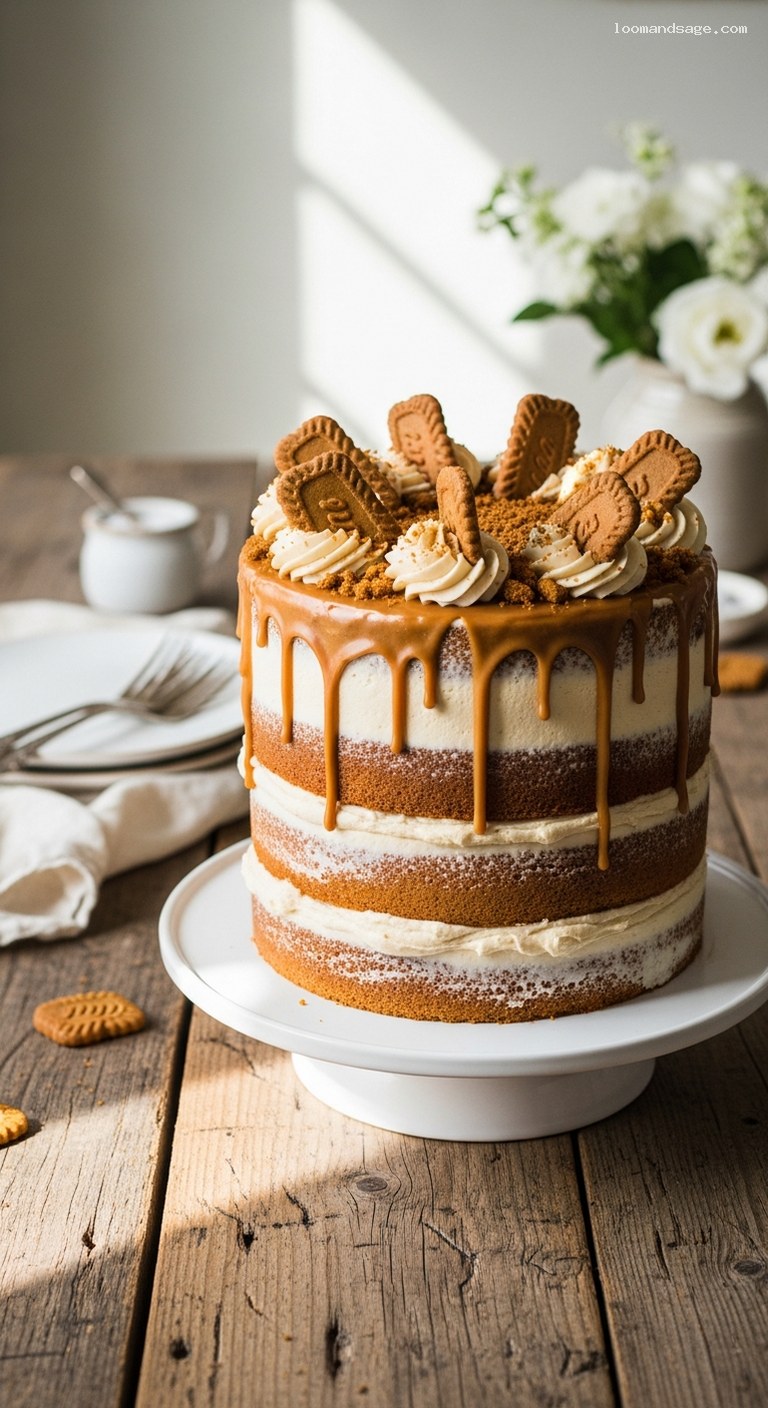
Quick Recipe Version (TL;DR)
Quick Ingredients
- 2 ½ cups (312 g) all-purpose flour
- 2 ½ tsp baking powder + ½ tsp baking soda + ½ tsp fine salt
- 2 tsp ground cinnamon + pinch nutmeg + pinch ginger
- 1 ½ cups (300 g) light brown sugar + ½ cup (100 g) granulated sugar
- ¾ cup (170 g) unsalted butter, room temp (for cake) + 1 ½ cups (340 g) for frosting
- 1 ¼ cups (320 g) creamy cookie butter (Biscoff-style) divided (cake, frosting, ganache, drizzle)
- 3 large eggs, room temp
- 1 cup (240 ml) whole milk + ½ cup (120 g) sour cream
- 2 tsp vanilla extract
- 5 cups (600 g) powdered sugar
- ½ cup (120 ml) heavy cream (for frosting + ganache)
- 4 oz (113 g) white chocolate, chopped
- 10–12 speculoos cookies (Biscoff), whole and crushed
Do This
- 1) Prep: Heat oven to 350°F (175°C). Grease and line three 8-inch round pans; dust with flour.
- 2) Cake: Whisk dry ingredients. Cream butter, sugars, and cookie butter; beat in eggs and vanilla. Alternate adding dry mix with milk/sour cream. Divide into pans; bake 30–35 minutes. Cool completely.
- 3) Buttercream: Beat butter until fluffy. Add powdered sugar, salt, cookie butter, vanilla, and enough cream to make a smooth, spreadable frosting.
- 4) Layer: Level cooled cakes. Stack with generous layers of cookie butter buttercream between each layer. Crumb coat the outside and chill 20–30 minutes.
- 5) Ganache: Warm cream, pour over white chocolate and cookie butter; stir smooth. Cool to a drip consistency. Pour over chilled cake, nudging drips down the sides.
- 6) Decorate: Pipe remaining frosting on top, decorate with whole and crushed speculoos cookies, and drizzle with warmed cookie butter. Slice and enjoy.
Why You’ll Love This Recipe
- Deeply spiced, caramelized cookie butter flavor in every layer: cake, frosting, and ganache.
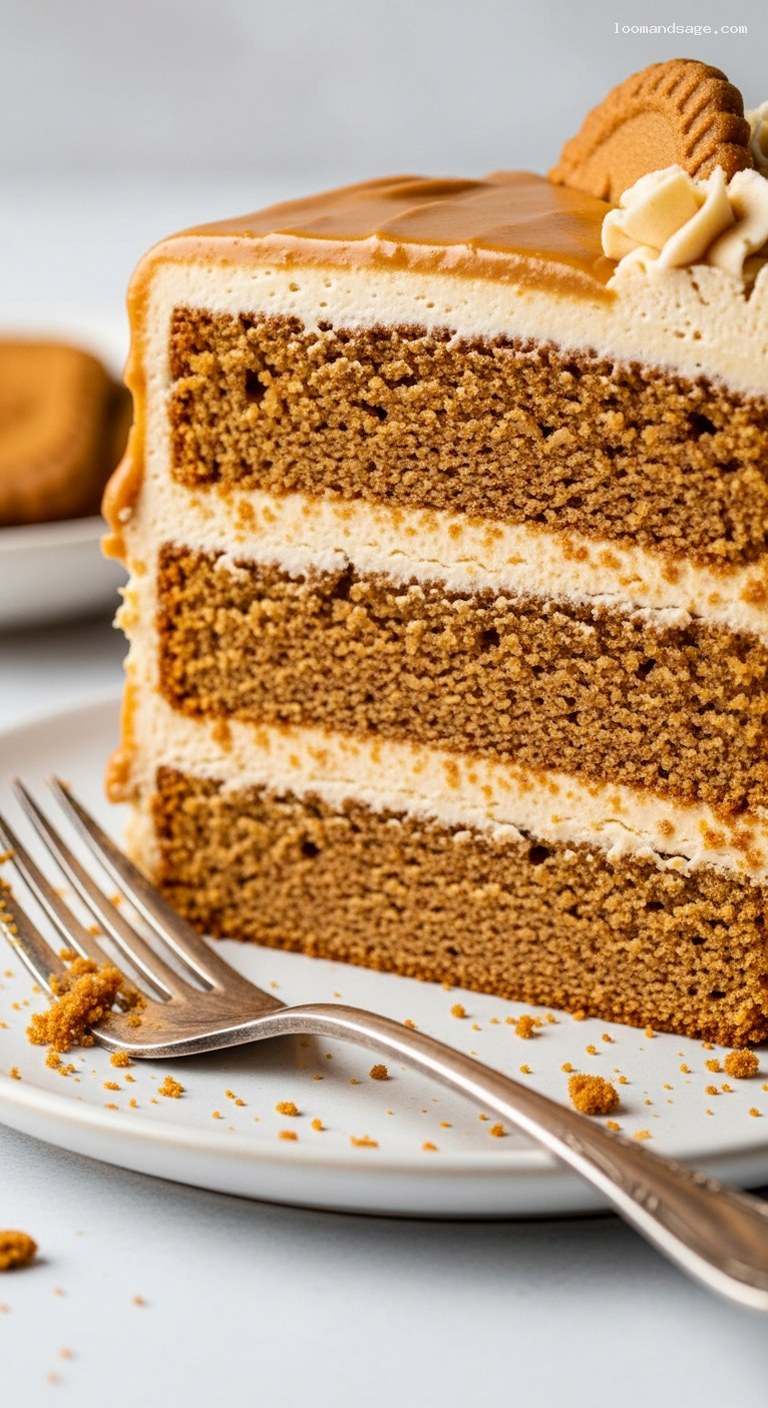
- Moist but sturdy cake layers that slice cleanly and look bakery-worthy.
- Simple, home-baker-friendly techniques that give you a showstopper celebration cake.
- Flexible recipe: make it ahead, customize the decorations, or turn it into cupcakes.
Grocery List
- Produce: None required (optional: fresh berries for serving).
- Dairy: Unsalted butter, whole milk, sour cream, heavy cream.
- Pantry: All-purpose flour, baking powder, baking soda, fine salt, ground cinnamon, ground nutmeg, ground ginger, light brown sugar, granulated sugar, powdered sugar, vanilla extract, cookie butter (Biscoff-style spread), white chocolate, speculoos cookies (Biscoff), nonstick spray or extra butter and flour for pans.
Full Ingredients
Cookie Butter Cake Layers
- 2 ½ cups (312 g) all-purpose flour, spooned and leveled
- 2 ½ tsp baking powder
- ½ tsp baking soda
- ½ tsp fine sea salt
- 2 tsp ground cinnamon
- ⅛ tsp ground nutmeg
- ⅛ tsp ground ginger
- ¾ cup (170 g) unsalted butter, softened to room temperature
- 1 ½ cups (300 g) packed light brown sugar
- ½ cup (100 g) granulated sugar
- ¾ cup (190 g) creamy cookie butter (Biscoff-style spread), at room temperature
- 3 large eggs, room temperature
- 2 tsp pure vanilla extract
- 1 cup (240 ml) whole milk, room temperature
- ½ cup (120 g) sour cream, room temperature
Cookie Butter Buttercream
- 1 ½ cups (340 g) unsalted butter, softened to room temperature
- 5 cups (600 g) powdered sugar, sifted
- ½ cup (130 g) creamy cookie butter, at room temperature
- 3–5 tbsp (45–75 ml) heavy cream or milk, at room temperature
- 2 tsp pure vanilla extract
- ½ tsp fine sea salt (or to taste)
Cookie Butter Ganache Drip
- 4 oz (113 g) white chocolate, finely chopped
- ¼ cup (60 ml) heavy cream
- ¼ cup (64 g) creamy cookie butter
- Pinch of fine sea salt (optional, but enhances flavor)
Decoration
- 6–8 whole speculoos cookies (Biscoff) for the top
- 4–6 speculoos cookies, roughly crushed, for the sides and top
- 2–4 tbsp (30–60 g) extra cookie butter, gently warmed for drizzling
- Optional: extra buttercream for piping rosettes or swirls on top
Step-by-Step Instructions
Step 1: Prep your pans and preheat the oven
Preheat your oven to 350°F (175°C) with a rack in the center. Prepare three 8-inch round cake pans by greasing the sides and bottoms with butter or nonstick spray. Line each pan with a round of parchment paper, then lightly grease the parchment as well. Dust the pans with a little flour, tapping out any excess. This prepares the pans so your cake layers release cleanly and stay intact, which is especially helpful for a layered showpiece cake.
Set out your butter, eggs, milk, sour cream, and cookie butter if they are not already at room temperature. Room-temperature ingredients blend more easily and help create a smooth, even batter.
Step 2: Mix the dry ingredients
In a medium bowl, whisk together the all-purpose flour, baking powder, baking soda, salt, cinnamon, nutmeg, and ginger until they are well combined and no streaks of spices remain. This ensures the leavening and spices are evenly distributed through the batter, so the cake rises evenly and every bite is warmly spiced.
Set this bowl aside; you will alternate adding it with the milk and sour cream mixture in a later step.
Step 3: Cream the butter, sugars, and cookie butter
In a large mixing bowl (or the bowl of a stand mixer fitted with the paddle attachment), add the softened butter, brown sugar, and granulated sugar. Beat on medium-high speed for 3–4 minutes, scraping down the bowl as needed, until the mixture is light, fluffy, and slightly paler in color.
Add the cookie butter and beat again for 1–2 minutes until fully incorporated and creamy. The mixture should smell deeply caramelized and spiced. Add the eggs one at a time, beating well after each addition and scraping the bowl to ensure no streaks remain. Finally, mix in the vanilla extract.
Step 4: Finish the batter and bake the layers
In a small bowl or measuring jug, whisk together the milk and sour cream until smooth. With the mixer on low speed, add the dry ingredients to the butter mixture in three additions, alternating with the milk-sour cream mixture in two additions (dry, wet, dry, wet, dry). Mix gently just until the batter is combined and no dry pockets remain; do not overmix.
Divide the batter evenly among your three prepared pans. A kitchen scale is helpful here; each pan should hold roughly the same amount of batter for even baking. Smooth the tops with a spatula.
Bake for 30–35 minutes, or until the cakes are golden, the edges are pulling slightly away from the sides, and a toothpick inserted into the center comes out clean or with a few moist crumbs. Remove the pans to a wire rack and let the cakes cool in the pans for 10–15 minutes. Then run a knife around the edges, invert the cakes onto the rack, peel off the parchment, and allow them to cool completely, about 1–1 ½ hours.
Step 5: Make the cookie butter buttercream
Once the cake layers are completely cool, prepare the buttercream. In a large mixing bowl or stand mixer with the paddle attachment, beat the softened butter on medium-high speed for 3–4 minutes until very light and creamy.
Turn the mixer to low and gradually add the powdered sugar, about 1 cup at a time, mixing until mostly incorporated before adding more. Once all the sugar has been added, mix in the salt, cookie butter, and vanilla extract. The frosting will be thick at this stage.
Add the heavy cream or milk, 1 tablespoon at a time, beating on medium-high after each addition, until the buttercream reaches a smooth, fluffy, spreadable consistency. You may not need all of the liquid, or you may prefer a bit more, depending on your climate and preference. Beat for 2–3 minutes more to aerate. Taste and adjust the salt or cookie butter to your liking.
Step 6: Level, fill, and crumb coat the cake
If the cakes domed in the oven, use a large serrated knife or cake leveler to carefully trim the tops so they are flat. Save the scraps for nibbling or for layering with extra frosting as a baker’s treat.
Place a small dollop of buttercream on a cake board or serving plate to help anchor the cake. Set the first cake layer on the board, cut side up. Spread a generous layer of buttercream (about ¾–1 cup) evenly over the top, taking it all the way to the edges.
Place the second layer on top, then repeat with another thick layer of buttercream. Add the top layer, cut side down, for the flattest finish. Apply a thin layer of buttercream over the top and sides of the cake, just enough to trap any crumbs. This is your crumb coat and does not need to be perfect. Chill the cake in the refrigerator for 20–30 minutes, or in the freezer for about 15 minutes, until the frosting is firm to the touch.
Once chilled, add a second, thicker layer of buttercream over the top and sides, smoothing with an offset spatula or bench scraper for a clean finish. Reserve some buttercream for piping decorations on top, if desired.
Step 7: Make the cookie butter ganache drip
While the frosted cake chills, prepare the ganache. Place the chopped white chocolate and cookie butter in a heatproof bowl. In a small saucepan, gently heat the heavy cream over medium-low heat just until it begins to steam and small bubbles appear around the edges (do not boil).
Pour the hot cream over the white chocolate and cookie butter. Let sit for 2–3 minutes to soften, then whisk slowly until the mixture is completely smooth and glossy. If a few small bits of chocolate remain, warm the bowl in the microwave for 5–10 seconds and whisk again. Stir in a pinch of salt, if using.
Allow the ganache to cool, stirring occasionally, until it thickens slightly but is still pourable, about 10–15 minutes. It should have the consistency of warm honey. If it becomes too thick, gently rewarm for a few seconds; if it is too thin, let it sit a little longer at room temperature.
Step 8: Add the drip and decorate
Make sure the cake is well chilled and the buttercream is firm; this helps the ganache set quickly and create defined drips. Transfer the cooled ganache to a squeeze bottle, piping bag, or use a spoon.
Working around the top edge of the cake, gently squeeze or spoon small amounts of ganache, nudging them over the edge to create drips of varying lengths down the sides. Once the border is complete, pour the remaining ganache into the center of the cake and spread it toward the edges, meeting the drips.
Let the ganache set for 5–10 minutes. If using reserved buttercream, pipe rosettes or swirls around the top edge. Press whole speculoos cookies into the frosting on top and sprinkle crushed cookies over the center and around the base of the cake. For extra drama, gently warm a few tablespoons of cookie butter until pourable and drizzle it over the top of the cake and cookies.
Chill the finished cake for at least 20–30 minutes to help it set before slicing. For the best texture, let it sit at room temperature for 20–30 minutes before serving.
Pro Tips
- Measure flour accurately: Too much flour can make the cake dense. Spoon flour into the measuring cup, level it off, or weigh it for the most reliable results.
- Use truly room-temperature ingredients: Butter, eggs, milk, sour cream, and cookie butter blend more smoothly and help prevent a curdled batter.
- Chill between stages: A chilled crumb coat and cooled cake layers make stacking, smoothing buttercream, and dripping ganache much easier and neater.
- Adjust ganache consistency: If the drip is too thick and clings, warm it slightly. If it runs all the way down and pools, let it cool and thicken before continuing.
- Slicing cleanly: Dip a sharp knife in hot water and wipe it dry between cuts for neat, bakery-style slices that show off the layers.
Variations
- Two-layer 9-inch cake: Divide the batter between two 9-inch pans and bake 30–35 minutes. You will have a slightly shorter cake; reduce frosting by about 25% if desired.
- Cookie butter cupcakes: Bake the batter in lined muffin tins, filling each about ⅔ full. Bake at 350°F (175°C) for 18–22 minutes. Swirl with cookie butter buttercream and drizzle with ganache and crushed cookies.
- Extra-spiced version: Add an extra ½ tsp cinnamon and ¼ tsp ginger to the cake batter and a pinch of cinnamon to the buttercream for a bolder spice profile.
Storage & Make-Ahead
This cake keeps well and is a great make-ahead dessert. Once assembled, store the cake covered in the refrigerator for up to 4 days. Because the frosting and ganache contain dairy, refrigeration is safest, but the cake tastes best when slightly softened, so let slices sit at room temperature for 20–30 minutes before serving.
You can also make the components in advance. Bake the cake layers, cool completely, wrap each tightly in plastic wrap, and store at room temperature for up to 1 day or freeze for up to 2 months. Thaw frozen layers in the fridge overnight, then bring to room temperature before assembling. The buttercream can be made up to 3 days ahead and stored in an airtight container in the fridge; bring it to room temperature and rewhip before using. The ganache is best made fresh on the day you assemble for the smoothest, most controllable drip.
Nutrition (per serving)
Approximate values for 1 of 12 slices: about 780 calories; 44 g fat; 26 g saturated fat; 95 mg cholesterol; 470 mg sodium; 92 g carbohydrates; 1 g fiber; 70 g sugars; 6 g protein. Values will vary based on exact ingredients and decoration amounts.