
Quick Recipe Version (TL;DR)
Quick Ingredients
- 1 large butternut squash (about 3 lb / 1.4 kg), peeled, seeded, cubed
- 2 tbsp olive oil, divided
- 1 medium yellow onion, chopped
- 3 cloves garlic, minced
- 2 tbsp fresh ginger, finely grated
- 1 tsp ground cumin
- 1/4 tsp ground cinnamon
- Pinch cayenne pepper (optional)
- 4 cups (1 L) low-sodium vegetable broth
- 1 can (13.5 oz / 400 ml) full-fat coconut milk
- 2–3 tbsp fresh lime juice, plus 1 tsp lime zest
- 1–1 1/2 tsp kosher salt, plus more to taste
- 1/4 tsp freshly ground black pepper
- 1–2 tsp maple syrup or brown sugar (to taste)
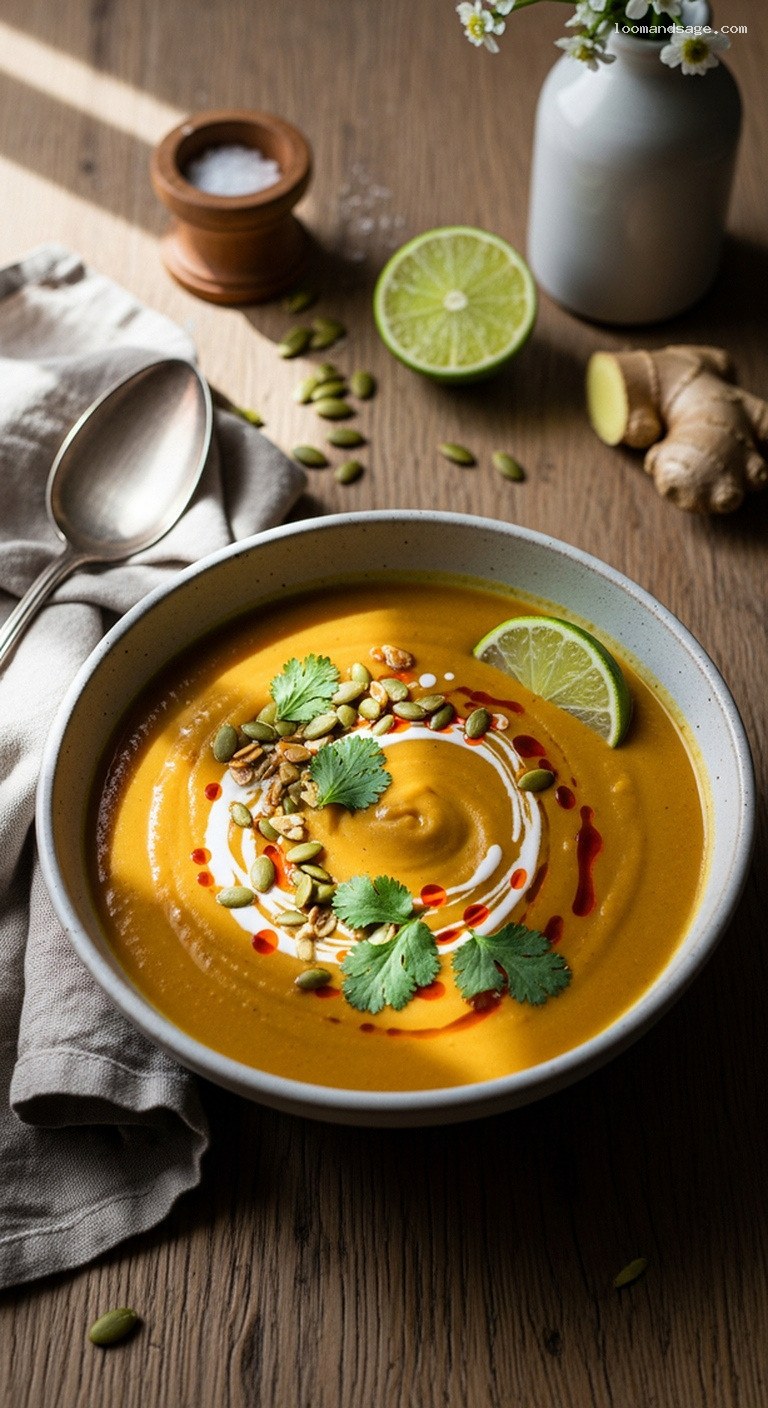
- Optional garnishes: extra coconut milk, toasted pumpkin seeds, fresh cilantro, chili oil, lime wedges
Do This
- 1. Heat oven to 400°F (200°C). Toss squash with 1 tbsp olive oil, salt, and pepper; spread on a baking sheet.
- 2. Roast squash 25–30 minutes, until very tender and lightly caramelized at the edges.
- 3. In a pot, heat remaining 1 tbsp olive oil. Sauté onion 4–5 minutes, then add garlic, ginger, cumin, cinnamon, and cayenne; cook 1 minute.
- 4. Add roasted squash, vegetable broth, and coconut milk. Simmer 10 minutes to meld flavors.
- 5. Blend soup (carefully) until completely smooth and creamy, using a blender or immersion blender.
- 6. Stir in lime juice, lime zest, maple syrup, additional salt, and pepper. Adjust to taste.
- 7. Serve hot, topped with a drizzle of coconut milk, toasted pumpkin seeds, cilantro, and a squeeze of lime.
Why You’ll Love This Recipe
- Silky-smooth and ultra-creamy from roasted squash and coconut milk, with no dairy needed.
- Bright ginger and lime keep it fresh and lively, so it never feels heavy.
- Mostly hands-off: roast, simmer, blend, and you are done.
- Perfect for meal prep, holidays, or a cozy weeknight dinner with crusty bread.
Grocery List
- Produce: 1 large butternut squash, 1 yellow onion, 3 cloves garlic, fresh ginger, 1–2 limes, fresh cilantro (optional), green onions (optional)
- Dairy: None (this soup is naturally dairy-free; add yogurt only if you want a non-vegan swirl)
- Pantry: Olive oil, low-sodium vegetable broth, canned full-fat coconut milk, ground cumin, ground cinnamon, cayenne pepper (optional), kosher salt, black pepper, maple syrup or brown sugar, pumpkin seeds (pepitas), chili oil or red pepper flakes (optional)
Full Ingredients
For the Soup
- 1 large butternut squash (about 3 lb / 1.4 kg), peeled, seeded, and cut into 1-inch cubes
- 2 tbsp olive oil, divided
- 1 medium yellow onion, chopped (about 1 1/2 cups)
- 3 cloves garlic, minced
- 2 tbsp fresh ginger, finely grated (about a 1 1/2-inch piece)
- 1 tsp ground cumin
- 1/4 tsp ground cinnamon
- Pinch cayenne pepper (optional, for gentle heat)
- 4 cups (1 L) low-sodium vegetable broth
- 1 can (13.5 oz / 400 ml) full-fat coconut milk, well shaken
- 1–1 1/2 tsp kosher salt, plus more to taste
- 1/4 tsp freshly ground black pepper, plus more to taste
For Finishing
- 2–3 tbsp fresh lime juice (from 1–2 limes), to taste
- 1 tsp finely grated lime zest
- 1–2 tsp maple syrup or brown sugar, to balance the acidity and bring out the squash’s sweetness
Optional Garnishes
- Extra coconut milk or coconut cream, for drizzling
- Toasted pumpkin seeds (pepitas)
- Fresh cilantro leaves or thinly sliced green onions
- Chili oil or a pinch of red pepper flakes
- Lime wedges, for serving
Step-by-Step Instructions
Step 1: Prep and Roast the Butternut Squash
Preheat your oven to 400°F (200°C). Line a large baking sheet with parchment paper for easier cleanup. Place the cubed butternut squash on the tray and drizzle with 1 tablespoon of olive oil. Sprinkle with a generous pinch of salt and a few grinds of black pepper. Toss with your hands or a spatula until the squash is evenly coated, then spread it into a single layer, leaving a little space between pieces so they caramelize instead of steam.
Roast for 25–30 minutes, turning once halfway through, until the squash is very tender when pierced with a fork and edges are lightly browned and caramelized. This roasting step concentrates the flavor and makes the soup naturally sweeter and richer.
Step 2: Sauté the Aromatics
While the squash is roasting, heat the remaining 1 tablespoon olive oil in a large heavy-bottomed pot or Dutch oven over medium heat. Add the chopped onion and a pinch of salt. Cook, stirring occasionally, for 4–5 minutes, until the onion softens and turns translucent but is not browned.
Add the minced garlic and grated ginger. Stir constantly for about 1 minute, just until fragrant. Sprinkle in the ground cumin, ground cinnamon, and a pinch of cayenne (if using). Cook for another 30 seconds to bloom the spices, being careful not to let the garlic brown, which can make it taste bitter.
Step 3: Build the Soup Base
When the squash is finished roasting, transfer it carefully to the pot with the onions and spices. Pour in the vegetable broth and the can of coconut milk. Stir well, scraping along the bottom of the pot to pick up any flavorful bits stuck there.
Increase the heat to medium-high and bring the mixture just to a gentle boil. Once it bubbles, reduce the heat to low, cover partially with a lid, and let the soup simmer for about 10 minutes. This gives the flavors time to mingle and the squash to break down further.
Step 4: Blend Until Silky Smooth
Turn off the heat. Now it is time to blend the soup. If you have an immersion (stick) blender, carefully blend the soup directly in the pot until it is completely smooth and velvety. Move the blender around the pot and tilt it slightly to avoid splattering.
If you are using a countertop blender, let the soup cool slightly. Work in batches, filling the blender no more than halfway, and vent the lid slightly to let steam escape, covering the vent with a clean kitchen towel. Blend each batch until silky-smooth, then pour the blended soup into a clean pot. Repeat until all the soup is blended.
Step 5: Add Lime, Sweetness, and Seasoning
Return the blended soup to low heat, if needed. Stir in the lime zest, 2 tablespoons of lime juice to start, and 1 teaspoon of maple syrup or brown sugar. Taste and adjust, adding more lime juice for brightness, another teaspoon of maple syrup if you want more sweetness, and more salt and pepper as needed. The flavors should be balanced: rich and creamy, with a gentle warmth from ginger and a fresh, tangy lift from lime.
If the soup seems too thick for your liking, thin it with a splash of vegetable broth or water, adding a little at a time until it reaches your preferred consistency.
Step 6: Warm Through and Taste Again
Let the soup warm gently over low heat for another 2–3 minutes, stirring occasionally, just until everything is hot and the flavors have melded. Taste one more time and fine-tune the seasoning: a pinch more salt can make the flavors pop, more lime if you want it brighter, or an extra pinch of cayenne for gentle heat.
Step 7: Garnish and Serve
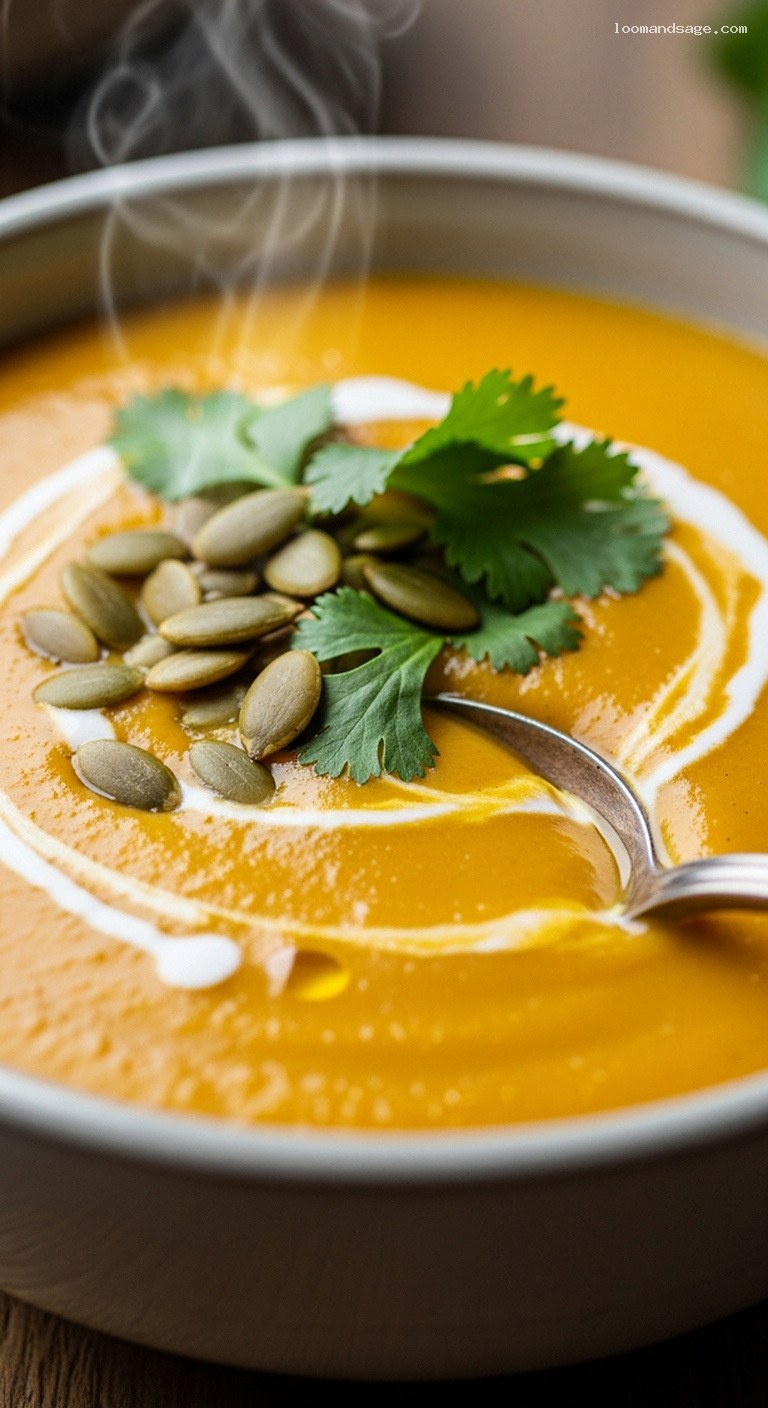
Ladle the hot soup into bowls. For a beautiful presentation, drizzle a spoonful of coconut milk or coconut cream in a swirl on top of each serving. Sprinkle with toasted pumpkin seeds for crunch, and add a few cilantro leaves or sliced green onions for freshness and color. Finish with a tiny drizzle of chili oil or a pinch of red pepper flakes if you enjoy a little heat, and tuck a lime wedge on the side of each bowl.
Serve immediately with crusty bread, naan, or a simple green salad. Enjoy it as a cozy main dish or as an elegant starter.
Pro Tips
- Roast for flavor: Roasting the squash instead of boiling it deepens the sweetness and adds subtle caramelized notes. Do not skip this step if you want maximum flavor.
- Control thickness: For a thicker, luxurious soup, use the full can of coconut milk and less broth. For a lighter soup, add an extra 1/2–1 cup broth or water after blending.
- Blend completely: Take your time blending. The smoother the texture, the more “restaurant-quality” the soup feels.
- Balance acidity and sweetness: Adjust the lime juice and maple syrup slowly, tasting as you go. Butternut squash can vary in sweetness, so the exact amounts may change each time you make it.
- Make it ahead-friendly: This soup actually tastes even better the next day as the flavors deepen in the fridge.
Variations
- Spicier Thai-inspired version: Add 1–2 tablespoons of red curry paste when you sauté the aromatics and finish with fresh basil instead of cilantro. This adds a bolder, more complex heat.
- Extra-velvety version: Stir in 1–2 tablespoons of unsalted butter or a splash of heavy cream (if not keeping it vegan) after blending for an ultra-rich texture.
- Carrot and squash blend: Replace 1/3 of the butternut squash with peeled, chopped carrots for a slightly earthier flavor and a brighter orange color.
Storage & Make-Ahead
Let the soup cool to room temperature, then transfer it to airtight containers. Store in the refrigerator for up to 4 days. The soup will thicken as it chills; thin with a splash of water or broth when reheating if needed. Reheat gently on the stovetop over low to medium-low heat, stirring occasionally, until hot but not boiling. You can also reheat individual portions in the microwave, stirring halfway through.
For longer storage, freeze the soup (without garnishes) in freezer-safe containers or bags for up to 3 months. Thaw overnight in the refrigerator before reheating. Add fresh lime juice and garnishes after reheating to keep the flavors bright and fresh.
Nutrition (per serving)
Approximate values for 6 servings: about 260 calories; 20 g fat (mostly from coconut milk), 22 g carbohydrates, 4 g fiber, 5 g protein, and around 550–650 mg sodium (depending on your broth and added salt). These numbers are estimates and will vary based on specific brands and exact portion sizes.