
Quick Recipe Version (TL;DR)
Quick Ingredients
- 1.5 lb (680 g) cleaned squid, tubes and tentacles
- 1 cup (130 g) all-purpose flour
- 1/4 cup (30 g) cornstarch
- 1 tsp fine sea salt, plus more to finish
- 1/2 tsp freshly ground black pepper
- 1/2 tsp sweet paprika (optional)
- Vegetable or light olive oil, for frying (about 3–4 cups)
- 1 lemon, cut into wedges
- Optional dip: 1/2 cup (120 g) Greek yogurt, 1–2 garlic cloves, 1 Tbsp olive oil, 1 Tbsp lemon juice, pinch of salt
Do This
- 1. Slice squid tubes into 1/2-inch (1.25 cm) rings; keep tentacles whole. Rinse quickly, then pat very dry with paper towels.
- 2. In a bowl, whisk flour, cornstarch, salt, pepper, and paprika.
- 3. Toss squid in the flour mixture, shaking off excess; spread coated pieces on a tray so they do not clump.
- 4. Heat 2 inches (5 cm) of oil in a deep pot to 350°F (180°C).
- 5. Fry squid in small batches for 2–3 minutes, until lightly golden and crisp. Do not overcrowd the pot.
- 6. Drain on paper towels, sprinkle with a little extra salt, and serve immediately with lemon wedges and garlic-yogurt dip.
Why You’ll Love This Recipe
- Light, crisp coating with tender, not rubbery, squid inside.
- Classic Greek taverna flavor at home, ready in about 30 minutes.
- Simple ingredients you likely already have in your pantry.
- Perfect appetizer for parties, date nights, or meze platters.
Grocery List
- Produce: 1–2 lemons, 2–3 garlic cloves, fresh parsley (optional, for garnish)
- Dairy: Plain Greek yogurt (for dip; optional), milk (optional, for tenderizing soak)
- Pantry: Cleaned squid (fresh or frozen), all-purpose flour, cornstarch, fine sea salt, black pepper, sweet paprika, vegetable or light olive oil, extra-virgin olive oil (for dip)
Full Ingredients
For the Fried Calamari (Kalamari Tiganito)
- 1.5 lb (680 g) cleaned squid, tubes and tentacles
- If buying whole: about 2 lb (900 g) whole squid before cleaning
- 1 cup (130 g) all-purpose flour
- 1/4 cup (30 g) cornstarch
- 1 tsp fine sea salt, plus more to finish
- 1/2 tsp freshly ground black pepper
- 1/2 tsp sweet paprika (optional, for a gentle warmth and color)
- 3–4 cups (700–950 ml) neutral frying oil
- Such as sunflower, canola, grapeseed, or light (refined) olive oil
- Optional tenderizing soak (recommended if squid is larger):
- 1 cup (240 ml) whole milk
- 1/2 tsp salt
For the Garlic–Lemon Yogurt Dip (Optional but Delicious)
- 1/2 cup (120 g) plain Greek yogurt
- 1–2 garlic cloves, very finely minced or grated
- 1 Tbsp extra-virgin olive oil
- 1 Tbsp freshly squeezed lemon juice
- 1–2 tsp water, as needed to thin
- Pinch of fine sea salt, to taste
To Serve
- 1–2 lemons, cut into wedges
- 1–2 Tbsp finely chopped fresh parsley (optional, for garnish)
- Flaky sea salt (optional, for finishing)
Step-by-Step Instructions
Step 1: Prepare and Dry the Squid
If your squid is not already prepared, clean it first: pull the head and tentacles away from the body, remove the clear quill, and peel away the thin purplish skin. Rinse quickly under cold water and pat dry. Cut the tubes crosswise into 1/2-inch (1.25 cm) rings. Leave small tentacles whole; if very large, cut them in half.
Place all the squid pieces on a tray lined with paper towels or a clean kitchen towel. Pat them very dry on all sides. This step is essential: dry squid will coat more evenly and fry up crisp instead of soggy or spattering.
Optional for extra tenderness, especially if the squid is on the larger side: in a bowl, mix 1 cup (240 ml) milk with 1/2 tsp salt. Add the squid and soak for 15–30 minutes in the refrigerator. Drain well and pat completely dry again before coating.
Step 2: Make the Garlic–Lemon Yogurt Dip
In a small bowl, combine the Greek yogurt, minced or grated garlic, extra-virgin olive oil, and lemon juice. Stir until smooth and creamy. If it is too thick, add 1–2 teaspoons of water until it reaches a soft, dipping consistency.
Taste and season with a pinch of salt. The dip should be bright, garlicky, and tangy, balancing the richness of the fried calamari. Cover and refrigerate until serving. The flavors will deepen slightly as it rests.
Step 3: Mix the Coating
In a medium mixing bowl, whisk together the all-purpose flour, cornstarch, 1 teaspoon fine sea salt, black pepper, and sweet paprika (if using). Cornstarch helps the coating stay light and crisp, while the flour gives it a bit of body.
Transfer a few spoonfuls of the flour mixture to a shallow dish or tray for easier dredging. Keep the rest nearby; if the coating becomes clumpy with moisture, you can refresh it with a bit of the dry mixture.
Step 4: Dredge the Squid
Add a handful of squid rings and tentacles to the flour mixture, tossing gently to coat all sides. Use your fingers or tongs to separate any pieces that want to stick together. Shake off any excess flour and arrange the coated squid in a single layer on a clean tray or baking sheet.
Repeat with the remaining squid, working in small batches. Allowing the coated squid to sit for 5–10 minutes before frying helps the flour adhere better, which leads to a more even, crisp crust.
Step 5: Heat the Oil
Pour 2 inches (about 5 cm) of frying oil into a deep, heavy-bottomed pot or deep skillet. Attach a deep-fry thermometer to the side, if you have one. Heat the oil over medium-high heat until it reaches 350°F (180°C).
If you do not have a thermometer, test the oil by dropping in a small pinch of the flour mixture. It should sizzle immediately and turn lightly golden within about 30 seconds. Keep the heat adjusted so the oil stays hot but does not smoke.
Step 6: Fry the Calamari
Working in small batches, carefully lower a handful of coated squid into the hot oil. Do not overcrowd the pot; the pieces should have space to float freely. Fry for 2–3 minutes, gently stirring with a slotted spoon or spider to prevent sticking.
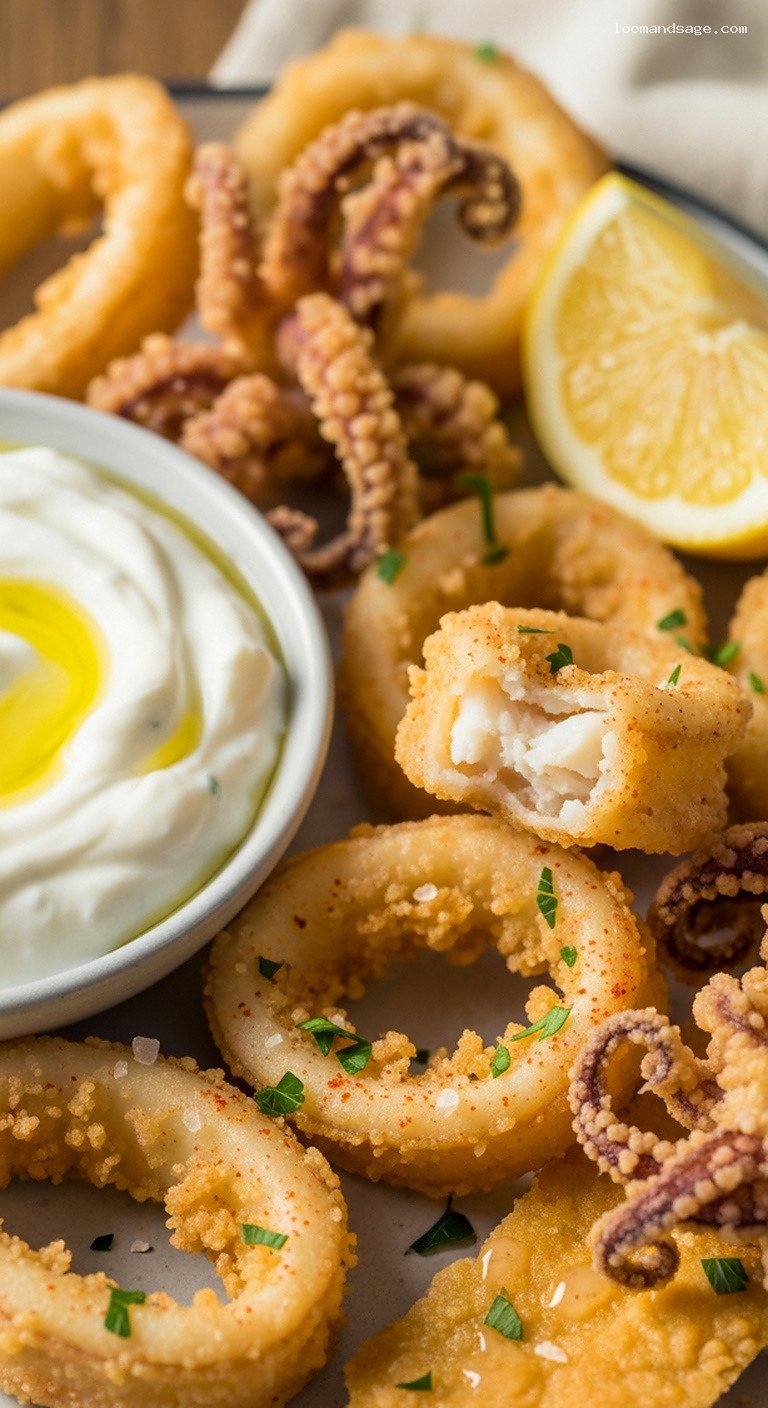
The calamari is done when it is lightly golden and crisp. Avoid frying until deep brown, which can make the squid tough. Remove the pieces with a slotted spoon and transfer to a plate lined with paper towels to drain. Immediately sprinkle with a little extra salt (and a touch of paprika, if you like).
Repeat with the remaining squid, allowing the oil to return to 350°F (180°C) between batches. Discard any clumps of flour left in the oil as you go, so they do not burn and darken the flavor.
Step 7: Serve Greek-Style with Lemon and Dip
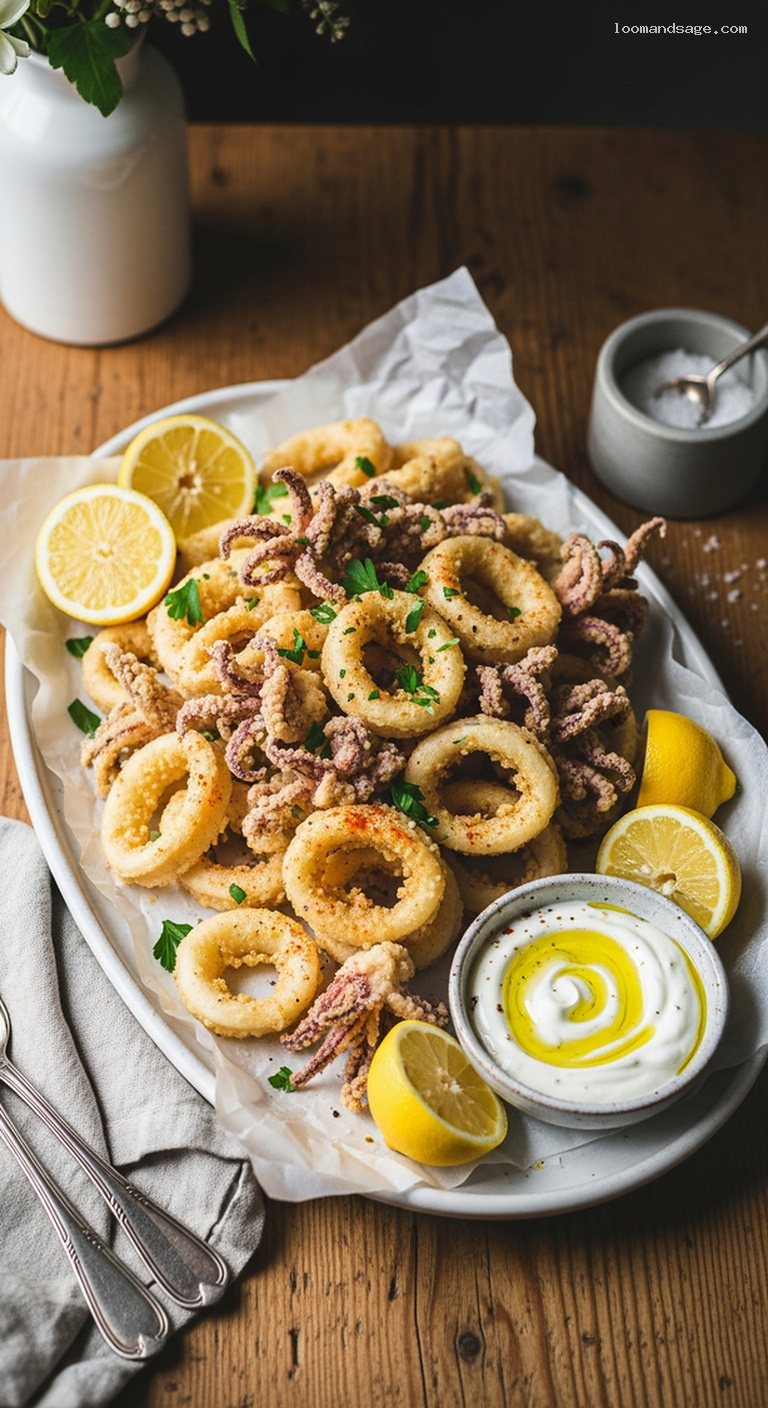
Pile the hot, crispy calamari onto a serving platter. Garnish with chopped fresh parsley, if using, and arrange lemon wedges all around. Serve immediately, while the coating is at its crispiest.
Set out the garlic–lemon yogurt dip on the side, along with extra salt if desired. To eat, squeeze plenty of fresh lemon juice over the squid, dip into the garlicky sauce, and enjoy right away. Fried calamari is at its absolute best within the first 10–15 minutes after frying.
Pro Tips
- Dryness is key: Take the time to pat the squid really dry before coating. Any surface moisture will cause sputtering oil and soggy coating.
- Do not overcook: Squid cooks very quickly. Once the coating is lightly golden (about 2–3 minutes), remove it. Overcooked squid can turn chewy.
- Keep the oil hot: Frying in small batches helps maintain the oil temperature around 350°F (180°C), which prevents greasy, heavy results.
- Use a mix of flour and cornstarch: Cornstarch lightens the coating and adds extra crunch without making it thick or bready.
- Serve immediately: Like most fried foods, calamari loses its crispness as it cools. Have your serving platter and lemon wedges ready before you start frying.
Variations
- Spicy calamari: Add 1/2–1 teaspoon cayenne pepper or hot smoked paprika to the flour mixture, and serve with a spicy garlic dip or harissa-yogurt sauce.
- Herb and lemon zest coating: Grate the zest of 1 lemon and mix it with 1–2 tablespoons finely chopped parsley or oregano into the flour mixture for a more aromatic crust.
- No-dip, extra-lemon style: Skip the yogurt dip and simply serve with plenty of lemon wedges and a drizzle of extra-virgin olive oil over the fried calamari in classic Greek taverna fashion.
Storage & Make-Ahead
Fried calamari is best eaten fresh and hot; it does not hold its crispness well. If you do have leftovers, store them in an airtight container in the refrigerator for up to 1 day. Reheat on a baking sheet in a 400°F (200°C) oven or air fryer for 5–8 minutes, until warmed through and slightly re-crisped. The texture will not be as perfect as freshly fried, but it will still be tasty.
You can, however, prep ahead: clean and slice the squid up to 1 day in advance and store it covered in the refrigerator on paper towels. You can also mix the flour coating and keep it sealed at room temperature, and prepare the garlic–lemon yogurt dip up to 1 day ahead (keep refrigerated). Coat and fry the squid just before serving.
Nutrition (per serving)
Approximate values for 1 of 4 appetizer servings (including a small amount of dip): about 320 calories; 25 g protein; 18 g fat; 13 g carbohydrates; 0–1 g fiber; 2 g sugar; 560 mg sodium. Actual values will vary depending on the exact amount of oil absorbed during frying and how much dip you use.