Quick Recipe Version (TL;DR)
Quick Ingredients
- 2 1/2 cups (300 g) cake flour
- 1/2 cup (50 g) finely ground blanched almonds (almond flour)
- 2 1/2 tsp baking powder, 1/2 tsp fine salt
- 3/4 cup (170 g) unsalted butter, softened + 1/4 cup (60 ml) neutral oil
- 1 3/4 cups (350 g) granulated sugar
- 5 large egg whites, room temperature
- 1 1/4 cups (300 ml) whole milk + 1/4 cup (60 g) sour cream
- 3 tsp total extract (2 tsp almond, 1 tsp vanilla)
- 1 1/2 cups (340 g) unsalted butter, softened (for frosting)
- 5 cups (600 g) powdered sugar, sifted
- 1/4–1/3 cup (60–80 ml) heavy cream or milk
- Extra almond and vanilla extract, pinch of salt
- 1 cup sliced almonds, toasted; fresh berries and marzipan (optional)
Do This
- 1. Preheat oven to 350°F (175°C). Grease and line three 8-inch round cake pans with parchment; lightly flour.
- 2. Whisk cake flour, almond flour, baking powder, and salt. In another bowl, whisk milk, sour cream, and extracts.
- 3. Cream butter and sugar until fluffy; beat in oil, then egg whites one at a time.
- 4. Add dry ingredients to creamed mixture in 3 additions, alternating with milk mixture. Divide batter among pans; bake 22–28 minutes.
- 5. Cool cakes completely. Meanwhile, beat butter, powdered sugar, extracts, cream, and salt into a smooth almond buttercream.
- 6. Layer cakes with buttercream. Crumb-coat, chill briefly, then frost smoothly. Decorate with sliced almonds, marzipan, and fresh berries.
Why You’ll Love This Recipe
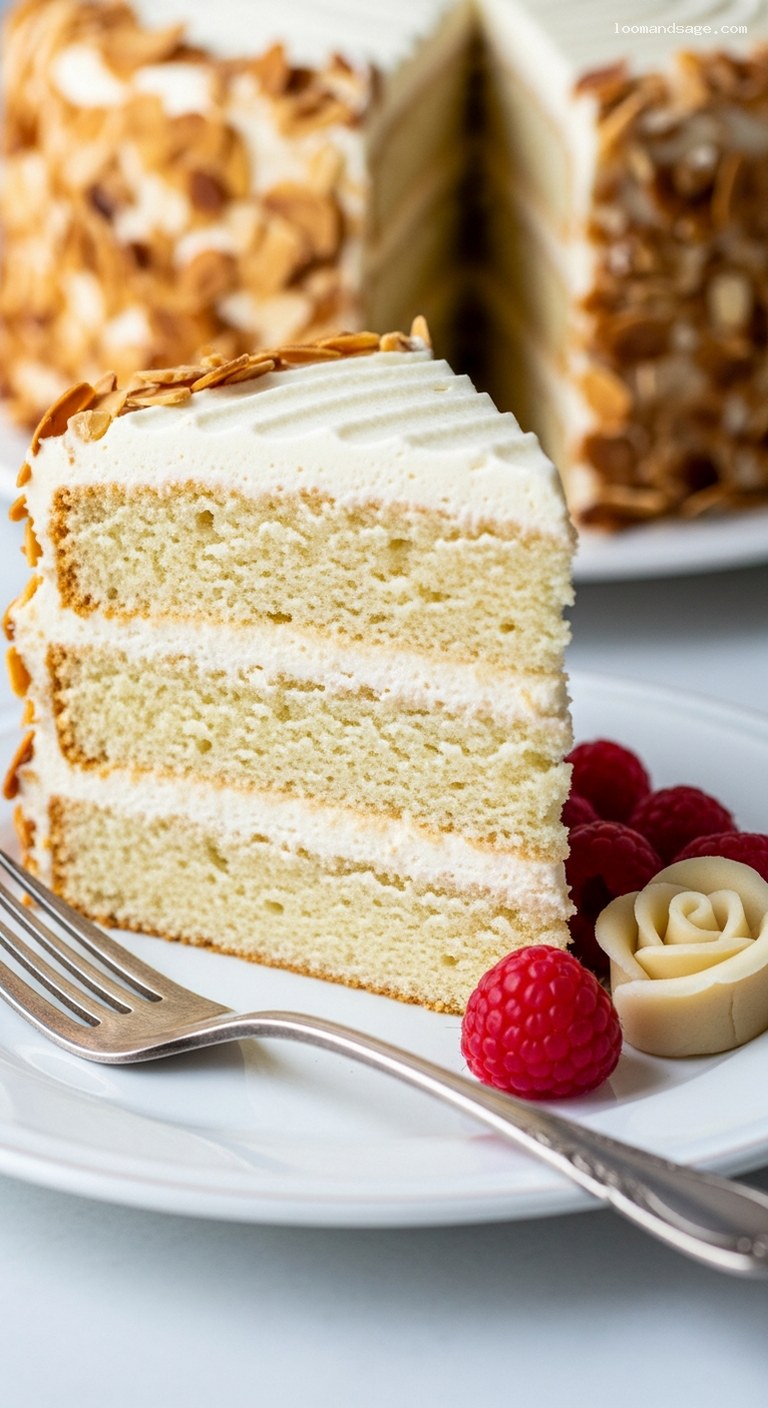
- Delicate white cake with a gentle almond flavor and fine, tender crumb.
- Luxuriously smooth almond buttercream that is sweet, but not cloying.
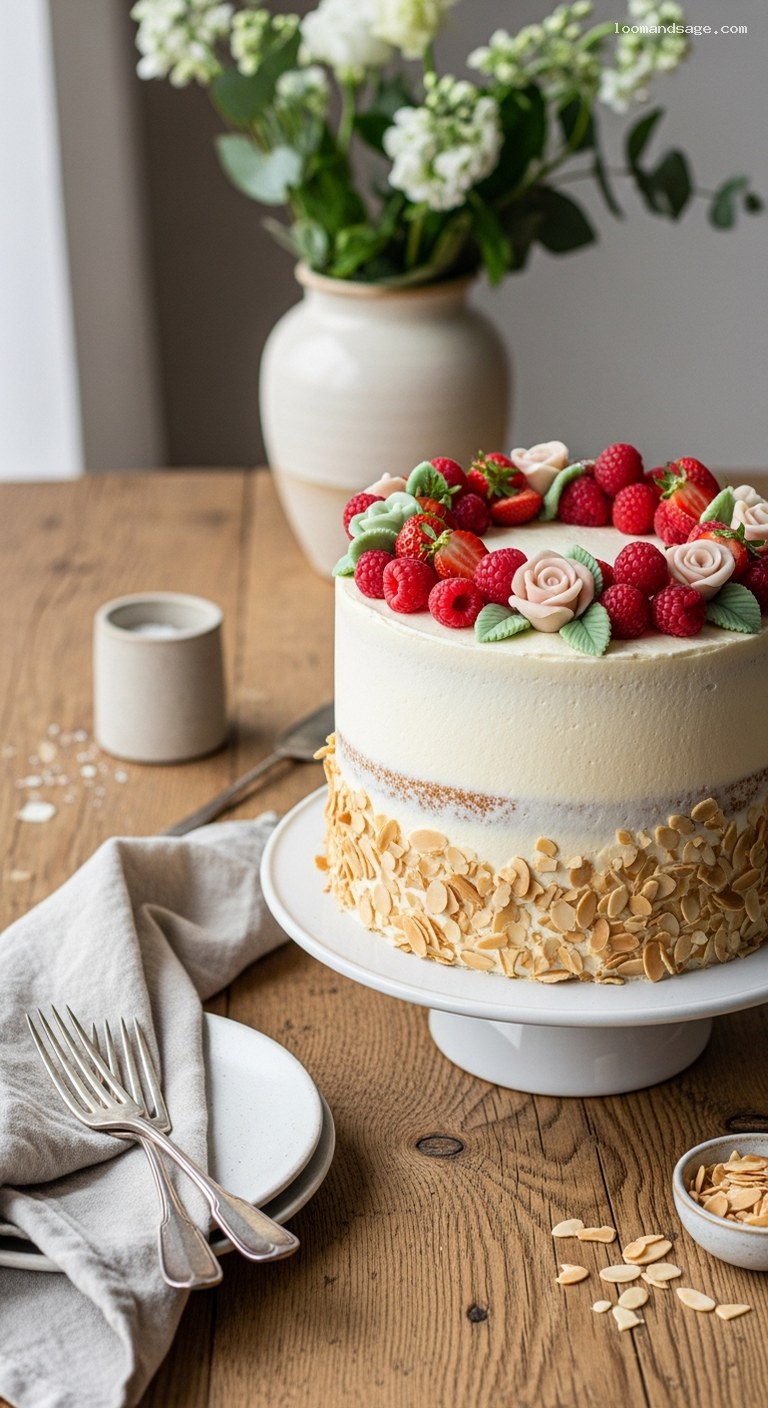
- Elegant European-style look with sliced almonds, marzipan, and berries.
- Perfect make-ahead celebration cake that slices beautifully for parties.
Grocery List
- Produce: Fresh berries for garnish (raspberries, strawberries, or mixed berries); optional: lemon (for a bit of zest, if desired).
- Dairy: Unsalted butter; whole milk; sour cream; heavy cream or whole milk (for frosting); large eggs (for egg whites).
- Pantry: Cake flour; finely ground blanched almonds (almond flour); granulated sugar; powdered sugar; baking powder; fine sea salt; neutral oil (such as canola or sunflower); pure almond extract; pure vanilla extract; sliced almonds; ready-made marzipan (optional); gel food coloring (optional, for marzipan decorations).
Full Ingredients
For the Almond Layer Cake
- Cooking spray or soft butter, for greasing pans
- Flour, for dusting pans
- 2 1/2 cups (300 g) cake flour, spooned and leveled
- 1/2 cup (50 g) finely ground blanched almonds (almond flour)
- 2 1/2 tsp baking powder
- 1/2 tsp fine sea salt
- 3/4 cup (170 g) unsalted butter, softened to room temperature
- 1/4 cup (60 ml) neutral oil (canola, sunflower, or vegetable)
- 1 3/4 cups (350 g) granulated sugar
- 5 large egg whites (about 150 g), at room temperature
- 1 1/4 cups (300 ml) whole milk, at room temperature
- 1/4 cup (60 g) sour cream, at room temperature
- 2 tsp pure almond extract
- 1 tsp pure vanilla extract
For the Almond Buttercream
- 1 1/2 cups (340 g) unsalted butter, softened to cool room temperature
- 5 cups (600 g) powdered sugar, sifted
- 1/4 cup (60 ml) heavy cream or whole milk, plus up to 2 tbsp (30 ml) more as needed
- 2 tsp pure almond extract
- 1 tsp pure vanilla extract
- 1/4 tsp fine sea salt (or to taste)
- Optional: 1–2 tbsp (15–30 ml) amaretto or almond liqueur (reduce cream slightly if using)
For Decorating
- 1 cup (about 85 g) sliced almonds, lightly toasted and cooled
- 4–6 oz (115–170 g) ready-made marzipan, for shaping roses or other decorations (optional)
- Gel food coloring (optional, to tint marzipan)
- 1–2 cups fresh berries (raspberries, strawberries, or a mix), for topping and serving
Step-by-Step Instructions
Step 1: Prep your pans and preheat the oven
Preheat your oven to 350°F (175°C). Position the oven rack in the center.
Grease three 8-inch (20 cm) round cake pans with cooking spray or soft butter. Line the bottoms with rounds of parchment paper, then lightly grease the parchment as well. Dust the sides of the pans with a little cake flour, tapping out any excess. This helps the cakes release cleanly and keeps the sides smooth.
Set your butter, eggs (for whites), milk, and sour cream out ahead of time so they can come to room temperature. This step helps the batter come together easily and gives you a more tender, even cake crumb.
Step 2: Mix the dry ingredients
In a medium bowl, whisk together the cake flour, finely ground almonds (almond flour), baking powder, and salt until well combined and lump-free. The almond flour should be very fine so it blends seamlessly and gives the cake a delicate, slightly nutty texture rather than visible nut pieces.
Set the dry mixture aside. In a separate small bowl or large measuring jug, whisk the whole milk, sour cream, almond extract, and vanilla extract until smooth. This will be your liquid mixture to alternate with the dry ingredients later.
Step 3: Cream the butter, sugar, and egg whites
In a large mixing bowl (or the bowl of a stand mixer fitted with the paddle attachment), beat the softened butter on medium speed for 1–2 minutes until creamy. Add the granulated sugar and continue beating on medium-high speed for 3–4 minutes, scraping down the sides occasionally, until the mixture looks pale and fluffy.
Beat in the neutral oil until fully incorporated and slightly glossy. With the mixer on medium-low, add the egg whites one at a time, beating well after each addition. Scrape down the bowl as needed. The mixture may look a little curdled at first; keep mixing gently until it looks mostly smooth and emulsified. Do not worry if it is not perfectly silky at this stage; it will come together once the dry and wet ingredients are added.
Step 4: Finish the batter and bake the layers
With the mixer on low speed, add about one-third of the dry ingredient mixture to the butter-egg mixture. Mix just until combined, then pour in about half of the milk-sour cream mixture. Mix briefly, just to incorporate. Repeat with another third of the dry ingredients, the remaining milk mixture, and finally the last third of the dry ingredients.
Mix only until the batter is smooth and no dry streaks remain. Overmixing at this stage can make the cake tough, so stop as soon as everything is evenly blended. Use a spatula to gently fold and scrape the bottom of the bowl to ensure there are no pockets of flour.
Divide the batter evenly between the three prepared pans (use a scale for best accuracy, or eyeball about 2 heaping cups per pan). Smooth the tops with a spatula. Bake for 22–28 minutes, or until the cakes are lightly golden at the edges, the tops spring back when gently touched, and a toothpick inserted in the center comes out clean or with a few moist crumbs.
Cool the cakes in their pans on a wire rack for 10–15 minutes. Then carefully run a thin knife around the edges, invert each cake onto the rack, peel off the parchment, and let them cool completely, top side up, before frosting (at least 1 hour).
Step 5: Make the almond buttercream
Once the cakes are nearly cool, prepare the frosting. In a large bowl or stand mixer fitted with the paddle attachment, beat the softened butter on medium speed for 2–3 minutes until very creamy and lightened in color.
With the mixer on low, gradually add the sifted powdered sugar, about 1 cup (120 g) at a time, mixing until incorporated before adding more. Scrape down the bowl as needed to keep everything even. The mixture will be very thick at first.
Add the almond extract, vanilla extract, salt, and 1/4 cup (60 ml) of heavy cream or milk (and amaretto, if using). Increase the speed to medium-high and beat for 2–3 minutes, until the frosting is smooth, fluffy, and spreadable. If the buttercream is too thick, add more cream or milk, 1 tablespoon at a time, beating after each addition, until you reach a silky, easily spreadable consistency. If it is too soft, mix in a bit more sifted powdered sugar.
Step 6: Assemble and crumb-coat the cake
Make sure your cake layers are fully cooled before assembling. If they are domed, level the tops with a long serrated knife so they stack evenly, brushing away any crumbs.
Place a small dab of buttercream on the center of your serving plate or cake board to keep the first layer from sliding. Set one cake layer, cut side down, on the plate. Spread about 3/4–1 cup of almond buttercream evenly over the top, going right to the edges. Place the second layer on top, then repeat with another 3/4–1 cup of frosting. Add the final layer, again cut side down for a flat top.
Apply a thin layer of buttercream over the top and sides of the cake, just enough to seal in crumbs. This is your crumb coat. Smooth it as best you can, then refrigerate the cake for 20–30 minutes to firm up the frosting. Chilling makes the final coat much easier and neater.
Step 7: Frost, decorate, and serve
Once the crumb coat is chilled and slightly firm to the touch, apply the remaining almond buttercream over the top and sides of the cake. Use an offset spatula or a bench scraper to smooth the sides for a classic look, or create soft swoops and swirls for a more rustic, European bakery style.
Press the toasted sliced almonds gently around the lower sides of the cake, or cover the entire side with almonds for a dramatic, textured effect. If using marzipan, tint portions with gel food coloring and shape small roses, leaves, or other decorations. Arrange them along the top edge or cluster them slightly off-center for a modern look.
Finish with fresh berries scattered on top and around the base of the cake. Chill for at least 20 minutes before slicing for the cleanest cuts. Slice with a long, sharp knife, wiping the blade between cuts. Serve at cool room temperature so the buttercream is soft and the almond flavor shines.
Pro Tips
- Use room temperature ingredients. Soft butter, room temperature egg whites, milk, and sour cream help the batter emulsify, giving you a fine, tender crumb.
- Weigh for accuracy. If possible, use a kitchen scale for flour, sugar, and almond flour. Precise measurements are especially helpful for light, layered cakes.
- Do not overbake. Start checking the cakes a few minutes early. Pull them from the oven as soon as a toothpick comes out mostly clean; slightly underbaked is better than dry.
- Chill between stages. A short chill after the crumb coat and before slicing makes the cake much easier to frost neatly and to cut into tidy, clean layers.
- Toast your almonds. Lightly toasting the sliced almonds deepens their flavor and adds a lovely contrast in texture against the soft cake and creamy frosting.
Variations
- Almond-Raspberry Cake: Spread a thin layer of raspberry jam (about 1/3 cup per layer) on top of each cake layer, then add a layer of buttercream. Finish the cake as directed and decorate with extra raspberries.
- Lemon-Almond Twist: Add 1–2 tsp finely grated lemon zest to the cake batter and another 1 tsp to the buttercream. Garnish with thin lemon slices or curls of lemon zest alongside the berries.
- Sheet Cake or Cupcakes: Bake the batter in a 9×13-inch pan (bake 30–35 minutes) or as cupcakes (about 24; bake 18–22 minutes). Frost generously with the almond buttercream and decorate with sliced almonds and berries.
Storage & Make-Ahead
Unfrosted cake layers can be wrapped tightly in plastic wrap once completely cool and stored at room temperature for up to 1 day, or frozen for up to 2 months. Thaw frozen layers (still wrapped) at room temperature before assembling.
The almond buttercream can be made up to 3 days in advance and stored in an airtight container in the refrigerator. Bring it to room temperature and re-whip briefly before using, adding a splash of cream if needed to loosen the texture.
The fully assembled cake can be kept covered at cool room temperature for up to 2 days, or refrigerated for up to 4–5 days. If refrigerating, let the cake sit at room temperature for 30–45 minutes before serving so the buttercream softens. For longer storage, you can freeze individual slices tightly wrapped and placed in an airtight container for up to 2 months.
Nutrition (per serving)
Approximate values for one of 12 slices (this will vary with exact decoration and portion size): about 640 calories; 30 g fat (18 g saturated); 90 g carbohydrates; 59 g sugar; 1–2 g fiber; 8–9 g protein; 320 mg sodium.