
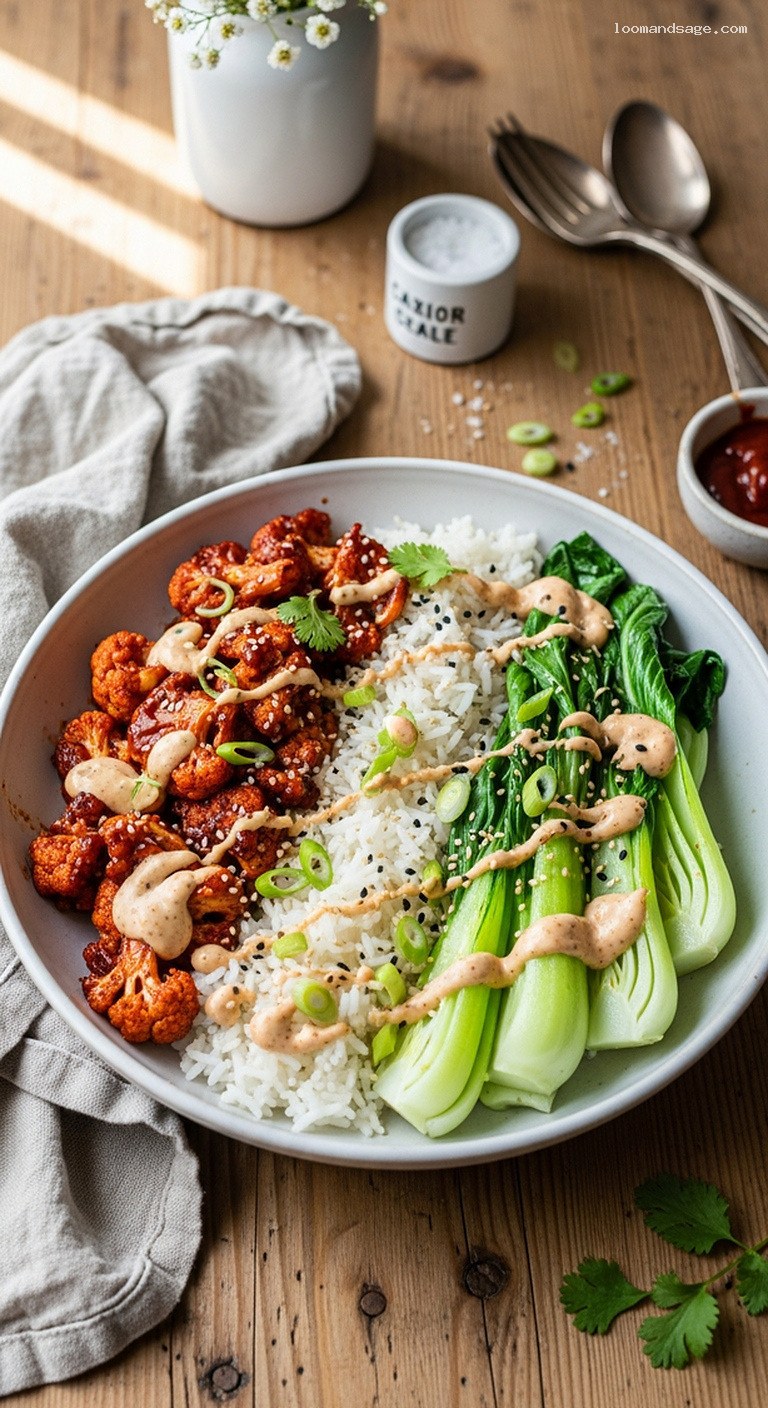
Quick Recipe Version (TL;DR)
Quick Ingredients
- 1 large head cauliflower (about 2 lb / 900 g), cut into florets
- 2 1/2 tbsp neutral oil (for roasting)
- 3 tbsp gochujang, divided (2 tbsp for cauliflower, 1 tbsp for sauce)
- 3 tbsp low-sodium soy sauce, divided
- 2 1/2 tbsp honey or maple syrup, divided
- 2 tbsp rice vinegar, divided
- 1 1/2 tsp toasted sesame oil, divided
- 4 cloves garlic, minced or grated (2 for cauliflower, 2 for sauce)
- 1 1/2 cups uncooked jasmine or short-grain rice + 2 1/4 cups water
- 8 oz (about 225 g) greens (baby bok choy, kale, or spinach)
- 3 tbsp tahini (or smooth peanut/sesame butter)
- 2 scallions, thinly sliced; 2 tsp toasted sesame seeds (for topping)
- Salt and optional lime wedges
Do This
- 1. Preheat oven to 425°F (220°C). Rinse rice until water runs mostly clear.
- 2. Start rice: combine rice, 2 1/4 cups water, and 1/2 tsp salt. Bring to a boil, cover, simmer 15 minutes, then rest 10 minutes off heat.
- 3. Toss cauliflower with oil, 2 tbsp gochujang, 2 tbsp soy sauce, 1 1/2 tbsp honey/maple, 1 tbsp rice vinegar, 1 tsp sesame oil, 2 minced garlic cloves, and a pinch of salt.
- 4. Spread cauliflower on a lined baking sheet and roast 22–28 minutes, flipping once, until browned and tender with lightly charred edges.
- 5. Whisk tahini, 1 tbsp gochujang, 1 tbsp soy sauce, 1 tbsp rice vinegar, 1 tbsp honey/maple, 2 minced garlic cloves, 1/2 tsp sesame oil, and 1–3 tbsp warm water until pourable.
- 6. Steam greens in a steamer basket (or sauté with a splash of water) for 2–4 minutes until bright and just tender; season lightly with salt and a few drops of sesame oil.
- 7. Build bowls: add rice, top with roasted cauliflower and greens, drizzle generously with sesame-garlic sauce, and finish with scallions, sesame seeds, and lime wedges.
Why You’ll Love This Recipe
- Bold, sweet-heat gochujang flavor balanced by creamy sesame-garlic sauce and fluffy rice.
- A complete, satisfying bowl: roasted veggie main, whole grains, and leafy greens in one dish.
- Flexible and forgiving: easy to make vegetarian, vegan, or gluten-free with simple swaps.
- Great for meal prep: components store and reheat well for flavorful lunches all week.
Grocery List
- Produce: 1 large head cauliflower, 8 oz greens (baby bok choy, kale, or spinach), 1 small piece fresh ginger (optional), 4 cloves garlic, 2 scallions, 1–2 limes (optional), fresh herbs like cilantro (optional).
- Dairy: None required (a spoonful of plain yogurt can be added when serving, optional).
- Pantry: Jasmine or short-grain rice, gochujang, low-sodium soy sauce (or tamari), honey or maple syrup, rice vinegar, neutral oil (canola, grapeseed, or avocado), toasted sesame oil, tahini (or smooth peanut/sesame butter), toasted sesame seeds, salt, black pepper.
Full Ingredients
For the Gochujang Roasted Cauliflower
- 1 large head cauliflower (about 2 lb / 900 g), cored and cut into medium florets
- 2 1/2 tbsp neutral oil (such as canola, grapeseed, or avocado oil)
- 2 tbsp gochujang (Korean fermented chili paste)
- 2 tbsp low-sodium soy sauce (or tamari for gluten-free)
- 1 1/2 tbsp honey or maple syrup
- 1 tbsp rice vinegar (unseasoned)
- 1 tsp toasted sesame oil
- 2 cloves garlic, minced or finely grated
- 1 tsp finely grated fresh ginger (optional but recommended)
- 1/4 tsp fine sea salt (or to taste)
For the Rice Base
- 1 1/2 cups uncooked jasmine rice or short-grain white rice
- 2 1/4 cups water
- 1/2 tsp fine sea salt
For the Steamed Greens
- 8 oz (about 225 g) greens, such as baby bok choy, kale, chard, or spinach
- 1 tsp toasted sesame oil
- Pinch of fine sea salt
For the Sesame-Garlic Sauce
- 3 tbsp tahini (or smooth peanut or sesame butter)
- 1 tbsp gochujang
- 1 tbsp low-sodium soy sauce (or tamari)
- 1 tbsp rice vinegar
- 1 tbsp honey or maple syrup
- 2 cloves garlic, very finely minced or grated
- 1/2 tsp toasted sesame oil
- 1–3 tbsp warm water, as needed to thin to drizzleable consistency
For Serving and Garnish
- 2 scallions, thinly sliced (green and pale green parts)
- 2 tsp toasted sesame seeds
- Lime wedges, for squeezing over the bowls (optional but delicious)
- Fresh cilantro leaves, roughly chopped (optional)
- Extra gochujang or soy sauce, to taste (optional)
Step-by-Step Instructions
Step 1: Preheat the oven and prep the rice
Position a rack in the middle of your oven and preheat to 425°F (220°C). Line a large baking sheet with parchment paper for easy cleanup.
Rinse the rice under cold running water in a fine-mesh sieve or bowl, swishing with your hand, until the water runs mostly clear. This removes excess starch and helps keep the grains fluffy. Drain well.
In a medium saucepan, combine the rinsed rice, 2 1/4 cups water, and 1/2 tsp salt. Bring to a boil over medium-high heat. As soon as it boils, give it a quick stir, cover with a tight-fitting lid, reduce the heat to low, and simmer for 15 minutes. Do not lift the lid.
After 15 minutes, turn off the heat but keep the lid on. Let the rice rest and steam for another 10 minutes. Fluff with a fork just before serving.
Step 2: Prep and marinate the cauliflower
While the rice cooks, prepare the cauliflower. Remove the outer leaves, trim the core, and cut the cauliflower into medium florets, about 1 1/2 inches each. Try to keep them close in size so they roast evenly.
In a large mixing bowl, whisk together the neutral oil, 2 tbsp gochujang, 2 tbsp soy sauce, 1 1/2 tbsp honey or maple syrup, 1 tbsp rice vinegar, 1 tsp toasted sesame oil, minced garlic, grated ginger (if using), and 1/4 tsp salt until smooth and glossy.
Add the cauliflower florets to the bowl and toss thoroughly, using a spatula or your hands, until every piece is well coated in the gochujang marinade. Make sure to get into the nooks and crannies for maximum flavor. Let sit for about 5–10 minutes while the oven finishes heating; this brief rest helps the flavors soak in.
Step 3: Roast the gochujang cauliflower
Spread the marinated cauliflower in a single layer on the prepared baking sheet. Avoid overcrowding; if needed, use two sheets so the florets roast rather than steam.
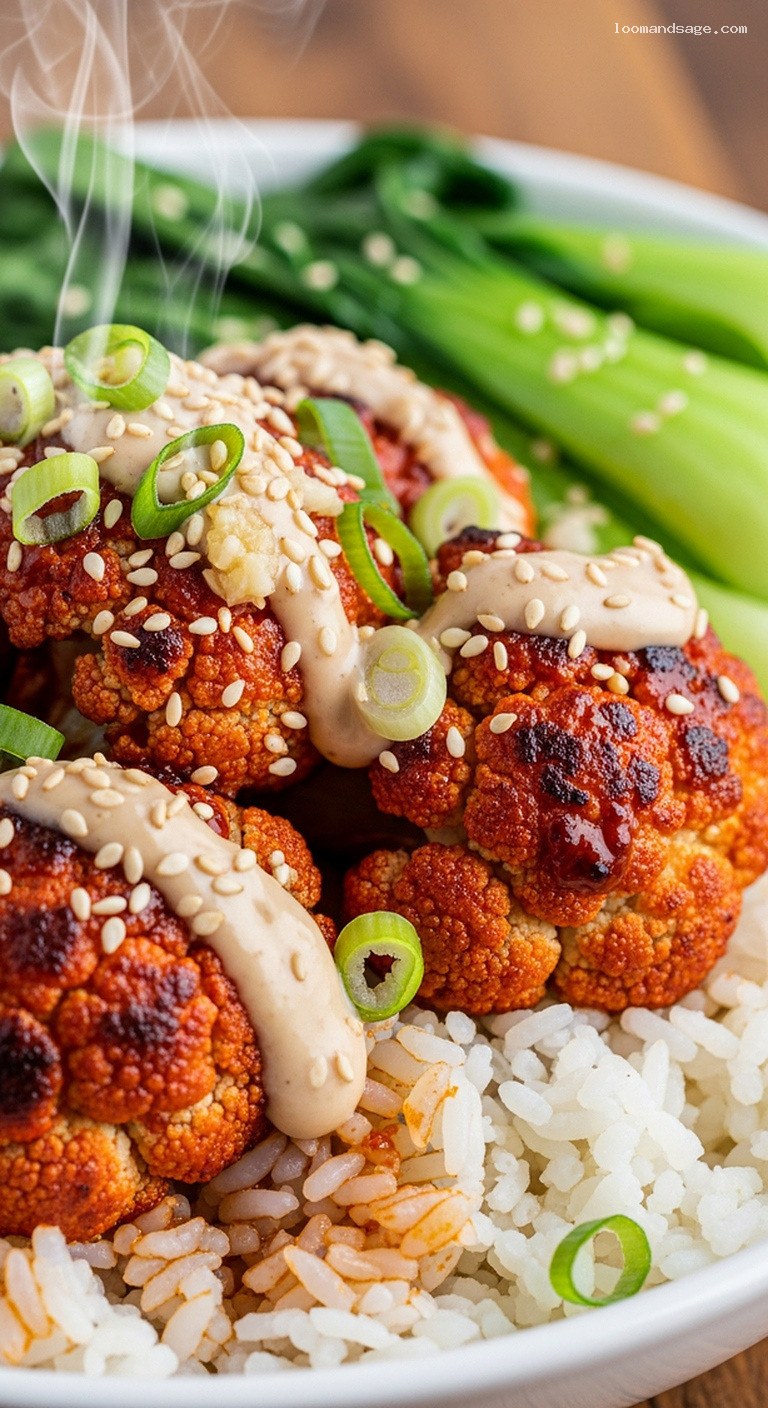
Roast at 425°F (220°C) for 22–28 minutes, flipping the florets once halfway through cooking. You are looking for deeply browned spots and some lightly charred edges, with the cauliflower tender all the way through when pierced with a fork.
If you like extra caramelization, you can switch the oven to broil for the last 1–2 minutes. Watch closely so the gochujang glaze does not burn. When done, set aside on the counter while you finish the rest of the components.
Step 4: Make the sesame-garlic sauce
While the cauliflower roasts, prepare the sesame-garlic sauce. In a small bowl, whisk together the tahini, 1 tbsp gochujang, 1 tbsp soy sauce, 1 tbsp rice vinegar, 1 tbsp honey or maple syrup, minced garlic, and 1/2 tsp toasted sesame oil.
The mixture will likely be quite thick at first. Slowly whisk in warm water, 1 tablespoon at a time, until the sauce becomes smooth and pourable, like a slightly thick salad dressing. You will typically need between 1 and 3 tbsp water, depending on your tahini.
Taste and adjust: add a splash more soy sauce for saltiness, a drizzle more honey or maple for sweetness, or a pinch more gochujang for extra heat. Set aside; the sauce will thicken slightly as it sits, so you can whisk in a few more drops of warm water right before serving if needed.
Step 5: Steam and season the greens
Prepare your greens. If using baby bok choy, trim the ends and separate the leaves. For kale or chard, strip the leaves from the stems (save stems for another use or slice thinly), and roughly chop the leaves. If using spinach, simply rinse and drain.
Set up a steamer basket over a pot with about an inch of simmering water. Add the greens, cover, and steam for 2–4 minutes until wilted and bright green. Cooking time will depend on the type and thickness of your greens: spinach will be quick, while kale may need a bit longer.
Transfer the steamed greens to a bowl. Drizzle with 1 tsp toasted sesame oil and sprinkle with a pinch of salt. Toss gently to coat. If you do not have a steamer basket, you can sauté the greens in a large skillet with a splash of water over medium heat until just tender, then season with sesame oil and salt.
Step 6: Fluff the rice and prep toppings
By now, the rice should be done steaming. Remove the lid and gently fluff the grains with a fork to separate them. Keep covered loosely to stay warm.
Prepare your toppings: thinly slice the scallions, roughly chop cilantro if using, and cut limes into wedges. Have the toasted sesame seeds ready. Give the sesame-garlic sauce a quick stir and add a few drops of warm water if it has thickened too much.
Check the roasted cauliflower; if it has cooled significantly and you prefer it hot, you can return it to the warm oven for 2–3 minutes.
Step 7: Assemble the gochujang cauliflower bowls
To build each bowl, add about 3/4–1 cup of cooked rice as the base. Top with a generous portion of roasted gochujang cauliflower and a handful of steamed greens.
Drizzle each bowl with a generous amount of the sesame-garlic sauce, letting it run over the cauliflower, greens, and rice. Sprinkle with sliced scallions and toasted sesame seeds. Add cilantro leaves and a squeeze of lime juice if using.
Taste and adjust at the table: add more sauce for richness, an extra dab of gochujang for heat, a dash of soy sauce for saltiness, or another squeeze of lime for brightness. Serve immediately while everything is warm and fragrant.
Pro Tips
- Get deep roasty flavor: Spread the cauliflower out well on the baking sheet. If the pieces are crowded or stacked, they will steam instead of caramelize.
- Adjust the heat level: For milder bowls, use slightly less gochujang in both the marinade and the sauce and add more honey or maple. For extra spicy, stir some thinly sliced fresh chili or chili flakes into the sauce.
- Perfect sauce texture: Add water to the sesame-garlic sauce slowly. It can go from thick to thin quickly, so whisk between each spoonful of water until it is just drizzleable.
- Even cooking for cauliflower: Try to cut similarly sized florets and rotate the pan halfway through roasting for more even browning.
- Meal prep friendly: Make a double batch of the cauliflower and sauce; they keep well and instantly upgrade simple rice or leftover veggies.
Variations
- Add protein: Toss cubed extra-firm tofu or tempeh in a little of the gochujang marinade and roast on a separate pan alongside the cauliflower. Or add thinly sliced sautéed chicken or shrimp to the bowls for a non-vegetarian option.
- Low-carb swap: Replace the rice with cauliflower rice, brown rice, or a mix of quinoa and greens. For cauliflower rice, keep the sauce and toppings the same to maintain flavor.
- Extra-veg version: Add sliced carrots, bell peppers, or broccoli to the roasting pan with the cauliflower (cut into similar-sized pieces) for more color and texture.
Storage & Make-Ahead
Store leftover components separately for the best texture. Cool everything to room temperature, then refrigerate in airtight containers for up to 3–4 days. The sesame-garlic sauce will keep well for up to 5 days in a covered jar; it may thicken in the fridge, so thin with a teaspoon or two of warm water before serving.
Reheat the rice and roasted cauliflower in the microwave or in a covered skillet over low heat with a splash of water until hot. Greens can be gently rewarmed in a pan or enjoyed at room temperature. Assemble bowls just before eating. This makes an excellent meal-prep lunch: portion rice, cauliflower, and greens into containers, pack sauce separately, and drizzle just before serving.
Nutrition (per serving)
Approximate values per bowl (1 of 4), including rice, cauliflower, greens, and sauce: about 500–550 calories, 11–14 g protein, 70–80 g carbohydrates, 18–22 g fat, 6–8 g fiber, and 13–18 g sugar (from honey/maple and natural vegetable sugars). Values will vary based on exact ingredients, brands, and portion sizes, and will be lower if you use less sauce or substitute brown rice.