
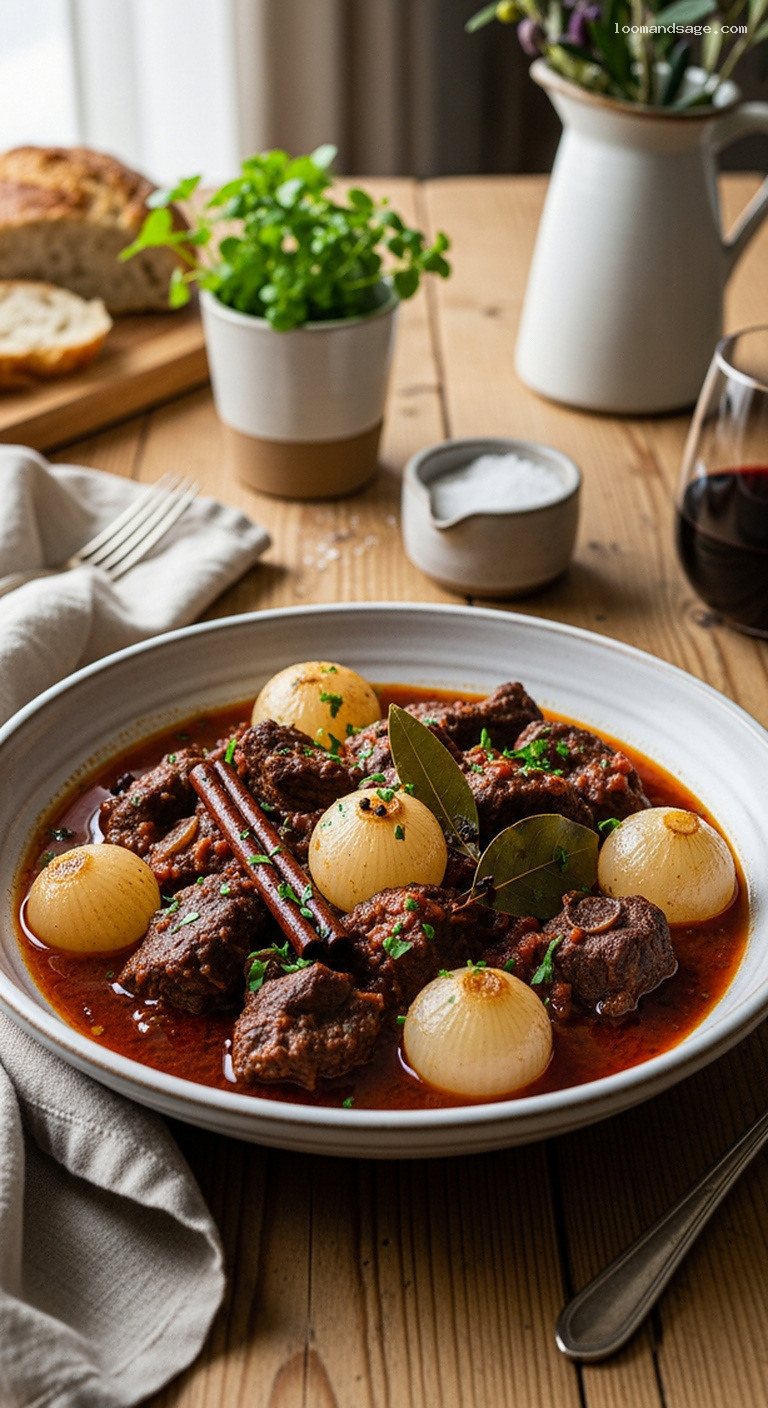
Quick Recipe Version (TL;DR)
Quick Ingredients
- 1.5 kg beef chuck or stewing beef, cut in 4–5 cm chunks (or 1.8 kg rabbit pieces)
- 750 g pearl onions, peeled
- 1 large yellow onion, finely chopped
- 7 tbsp olive oil, divided
- 5 cloves garlic (3 sliced, 2 minced)
- 180 ml dry red wine
- 60 ml red wine vinegar
- 400 g canned crushed tomatoes
- 1 tbsp tomato paste
- 250–300 ml beef or chicken stock (or water)
- 2 cinnamon sticks
- 8 whole cloves
- 4 bay leaves
- 1/2 tsp ground allspice (optional)
- 2–3 strips orange peel (optional)
- Salt, black pepper, and 1–2 tsp sugar, to taste
- Chopped fresh parsley, to serve
Do This
- 1. Marinate meat 1–12 hours in wine, vinegar, sliced garlic, 1 cinnamon stick, 4 cloves, 2 bay leaves, salt, and pepper in the fridge.
- 2. Peel pearl onions, then brown them in 2 tbsp olive oil until golden; remove and set aside.
- 3. Pat meat dry and brown in 3 tbsp olive oil in batches; remove to a plate.
- 4. Soften chopped onion in remaining 2 tbsp oil, add minced garlic and tomato paste; cook briefly. Add reserved marinade, crushed tomatoes, stock, remaining cinnamon stick, cloves, bay leaves, allspice, orange peel, sugar, salt, and pepper.
- 5. Return meat and juices to the pot, nestle browned pearl onions on top. Cover and braise at 160°C / 325°F for 2–2.5 hours until meat is very tender.
- 6. Skim fat, adjust seasoning with extra vinegar, salt, and pepper if needed. Rest 10 minutes, garnish with parsley, and serve with crusty bread, rice, or orzo.
Why You’ll Love This Recipe
- Deep, sweet-savory flavor from slow-braised meat, caramelized pearl onions, and warm spices.
- Mostly hands-off once it is in the oven – perfect for a cozy weekend meal or entertaining.
- Tastes even better the next day, so it is ideal for making ahead.
- Flexible: make it with beef for richness, or rabbit for a more traditional, lighter version.
Grocery List
- Produce: Pearl onions, yellow onion, garlic, orange (for peel, optional), fresh parsley.
- Dairy: None required.
- Pantry: Beef chuck or rabbit, olive oil, canned crushed tomatoes, tomato paste, red wine, red wine vinegar, beef or chicken stock, cinnamon sticks, whole cloves, bay leaves, ground allspice, sugar, salt, black pepper, bread/rice/orzo for serving.
Full Ingredients
Meat & Marinade
- 1.5 kg beef chuck or stewing beef, cut into 4–5 cm chunks
(or use 1.8 kg bone-in rabbit, cut into serving pieces) - 180 ml dry red wine (3/4 cup)
- 60 ml red wine vinegar (1/4 cup)
- 3 cloves garlic, thinly sliced
- 1 cinnamon stick
- 4 whole cloves
- 2 bay leaves
- 1 tsp kosher salt
- 1/2 tsp freshly ground black pepper
Stew Base & Pearl Onions
- 750 g pearl onions, peeled (about 5 cups)
- 1 large yellow onion, finely chopped
- 7 tbsp olive oil, divided (about 100 ml)
- 2 cloves garlic, minced
- 400 g canned crushed tomatoes (about 1 1/2 cups)
- 1 tbsp tomato paste
- 250–300 ml beef or chicken stock, or water (1–1 1/4 cups), as needed
- 1 cinnamon stick
- 4 whole cloves
- 2 bay leaves
- 1/2 tsp ground allspice (optional but traditional)
- 2–3 strips orange peel, about 5 cm long each (optional but lovely)
- 1–2 tsp sugar, to taste
- 1 tsp kosher salt, plus more to taste
- 1/2 tsp freshly ground black pepper, plus more to taste
To Finish & Serve
- 1–2 tsp red wine vinegar or lemon juice, to brighten at the end (optional)
- 3 tbsp fresh flat-leaf parsley, finely chopped
- Crusty bread, rice, mashed potatoes, or orzo, for serving
Step-by-Step Instructions
Step 1: Marinate the meat for deep flavor
Cut the beef into large, hearty chunks (about 4–5 cm). If using rabbit, ask your butcher to cut it into serving pieces, or do so yourself, keeping the bone in for extra flavor. Place the meat in a large non-reactive bowl or a zip-top bag.
Add the red wine, red wine vinegar, sliced garlic, cinnamon stick, whole cloves, bay leaves, salt, and pepper. Toss or massage the bag so the meat is evenly coated. Cover and refrigerate for at least 1 hour and up to 12 hours. The longer it marinates, the deeper and more aromatic the stew will be. If you are short on time, even 30 minutes while you prep the onions helps.
Step 2: Prep and brown the pearl onions
Peeling lots of pearl onions is easier than it looks. Bring a saucepan of water to a boil. Trim the root ends of the pearl onions very slightly. Blanch the onions in boiling water for 1–2 minutes, then drain and rinse under cold water until cool enough to handle. Squeeze each onion gently at the stem end and the peel should slip off.
In a large, heavy oven-safe pot or Dutch oven, heat 2 tbsp olive oil over medium heat. Add the peeled pearl onions in a single layer (work in batches if needed) and cook, turning occasionally, until they are nicely golden in spots, 8–10 minutes. You are not cooking them through, just giving them color and sweetness. Transfer the browned pearl onions to a bowl and set aside.
Step 3: Brown the meat
Remove the meat from the marinade with a slotted spoon, letting excess liquid drip back into the bowl (do not discard the marinade). Pat the meat dry thoroughly with paper towels; this helps it brown instead of steam.
Add 3 tbsp olive oil to the same pot and increase the heat to medium-high. Brown the meat in batches, leaving some space between pieces. Do not overcrowd the pot. Sear each batch for 3–4 minutes per side until well browned. Transfer browned meat to a plate and continue with the remaining pieces, adding a little more oil if the pot looks dry. Browning develops deep flavor, so take your time here.
Step 4: Build the aromatic tomato-wine sauce
Preheat your oven to 160°C / 325°F.
Reduce the heat under the pot to medium. Add the remaining 2 tbsp olive oil, then the finely chopped yellow onion. Cook, stirring often and scraping up any browned bits, until the onion is soft and translucent, 6–8 minutes. Stir in the minced garlic and cook for 30 seconds until fragrant.
Add the tomato paste and cook, stirring constantly, for 1–2 minutes to caramelize it slightly; it should darken in color and smell sweet. Pour in the reserved marinade (wine, vinegar, and aromatics), scraping the bottom of the pot to deglaze any stuck bits. Let it simmer for 2–3 minutes to reduce slightly and cook off some of the raw alcohol taste.
Add the crushed tomatoes, 250 ml stock (start with the lower amount), the second cinnamon stick, 4 whole cloves, 2 bay leaves, ground allspice (if using), orange peel strips, sugar, salt, and pepper. Stir well and bring just to a simmer. The sauce should be slightly loose; you will adjust later if needed.
Step 5: Combine meat and onions, then start the braise
Return the browned meat and any accumulated juices to the pot, nestling the pieces into the sauce so they are mostly submerged. Gently spoon some sauce over the top. Bring the pot back to a gentle simmer on the stovetop.
Carefully arrange the browned pearl onions on top of the meat. It is fine if some are partially submerged and some sit on the surface. Cover the pot tightly with a lid. If the lid is not very tight, cover the pot first with a piece of parchment or foil, then the lid to minimize evaporation.
Transfer the covered pot to the preheated oven and braise for 2–2.5 hours, until the meat is very tender and the pearl onions are soft but still holding their shape.
Step 6: Adjust the sauce and seasoning
Remove the pot from the oven and carefully take off the lid, watching for steam. The meat should be fork-tender. If it is not yet very tender, return to the oven and continue cooking in 20-minute increments.
If the sauce looks too thin, remove the pearl onions with a slotted spoon and set aside, then place the pot on the stovetop over medium-low heat and simmer uncovered for 10–15 minutes to reduce slightly. Add the onions back in once the sauce has thickened a bit. If the sauce is too thick, stir in a splash of extra stock or water.
Taste and adjust the seasoning: add more salt and pepper as needed. For brightness and balance, add 1–2 tsp red wine vinegar or a squeeze of lemon juice if the stew tastes a little flat or overly sweet. Skim off any excess fat from the surface with a spoon.
Step 7: Rest, garnish, and serve
Let the stifado rest, covered, off the heat for about 10–15 minutes. This brief rest helps the flavors settle and makes it easier to serve without everything falling apart.
Just before serving, remove the cinnamon sticks, bay leaves, and orange peel strips if you can find them. Sprinkle generously with chopped fresh parsley.
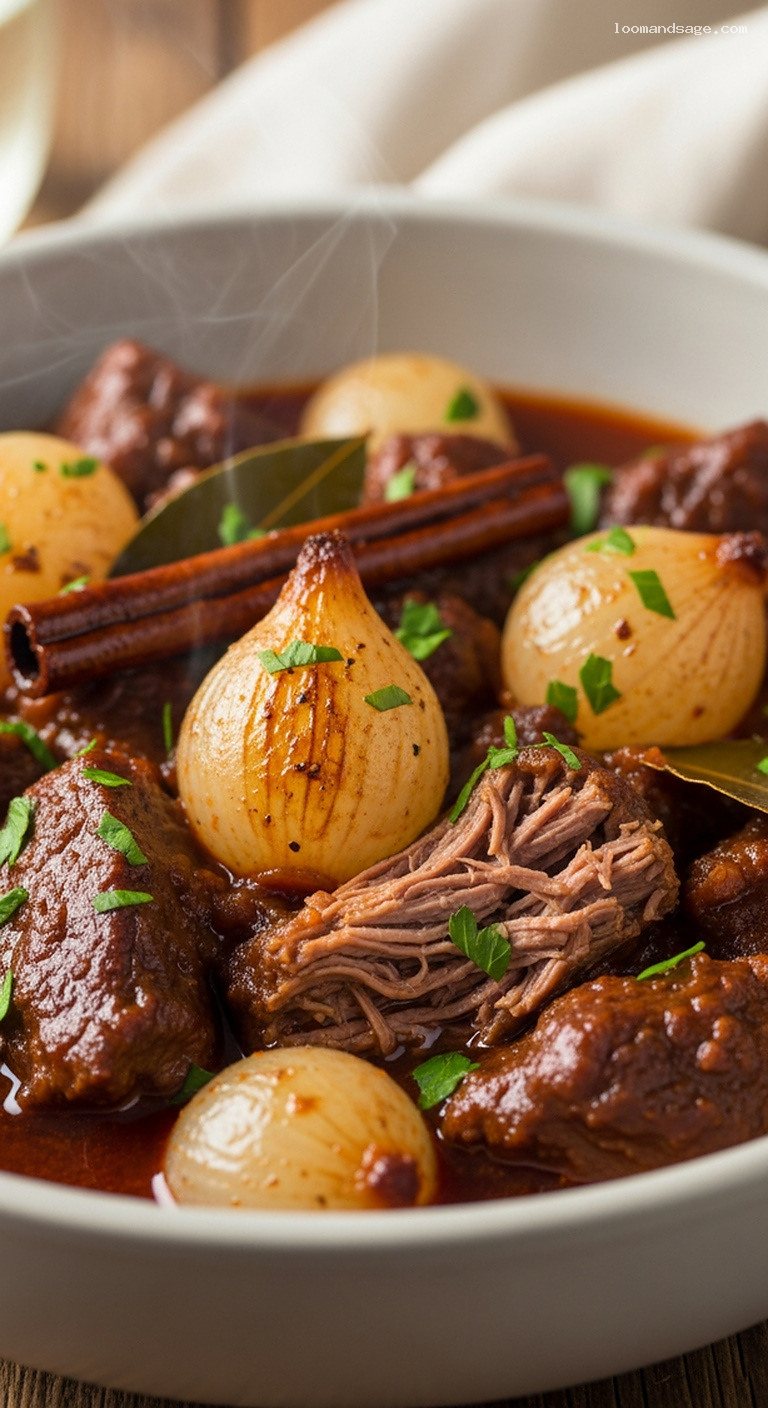
Serve the stifado hot in warm bowls, making sure each portion gets several pearl onions and plenty of the rich sauce. It is wonderful with crusty bread for dipping, or over a bed of rice, mashed potatoes, or tiny pasta like orzo. This is a rustic, hearty dish, so do not be afraid of generous portions and plenty of sauce.
Pro Tips
- Choose the right cut: Beef chuck or similar stewing cuts are ideal because their connective tissue melts into the sauce during slow cooking. Avoid lean cuts, which turn dry and tough.
- Do not rush the browning: Properly browning both the meat and pearl onions creates a deep, almost caramelized flavor that you cannot get any other way.
- Keep the pearl onions intact: Once they are in the pot, stir very gently (or simply shake the pot) to avoid breaking them; whole, tender onions are part of stifado’s charm.
- Balance the sweetness and acidity: The onions and tomatoes bring sweetness; the wine and vinegar bring acidity. Adjust with a pinch of sugar or splash of vinegar at the end until the flavor feels round and satisfying.
- Make it ahead: Stifado tastes even better the next day, after the flavors have mingled. Cool, chill, and reheat gently for a stress-free meal when guests arrive.
Variations
- Rabbit stifado: Use 1.8 kg rabbit pieces instead of beef and chicken stock instead of beef stock. Rabbit usually cooks a bit faster; start checking for tenderness around 1.5 hours of braising.
- Stovetop method: If you prefer not to use the oven, keep the pot on the stovetop at the lowest simmer possible. Use a heat diffuser if you have one, keep it covered, and cook gently for 2–2.5 hours, stirring very gently every 20–30 minutes to prevent sticking.
- Slow cooker adaptation: Brown the meat and onions and build the sauce in a skillet or pot as written, then transfer everything to a slow cooker. Cook on LOW for 7–8 hours or on HIGH for 4–5 hours, until the meat is very tender and the onions are soft.
Storage & Make-Ahead
Let the stifado cool to room temperature, then transfer to airtight containers. Refrigerate for up to 4 days. Reheat gently on the stovetop over low heat, adding a splash of water or stock if the sauce has thickened too much. You can also reheat individual portions in the microwave at medium power, stirring occasionally.
For longer storage, freeze in freezer-safe containers or heavy-duty bags for up to 3 months. Thaw overnight in the refrigerator before reheating. Because the flavors improve over time, this is an excellent dish to make 1–2 days in advance; simply reheat slowly and garnish with fresh parsley just before serving.
Nutrition (per serving)
Approximate values for the beef version (1 of 6 servings, without sides): about 480 kcal; 35 g protein; 28 g fat (10 g saturated); 18 g carbohydrates; 3 g fiber; 6 g sugars; 900 mg sodium. Values will vary based on the cut of meat, exact amounts of oil and stock used, and whether you choose beef or rabbit.