
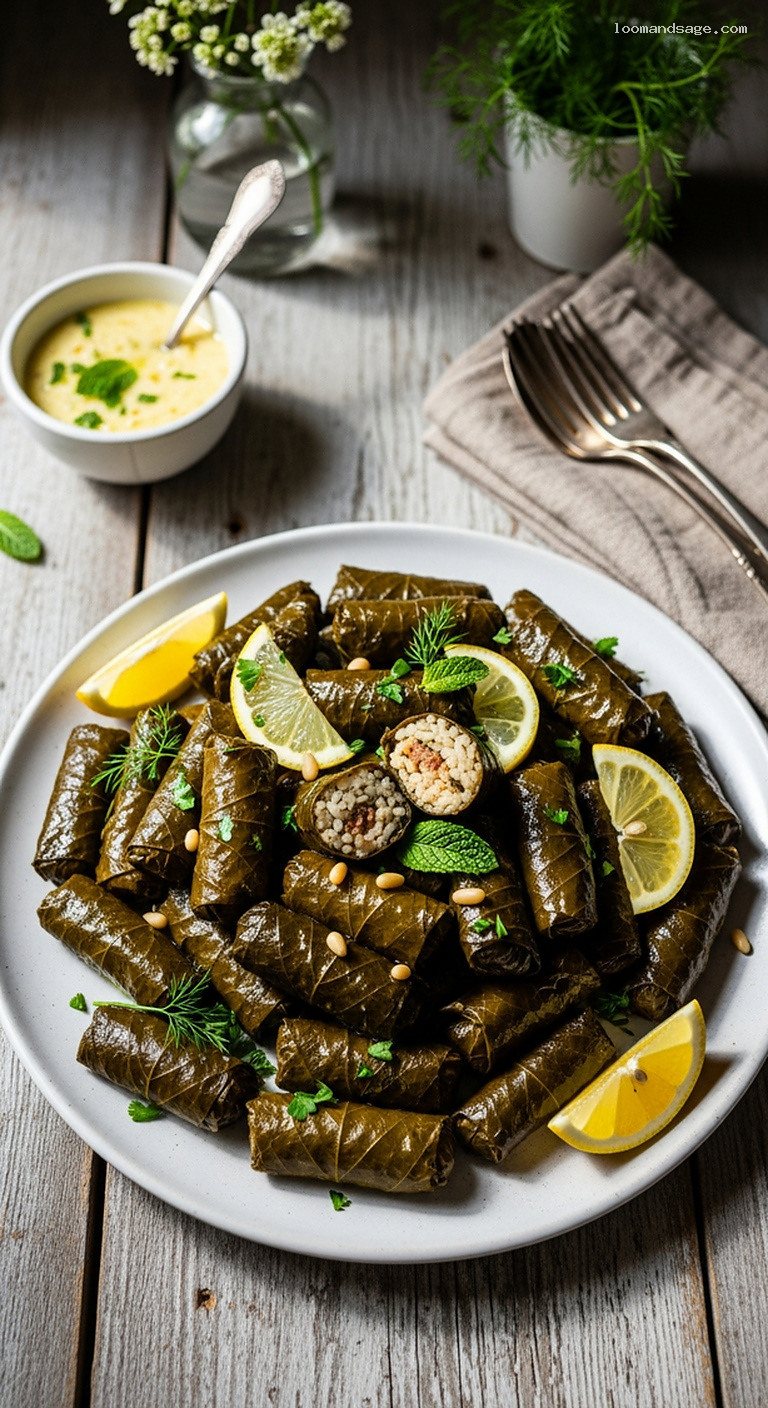
Quick Recipe Version (TL;DR)
Quick Ingredients
- 40–45 brined grape leaves, rinsed
- 1 cup (200 g) long-grain white rice, rinsed
- 1 large onion, finely diced
- 3 garlic cloves, minced
- 3 tbsp (25 g) pine nuts, lightly toasted
- 1/2 cup (120 ml) extra-virgin olive oil, divided
- 1/2 cup finely chopped parsley, 1/4 cup dill, 1/4 cup mint
- Zest of 1 lemon + 6 tbsp fresh lemon juice (about 2–3 lemons)
- 3 cups (720 ml) water or light vegetable/chicken broth
- 1 1/4 tsp fine sea salt for filling + 1 tsp for cooking liquid
- 1/2 tsp freshly ground black pepper
- Optional: 9 oz (250 g) ground beef or lamb
- Optional avgolemono: 2 eggs, 3 tbsp lemon juice, 1 cup hot cooking liquid
Do This
- 1. Rinse grape leaves well; blanch 1–2 minutes if very salty. Drain, cool, and trim thick stems.
- 2. Sauté onion in 3 tbsp olive oil until soft; add garlic. Brown optional ground meat. Stir in rice, pine nuts, salt, and pepper; cook 2–3 minutes.
- 3. Remove from heat; mix in herbs and lemon zest plus 2 tbsp lemon juice. Cool 10–15 minutes.
- 4. Place a leaf vein-side up. Add 1–2 tbsp filling, fold sides in, and roll tightly. Pack seam-side down in a snug layer in a heavy pot lined with spare leaves.
- 5. Add remaining olive oil, remaining lemon juice, and enough water/broth to just cover. Season with salt, top with a small plate, and cover the pot.
- 6. Bring to a gentle simmer, then cook on low at about 185–195°F (85–90°C) for 45–55 minutes. Let rest 15–20 minutes off heat.
- 7. For avgolemono, whisk eggs and lemon juice; slowly temper with 1 cup hot cooking liquid, then stir back into the pot off heat. Serve warm with lemon wedges and herbs.
Why You’ll Love This Recipe
- Delicate, melt-in-your-mouth grape leaves wrapped around a lemony, herb-packed rice filling.
- Flexible: make them fully vegetarian or add ground beef/lamb for a heartier version.
- Perfect for making ahead; they taste even better after the flavors mingle overnight.
- Serve simply with lemon wedges or dress them up with a silky avgolemono (egg-lemon) sauce.
Grocery List
- Produce: Jar of brined grape leaves, 2–3 lemons, 1 large onion, garlic, fresh flat-leaf parsley, fresh dill, fresh mint.
- Dairy/Eggs: 2 large eggs (for optional avgolemono sauce).
- Pantry: Long-grain white rice, pine nuts, extra-virgin olive oil, fine sea salt, black pepper, vegetable or chicken broth (or use water).
Full Ingredients
For the Dolmades
- 40–45 brined grape leaves (about 250 g drained), plus a few extra torn leaves for lining the pot
- 1 cup (200 g) long-grain white rice, rinsed until water runs mostly clear and drained
- 1 large yellow onion (about 200 g), finely diced
- 3 garlic cloves, minced
- 3 tbsp (25 g) pine nuts, lightly toasted in a dry pan
- 1/2 cup (120 ml) extra-virgin olive oil, divided (3 tbsp for the filling, the rest for layering and cooking)
- 1/2 cup (loosely packed, about 15 g) finely chopped fresh flat-leaf parsley
- 1/4 cup (loosely packed, about 10 g) finely chopped fresh dill
- 1/4 cup (loosely packed, about 5 g) finely chopped fresh mint leaves
- Zest of 1 untreated lemon (finely grated)
- 6 tbsp (90 ml) fresh lemon juice, divided (about 2–3 lemons), plus extra wedges for serving
- 3 cups (720 ml) water or light vegetable/chicken broth
- 1 1/4 tsp fine sea salt for the filling, plus 1 tsp (or to taste) for the cooking liquid
- 1/2 tsp freshly ground black pepper
Optional Meat Addition
- 9 oz (250 g) ground beef, ground lamb, or a 50/50 mix
- Additional 1/4 tsp salt and a pinch of pepper (to season the meat)
For the Optional Avgolemono (Egg-Lemon) Sauce
- 2 large eggs, at room temperature
- 3 tbsp (45 ml) fresh lemon juice
- 1 cup (240 ml) hot dolmades cooking liquid
- Pinch of salt, to taste
To Serve
- Lemon wedges
- Extra chopped fresh herbs (parsley, dill, or mint)
- Extra-virgin olive oil for drizzling
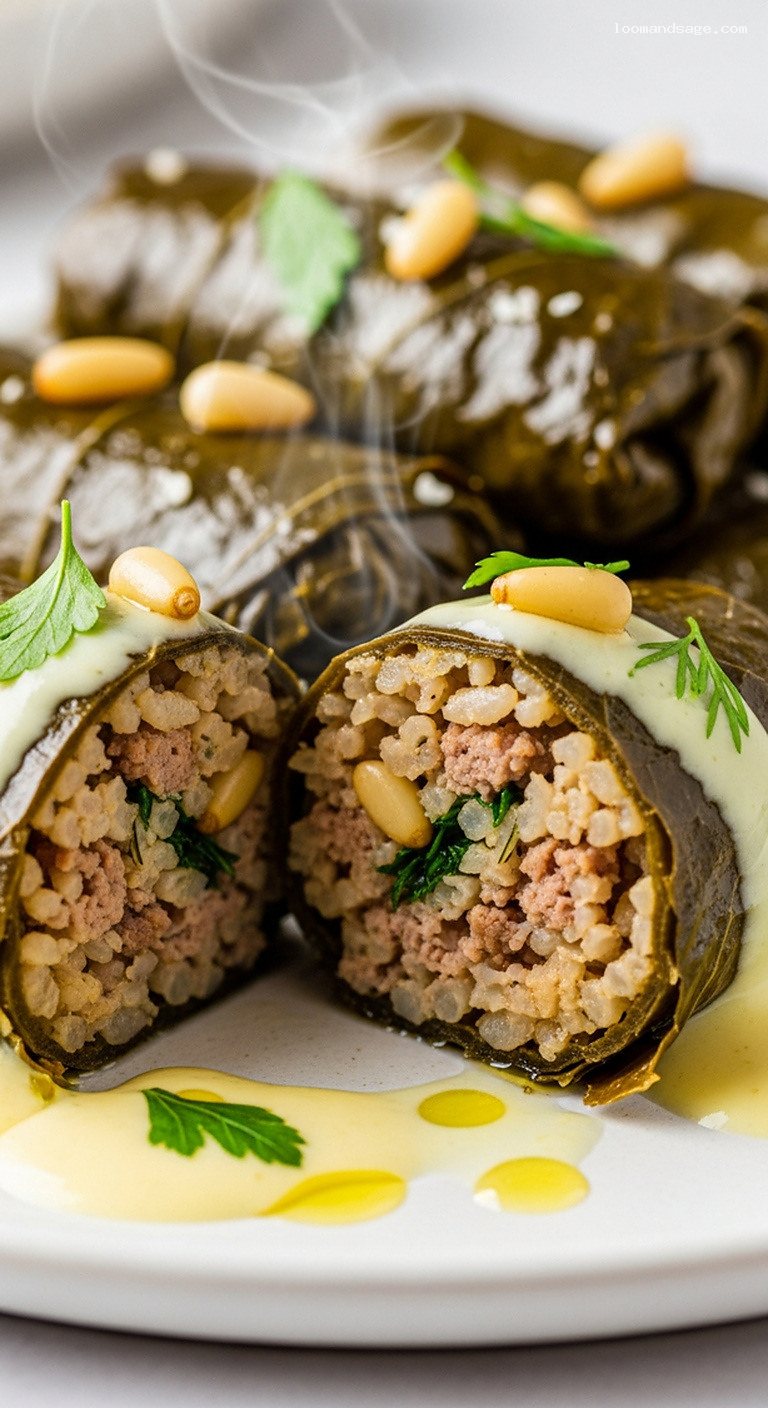
Step-by-Step Instructions
Step 1: Prepare the grape leaves and aromatics
Open the jar of grape leaves and gently unroll them. Carefully separate the leaves so they do not tear. Place them in a colander and rinse under plenty of cold running water to remove excess brine. If the leaves are very salty, bring a large pot of water to a boil, drop in the leaves, and blanch them for 1–2 minutes. Drain well and let them cool. Pat dry and trim any thick stems with a small knife or scissors.
Prepare the aromatics: finely dice the onion, mince the garlic, and chop the parsley, dill, and mint. Toast the pine nuts in a small dry skillet over medium heat for 3–4 minutes, stirring frequently, until lightly golden and fragrant. Set everything aside. This mise en place will make the cooking smooth and relaxed.
Step 2: Make the fragrant rice (and meat) filling
In a large, deep skillet or wide saucepan, heat 3 tbsp (about 45 ml) olive oil over medium heat. Add the diced onion and a pinch of salt. Cook, stirring often, for 8–10 minutes until very soft and translucent but not browned. Add the minced garlic and cook for 30–60 seconds, just until fragrant.
If using ground beef or lamb, add it now with 1/4 tsp salt and a pinch of pepper. Cook, breaking it up with a spoon, for 4–5 minutes until no longer pink. Spoon off excess fat if needed (you still want some richness, just not a greasy filling).
Stir in the rinsed, drained rice and the toasted pine nuts. Add 1 1/4 tsp salt and 1/2 tsp black pepper (reduce the salt slightly if your broth is very salty). Cook, stirring constantly, for 2–3 minutes so the rice is well coated in oil and lightly toasted but not browned. Remove the pan from the heat and let it cool for 2–3 minutes, then stir in the chopped parsley, dill, and mint, plus the lemon zest and 2 tbsp (30 ml) of the lemon juice. Taste and adjust seasoning; it should be pleasantly salty and lemony because it will mellow as the rice cooks.
Let the filling cool for 10–15 minutes so it is easier to handle and does not tear the grape leaves.
Step 3: Set up your pot and rolling station
Choose a wide, heavy-bottomed pot with a tight-fitting lid (a Dutch oven is ideal). Line the bottom with any torn or extra grape leaves to prevent sticking and to cushion the dolmades. If you like, lay a few thin lemon slices on the bottom for extra aroma.
Set up a comfortable rolling station: place the cooled filling in a bowl with a spoon, stack the grape leaves (vein-side down) on a plate, and keep the pot nearby. This assembly-line setup will make rolling much quicker and neater.
Step 4: Roll the dolmades
Place one grape leaf on a cutting board or plate, shiny side down and vein side up, with the stem end closest to you. If the leaf is very large, you can trim or fold in any very wide parts.
Spoon 1 tbsp of filling (for small leaves) or up to 1 1/2–2 tbsp (for large leaves) near the stem end, forming a short horizontal log. Do not overfill or the rolls may burst as the rice expands.
Fold the lower stem end up over the filling, then fold the left and right sides toward the center (like folding a burrito). Continue rolling away from you into a tight but not rock-hard cylinder, about the size of a plump finger. The leaf will naturally seal itself.
Place each roll seam-side down in the lined pot, starting at the outer edge and working inwards in concentric circles. Pack them snugly; this helps them hold their shape. Continue until you have used all the filling. If you have extra leaves, you can place a second layer of dolmades on top, arranging them just as tightly.
Step 5: Add the cooking liquid and weight them down
Drizzle the remaining olive oil (about 5 tbsp / 75 ml) over the arranged dolmades. Pour in the remaining 4 tbsp (60 ml) lemon juice. Add enough water or broth to just barely cover the top layer of rolls; for this quantity, you will usually need about 3 cups (720 ml). Sprinkle with about 1 tsp salt (adjust if your broth is already salty).
Place a small heatproof plate directly on top of the dolmades to keep them from floating and unraveling as they cook. Press down gently. Cover the pot with its lid.
Step 6: Simmer gently until tender
Set the pot over medium heat and bring the liquid to a gentle simmer. This should take about 8–10 minutes. As soon as the liquid is lightly bubbling around the edges, reduce the heat to low. You want a very gentle simmer at about 185–195°F (85–90°C): a few small bubbles here and there, not a rolling boil.
Simmer, covered, for 45–55 minutes. Check once or twice to ensure the liquid level is still close to the top of the dolmades; add a splash of hot water only if necessary. When done, the rice inside should be fully cooked and tender, and the grape leaves soft but still holding together.
Turn off the heat and let the dolmades rest, still covered, for 15–20 minutes. This resting time helps the rolls firm up and absorb more flavor, making them easier to serve without breaking.
Step 7: Make the avgolemono (optional) and serve
If you are making the avgolemono, carefully remove 1 cup (240 ml) of the hot cooking liquid from the pot and let it sit for 2–3 minutes so it is hot but not boiling. In a medium bowl, whisk the eggs with 3 tbsp (45 ml) lemon juice and a pinch of salt until very smooth and slightly foamy.
Very slowly drizzle the hot cooking liquid into the egg mixture while whisking constantly. This step gently warms (tempers) the eggs so they do not scramble. Once combined, pour the egg-lemon mixture back into the pot of dolmades off the heat. Swirl the pot gently to distribute the sauce. Do not boil after adding the eggs; gentle warmth is enough to thicken the sauce.
Serve the dolmades warm or at room temperature, with a spoonful of the cooking juices or avgolemono sauce over the top. Drizzle with a little extra-virgin olive oil and garnish with extra chopped herbs and lemon wedges. They can be served as an appetizer, a mezze dish, or a light main with a salad and crusty bread.
Pro Tips
- Do not overfill the leaves. The rice expands as it cooks; leaving a bit of room inside prevents bursting and helps the rolls stay tight and neat.
- Keep the simmer gentle. A slow, low simmer (185–195°F / 85–90°C) yields silky leaves and tender rice without breaking the dolmades or turning them mushy.
- Pack them snugly in the pot. Tightly packed layers and a small plate on top keep the rolls from unraveling as they cook.
- Adjust the salt to your grape leaves and broth. Jarred leaves and broth can be salty; rinse leaves well and taste the cooking liquid before adding more salt.
- Let them rest. The 15–20 minute rest after cooking is not optional if you want tidy slices and deeper flavor; they firm up beautifully as they cool slightly.
Variations
- Classic vegetarian dolmades: Omit the meat and avgolemono for a naturally vegan version. Increase pine nuts to 1/4 cup (30 g) and add a small handful of currants or golden raisins for a sweet-savoury twist.
- Hearty meat dolmades: Use the full 9 oz (250 g) ground beef or lamb, and serve warm with plenty of avgolemono. This version works well as a main course with a Greek salad on the side.
- Tomato-herb style: Add 2–3 tbsp tomato paste to the onion mixture in Step 2 and use a mix of water and tomato juice for cooking liquid. This yields a deeper, slightly richer sauce and a beautiful reddish tint to the rice.
Storage & Make-Ahead
Dolmades are excellent for making ahead. Once cooked, let them cool completely in their liquid. Transfer to an airtight container, covering them with some of the cooking liquid to keep them moist. Store in the refrigerator for up to 4 days. They can be served cold or gently rewarmed: warm them in a covered pan over low heat with a splash of water or broth, or in a 300°F (150°C) oven, tightly covered, for 15–20 minutes until heated through.
For longer storage, you can freeze dolmades (without avgolemono) for up to 2 months. Place them in a single layer on a tray to freeze, then transfer to a freezer bag or container. Thaw overnight in the refrigerator and reheat gently as above. If making avgolemono, prepare it fresh just before serving for the best texture.
Nutrition (per serving)
Approximate values for 1 serving (about 5 vegetarian dolmades, without avgolemono): 320 calories; 6 g protein; 45 g carbohydrates; 14 g fat; 3 g fiber; 600 mg sodium. With meat and a generous spoon of avgolemono, expect roughly 430 calories and 14 g protein. These values are estimates and will vary based on the exact brands and amounts you use.