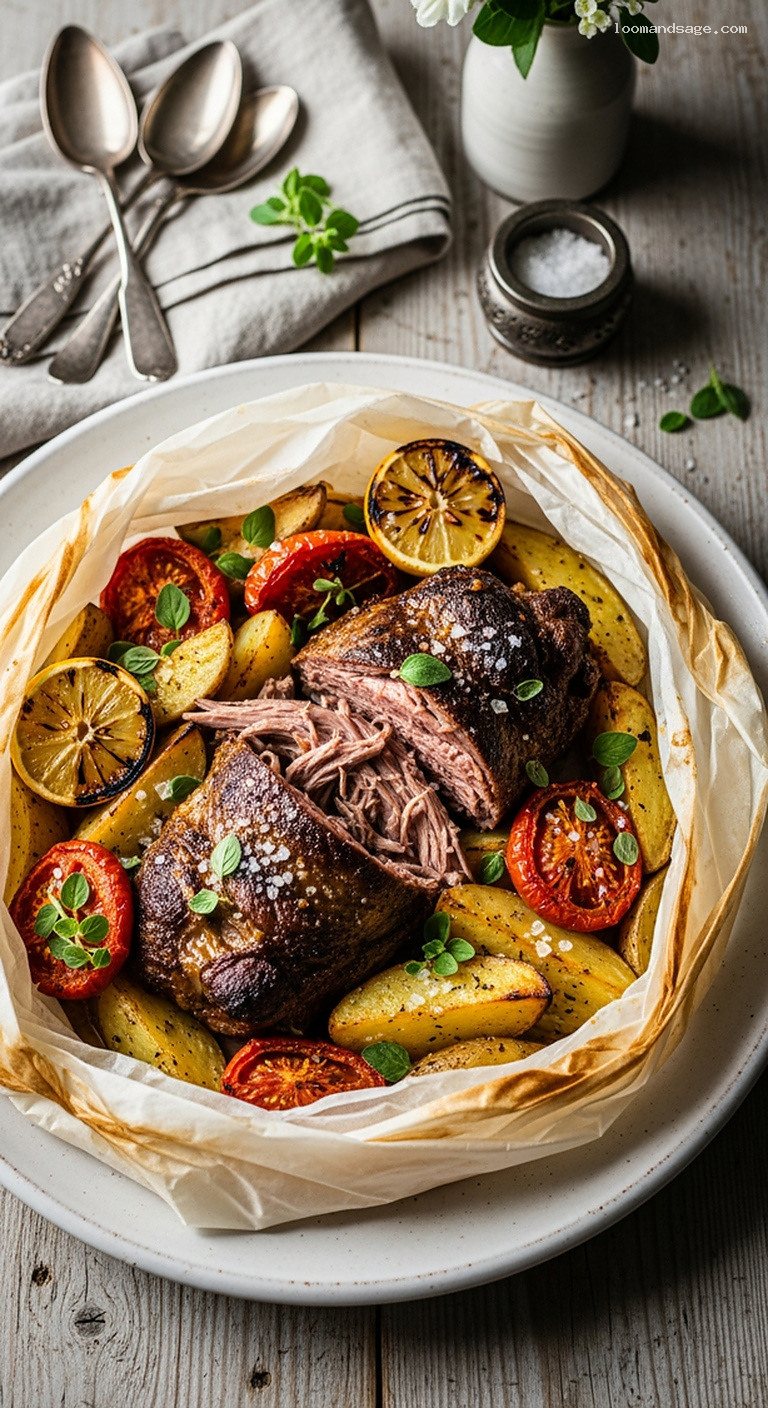
Quick Recipe Version (TL;DR)
Quick Ingredients
- 2 kg (4.4 lb) bone-in lamb shoulder or leg
- 1.5 kg (3.3 lb) waxy potatoes, cut into wedges
- 2 large onions, cut into wedges
- 3 large ripe tomatoes, sliced or wedged
- 8 garlic cloves (4 minced, 4 whole)
- 2 lemons (zest + juice of 1, 1 cut in wedges)
- 80 ml (1/3 cup) extra-virgin olive oil
- 120 ml (1/2 cup) dry white wine
- 2 tbsp dried oregano, 3 bay leaves
- 2½ tsp fine sea salt, 1½ tsp black pepper
- Optional: 100 g (3.5 oz) feta, fresh herbs for serving
- Heavy-duty parchment paper and foil or kitchen twine
Do This
- 1. Preheat oven to 160°C / 325°F. Line a roasting pan with a large cross of parchment.
- 2. Whisk olive oil, lemon zest and juice, minced garlic, oregano, salt, pepper, and wine. Rub all over lamb.
- 3. Toss potatoes, onions, tomatoes, and whole garlic with a little extra oil and seasoning; pile in center of parchment. Nestle lamb on top, add bay leaves and lemon wedges.
- 4. Fold parchment tightly over lamb and veg to form a sealed parcel. Cover with foil or tie securely.
- 5. Roast 3 hours at 160°C / 325°F until lamb is very tender.
- 6. Increase oven to 200°C / 400°F. Open parcel, baste lamb with juices, and roast uncovered 15–20 minutes to brown.
- 7. Rest 10 minutes, then serve lamb and vegetables with pan juices, crumbled feta, and fresh herbs.
Why You’ll Love This Recipe
- Slow cooking in parchment traps all the aromas, giving you incredibly tender lamb and deeply flavored vegetables.
- Everything cooks together in one pan, so you get a complete meal with minimal cleanup.
- Simple, everyday ingredients like potatoes, tomatoes, garlic, and lemon turn into something special and very Mediterranean.
- It feels impressive and rustic for entertaining, yet the method is very forgiving for home cooks.
Grocery List
- Produce: Potatoes, onions, tomatoes, garlic, lemons, fresh oregano or parsley (optional), fresh flowers or herbs for table styling (optional).
- Dairy: Feta cheese (optional, for serving).
- Pantry: Bone-in lamb shoulder or leg, extra-virgin olive oil, dry white wine, dried oregano, bay leaves, sea salt, black pepper, parchment paper, aluminum foil or kitchen twine.
Full Ingredients
Lamb & Marinade
- 2 kg (4.4 lb) bone-in lamb shoulder or leg, trimmed of excess surface fat
- 80 ml (1/3 cup) extra-virgin olive oil
- Zest of 1 lemon (finely grated)
- Juice of 1 lemon (about 3 tbsp)
- 4 garlic cloves, finely minced
- 2 tbsp dried oregano (ideally Greek oregano)
- 2½ tsp fine sea salt
- 1½ tsp freshly ground black pepper
- 120 ml (1/2 cup) dry white wine (such as Sauvignon Blanc or a Greek white)
Vegetables & Aromatics
- 1.5 kg (3.3 lb) waxy potatoes (Yukon Gold or similar), scrubbed and cut into thick wedges
- 2 large onions (red or yellow), peeled and cut into thick wedges
- 3 large ripe tomatoes, cut into thick slices or wedges
- 4 garlic cloves, left whole and lightly crushed
- 2–3 tbsp extra-virgin olive oil (for vegetables)
- 3 bay leaves
- 1 lemon, cut into wedges
- Extra salt and black pepper, to taste
For Sealing & Serving
- Heavy-duty parchment paper (enough to make a large, well-sealed parcel)
- Aluminum foil or kitchen twine (to secure the parcel)
- 100 g (3.5 oz) feta cheese, crumbled (optional)
- Fresh oregano or flat-leaf parsley, chopped (optional, for garnish)
Step-by-Step Instructions
Step 1: Preheat the oven and prepare your pan
Preheat your oven to 160°C / 325°F (conventional). Place a large roasting pan or deep baking dish on your counter. Line it with two wide sheets of parchment paper arranged in a cross, so that plenty of parchment hangs over all sides. You want enough overhang to completely wrap and seal the lamb and vegetables.
If your parchment feels flimsy, you can double it. Have aluminum foil or kitchen twine nearby for later, when you seal the parcel.
Step 2: Make the lemon-garlic-oregano marinade
In a medium bowl or jug, whisk together the 80 ml (1/3 cup) olive oil, lemon zest, lemon juice, minced garlic, dried oregano, 2½ tsp salt, and 1½ tsp black pepper until well combined. Pour in the 120 ml (1/2 cup) white wine and whisk again. You should have a fragrant, slightly thick, emulsified marinade.
Pat the lamb dry with paper towels. Place it in a large bowl or on a tray, and pour most of the marinade over, reserving 2–3 tbsp for the vegetables. Rub the marinade all over the lamb, making sure it gets into any natural folds. If you have time, you can cover and refrigerate the lamb for a few hours or overnight to marinate; otherwise, continue straight on.
Step 3: Season and layer the vegetables
In a separate large bowl, combine the potato wedges, onion wedges, tomato slices or wedges, and the 4 whole, lightly crushed garlic cloves. Drizzle with 2–3 tbsp olive oil plus the reserved marinade. Sprinkle with a good pinch of salt and pepper, then toss thoroughly so everything is glistening and evenly coated.
Transfer the vegetables into the center of the parchment-lined roasting pan, making a thick bed that is slightly mounded in the middle. Tuck the bay leaves and lemon wedges in among the vegetables so they are evenly distributed.
Step 4: Nestle the lamb and seal the parchment parcel
Place the marinated lamb directly on top of the vegetable bed, fatty side up if there is a clear top. Pour any remaining marinade from the bowl over the lamb and vegetables. This will become part of the delicious cooking juices.
Fold the parchment up and over the lamb: bring the two long sides together first and fold them over several times to create a tight seam, then fold in the short ends, tucking them firmly underneath to make a sealed parcel. If needed, add an extra sheet of parchment on top and wrap again. Finally, cover the parcel with aluminum foil or tie the parchment securely with kitchen twine to help keep all the steam inside.
Step 5: Slow-roast until fall-apart tender
Place the sealed pan on the middle rack of your preheated oven. Roast at 160°C / 325°F for about 3 hours. Try not to open the parcel during this time; the trapped steam is what makes the lamb and vegetables so tender and aromatic.
After 3 hours, carefully open the oven and, without tearing the parchment, insert a fork or knife through a small opening to test the lamb. It should be very soft and close to falling off the bone. If it still feels firm, reseal and cook for another 20–30 minutes, then check again.
Step 6: Uncover and brown the top
When the lamb is tender, increase the oven temperature to 200°C / 400°F. Carefully open the parchment parcel, pulling the sides back to expose the lamb and potatoes. Beware of the hot steam that will escape as you open it.
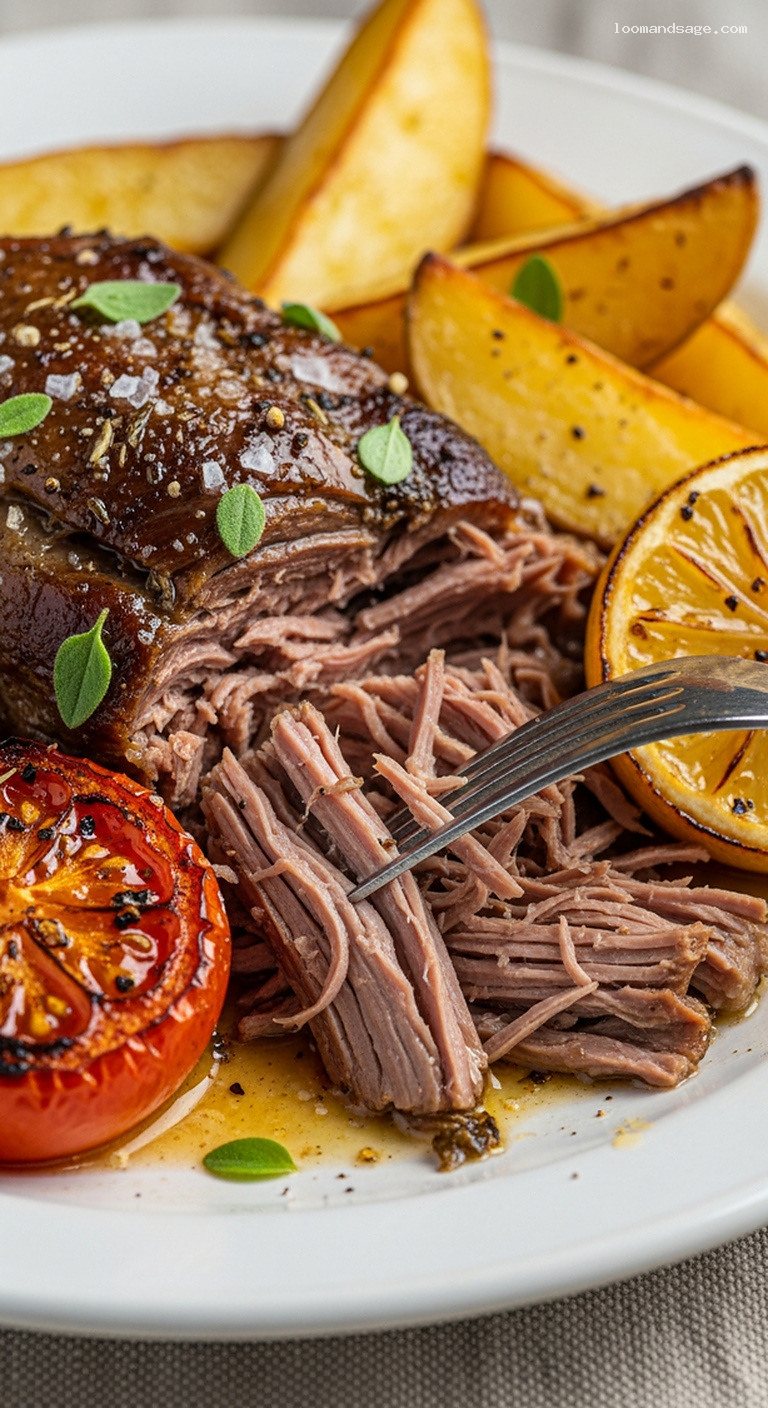
Spoon some of the cooking juices over the lamb and vegetables to baste them. Return the uncovered pan to the oven and roast for a further 15–20 minutes, until the lamb and potatoes are nicely browned on top and the edges of the tomatoes are caramelized.
Step 7: Rest, garnish, and serve
Remove the pan from the oven and let the lamb rest in the open parcel for about 10 minutes. This allows the juices to settle slightly, making the meat easier to portion.
To serve, you can present the whole parcel at the table for a dramatic reveal, or carefully lift the lamb onto a large serving platter and surround it with the potatoes and vegetables. Spoon plenty of the lemony, garlicky pan juices over everything. Sprinkle with crumbled feta and a handful of fresh oregano or parsley, if using. Serve hot, with crusty bread to mop up the juices.
Pro Tips
- Choose the right cut: Bone-in lamb shoulder is ideal because it has more connective tissue and fat, which melt during the long cook and keep everything moist and flavorful.
- Seal well: Take your time sealing the parchment. Any large gaps mean steam escapes, and you will lose the “oven-within-an-oven” effect that makes kleftiko so tender.
- Use waxy potatoes: Waxy or all-purpose potatoes hold their shape better and soak up the juices without turning mushy.
- Let it marinate: If time allows, marinate the lamb for 4–12 hours in the fridge. The flavor penetration is noticeably deeper.
- Rest before serving: A short resting time makes the lamb easier to pull apart and helps the juices redistribute for more succulent meat.
Variations
- Herb boost: Add a handful of fresh rosemary or thyme sprigs to the parcel along with the bay leaves for a woodsy, aromatic twist.
- Vegetable extras: Include chunks of bell pepper, zucchini, or carrot among the potatoes and tomatoes for more color and variety.
- Spicier version: Add 1–2 tsp of mild chili flakes to the marinade for a gentle heat that complements the lemon and garlic.
Storage & Make-Ahead
Leftover kleftiko keeps very well. Cool any remaining lamb and vegetables completely, then transfer to an airtight container with the pan juices. Store in the refrigerator for up to 3 days. Reheat gently in a covered dish at 160°C / 325°F for 20–25 minutes, or until hot throughout, adding a splash of water or stock if it looks dry.
For longer storage, you can freeze portions (with some of the juices) for up to 2 months. Thaw overnight in the fridge before reheating. You can also prepare the lamb in its marinade up to a day ahead and keep it refrigerated; simply bring it out while you prep the vegetables and then proceed with assembling and roasting.
Nutrition (per serving)
Approximate values for 1 of 6 servings (including potatoes and vegetables, without feta): about 780 calories, 48 g protein, 48 g fat, 30 g carbohydrates, 4 g fiber, 2 g sugars, and 1,200 mg sodium. These numbers are estimates and will vary depending on the exact cut of lamb, trimming, and any optional ingredients you add.