Quick Recipe Version (TL;DR)
Quick Ingredients
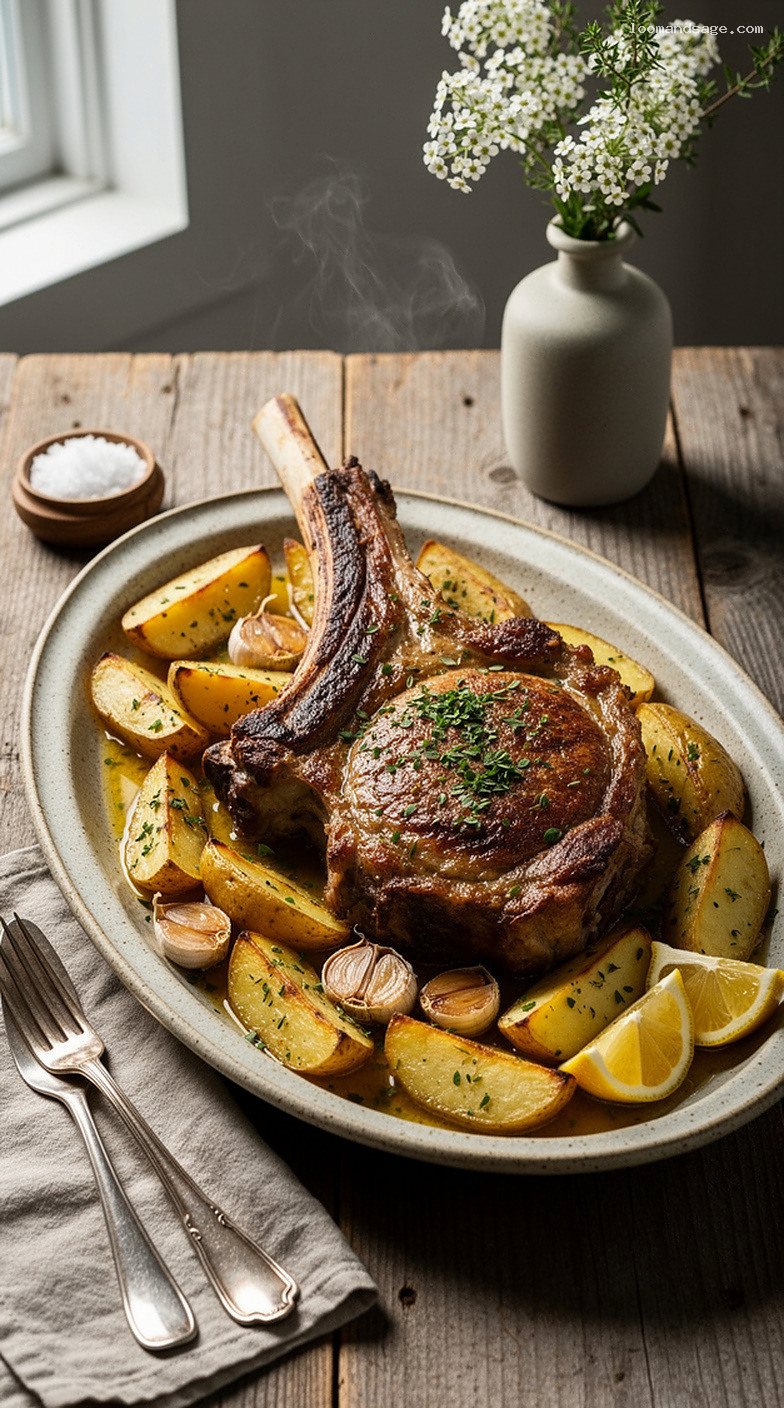
- 1 bone-in lamb shoulder roast (about 2.3 kg / 5 lb)
- 1.8 kg (4 lb) Yukon Gold potatoes, peeled and cut into thick wedges
- 80 ml (1/3 cup) extra-virgin olive oil
- 120 ml (1/2 cup) fresh lemon juice
- 240 ml (1 cup) low-sodium chicken stock (or water)
- 8 garlic cloves, smashed and peeled
- 2 tbsp dried oregano
- 2 1/2 tsp kosher salt (plus more to taste)
- 1 tsp freshly ground black pepper
- 2 bay leaves (optional but traditional)
- 2 tbsp chopped fresh parsley or oregano (for serving)
Do This
- 1) Heat oven to 220°C (425°F).
- 2) Mix olive oil, lemon juice, stock, oregano, salt, pepper; add garlic.
- 3) Toss potatoes with about 1/3 of the lemon mixture; spread in a roasting pan.
- 4) Nestle lamb on top; pour remaining lemon mixture around (and a little over) the lamb; add bay leaves.
- 5) Cover tightly with parchment and foil; roast 20 minutes at 220°C (425°F), then reduce to 170°C (325°F) and roast 2 hours.
- 6) Uncover; roast 25–35 minutes more, turning potatoes once, until crisp-edged and lamb is very tender (93°C / 200°F internal for shoulder).
- 7) Rest lamb 15 minutes; spoon pan juices over potatoes; finish with fresh herbs and extra lemon if you like.
Why You’ll Love This Recipe
- One-pan meal: the potatoes roast in the lamb drippings and lemony juices.
- Classic Greek flavor: bright lemon, lots of garlic, and oregano.
- Tender, pull-apart lamb with crisp-edged, creamy-centered potatoes.
- Great for guests, but straightforward enough for a relaxed Sunday dinner.
Grocery List
- Produce: Yukon Gold potatoes, lemons, garlic, fresh parsley or fresh oregano (optional)
- Dairy: None
- Pantry: Extra-virgin olive oil, dried oregano, kosher salt, black pepper, chicken stock (or water), bay leaves (optional)
Full Ingredients
Lamb
- 1 bone-in lamb shoulder roast (about 2.3 kg / 5 lb)
- 2 1/2 tsp kosher salt (use 2 tsp if using fine table salt)
- 1 tsp freshly ground black pepper
- 2 tbsp dried oregano
- 8 garlic cloves, smashed and peeled
- 80 ml (1/3 cup) extra-virgin olive oil
- 120 ml (1/2 cup) fresh lemon juice (about 2–3 lemons)
- 240 ml (1 cup) low-sodium chicken stock (or water)
- 2 bay leaves (optional)
Potatoes
- 1.8 kg (4 lb) Yukon Gold potatoes, peeled (optional) and cut into thick wedges (about 3 cm / 1 1/4 in at the widest point)
To Finish
- 2 tbsp chopped fresh parsley or fresh oregano
- Lemon wedges (optional, for serving)
- Additional kosher salt and black pepper, to taste
Step-by-Step Instructions
Step 1: Preheat the oven and set up the pan
Arrange a rack in the middle of the oven and preheat to 220°C (425°F). Choose a sturdy roasting pan or large baking dish (about 33 x 23 cm / 13 x 9 in or larger) so the potatoes can spread in a mostly single layer.
If your lamb shoulder has excess hard fat on the surface, trim off only the thickest pieces, leaving a thin layer for flavor and moisture.
Step 2: Mix the lemon-garlic-oregano roasting liquid
In a medium bowl or measuring jug, whisk together:
80 ml (1/3 cup) olive oil, 120 ml (1/2 cup) lemon juice, 240 ml (1 cup) chicken stock, 2 1/2 tsp kosher salt, 1 tsp black pepper, and 2 tbsp dried oregano.
Stir in the 8 smashed garlic cloves. This mixture will season the lamb, help tenderize it, and create the intensely flavorful pan juices that the potatoes will absorb.
Step 3: Season the potatoes and build the base layer
Place the potato wedges in the roasting pan. Pour about 1/3 of the lemon mixture over the potatoes and toss well to coat. Spread the potatoes out evenly.
Tip: keep most of the potatoes cut-side down so they develop deep golden edges as the pan juices reduce.
Step 4: Season the lamb and place it on top
Pat the lamb dry with paper towels. Set the lamb on top of the potatoes (or slightly nestled among them). Pour the remaining lemon mixture around the lamb, and spoon a little over the top.
If using, tuck 2 bay leaves into the pan liquid (not directly on a dry spot, where they can scorch).
Step 5: Roast covered for tenderness
Cover the pan tightly: first with parchment paper (optional but helpful to prevent the foil from sticking), then seal with foil.
Roast at 220°C (425°F) for 20 minutes. Without removing the pan, reduce the oven temperature to 170°C (325°F) and continue roasting (still covered) for 2 hours.
This covered stage gently braises the lamb in its own juices and the lemony stock, keeping everything moist and setting you up for tender meat and potatoes that taste like the roast.
Step 6: Uncover and roast until browned and crisp-edged
Remove the foil (careful of steam). Turn the potato wedges once so new sides get exposed to the hot pan and concentrated juices.
Return the pan to the oven, uncovered, and roast at 170°C (325°F) for 25–35 minutes, until:
- The potatoes are tender all the way through and deeply golden with crisp edges.
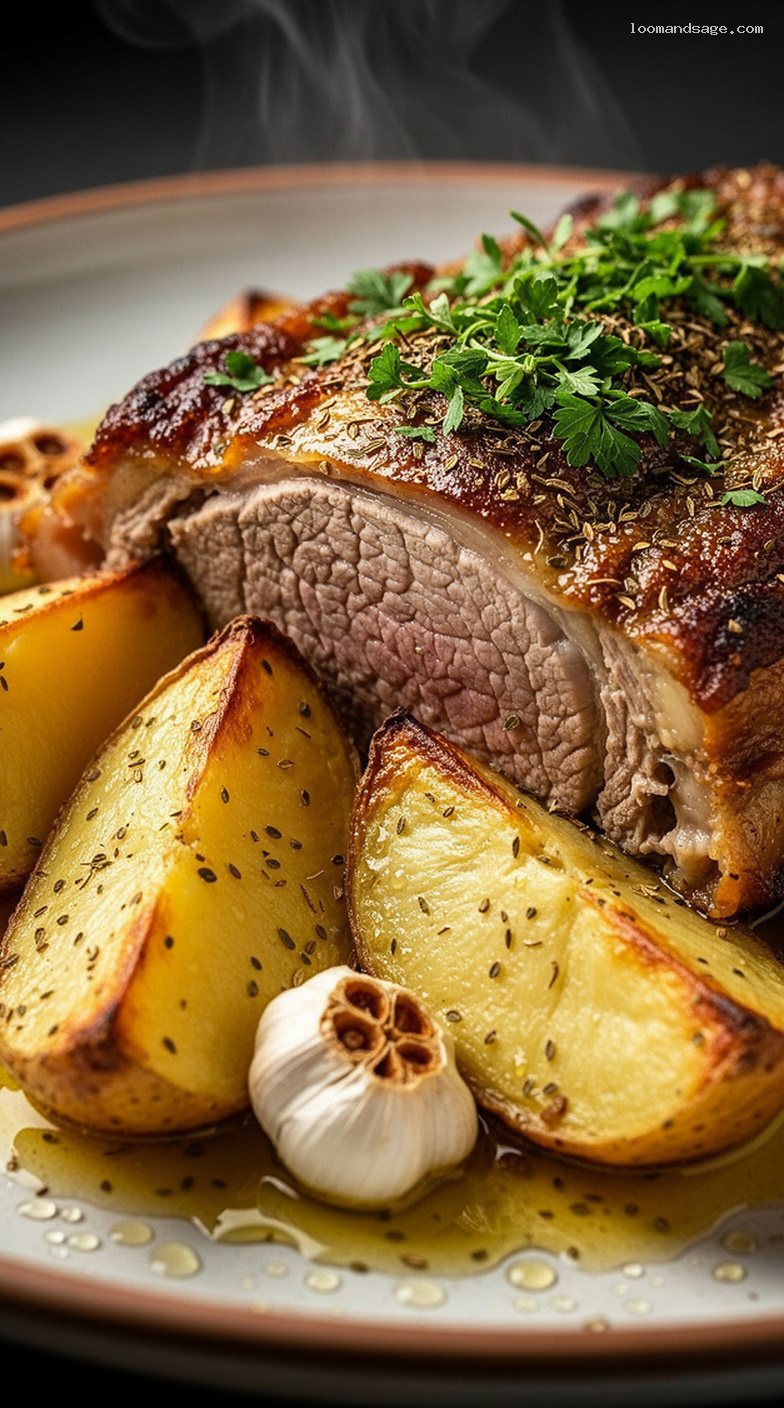
- The lamb is browned on top and very tender.
Doneness target (recommended): For lamb shoulder, aim for 93°C (200°F) internal temperature in the thickest part for truly pull-apart tenderness. If it’s not there yet, roast uncovered in 10-minute increments until it reaches temperature and feels yielding when pierced.
If at any point the pan looks dry (depends on the pan size and your potatoes), splash in 60–120 ml (1/4–1/2 cup) hot water to keep the lemony juices from scorching.
Step 7: Rest, carve, and spoon those pan juices over everything
Transfer the lamb to a cutting board and let it rest for 15 minutes. This keeps the meat juicy and makes it easier to carve (or pull into chunks).
While the lamb rests, gently toss the potatoes in the pan juices so they’re glossy and coated. Taste a potato and adjust with a pinch of salt, pepper, or an extra squeeze of lemon if you want the flavor brighter.
Carve the lamb (or pull into large pieces for a rustic presentation). Serve with the potatoes and spoon extra lemon-garlic pan juices over the top. Finish with 2 tbsp chopped fresh parsley or oregano.
Pro Tips
- Use the right cut for the texture you want. Lamb shoulder becomes meltingly tender at higher internal temps (around 93°C / 200°F). It’s ideal for this style of roast.
- Cut potatoes thick. Thick wedges (about 3 cm / 1 1/4 in) hold their shape, soak up juices, and still crisp at the edges.
- Cover tightly during the slow stage. A tight seal prevents drying and helps the lamb braise gently in the lemony liquid.
- Brown at the end, not the beginning. The uncovered finishing roast is what gives you crisp potatoes and a richly colored lamb surface without drying the meat.
- Deglaze if needed. If the pan juices are intense and stuck-on in spots, add a splash of hot water and scrape gently; those browned bits are pure flavor.
Variations
- Lamb leg version (slicer roast): Use a bone-in leg roast (about 2.3 kg / 5 lb). Roast covered for less time and cook to 60–63°C (140–145°F) for medium. Note: it will slice rather than pull apart, and the total cook time will be shorter.
- Add more aromatics: Scatter 1 large red onion (cut into wedges) among the potatoes, or add 1 tsp dried thyme along with the oregano.
- Extra lemony potatoes: Add the zest of 1 lemon to the liquid (avoid the white pith). The aroma is bold and very Greek.
Storage & Make-Ahead
Refrigerate: Cool leftovers, then store lamb and potatoes in an airtight container for up to 4 days.
Reheat: For best texture, reheat in a 190°C (375°F) oven: spread potatoes on a sheet pan and warm for 15–20 minutes (they’ll re-crisp). Warm lamb covered with foil (or with a splash of stock) until heated through, about 15–20 minutes depending on thickness.
Make-ahead option: Mix the lemon-oregano liquid up to 24 hours ahead and refrigerate. Cut potatoes up to 12 hours ahead and keep submerged in cold water in the fridge; drain and dry well before roasting.
Nutrition (per serving)
Approximate, per serving (1/6 of recipe): 790 calories, 48 g protein, 46 g fat, 46 g carbohydrates, 5 g fiber, 2 g sugar, 1050 mg sodium. Values vary by cut of lamb and how much pan juice is consumed.