
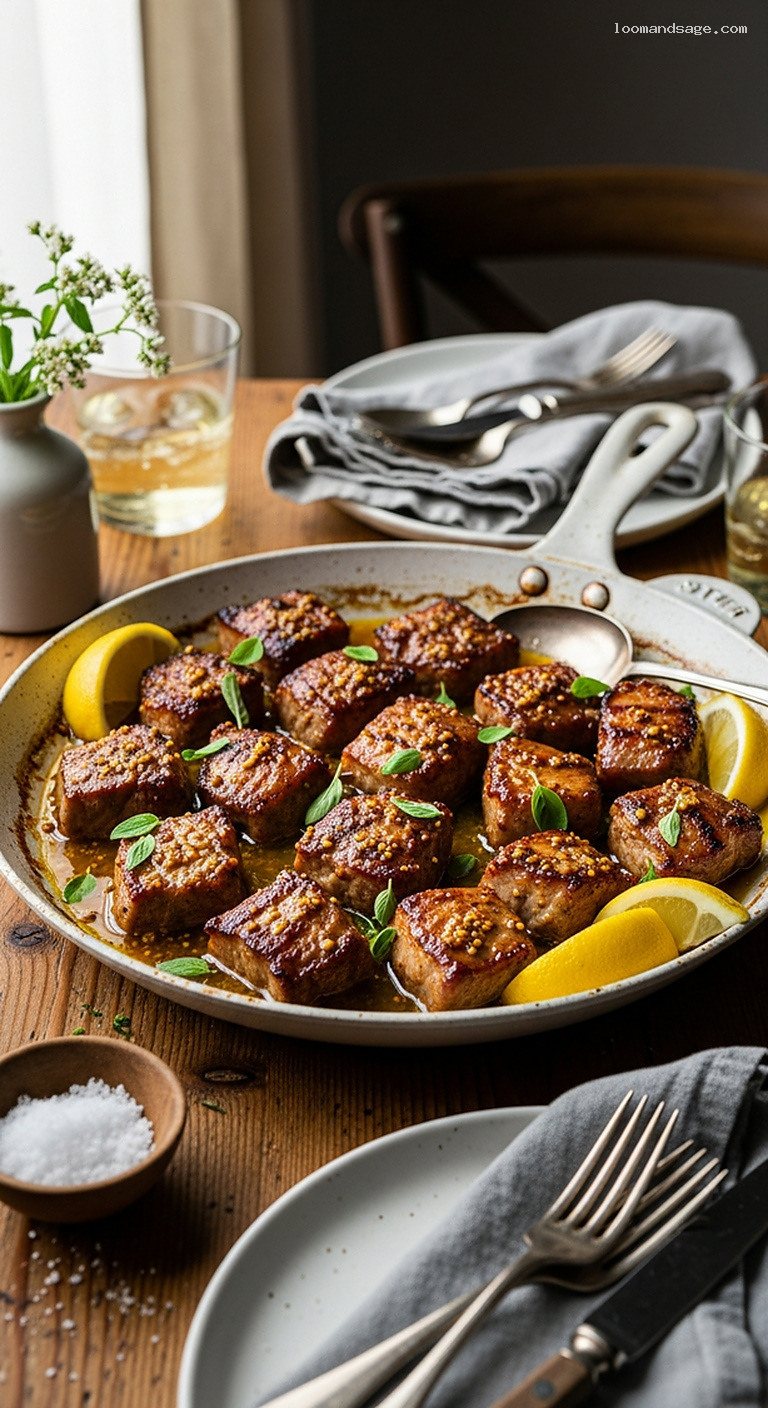
Quick Recipe Version (TL;DR)
Quick Ingredients
- 700 g (1 1/2 lb) boneless pork shoulder or neck, cut in 2.5 cm cubes
- 3 tbsp extra-virgin olive oil, divided
- 3 cloves garlic, finely minced
- Zest of 1 lemon + 3 tbsp fresh lemon juice (about 1 1/2 lemons)
- 1 1/2 tbsp Dijon or Greek mustard
- 1 tsp dried oregano, plus extra to finish
- 1/2 tsp dried thyme (optional)
- 1 tsp sweet paprika
- 1 1/4 tsp fine sea salt + 1/2 tsp black pepper
- 80 ml (1/3 cup) dry white wine or chicken broth
- 60 ml (1/4 cup) water
- 1 tsp honey or sugar (optional, for balance)
- 1 bay leaf (optional)
- Lemon wedges and extra oregano to serve
Do This
- 1. Toss pork with 2 tbsp olive oil, garlic, lemon zest, half the lemon juice, mustard, oregano, thyme, paprika, salt, and pepper. Marinate 10–15 minutes at room temperature.
- 2. Heat 1 tbsp olive oil in a large heavy pan over medium-high heat until very hot. Shake excess marinade off pork (reserve marinade) and sear in a single layer, in 2 batches if needed, 3–4 minutes per side until well browned. Transfer to a plate.
- 3. Reduce heat to medium. Pour wine (or broth) into the hot pan, scraping up browned bits. Simmer 1–2 minutes to reduce slightly.
- 4. Return pork and any juices to the pan. Add reserved marinade, water, bay leaf, and honey if using. Simmer 5–7 minutes, stirring, until pork is just cooked through and sauce thickens and glazes the meat.
- 5. Stir in remaining lemon juice, taste, and adjust salt, pepper, and lemon. Sprinkle with more dried or fresh oregano.
- 6. Serve immediately in the hot pan or a warm shallow dish with lemon wedges and crusty bread to mop up the sauce.
Why You’ll Love This Recipe
- Punchy, bright flavors from lemon, mustard, and oregano that taste like a Greek taverna at home.
- Ready in about 30 minutes, with minimal chopping and just one pan to clean.
- Perfect as a meze with bread and drinks, or scaled up for an easy weeknight main.
- Flexible: cook with wine or broth and adjust the tangy sauce exactly to your taste.
Grocery List
- Produce: 2 lemons, 3 cloves garlic, fresh oregano or parsley (optional, for garnish)
- Dairy: None required (optional: a small block of feta for serving)
- Pantry: Boneless pork shoulder/neck, extra-virgin olive oil, Dijon or Greek mustard, dried oregano, dried thyme, sweet paprika, bay leaf, honey or sugar, fine sea salt, black pepper, dry white wine or chicken broth
Full Ingredients
Pork & Marinade
- 700 g (1 1/2 lb) boneless pork shoulder or pork neck, trimmed of excess fat and cut into 2.5 cm (1 inch) cubes
- 2 tbsp extra-virgin olive oil
- 3 cloves garlic, finely minced
- Zest of 1 lemon (use unwaxed if possible)
- 2 tbsp fresh lemon juice (about 1 lemon), plus more below
- 1 1/2 tbsp Dijon or Greek-style mustard
- 1 tsp dried oregano
- 1/2 tsp dried thyme (optional but traditional in some regions)
- 1 tsp sweet paprika
- 1 1/4 tsp fine sea salt (or to taste)
- 1/2 tsp freshly ground black pepper
For the Pan Sauce
- 1 tbsp extra-virgin olive oil
- 80 ml (1/3 cup) dry white wine or low-sodium chicken broth
- 60 ml (1/4 cup) water, plus a splash more if needed
- 1 tsp honey or granulated sugar (optional, to soften the acidity)
- 1 bay leaf (optional but adds a lovely depth)
- 1 tbsp fresh lemon juice (from the remaining 1/2 lemon), plus extra to taste
- Pinch of additional dried oregano, to finish
To Serve
- Lemon wedges
- Extra dried oregano or a few sprigs of fresh oregano/parsley, roughly chopped
- Crusty bread, grilled pita, or fried potatoes for soaking up the sauce

Step-by-Step Instructions
Step 1: Cut and Season the Pork
Trim any very thick or tough pieces of fat and silverskin from the pork shoulder or neck, but leave some marbling for flavor. Cut into cubes about 2.5 cm (1 inch) so they cook quickly but still stay juicy. Pat the pork dry with paper towels; this helps it brown beautifully instead of steaming.
Step 2: Make a Quick Marinade
In a medium bowl, whisk together 2 tbsp olive oil, minced garlic, lemon zest, 2 tbsp lemon juice, mustard, dried oregano, dried thyme (if using), paprika, salt, and black pepper. You should have a thick, fragrant paste. Add the pork cubes and toss very well so every surface is coated. Let the pork sit in this mixture for 10–15 minutes at room temperature. This short marinade infuses flavor and takes the chill off the meat so it sears better.
Step 3: Sear the Pork Until Deeply Browned
Place a large, heavy skillet (cast iron or thick stainless steel works best) over medium-high heat. Add the remaining 1 tbsp olive oil and heat until shimmering and just starting to smoke. Lift the pork pieces out of the marinade, letting the excess drip back into the bowl (do not discard the marinade). Arrange the pork in a single layer in the hot pan; work in 2 batches if needed so you do not crowd the pan.
Sear without moving the pieces for 3–4 minutes, until the first side develops a deep golden-brown crust. Flip and cook another 3–4 minutes. The goal here is color and flavor; the pork does not have to be cooked through yet. Transfer the browned pork and any juices to a plate while you make the pan sauce.
Step 4: Deglaze the Pan with Wine or Broth
Reduce the heat to medium. With the pan still hot, carefully pour in the white wine (or chicken broth). It should bubble vigorously. Immediately use a wooden spoon or spatula to scrape up all the browned bits stuck to the bottom of the pan. These are full of flavor and will enrich the sauce. Let the wine simmer for 1–2 minutes, until it reduces slightly and the harsh alcohol smell has mellowed.
Step 5: Simmer Pork in the Lemon-Mustard Sauce
Pour the reserved marinade into the pan along with the reduced wine. Add 60 ml (1/4 cup) water, the bay leaf, and the honey if you are using it. Stir to combine into a loose, tangy sauce. Return the browned pork pieces and any accumulated juices to the pan, turning them in the sauce so they are well coated.
Simmer gently over medium heat for 5–7 minutes, stirring occasionally, until the pork is just cooked through and the sauce has thickened and reduced to a glossy coating. If you have an instant-read thermometer, aim for an internal temperature of about 63°C (145°F). If the pan seems too dry at any point, splash in another tablespoon or two of water.
Step 6: Finish with Fresh Lemon and Oregano
Once the pork is cooked and the sauce has a slightly syrupy consistency, turn off the heat. Stir in the remaining 1 tbsp lemon juice and taste the sauce. Adjust with extra salt, pepper, or lemon juice as needed; Tigania should be bright, savory, and slightly sharp from the lemon and mustard. Sprinkle with a pinch more dried oregano or some chopped fresh oregano/parsley.
Transfer immediately to a warm shallow serving dish or bring the skillet straight to the table for a rustic presentation. Garnish with lemon wedges around the edge so everyone can squeeze more over their portion. Serve hot with crusty bread, grilled pita, or fried potatoes to soak up all the lemon-mustard pan juices.
Pro Tips
- Use the right cut: Pork shoulder or neck has enough fat to stay tender and juicy over high heat. Lean cuts like loin can dry out more easily.
- Dry, then marinate: Patting the pork dry before marinating and shaking off excess marinade before searing both help you get that deep, flavorful crust.
- Do not overcrowd the pan: Brown in batches if necessary. Crowding cools the pan and leads to pale, stewed meat instead of caramelized bites.
- Balance the sauce: If the sauce tastes too sharp, add a little more honey or a splash of water. If it is too mild, finish with an extra squeeze of lemon and pinch of salt.
- Serve immediately: Tigania is at its best sizzling hot from the pan, while the sauce is still glossy and the edges of the pork are crisp.
Variations
- Extra garlicky: Add 1–2 more cloves of garlic to the marinade and toss in a whole smashed clove while simmering for a more intense garlic aroma.
- Spicy Tigania: Add 1/4–1/2 tsp crushed red pepper flakes or a pinch of hot paprika to the marinade for gentle heat that works beautifully with the lemon and mustard.
- Herb-loaded version: Finish with a big handful of chopped fresh oregano, thyme, and parsley for a greener, more aromatic dish, and reduce the dried herbs slightly so it does not become overpowering.
Storage & Make-Ahead
Tigania is best eaten fresh, but leftovers keep well. Store cooled pork and sauce in an airtight container in the refrigerator for up to 3 days. Reheat gently in a small skillet over medium-low heat with a tablespoon of water to loosen the sauce, just until warmed through (do not overcook or the pork can become dry). For make-ahead prep, you can cut and marinate the pork up to 12 hours in advance; keep it in the refrigerator, then bring it out 20–30 minutes before cooking to remove the chill and proceed with the recipe. This can actually deepen the flavor without adding work at dinnertime.
Nutrition (per serving)
Approximate values per serving (4 servings total): about 480 kcal; 24 g protein; 33 g fat; 5 g carbohydrates; 0.5 g fiber; 2 g sugars; 780 mg sodium. Values will vary based on the exact cut of pork, amount of fat trimmed, and whether you use wine or broth and honey or sugar.