
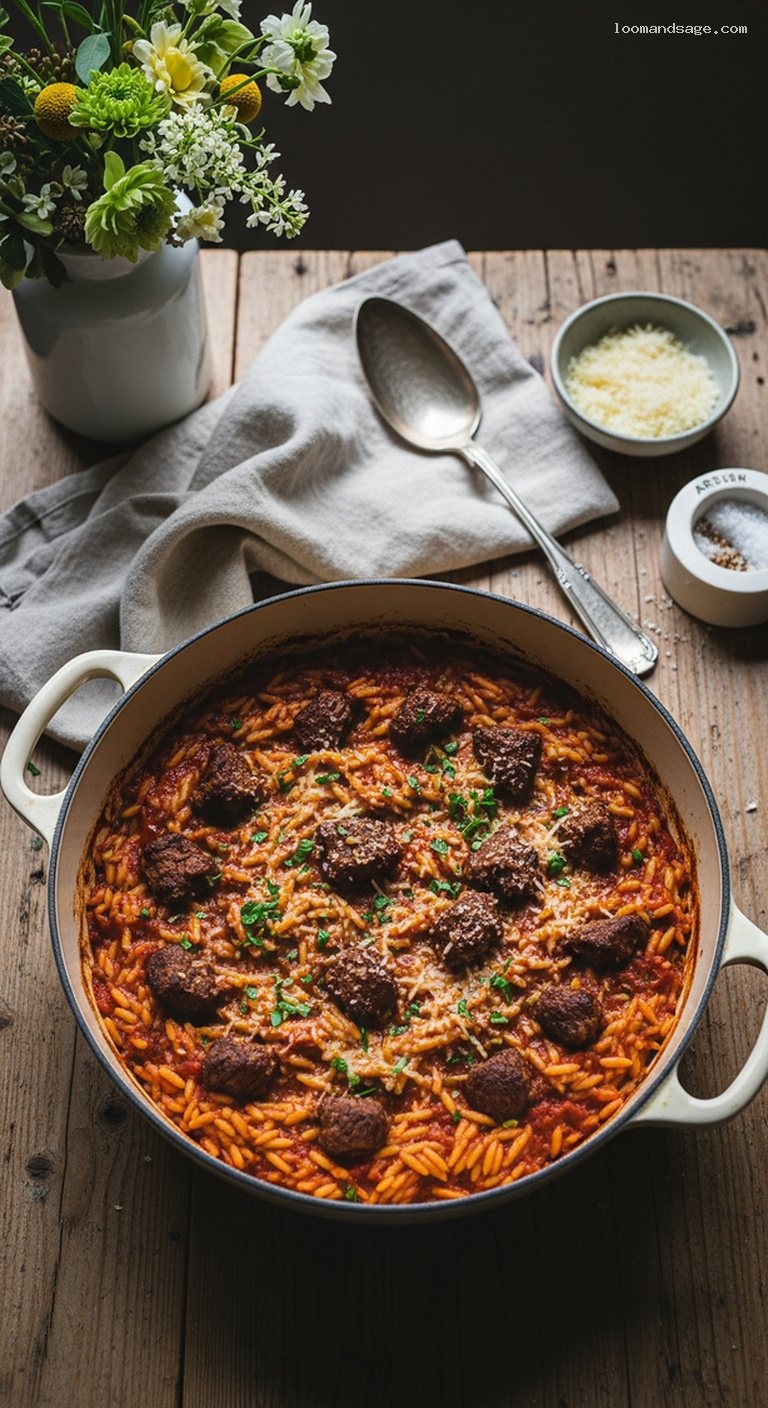
Quick Recipe Version (TL;DR)
Quick Ingredients
- 2 1/2 lb (1.1 kg) beef chuck or lamb shoulder, cut in 1 1/2 in (4 cm) cubes
- 3 tbsp olive oil
- 1 large onion, finely chopped
- 4 garlic cloves, minced
- 2 tbsp tomato paste
- 1/2 cup (120 ml) dry red wine
- 1 can (14.5 oz / 400 g) crushed tomatoes
- 2 cups (480 ml) beef or chicken broth, plus 3 cups (720 ml) hot water or more broth
- 1 cinnamon stick, 1 bay leaf, 1/2 tsp ground allspice (or 2 whole cloves), 1 tsp dried oregano
- 2 cups (400 g) orzo pasta
- 2 tbsp butter or olive oil
- 1/2 cup (50 g) grated kefalotyri, kefalograviera, or Parmesan, plus extra for serving
- Salt and freshly ground black pepper
- 2–3 tbsp chopped fresh parsley (optional)
Do This
- 1. Preheat oven to 325°F (160°C). Pat meat dry, season well with salt and pepper.
- 2. Brown meat in olive oil in a heavy oven-safe pot or Dutch oven in batches; set browned pieces aside.
- 3. In same pot, sauté onion and garlic, stir in tomato paste, deglaze with red wine, then add tomatoes, 2 cups broth, spices, and return meat to pot.
- 4. Cover and braise in the oven for about 1 hour 15 minutes, until meat is very tender.
- 5. Stir in orzo, 3 cups hot water or broth, butter, and salt; bring to a simmer on the stove.
- 6. Bake uncovered at 350°F (180°C) for 25–30 minutes, stirring once, until orzo is just tender and saucy.
- 7. Rest 10–15 minutes, sprinkle with cheese and parsley, adjust seasoning, and serve warm.
Why You’ll Love This Recipe
- Classic Greek comfort food: tender beef or lamb nestled in silky, tomato-rich orzo.
- Almost entirely one-pot, with simple, everyday ingredients.
- Perfect make-ahead dish that reheats beautifully for busy weeknights or dinner parties.
- Deep flavor from gentle oven braising, warm spices, and a cheesy, glossy finish.
Grocery List
- Produce: 1 large onion, garlic, fresh parsley, lemon (optional, for serving).
- Dairy: Kefalotyri, kefalograviera, or Parmesan (for mixing in and serving); butter (or extra olive oil).
- Pantry: Beef chuck or lamb shoulder, orzo pasta, olive oil, tomato paste, canned crushed tomatoes, beef or chicken broth, dry red wine, cinnamon stick, bay leaf, ground allspice or whole cloves, dried oregano, sugar (optional), salt, black pepper.
Full Ingredients
For the Meat and Tomato Sauce
- 2 1/2 lb (1.1 kg) beef chuck or lamb shoulder, cut into 1 1/2 in (4 cm) cubes
- 1 1/2 tsp fine sea salt (plus more to taste)
- 1 tsp freshly ground black pepper (plus more to taste)
- 3 tbsp olive oil
- 1 large yellow onion, finely chopped
- 4 garlic cloves, minced
- 2 tbsp tomato paste
- 1/2 cup (120 ml) dry red wine
- 1 can (14.5 oz / 400 g) crushed tomatoes
- 2 cups (480 ml) beef or chicken broth
- 1 cinnamon stick
- 1 bay leaf
- 1/2 tsp ground allspice or 2 whole cloves
- 1 tsp dried oregano
- 1 tsp sugar (optional, to balance acidity)
For Baking with the Orzo
- 2 cups (400 g) orzo pasta
- 3 cups (720 ml) hot water or additional hot broth (plus extra as needed)
- 2 tbsp unsalted butter or olive oil
- 1/2 tsp fine sea salt (to season the orzo layer; adjust to taste)
For Finishing and Serving
- 1/2 cup (50 g) finely grated kefalotyri, kefalograviera, or Parmesan cheese, plus extra at the table
- 2–3 tbsp chopped fresh flat-leaf parsley
- Lemon wedges (optional, to brighten the flavors)
- Freshly ground black pepper, to taste
Step-by-Step Instructions
Step 1: Prep the ingredients and heat the oven
Preheat your oven to 325°F (160°C). Place a rack in the middle position.
Pat the beef or lamb cubes very dry with paper towels; this helps them brown instead of steam. In a large bowl, toss the meat with 1 1/2 teaspoons salt and 1 teaspoon black pepper so the pieces are evenly seasoned. Chop the onion, mince the garlic, measure out the spices, and open the can of tomatoes so everything is ready to go.
Step 2: Brown the meat
Heat a large, heavy, oven-safe pot or Dutch oven (at least 5 quarts / 4.7 L) over medium-high heat. Add 3 tablespoons olive oil. When the oil is shimmering, add about one-third to half of the meat in a single layer, leaving space between pieces. Brown on all sides, turning occasionally, for about 6–8 minutes per batch.
Transfer browned meat to a plate and repeat with the remaining pieces, adding a little more oil if needed. Browning builds deep flavor, so take your time here, but reduce the heat slightly if the bottom of the pot begins to scorch. Once all the meat is browned, pour off most of the excess fat if there is more than a thin coating in the pot, but leave the browned bits on the bottom.
Step 3: Build the tomato sauce base
Reduce heat to medium. In the same pot, add the chopped onion and a pinch of salt. Cook, stirring and scraping up any browned bits, for 5–7 minutes, until the onion is soft and golden at the edges. Add the minced garlic and cook for 30–60 seconds, just until fragrant.
Stir in the tomato paste and cook it for 1–2 minutes, stirring frequently, until it darkens slightly in color; this step sweetens and deepens the tomato flavor. Pour in the red wine, scraping the bottom of the pot to release any remaining browned bits, and simmer for about 2 minutes to reduce the wine slightly.
Add the crushed tomatoes, 2 cups broth, cinnamon stick, bay leaf, allspice (or whole cloves), dried oregano, and sugar (if using). Stir to combine. Return the browned meat, along with any juices on the plate, to the pot and nestle it into the sauce.
Step 4: Gently braise the meat until tender
Bring the pot just to a simmer on the stove over medium heat. Once it is gently bubbling, cover the pot with a tight-fitting lid and transfer it to the preheated oven.
Braise for about 1 hour 15 minutes, or until the meat is very tender when pierced with a fork. Check once halfway through; if the sauce looks like it is reducing too quickly and getting dry, stir in 1/2 cup hot water. The sauce should stay loose and spoonable, not thick like a stew, because it will need to hydrate the orzo later.
Step 5: Add the orzo and extra liquid
When the meat is tender, remove the pot from the oven and increase the oven temperature to 350°F (180°C). Carefully remove the lid. The sauce should be richly flavored and fairly loose; taste and adjust with more salt and pepper if needed, keeping in mind that the orzo will absorb seasoning too.
Stir in the orzo, making sure it is evenly distributed around the meat. Add 3 cups of hot water or hot broth and 2 tablespoons butter (or olive oil), and 1/2 teaspoon salt. Stir well to combine; the mixture will look very brothy at this stage, which is exactly what you want. If your sauce was very reduced, you may add up to 1/2 cup more hot water.
Bring the mixture back to a simmer on the stovetop over medium heat, stirring occasionally so the orzo does not stick to the bottom (about 3–5 minutes).
Step 6: Bake until the orzo is silky and just tender
Once the pot is simmering again, transfer it (uncovered) to the 350°F (180°C) oven. Bake for 25–30 minutes, stirring gently once halfway through baking to prevent sticking and to ensure even cooking.
The youvetsi is done when the orzo is just tender (al dente) and most of the liquid has been absorbed into a silky, slightly saucy mixture. It should not be dry; if it looks too tight or the orzo is still firm, stir in 1/4–1/2 cup hot water and bake for another 5–10 minutes.
Step 7: Rest, finish, and serve
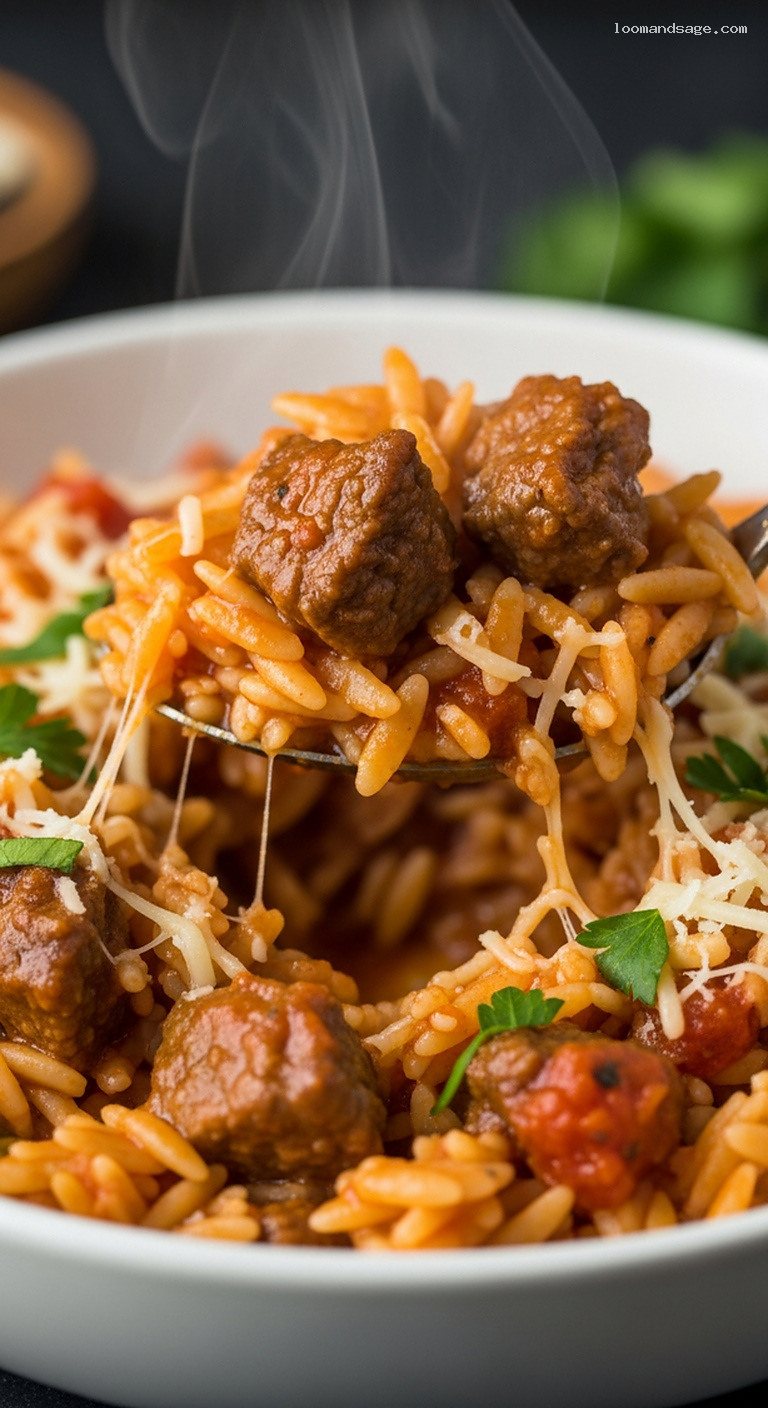
Remove the pot from the oven and let the youvetsi rest, uncovered, for 10–15 minutes. During this time the orzo will finish absorbing liquid and thicken slightly to a creamy, spoonable consistency.
Discard the bay leaf, cinnamon stick, and any whole cloves if used. Sprinkle the grated cheese and chopped parsley evenly over the top and give everything a gentle stir so some of the cheese melts into the pasta while a bit stays on the surface.
Taste and adjust seasoning with more salt and pepper as needed. Serve warm in shallow bowls, making sure each portion includes plenty of meat, orzo, and sauce. Offer extra grated cheese and lemon wedges at the table for squeezing over the top if you like a brighter finish.
Pro Tips
- Brown deeply, not quickly. Proper browning of the beef or lamb is the foundation of flavor. If the pot gets too dark, splash in a tablespoon of water and scrape up the bits rather than letting them burn.
- Use hot liquid for the orzo stage. Adding hot water or broth keeps the pot at a gentle simmer and helps the orzo cook evenly without becoming mushy.
- Check for liquid halfway through baking. Every oven and pot is a bit different. If the youvetsi looks dry before the orzo is tender, stir in more hot water 1/4–1/2 cup at a time.
- Resting time is essential. The 10–15 minute rest lets the orzo absorb excess liquid and become glossy and creamy; serving immediately can make it seem too loose.
- Choose the right cut. Well-marbled beef chuck or lamb shoulder becomes tender and succulent with braising; lean cuts will turn dry and tough.
Variations
- All-lamb youvetsi: Use lamb shoulder or leg instead of beef. Lamb can become tender a little faster; start checking for doneness after 55–60 minutes of braising.
- Spice-forward version: Increase ground allspice to 3/4 teaspoon and add a small piece of star anise or a pinch of cinnamon in addition to the stick for a warmer, more aromatic profile.
- Lighter tomato base: Replace half of the crushed tomatoes with extra broth and finish with a generous squeeze of lemon and extra fresh herbs for a brighter, less rich sauce.
Storage & Make-Ahead
Let leftovers cool to room temperature, then transfer to airtight containers and refrigerate for up to 4 days. The orzo will continue to absorb sauce as it sits, so it will thicken considerably. To reheat, add a splash of water or broth, cover, and warm gently on the stove over low heat or in the microwave, stirring occasionally, until hot and loosened to your liking. You can also freeze youvetsi for up to 2 months; thaw overnight in the refrigerator before reheating with added liquid.
To make ahead for guests, you can braise the meat through the end of Step 4 up to 2 days in advance. Cool, refrigerate, and reheat gently on the stovetop until simmering, then proceed with Steps 5–7 (adding the orzo and baking) just before serving for the best texture.
Nutrition (per serving)
Approximate values per serving (1/6 of recipe): about 650 calories; 45 g protein; 35 g carbohydrates; 32 g fat; 10 g saturated fat; 4 g fiber; 7 g sugar; 900 mg sodium. Actual values will vary based on the specific cut of meat, cheese, and broth used.