
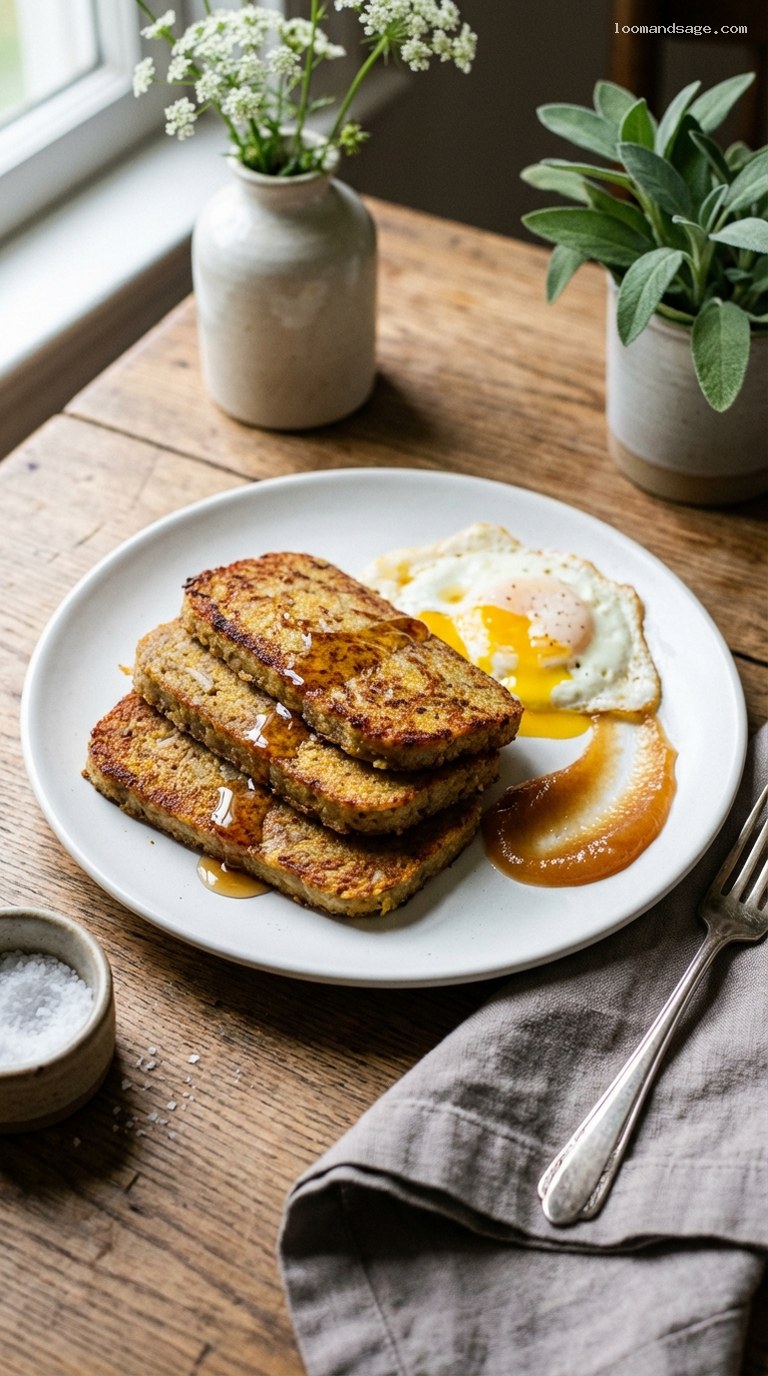
Quick Recipe Version (TL;DR)
Quick Ingredients
- 2 lb bone-in pork shoulder or country-style ribs
- 8 cups (1.9 L) water
- 1 small onion, quartered
- 3 garlic cloves, smashed
- 2 bay leaves
- 1 ½ cups (225 g) finely ground yellow cornmeal
- ½ cup (60 g) all-purpose flour
- 2 tsp kosher salt, plus more to taste
- 1 ½ tsp ground black pepper
- 1 ½ tsp dried sage
- 1 tsp dried thyme
- ¼ tsp ground allspice or nutmeg (optional)
- Butter, bacon fat, or oil for frying
Do This
- 1. Simmer pork, water, onion, garlic, bay leaves, and 1 tsp salt in a covered pot for 2–2 ½ hours, until meat is very tender and falling off the bone.
- 2. Strain the broth, discard aromatics, and measure out 4 cups (add water if needed). Shred pork very finely, removing bones and excess fat.
- 3. Whisk cornmeal, flour, remaining 1 tsp salt, pepper, sage, thyme, and allspice together. Bring the 4 cups broth to a simmer.
- 4. Whisk the dry mixture into the simmering broth in a thin stream, stirring constantly. Add shredded pork and cook over low heat 15–20 minutes until very thick.
- 5. Scrape into a greased 9×5-inch loaf pan, smooth the top, cool to room temperature, then cover and chill at least 6 hours or overnight.
- 6. Slice chilled scrapple into ½-inch-thick slices. Pan-fry in a thin layer of butter, bacon fat, or oil over medium heat until deeply browned and crisp on both sides.
- 7. Serve hot with eggs, toast, apple butter, maple syrup, or ketchup.
Why You’ll Love This Recipe
- Classic Mid-Atlantic comfort food made completely from scratch using simple pantry ingredients.
- Wonderfully crispy outside and tender, savory inside with warm spices and rich pork flavor.
- Budget-friendly: transforms inexpensive pork trimmings into several hearty breakfasts.
- Perfect for make-ahead meal prep: the loaf keeps well and fries up in minutes on busy mornings.
Grocery List
- Produce: 1 small onion, 3 garlic cloves
- Dairy: Butter (for frying; or use bacon fat/oil if you prefer)
- Pantry: Yellow cornmeal, all-purpose flour, bay leaves, kosher salt, black pepper, dried sage, dried thyme, ground allspice or nutmeg (optional), cooking oil (if not using butter/fat)
- Meat: 2 lb bone-in pork shoulder or country-style ribs (plus optional pork liver if making a more traditional version)
Full Ingredients
Pork Broth and Meat Base
- 2 lb (900 g) bone-in pork shoulder or country-style ribs
- Optionally replace 4–8 oz (115–225 g) with pork liver for a more traditional flavor.
- 8 cups (1.9 L) cold water
- 1 small onion, quartered (no need to peel)
- 3 garlic cloves, smashed
- 2 bay leaves
- 2 tsp kosher salt, divided (start with 1 tsp in the broth; adjust to taste later)
Cornmeal Scrapple Mixture
- 1 ½ cups (225 g) finely ground yellow cornmeal
- ½ cup (60 g) all-purpose flour
- Optional but tasty: ¼ cup (30 g) buckwheat flour for classic Pennsylvania-style flavor
- 1 ½ tsp freshly ground black pepper
- 1 ½ tsp dried rubbed sage
- 1 tsp dried thyme
- ¼ tsp ground allspice or nutmeg (optional, for subtle warmth)
- Reserved pork broth (aim for 4 cups / 960 ml total)
- Finely shredded cooked pork (from above, all of it)
For Frying and Serving
- Butter, bacon fat, lard, or neutral oil, for pan-frying
- Optional for serving: fried eggs, toast, apple butter, maple syrup, ketchup, or hot sauce

Step-by-Step Instructions
Step 1: Simmer the pork into a rich broth
Place the pork shoulder or country-style ribs into a large heavy pot or Dutch oven. Add the onion, garlic, bay leaves, 1 teaspoon of the kosher salt, and the 8 cups of water. The meat should be mostly submerged; add a bit more water if needed to cover.
Bring the pot to a gentle boil over medium-high heat, then immediately reduce to a low simmer. Skim off any foam that rises during the first 10–15 minutes. Cover the pot with a lid slightly askew and simmer gently for 2–2 ½ hours, or until the pork is extremely tender and falling off the bone. The broth should be flavorful and aromatic.
Step 2: Strain the broth and finely shred the meat
Carefully remove the pork pieces to a large bowl or cutting board and let them cool until comfortable to handle. Pour the cooking liquid through a fine-mesh strainer into a large measuring jug or bowl, discarding the onion, garlic, bay leaves, and any scum.
Measure out 4 cups (960 ml) of broth for the scrapple. If you have less, top it up with water; if you have more, save the extra for soup or gravy.
Meanwhile, pick through the cooled pork, removing and discarding bones, gristle, and large pieces of excess fat. Using your fingers, two forks, or a knife, shred or mince the meat very finely. Scrapple has a smoother slice if the meat is in tiny bits rather than big chunks. Set the shredded meat aside.
Step 3: Mix the dry ingredients and seasonings
In a medium bowl, whisk together the cornmeal, all-purpose flour, and buckwheat flour (if using). Add the remaining 1 teaspoon kosher salt, black pepper, dried sage, dried thyme, and ground allspice or nutmeg (if using). Whisk until everything is evenly combined.
This dry mix will thicken the broth into a stiff, spoonable porridge that sets into the classic scrapple loaf texture.
Step 4: Cook the thick cornmeal mixture with the pork
Return the 4 cups of reserved pork broth to the cleaned pot and bring it to a gentle simmer over medium heat. While whisking constantly with one hand, slowly sprinkle in the cornmeal-flour-spice mixture in a thin, steady stream. This helps prevent lumps.
Once all the dry mix is added, reduce the heat to low. The mixture will thicken quickly. Switch to a sturdy wooden spoon or heatproof spatula and stir frequently, scraping the bottom and sides of the pot to prevent sticking.
Stir in all of the finely shredded pork. Continue to cook over low heat for 15–20 minutes, stirring almost constantly, until the mixture is very thick, glossy, and pulls away from the sides of the pot. It should be thicker than oatmeal and closer to wet polenta that holds its shape. Taste carefully (it will be hot) and adjust seasoning with more salt and pepper if needed.
Step 5: Pack into a loaf pan and chill until firm
Lightly grease a 9×5-inch (23×13 cm) loaf pan with butter or oil. If you like easy removal, you can line it with a strip of parchment paper, leaving overhang on the long sides as handles.
Scrape the hot scrapple mixture into the prepared pan. Use a spatula to press it firmly into the corners and smooth the top so the loaf is even. Let it cool on the counter until it reaches room temperature, about 1 hour.
Cover the pan tightly with plastic wrap or foil and refrigerate for at least 6 hours, preferably overnight. As it chills, the loaf will firm up and become sliceable.
Step 6: Slice the scrapple
When you are ready to cook, run a thin knife around the inside edge of the pan. If lined with parchment, use the paper to lift the loaf out; otherwise, invert it onto a cutting board.
Using a sharp knife, slice the cold scrapple into ½-inch (about 1.25 cm) thick slices. Thinner slices get extra crisp and a little more delicate, while thicker slices stay softer inside; choose what you prefer. If the loaf feels crumbly, chill it a bit longer before slicing.
Step 7: Pan-fry until crisp and serve hot
Heat a large cast-iron or nonstick skillet over medium heat. Add just enough butter, bacon fat, lard, or neutral oil to coat the bottom of the pan in a thin layer. When the fat is hot and shimmering, lay in a single layer of scrapple slices, leaving a little space between each piece.
Cook without moving them for 4–5 minutes, until the bottoms are deeply golden-brown and crisp. Carefully flip the slices with a spatula and cook the second side for another 3–4 minutes. Adjust the heat as needed so they brown without burning.
Transfer the finished slices to a paper towel–lined plate while you cook the remaining slices, adding more fat as necessary. Serve immediately with fried or poached eggs, toast, apple butter, maple syrup, ketchup, or hot sauce, depending on your favorite regional style.
Pro Tips
- Take your time with the simmer. The longer, gentle simmer builds a richer broth and more tender meat, which gives your scrapple better flavor and texture.
- Chop the meat very finely. Large chunks can cause the loaf to crumble. Aim for tiny shreds or mince for the smoothest slice and clean edges.
- Cook the cornmeal mixture until very thick. If it is too loose when you pour it into the pan, the scrapple will be soft and might not slice cleanly after chilling.
- Chill thoroughly before slicing. Overnight chilling is ideal. A well-chilled loaf cuts evenly and holds together during frying.
- Use medium heat for frying. Too high and it scorches before the center warms; too low and it dries out without crisping. Moderate, steady heat gives a crunchy crust and creamy interior.
Variations
- Traditional liver scrapple: Replace 4–8 oz (115–225 g) of the pork with pork liver. Simmer it together with the other meats, then finely mince before adding to the cornmeal mixture. Expect a stronger, more old-fashioned flavor.
- Buckwheat scrapple: Use the optional ¼ cup buckwheat flour and reduce all-purpose flour to ¼ cup (30 g). Buckwheat adds hearty, nutty depth and a slightly darker color.
- Spicy breakfast scrapple: Add ½–1 teaspoon crushed red pepper flakes and ½ teaspoon smoked paprika with the dry spices. Serve with hot sauce for a bolder, modern twist.
Storage & Make-Ahead
Scrapple is perfect for making ahead. The cooked loaf can be tightly wrapped in plastic wrap or foil and refrigerated for up to 4–5 days. Slice and fry portions as needed straight from the refrigerator. For longer storage, wrap the chilled loaf (or individual slices) in plastic wrap and then in foil or a freezer bag, and freeze for up to 3 months. Thaw overnight in the refrigerator before slicing and frying, or pan-fry frozen slices over slightly lower heat, adding a minute or two per side so they heat through. Leftover fried scrapple can be refrigerated in an airtight container for up to 3 days; reheat in a dry skillet over medium heat to re-crisp the exterior.
Nutrition (per serving)
Approximate values for 1 of 8 servings (about 2 fried slices), not including frying fat or toppings: 280 calories; 13 g protein; 18 g fat; 18 g carbohydrates; 1 g fiber; 650 mg sodium. Values will vary based on exact cut of pork, added fat, and portion size.