
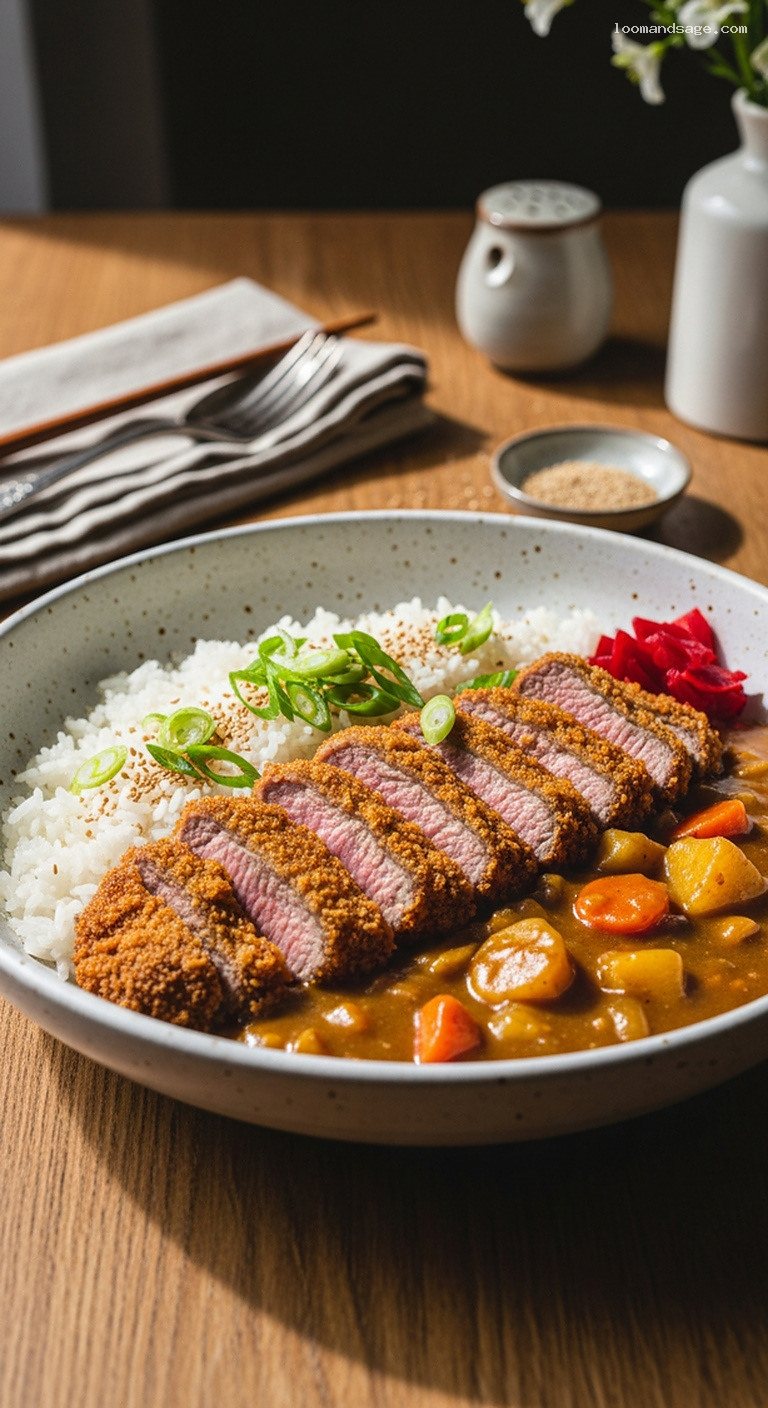
Quick Recipe Version (TL;DR)
Quick Ingredients
- 4 lamb leg steaks or lamb loin chops, about 120–150 g each, pounded to 1 cm thick
- 1 tsp fine sea salt, 1/2 tsp black pepper
- 60 g (1/2 cup) all-purpose flour
- 2 large eggs + 2 Tbsp milk or water
- 120 g (about 2 cups) panko breadcrumbs
- 750 ml neutral oil (canola, sunflower, or peanut) for frying
- 2 cups (360 g) Japanese short-grain rice + 2 1/4 cups (540 ml) water
- 1 large onion, 2 medium carrots, 2 small potatoes, 2 garlic cloves, 2 tsp grated ginger
- 3 cups (720 ml) low-sodium chicken or vegetable stock
- 1 medium apple, grated
- 4 blocks (about 100 g) Japanese curry roux (medium or mild)
- 1 Tbsp soy sauce, 1 tsp Worcestershire sauce, 1 tsp honey or sugar (optional)
- Sliced spring onions, toasted sesame seeds, pickled ginger for serving (optional)
Do This
- 1. Rinse rice until water is mostly clear, then cook with 2 1/4 cups water (rice cooker or stovetop) while you make the curry and lamb.
- 2. Slice onion, carrots, and potatoes; mince garlic and grate ginger and apple.
- 3. For curry: sauté onion, then add carrots, potatoes, garlic, ginger, stock, and grated apple. Simmer 12–15 minutes until vegetables are tender.
- 4. Stir curry roux blocks into the pot to melt, then add soy sauce, Worcestershire, and honey if needed. Simmer until thick and glossy.
- 5. For katsu: season lamb, then coat in flour, egg wash, and panko. Press crumbs on firmly.
- 6. Fry lamb in 2.5 cm deep oil at 175°C / 350°F for 2–3 minutes per side until deep golden and just pink inside. Rest 3 minutes, then slice.
- 7. Serve rice in bowls, ladle curry over rice, top with sliced lamb katsu, and garnish with spring onions, sesame seeds, and pickled ginger.
Why You’ll Love This Recipe
- Crispy, golden lamb cutlets meet rich, gently spiced Japanese curry for ultimate comfort food.
- Uses easy-to-find Japanese curry roux, so you get deep flavor without complicated techniques.
- Everything cooks in about an hour, and most steps overlap to save time.
- Great for impressing guests, but simple enough for a cozy weeknight dinner.
Grocery List
- Produce: 1 large onion, 2 medium carrots, 2 small waxy potatoes, 2 garlic cloves, fresh ginger, 1 apple, spring onions (scallions), optional pickled ginger or Japanese pickles.
- Dairy: 2 large eggs, optional splash of milk.
- Pantry: 4 lamb leg steaks or lamb loin chops, Japanese short-grain rice, all-purpose flour, panko breadcrumbs, neutral frying oil, Japanese curry roux blocks, low-sodium stock (chicken or vegetable), soy sauce, Worcestershire sauce, honey or sugar, fine sea salt, black pepper, toasted sesame seeds.
Full Ingredients
For the Lamb Katsu
- 4 lamb leg steaks or lamb loin chops, about 120–150 g each, 1.5 cm thick, bones removed and pounded to about 1 cm thickness
- 1 tsp fine sea salt
- 1/2 tsp freshly ground black pepper
- 60 g (1/2 cup) all-purpose flour
- 2 large eggs
- 2 Tbsp milk or water (to loosen the eggs)
- 120 g (about 2 cups) panko breadcrumbs
- 750 ml neutral oil for shallow frying (canola, sunflower, or peanut), enough for about 2.5 cm depth in a large skillet
For the Japanese Curry Sauce
- 1 Tbsp neutral oil
- 1 large onion (about 250 g), thinly sliced
- 2 medium carrots (about 200 g), peeled and sliced into 0.5–1 cm thick rounds or on the bias
- 2 small waxy potatoes (about 250 g), peeled and cut into 2–3 cm chunks
- 2 garlic cloves, minced
- 2 tsp freshly grated ginger
- 3 cups (720 ml) low-sodium chicken or vegetable stock
- 1 medium apple (about 100 g), peeled if you like, grated
- 4 blocks (about 100 g total) Japanese curry roux (mild or medium-hot)
- 1 Tbsp soy sauce
- 1 tsp Worcestershire sauce
- 1 tsp honey or sugar, or to taste (optional, to balance salt and spice)
For the Steamed Rice
- 2 cups (360 g) Japanese short-grain rice
- 2 1/4 cups (540 ml) cold water
To Serve (Optional Garnishes)
- 2 spring onions (scallions), thinly sliced
- 1–2 Tbsp toasted white or black sesame seeds
- Pickled red ginger (beni shoga) or Japanese mixed pickles (fukujinzuke)
Step-by-Step Instructions
Step 1: Rinse and Cook the Rice
Place the rice in a bowl and cover with plenty of cold water. Swirl gently with your hand, then drain the cloudy water. Repeat this rinsing 3–4 times until the water is mostly clear. Drain well in a sieve.
Add the rinsed rice and 2 1/4 cups (540 ml) water to a rice cooker or a medium saucepan with a tight-fitting lid. If using a rice cooker, cook according to the manufacturer’s white rice setting. For stovetop: bring to a gentle boil over medium heat, then reduce to low, cover, and cook for 12 minutes. Turn off the heat and let the rice steam, covered, for another 10 minutes. Fluff gently with a rice paddle or fork just before serving.
Step 2: Prep the Vegetables and Lamb
While the rice starts cooking, prepare the curry ingredients. Thinly slice the onion. Peel and slice the carrots into 0.5–1 cm thick rounds or on a diagonal. Peel the potatoes and cut into 2–3 cm chunks. Mince the garlic and grate the ginger. Grate the apple on the coarse side of a box grater.
For the lamb, remove any bones from loin chops if necessary. Trim off large pockets of surface fat but leave a thin layer for flavor. Place each piece between two sheets of baking parchment or plastic wrap and gently pound with a meat mallet or rolling pin until about 1 cm thick. Season both sides of each cutlet with the salt and pepper. Set aside while you start the curry.
Step 3: Start the Japanese Curry Base
In a medium pot or deep sauté pan, heat 1 Tbsp neutral oil over medium heat. Add the sliced onion and cook, stirring occasionally, for 6–8 minutes until softened and lightly golden at the edges. Do not rush this step; a bit of caramelization adds sweetness and depth.
Add the carrots and potatoes, then cook for 2–3 minutes, stirring, to coat the vegetables in the onions and oil. Stir in the minced garlic and grated ginger and cook for 30–60 seconds until fragrant, being careful not to burn the garlic.
Pour in the stock and add the grated apple. Stir, bring to a gentle boil, then reduce the heat to a simmer. Cook, partially covered, for 12–15 minutes, or until the carrots and potatoes are just tender when pierced with a knife.
Step 4: Finish the Curry Sauce
Turn the heat down to low. Break the Japanese curry roux blocks into smaller pieces and add them to the pot. Stir continuously as they melt into the hot liquid; this can take 2–3 minutes. Once dissolved, the sauce should thicken to a gravy-like consistency that coats the back of a spoon.
Stir in the soy sauce and Worcestershire sauce. Taste and, if needed, add honey or sugar a little at a time to round out the flavors. If the curry is too thick, add a splash of water or stock; if it is too thin, simmer gently, uncovered, for a few more minutes until glossy and slightly thickened. Turn the heat to very low, cover, and keep warm while you cook the lamb, stirring occasionally so it does not stick.
Step 5: Bread the Lamb Cutlets
Set up a breading station: place the flour in one shallow bowl. In a second bowl, whisk together the eggs and milk (or water) until smooth. In a third bowl, add the panko breadcrumbs.
Working with one piece of lamb at a time, dredge it lightly in flour, shaking off the excess. Dip it into the egg mixture, letting any excess drip back into the bowl. Finally, press it firmly into the panko, coating both sides thoroughly and pressing the crumbs on so they adhere well. Place the breaded cutlets on a plate or tray. Let them sit for 5–10 minutes; this helps the coating stick when fried.
Step 6: Fry the Lamb Katsu
Pour enough neutral oil into a large, heavy-bottomed skillet to reach a depth of about 2.5 cm. Heat over medium-high heat until the oil reaches 175°C / 350°F. If you do not have a thermometer, drop in a few panko crumbs; they should sizzle immediately and turn golden in about 45 seconds.
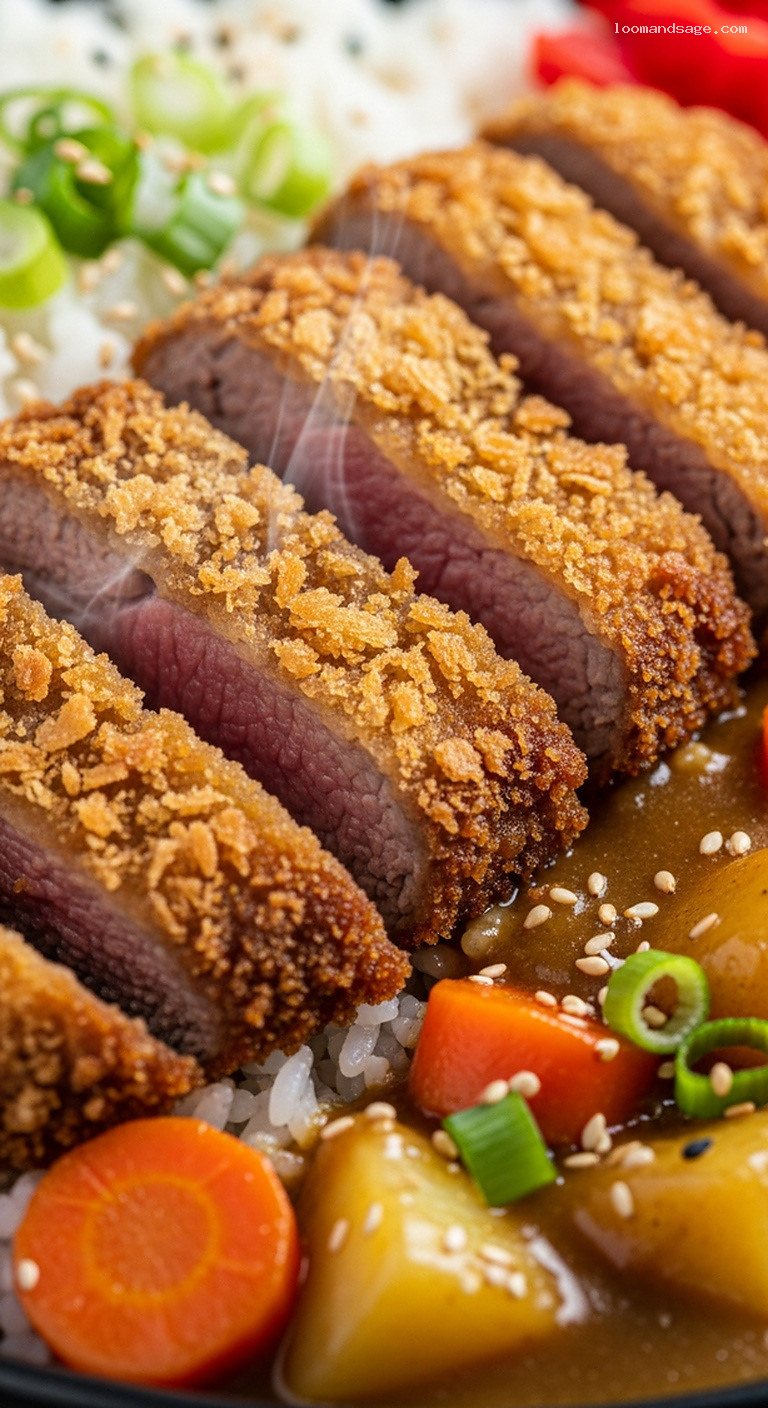
Carefully lower 2 lamb cutlets into the hot oil, laying them away from you to avoid splashes. Fry for 2–3 minutes per side, or until the panko is deep golden brown and the lamb is just cooked through but still slightly pink in the center (an internal temperature of about 60–63°C / 140–145°F for medium). Adjust the heat as needed to keep the oil temperature steady and prevent burning.
Transfer the fried cutlets to a wire rack set over a tray or to a plate lined with paper towels. Repeat with the remaining lamb. Let the katsu rest for 3–5 minutes to keep them juicy before slicing.
Step 7: Slice, Plate, and Serve
Fluff the steamed rice and divide it among 4 warm shallow bowls or plates, mounding the rice slightly to one side. Give the curry a final stir and ladle it generously beside or partially over the rice.
Using a sharp knife, slice each lamb cutlet across the grain into strips about 1.5–2 cm wide, keeping the pieces lined up in their original shape. Gently transfer the sliced katsu onto the rice so the cut sides are visible and the crisp crust is on top.
Sprinkle with sliced spring onions and toasted sesame seeds. Add a small spoonful of pickled red ginger or Japanese pickles on the side, if using. Serve immediately while the katsu is crisp and the curry and rice are hot.
Pro Tips
- Keep it crisp: Rest fried cutlets on a wire rack instead of paper towels so steam can escape and the panko stays crunchy.
- Do not overcrowd the pan: Fry in batches. Too many cutlets at once will cool the oil, leading to soggy, greasy katsu.
- Control curry thickness: Japanese curry should be a pourable gravy. If it gets too thick while waiting for the lamb, thin it with a splash of hot water or stock and stir well.
- Rice matters: Use Japanese short-grain rice if possible. Its slightly sticky texture is perfect for catching curry and katsu crumbs.
- Cook lamb to your liking: Lamb is best when still slightly pink. For well-done, simply fry 1–2 minutes longer per side, but watch that the crumbs do not burn.
Variations
- Spicy lamb katsu curry: Use hot Japanese curry roux, add a pinch of cayenne or chili flakes, and finish with a drizzle of chili oil for extra heat.
- Lighter, baked version: Instead of frying, spray the breaded lamb with oil and bake at 220°C / 425°F on a wire rack over a tray for 12–15 minutes, turning once, until golden and cooked through.
- Extra-vegetable curry: Add bell peppers, peas, or green beans during the last 5–7 minutes of simmering the curry for more color and texture.
Storage & Make-Ahead
The elements of this dish keep best when stored separately. Cool leftovers completely. Store the curry sauce in an airtight container in the refrigerator for up to 4 days; it often tastes even better the next day. Rice can be refrigerated for up to 3 days; sprinkle with a little water and reheat covered in the microwave. Fried lamb katsu is best fresh, but you can refrigerate it for up to 2 days. To re-crisp, warm in a 190°C / 375°F oven or air fryer for 8–10 minutes until hot and crunchy again. You can also bread the raw lamb in advance and refrigerate it, covered, for up to 8 hours before frying. For longer storage, freeze breaded but uncooked cutlets on a tray, then transfer to a bag and fry from frozen, adding 1–2 extra minutes per side.
Nutrition (per serving)
Approximate values per serving (1/4 of the recipe, including rice, curry, and lamb katsu): about 880 calories; 43 g protein; 88 g carbohydrates; 32 g fat; 8 g saturated fat; 5 g fiber; 1,300–1,500 mg sodium. Actual values will vary based on the exact cut of lamb, how much oil is absorbed during frying, and the specific curry roux brand used.