
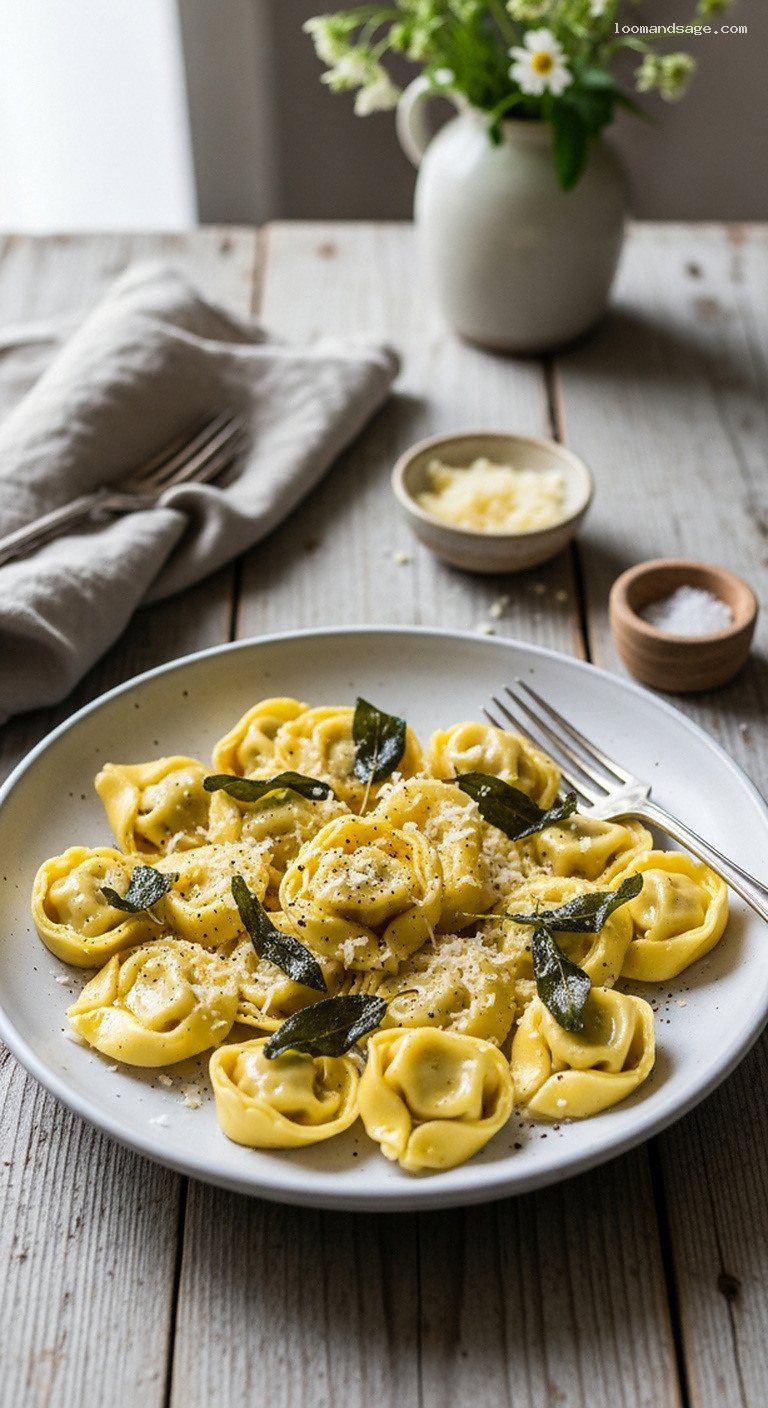
Quick Recipe Version (TL;DR)
Quick Ingredients
- 2 cups (260 g) 00 or all-purpose flour
- 3 large eggs + 1 yolk (for filling)
- 1 tbsp olive oil (for dough) + 1 tbsp (for filling)
- 300 g (10.5 oz) ground lamb
- 1 small onion, very finely chopped
- 2 garlic cloves (1 for filling, 1 for sauce), minced or crushed
- 2 tsp chopped fresh rosemary, 2 tsp chopped thyme, 1 tbsp chopped parsley
- 1 pinch nutmeg, pinch chili flakes (optional)
- 1/2 cup (50 g) finely grated Pecorino Romano, plus extra for serving
- 1–2 tbsp fine dry breadcrumbs (if needed for filling)
- 8 tbsp (113 g) unsalted butter
- 10–12 fresh sage leaves
- Salt and black pepper
Do This
- 1. Make dough: Mound flour, add salt, eggs, and oil; knead 8–10 minutes until smooth. Wrap and rest 30 minutes.
- 2. Cook filling base: Sauté onion in oil until soft; add garlic and lamb. Cook until no longer pink, breaking up lumps.
- 3. Season filling: Stir in herbs, nutmeg, chili flakes, salt, pepper, and wine or water. Cool, then mix in Pecorino and egg yolk; add breadcrumbs if needed to firm up.
- 4. Roll dough into thin sheets and cut into 5–6 cm (2–2.5 in) squares or circles. Add small mounds of filling and shape into tortellini or ravioli.
- 5. Boil in salted water for 2–3 minutes, until they float and pasta is tender.
- 6. Meanwhile, melt butter with sage and crushed garlic until foamy and lightly nutty.
- 7. Transfer cooked tortellini/ravioli straight to the pan, toss with a splash of pasta water, and serve with more Pecorino and black pepper.
Why You’ll Love This Recipe
- Tender homemade pasta filled with juicy, aromatic lamb, herbs, and sharp Pecorino.
- A classic, ultra-simple sage butter sauce that lets the filling really shine.
- Surprisingly achievable for home cooks with clear, step-by-step guidance.
- Perfect for a cozy dinner party or a special weekend meal that feels restaurant-worthy.
Grocery List
- Produce: 1 small onion, 2–3 garlic cloves, fresh rosemary, fresh thyme, fresh flat-leaf parsley, fresh sage
- Dairy: Eggs, unsalted butter, Pecorino Romano cheese
- Pantry: 00 or all-purpose flour, olive oil, fine dry breadcrumbs, salt, black pepper, nutmeg, chili flakes (optional), dry white wine or chicken/vegetable stock (optional)
Full Ingredients
For the Fresh Pasta Dough
- 2 cups (260 g) 00 flour or unbleached all-purpose flour, plus extra for dusting
- 3 large eggs, at room temperature
- 1 tbsp extra-virgin olive oil
- 1/2 tsp fine sea salt
- 1–2 tsp water, only if needed to bring dough together
For the Lamb, Herb & Pecorino Filling
- 1 tbsp extra-virgin olive oil
- 1 small onion (about 75 g), very finely chopped
- 1 garlic clove, minced
- 300 g (10.5 oz) ground lamb
- 2 tsp fresh rosemary leaves, finely chopped
- 2 tsp fresh thyme leaves, finely chopped
- 1 tbsp fresh flat-leaf parsley, finely chopped
- 1/4 tsp freshly grated nutmeg
- 1/4 tsp red chili flakes (optional)
- 1/2 tsp fine sea salt, plus more to taste
- 1/4 tsp freshly ground black pepper
- 2 tbsp dry white wine or low-sodium stock (optional, for deglazing)
- 1/2 cup (50 g) finely grated Pecorino Romano cheese
- 1 large egg yolk
- 1–2 tbsp fine dry breadcrumbs, as needed, to firm up the filling
For the Sage Butter Sauce
- 8 tbsp (113 g) unsalted butter
- 10–12 fresh sage leaves (small leaves left whole, larger ones torn)
- 1 small garlic clove, lightly crushed (optional)
- 1/4–1/2 tsp fine sea salt, to taste
- Freshly ground black pepper, to taste
- 2–4 tbsp reserved pasta cooking water (as needed, to loosen the sauce)
To Serve
- 1/3–1/2 cup (30–50 g) finely grated Pecorino Romano
- Extra fresh parsley or thyme leaves, finely chopped (optional)
- Extra freshly ground black pepper
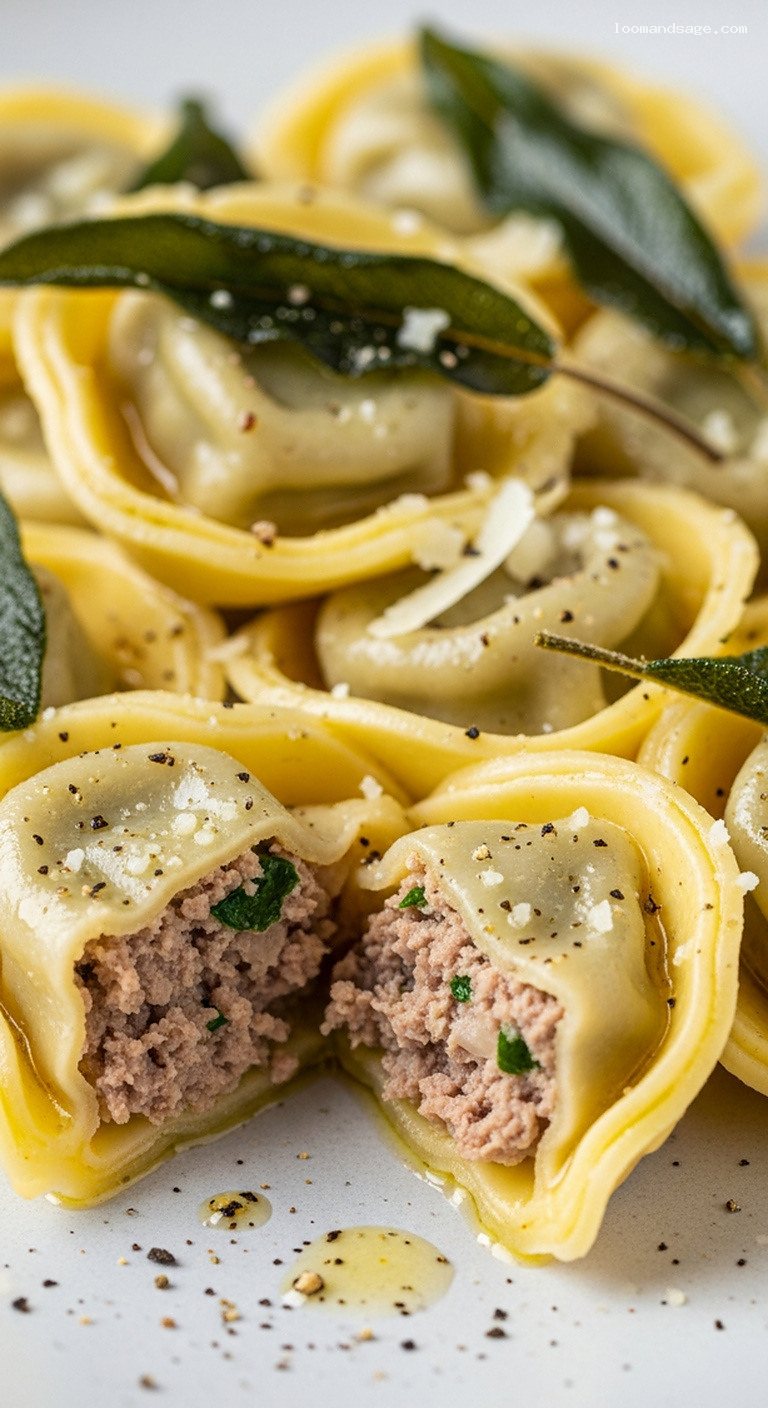
Step-by-Step Instructions
Step 1: Make the pasta dough
On a clean work surface, mound the flour and make a wide well in the center. Sprinkle the salt over the flour. Crack the 3 eggs into the well and add the olive oil. Using a fork, gently beat the eggs and oil together, gradually drawing in flour from the inner edge of the well. Continue until the mixture thickens and is no longer runny.
Switch to using your hands and begin kneading, incorporating just enough flour to form a cohesive dough. If the dough feels very dry and crumbly and there is still a lot of loose flour, sprinkle in 1–2 teaspoons of water, a little at a time. Knead for 8–10 minutes, until the dough is smooth, elastic, and only slightly tacky. Shape into a ball, wrap tightly in plastic wrap (or cover with an upturned bowl), and let rest at room temperature for at least 30 minutes. This relaxes the gluten and makes rolling much easier.
Step 2: Cook and season the lamb filling
While the dough rests, prepare the filling. Heat the olive oil in a medium skillet over medium heat. Add the finely chopped onion and a small pinch of salt. Cook, stirring often, for 5–7 minutes until the onion is very soft and translucent but not browned. Add the minced garlic and cook for 30 seconds, just until fragrant.
Add the ground lamb, breaking it up with a spatula. Cook for 5–7 minutes, until the lamb is no longer pink and any moisture has mostly evaporated. If using, pour in the white wine or stock and cook for another 1–2 minutes, scraping up any browned bits from the bottom of the pan, until the liquid has mostly evaporated again.
Stir in the rosemary, thyme, parsley, nutmeg, and chili flakes (if using). Season with the salt and pepper, then taste and adjust the seasoning; it should be well seasoned at this stage. Remove from the heat and spread the mixture on a plate or shallow bowl to cool to room temperature. The filling must be cool before adding egg and cheese, or it may become greasy.
Step 3: Finish the lamb, herb & Pecorino filling
Once the lamb mixture is cool, transfer it to a mixing bowl. Add the grated Pecorino Romano and egg yolk. Mix thoroughly with a fork or your hands until evenly combined. The filling should hold together when pressed but still be soft and moist.
If the mixture seems too loose or wet to scoop neatly, sprinkle in 1–2 tablespoons of fine dry breadcrumbs, mixing well after each addition, just until the filling firms up slightly. Avoid adding too many breadcrumbs; the filling should be tender, not dry. Taste a tiny bit (if you are not comfortable tasting raw yolk, cook a teaspoon of the mixture in a pan first) and adjust salt and pepper if needed. Cover and refrigerate while you roll out the pasta.
Step 4: Roll out the pasta sheets
Divide the rested dough into 2–4 pieces. Work with one piece at a time, keeping the others well covered so they do not dry out. Lightly flour your work surface and the dough. If using a pasta machine, flatten the piece into a rough rectangle and pass it through the widest setting several times, folding in thirds each time, until smooth. Then gradually roll it thinner, 1–2 settings at a time, until you reach a thin sheet (about 1–1.5 mm thick; on many machines this is setting 6 or so).
If rolling by hand, use a long rolling pin and roll from the center outward, rotating the dough frequently and dusting lightly with flour as needed, until you have a large, very thin sheet.
For tortellini, cut the sheet into 5 cm (2 inch) squares. For ravioli, you can use the same size squares or cut 6–7 cm (2.5 inch) squares or circles with a cutter. Lay the cut pieces on a lightly floured surface or tray, and cover with a clean kitchen towel while you fill and shape them.
Step 5: Shape into tortellini or ravioli
For each tortellino, place about 1/2 teaspoon to 3/4 teaspoon of filling in the center of a pasta square. Lightly brush two adjacent edges with a little water if your dough feels dry. Fold the square into a triangle, pressing firmly around the filling to seal and gently pushing out any air pockets. Bring the two bottom corners of the triangle together around your fingertip and press to seal, creating the classic tortellini ring shape. Place on a floured tray.
For ravioli, place small mounds of filling (about 1 teaspoon each) in rows on a pasta sheet, leaving about 2.5 cm (1 inch) between them. Lightly brush around the filling with water, lay another sheet of pasta over the top, and gently press around each mound to seal and remove air. Cut into individual ravioli with a knife, pasta wheel, or cutter, and press edges to seal well. Arrange finished tortellini or ravioli in a single layer on a floured tray. Cover with a cloth while you prepare to cook.
Step 6: Cook the pasta
Bring a large pot of generously salted water to a rapid boil (about 1 tbsp salt per 4 liters / 1 gallon of water). Gently lower in the tortellini or ravioli, stirring once or twice to prevent sticking. Cook fresh tortellini for 2–3 minutes, or ravioli for 3–4 minutes, until they float to the surface and the pasta is tender but still slightly firm to the bite.
Before draining, scoop out about 1/2 cup (120 ml) of the starchy cooking water and set aside for the sauce. Use a slotted spoon to transfer the cooked pasta directly into the sage butter pan in the next step, rather than draining in a colander. This helps keep them intact and well coated.
Step 7: Make the sage butter and finish the dish
While the pasta cooks, make the sauce. In a large, wide skillet or sauté pan, melt the butter over medium heat. Add the sage leaves and the lightly crushed garlic clove, if using. Let the butter foam and sizzle gently, stirring and tilting the pan, until it smells nutty and you see just a hint of golden color around the edges of the foam, 3–5 minutes. Remove the garlic clove if it starts to brown.
Lower the heat. Taste the butter and season with 1/4–1/2 teaspoon salt and a few grinds of black pepper. As soon as the pasta is done, transfer it directly into the pan with the sage butter. Add 2–3 tablespoons of the reserved pasta water and gently toss or swirl the pan over low heat for 30–60 seconds, until each piece is well coated and the sauce is slightly silky and emulsified.
Divide the tortellini or ravioli among warm plates. Spoon any remaining sage butter over the top. Shower with grated Pecorino Romano, a little extra chopped parsley or thyme if you like, and more freshly ground black pepper. Serve immediately while hot and glossy.
Pro Tips
- Keep the filling cool and firm: A cool, slightly firm filling is much easier to portion and wrap without tearing the pasta or leaking during cooking.
- Roll the pasta thinner than you think: Fresh filled pasta thickens slightly as it cooks; thin sheets (about 1–1.5 mm) give you delicate, tender results.
- Seal well and remove air: Press firmly around the filling and push out air pockets to prevent the tortellini or ravioli from bursting or floating unevenly.
- Do not over-brown the butter: Aim for a light hazelnut color and nutty aroma; very dark butter will overpower the gentle lamb and herb flavors.
- Use pasta water to balance the sauce: A tablespoon or two of starchy water helps the butter cling to the pasta instead of pooling on the plate.
Variations
- Ricotta & lamb blend: Replace one-third of the ground lamb with 100 g (3.5 oz) whole-milk ricotta (well drained). This makes a lighter, creamier filling. Reduce or omit the breadcrumbs so the mixture stays soft.
- Lemon brown butter: After browning the butter with sage, stir in 1–2 teaspoons of freshly grated lemon zest and a squeeze of lemon juice right at the end for a brighter, more aromatic sauce.
- All-ravioli version: If shaping tortellini feels fussy, make large square ravioli instead. Use about 1 tablespoon of filling per piece and adjust cooking time to 4–5 minutes.
Storage & Make-Ahead
Make-ahead pasta dough: The dough can be made up to 1 day in advance. Wrap tightly and refrigerate, then return to room temperature for 20–30 minutes before rolling. Make-ahead filling: The lamb filling can be prepared, cooled, and refrigerated in an airtight container for up to 2 days.
Freezing uncooked tortellini/ravioli: Arrange in a single layer on a floured or parchment-lined tray and freeze until solid. Transfer to a freezer bag or container and freeze for up to 1 month. Cook from frozen, adding 1–2 extra minutes to the cooking time.
Leftover cooked pasta: Store cooled leftovers in an airtight container in the refrigerator for up to 2 days. Reheat gently in a skillet with a splash of water and a little extra butter, tossing until warmed through. The texture will be softer than freshly cooked but still very enjoyable.
Nutrition (per serving)
Approximate values (for 1 of 4 servings): about 780 kcal; 42 g fat; 57 g carbohydrates; 37 g protein; 3 g fiber; 260 mg cholesterol; 1050 mg sodium. Values will vary based on exact ingredients, portion sizes, and how much sauce and cheese you use at the table.