Quick Recipe Version (TL;DR)
Quick Ingredients
- 3 lb fresh asparagus, medium-thick spears, trimmed to jar height
- 3 cups water
- 3 cups distilled white vinegar (5% acidity)
- 3 Tbsp pickling salt or kosher salt (non-iodized)
- 2 Tbsp granulated sugar
- 2 lemons (zest and juice of 1; thin slices from 1)
- 8 garlic cloves, peeled
- 4 tsp mustard seeds
- 4 tsp whole black peppercorns
- 4 tsp dill seeds and/or 8 fresh dill sprigs
- 1–2 tsp red pepper flakes (optional, for heat)
Do This
- 1. Wash 4 pint jars and lids in hot soapy water; rinse well. Keep jars hot in a 200°F (95°C) oven or a pot of hot water.
- 2. Trim asparagus to fit jars. Blanch in boiling water for 1–2 minutes, then plunge into ice water; drain very well.
- 3. Divide garlic, dill, lemon slices, mustard seeds, peppercorns, and red pepper flakes among jars. Pack asparagus spears tightly, tips up.
- 4. In a saucepan, combine water, vinegar, salt, sugar, lemon zest, and lemon juice. Bring just to a simmer, stirring until salt and sugar dissolve.
- 5. Pour hot brine over asparagus, leaving 1/2 inch headspace. Remove air bubbles, top up with brine if needed, then wipe rims and apply lids.
- 6. For refrigerator pickles, cool jars to room temperature, then refrigerate at least 24 hours (3 days is best) before serving.
- 7. For shelf-stable jars, process in a boiling water bath for 10 minutes, then cool. Store unopened in a cool, dark place up to 1 year.
Why You’ll Love This Recipe
- Bright, lemony brine and fresh dill turn simple asparagus into a crisp, tangy snack or side.
- Works as easy refrigerator pickles or as a shelf-stable canned recipe with a short water-bath.
- Perfect for charcuterie boards, Bloody Mary garnishes, sandwiches, and snacking straight from the jar.
- Make-ahead friendly and a great way to preserve peak-season asparagus.
Grocery List
- Produce: Asparagus (about 3 lb), 2 lemons, 8 garlic cloves, fresh dill (optional but lovely)
- Dairy: None
- Pantry: Distilled white vinegar (5% acidity), pickling or kosher salt, sugar, mustard seeds, whole black peppercorns, dill seeds, red pepper flakes (optional)
Full Ingredients
For the Asparagus Jars
- 3 lb fresh asparagus, medium-thick spears (about 2–2.5 lb trimmed weight)
- 8 garlic cloves, peeled
- 1 lemon, thinly sliced into half-moons (seeds removed)
- 8 fresh dill sprigs (about 2–3 inches long each) or an extra 2 tsp dill seed
- 1–2 tsp red pepper flakes, to taste (optional, for spicy pickles)
For the Lemony Dill Brine
- 3 cups water
- 3 cups distilled white vinegar (5% acidity)
- 3 Tbsp pickling salt or kosher salt (non-iodized; do not use table salt)
- 2 Tbsp granulated sugar
- Zest of 1 lemon (removed in wide strips with a peeler, avoiding bitter white pith)
- Juice of 1 lemon (about 3 Tbsp)
- 4 tsp mustard seeds
- 4 tsp whole black peppercorns
- 4 tsp dill seeds (if using fresh dill sprigs, you can reduce to 2 tsp for a milder flavor)
Equipment
- 4 pint-size glass canning jars with lids and bands
- Large pot for blanching asparagus
- Medium saucepan for brine
- Tongs and a slotted spoon
- Heatproof measuring cup or ladle
- Optional for canning: large canning pot or deep stockpot with rack, jar lifter, and canning funnel
Step-by-Step Instructions
Step 1: Prepare jars and equipment
Wash the jars, lids, and bands in hot, soapy water. Rinse well. To minimize the risk of breakage when filling with hot brine, keep the jars warm: either place them upright on a baking sheet in a 200°F (95°C) oven or in a pot of very hot (not boiling) water until you are ready to pack them. Leave the lids at room temperature; modern lids no longer need boiling, but they should be clean and ready to use.
Step 2: Trim and blanch the asparagus
Rinse the asparagus well and snap or cut off the woody ends. Stand a spear in one of your jars to check height, then trim all spears so they are about 1/2 inch shorter than the jar’s rim. Bring a large pot of water to a boil and set up a large bowl of ice water nearby.
Blanch the asparagus in batches: add spears to the boiling water and cook for 1–2 minutes, just until they turn a brighter green and barely begin to soften. Immediately transfer them to the ice water to stop the cooking and preserve their crispness and color. Once cooled, drain thoroughly and pat dry with clean towels so they do not dilute the brine.
Step 3: Pack the jars with aromatics and asparagus
Divide the peeled garlic cloves among the 4 warm jars (2 cloves per jar). Add 2 fresh dill sprigs (or a generous pinch of dill seed) and 2–3 lemon half-moon slices to each jar. If using red pepper flakes, add about 1/4–1/2 tsp to each jar, depending on how spicy you like things.
Stand the asparagus spears upright in the jars, tips up, packing them as tightly as you can without crushing them. Tighter packing helps prevent floating spears once the brine is added. Set the packed jars aside while you make the brine.
Step 4: Make the lemony dill brine
In a medium saucepan, combine the water, vinegar, pickling salt, and sugar. Add the lemon zest strips and lemon juice, mustard seeds, black peppercorns, and dill seeds. Stir to dissolve the salt and sugar.
Bring the mixture just to a simmer over medium heat, stirring occasionally, until the salt and sugar are fully dissolved, 3–5 minutes. Once it reaches a gentle simmer and everything is dissolved, turn the heat to low to keep the brine hot but not vigorously boiling while you fill the jars.
Step 5: Fill jars with hot brine
Working with one jar at a time, use a ladle or heatproof measuring cup to pour the hot brine (including some of the seeds and zest strips) over the asparagus. Fill each jar until the liquid level is about 1/2 inch below the rim; this is your headspace. If needed, use a clean butter knife or a small spatula to gently run around the inside of the jar to release any trapped air bubbles, then top off with a bit more brine to maintain 1/2 inch headspace.
Wipe the rims of the jars with a clean, damp cloth to remove any brine or seeds. Place the lids on the jars and screw the bands on until they are fingertip tight (snug, but not cranked down as hard as possible).
Step 6: Choose refrigerator or shelf-stable method
For easy refrigerator pickles: Let the jars cool at room temperature until no longer hot, about 1–2 hours. Refrigerate for at least 24 hours before tasting; 3–5 days will give you the best flavor and color. Keep refrigerated and use within 2–3 months for best quality, always using a clean utensil to remove spears.
For shelf-stable canning (optional): While you make the brine, bring a canning pot or deep stockpot of water to a boil with a rack in the bottom. The water should cover the jars by at least 1–2 inches. Place the filled, closed jars into the boiling water using a jar lifter. Return to a full boil, then process pint jars for 10 minutes (adjusting time per trusted canning guidelines if you are at high altitude).
Turn off the heat, let jars rest in the hot water for 5 minutes, then carefully remove them to a towel-lined counter. Do not tilt the jars. Let them cool undisturbed for 12–24 hours. Check seals: the center of each lid should be concave and not flex when pressed. Refrigerate any jars that did not seal and use them as refrigerator pickles.
Step 7: Let flavors develop and serve
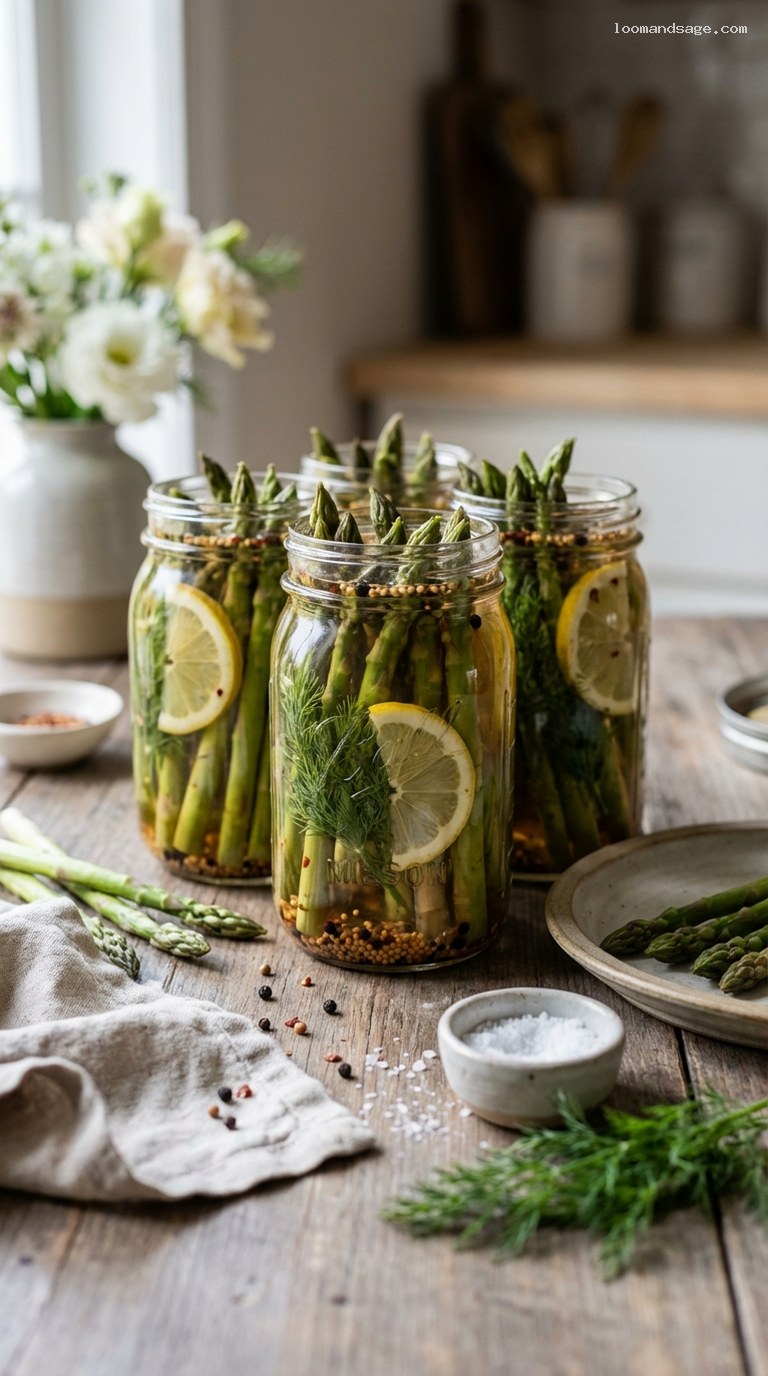
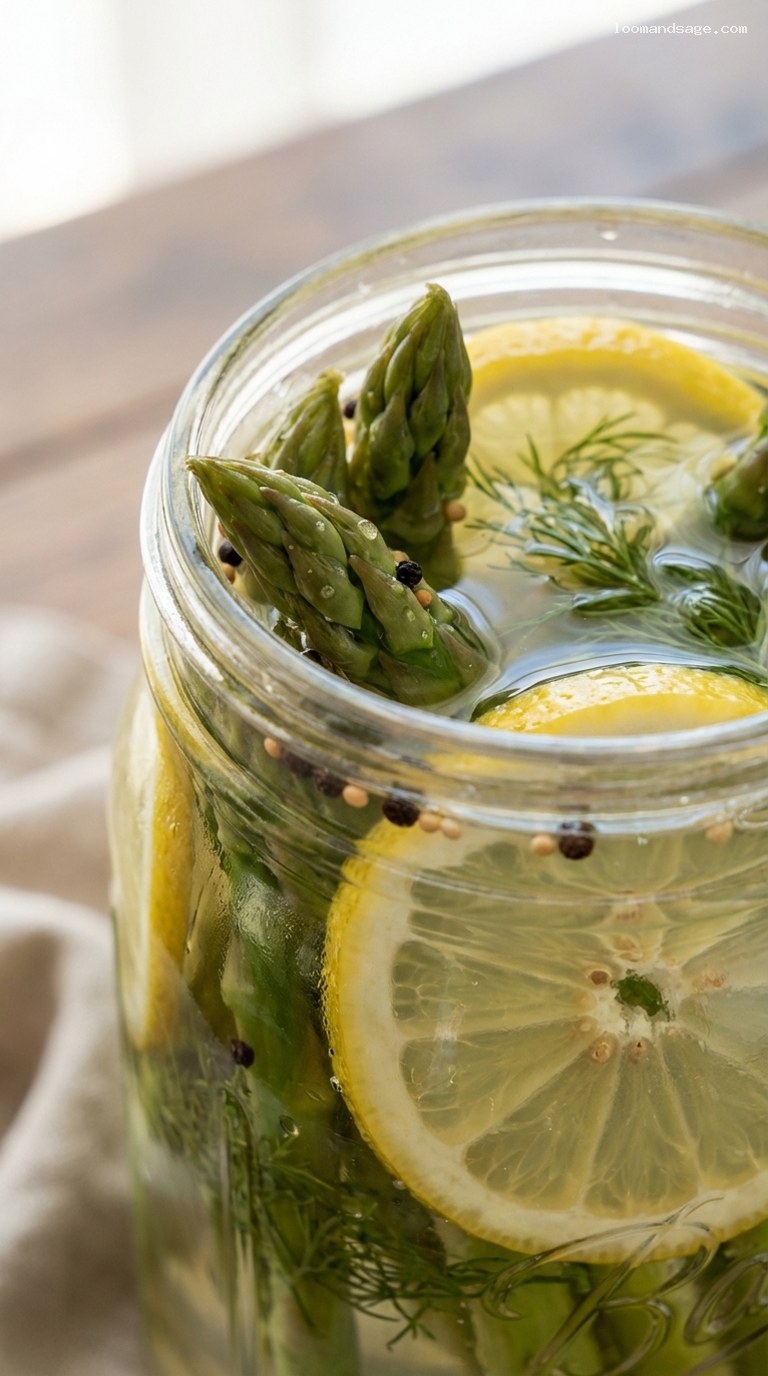
Allow at least 24 hours for the flavors to develop; the lemon and dill will become brighter and the asparagus more tangy over time. For the very best flavor, wait 3–5 days before opening. Serve chilled straight from the jar as a snack, tuck into sandwiches and wraps, or use as an eye-catching garnish on salads and Bloody Marys. The spears should be crisp-tender, with a vibrant green color, flecks of dill, and thin slices of lemon visible in the jar.
Pro Tips
- Choose medium-thick spears. Very thin asparagus can soften too much in the brine; medium to thick spears stay pleasantly crisp after pickling.
- Do not skip the ice bath. The quick blanch plus ice shock locks in color and gives you that ideal crisp-tender texture instead of rubbery or limp spears.
- Pack jars tightly. Standing the spears tightly together helps prevent floating and gives a professional, tidy look in the jar.
- Use the right salt. Pickling or kosher salt dissolves cleanly and keeps the brine clear; iodized table salt can make it cloudy and harsh-tasting.
- Adjust heat and lemon to taste. For bolder lemon flavor, add extra zest or a splash more lemon juice. For more heat, increase red pepper flakes or add a sliced fresh chile to each jar.
Variations
- Extra-Spicy Lemony Asparagus: Double the red pepper flakes and add 1–2 sliced fresh jalapeños or serranos among the jars. Keep the lemon and dill the same for a bright, spicy kick.
- Garlic-Dill Classic: Omit the lemon zest and juice, and replace 1 cup of the vinegar with apple cider vinegar for a mellower tang. Keep plenty of dill and garlic for a more traditional dill-pickle profile.
- Meyer Lemon & Herb: Use Meyer lemons if in season and replace dill with fresh tarragon or thyme sprigs for a softer, slightly floral citrus note.
Storage & Make-Ahead
Refrigerator pickled asparagus will keep for 2–3 months in the fridge as long as the spears remain fully submerged in brine and you always use clean utensils to remove them. The flavor may gradually soften over time, but they remain safe and tasty if kept cold and uncontaminated.
Properly water-bath canned jars (with good seals) can be stored unopened in a cool, dark pantry for up to 1 year. Once opened, refrigerate and enjoy within 2–3 months. This recipe is ideal for making ahead: plan to prepare the jars at least a few days before you want to serve them so the lemony dill flavors can fully develop.
Nutrition (per serving)
Approximate values per serving (about 3–4 spears with a small amount of brine): 15 calories; 0 g fat; 3 g carbohydrates; 1 g fiber; 1 g sugar; 1 g protein; about 220 mg sodium. Actual values will vary based on the exact size of the asparagus spears and how much brine you consume.