Quick Recipe Version (TL;DR)
Quick Ingredients
- 1 block (225–250 g / 8–9 oz) kefalotyri, graviera, or kasseri cheese, about 2–2.5 cm (1 in) thick
- 1/4 cup (30 g) all-purpose flour
- 1/4 tsp freshly ground black pepper
- 2–3 tbsp extra-virgin olive oil (plus 1 tbsp butter, optional)
- 1 lemon, cut into wedges
- 1 tbsp chopped fresh parsley or oregano (optional, for garnish)
- Crusty bread or warm pita, for serving
Do This
- 1. Pat cheese completely dry, then trim into a neat block about 2–2.5 cm (1 in) thick.
- 2. Mix flour and pepper on a plate. Lightly coat cheese on all sides, shaking off excess.
- 3. Heat olive oil (and butter, if using) in a small heavy skillet over medium-high heat until shimmering.
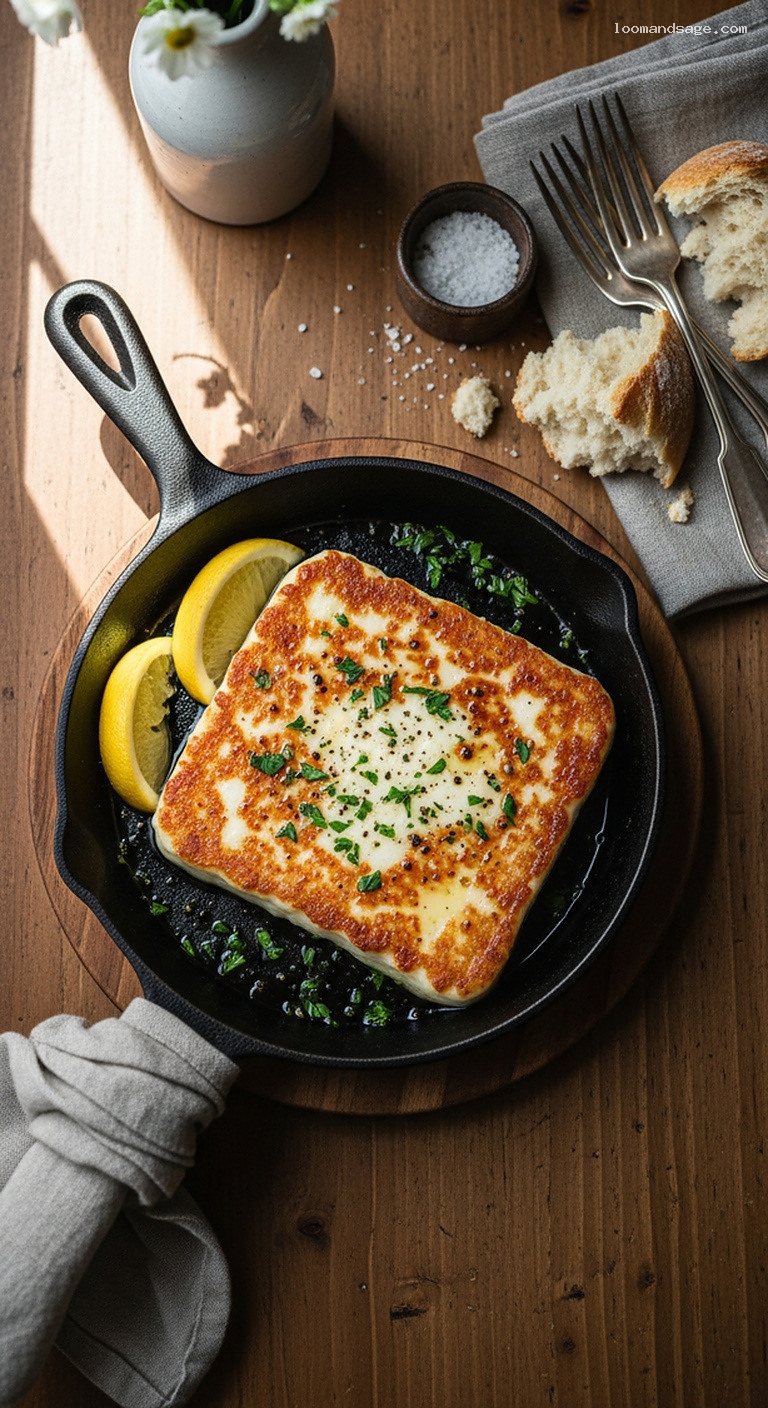
- 4. Lay floured cheese in the hot pan. Cook 2–3 minutes until deep golden and crisp on the first side.
- 5. Carefully flip; cook another 2–3 minutes until the second side is golden and the cheese feels soft and melty inside.
- 6. Transfer immediately to a warm small plate or skillet. Squeeze fresh lemon juice over the top.
- 7. Garnish with herbs, add extra lemon wedges, and serve at once with crusty bread or pita.
Why You’ll Love This Recipe
- It turns a simple block of cheese into a restaurant-worthy, dramatic appetizer in under 15 minutes.
- Crisp, golden crust on the outside and gooey, stretchy cheese on the inside makes it irresistibly indulgent.
- Uses just a handful of easy-to-find ingredients and one pan, so cleanup is minimal.
- Perfect for entertaining: bring it sizzling to the table and finish with a generous squeeze of lemon.
Grocery List
- Produce: 1 lemon, fresh parsley or oregano (optional)
- Dairy: 1 block kefalotyri, graviera, or kasseri cheese; unsalted butter (optional)
- Pantry: All-purpose flour, extra-virgin olive oil, black pepper, crusty bread or pita
Full Ingredients
For the Saganaki
- 1 block (225–250 g / 8–9 oz) kefalotyri, graviera, or kasseri cheese, about 2–2.5 cm (1 in) thick
- 1/4 cup (30 g) all-purpose flour
- 1/4 tsp freshly ground black pepper
- 2–3 tbsp extra-virgin olive oil (enough to coat the bottom of the pan in a thin layer)
- 1 tbsp unsalted butter, optional, for richer flavor and deeper browning
To Finish and Serve
- 1 lemon, cut into wedges (plus extra for serving, if desired)
- 1–2 tbsp fresh parsley or fresh oregano, finely chopped (optional)
- Crusty country bread or warm pita, for dipping and scooping
Optional Flambé (Classic Restaurant-Style)
- 1–2 tbsp ouzo or brandy (optional; for experienced cooks comfortable with flambéing only)
Step-by-Step Instructions
Step 1: Choose and Prep the Cheese
Pick a firm Greek cheese that can handle high heat without melting into a puddle. Traditional choices are kefalotyri, graviera, or kasseri. Avoid very soft cheeses like feta for this pan-fried version.
Cut the cheese into a block roughly 225–250 g (8–9 oz) and about 2–2.5 cm (1 in) thick. A uniform thickness helps it cook evenly and get melty inside just as the crust turns golden. Pat the cheese very dry on all sides with paper towels; this step is crucial for a crisp crust and to reduce splattering.
Step 2: Dredge the Cheese in Seasoned Flour
On a plate, combine the all-purpose flour and black pepper, stirring to distribute the seasoning evenly. Place the cheese block in the flour and gently press to coat. Turn and roll it so all sides, including the edges, are lightly but thoroughly covered.
Shake off any excess flour; you want a thin, even layer, not clumps. Set the floured cheese on a clean plate while you heat the pan. The flour will hydrate slightly and adhere better, forming a beautiful golden crust once fried.
Step 3: Heat the Pan and Fat
Use a small heavy skillet, about 15–18 cm (6–7 in) wide. A cast-iron, carbon steel, or high-quality nonstick pan works best. Add the olive oil to coat the bottom of the pan in a thin but generous layer (about 2–3 tbsp). If using butter for extra flavor, add it now as well.
Set the pan over medium-high heat. Allow the oil to heat until it is shimmering and just starting to ripple, but not smoking. To test if the oil is ready, sprinkle in a tiny pinch of flour; it should sizzle immediately. Properly heated oil is key to a crisp crust that does not soak up too much fat.
Step 4: Sear the First Side Until Deep Golden
Carefully lay the floured cheese into the hot pan, placing it away from you to avoid splashes. Do not move it once it hits the pan; letting it sit undisturbed helps form an even crust.
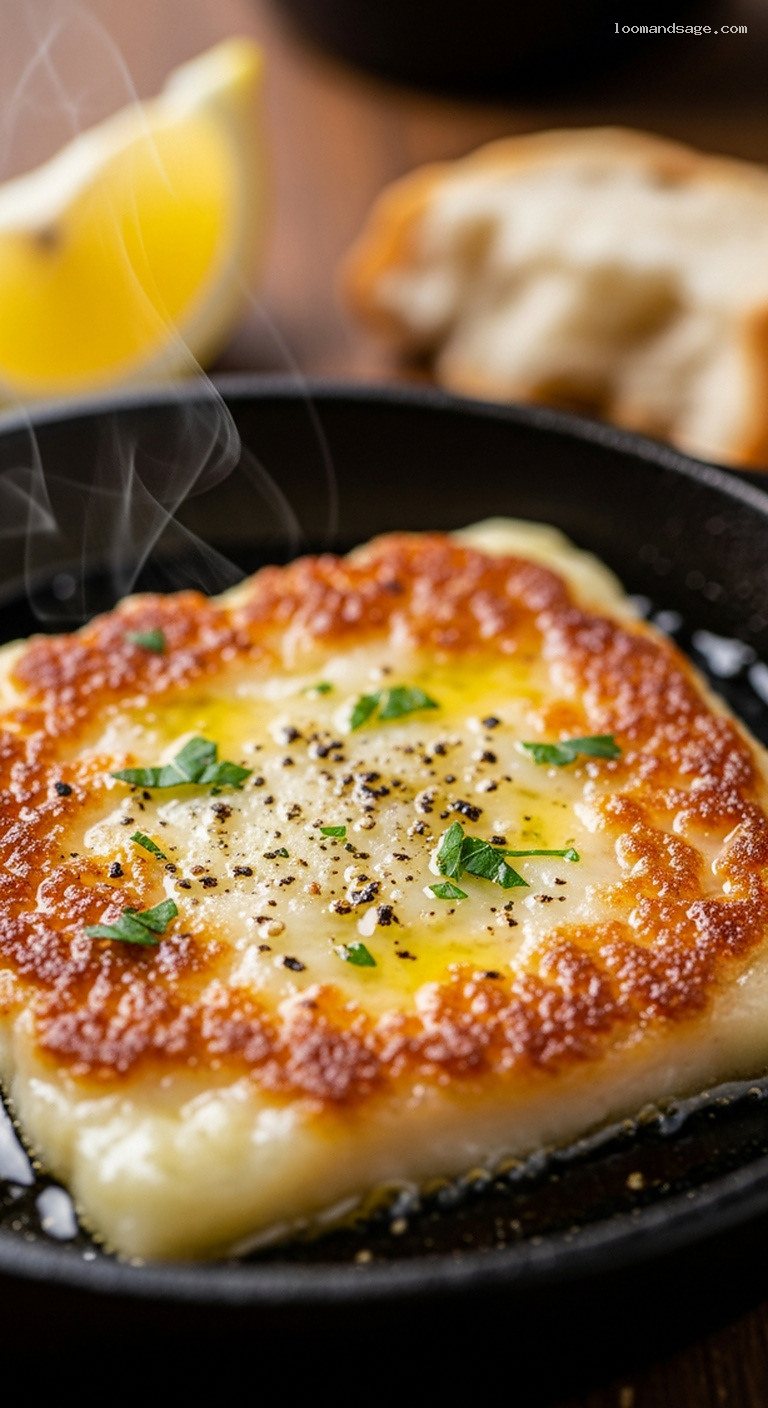
Cook for 2–3 minutes, watching the edges. The cheese should turn a rich golden color and smell nutty and toasty. If it darkens too quickly, reduce the heat slightly; if it stays pale after 3 minutes, increase the heat a bit. Gently shake the pan near the end of this time; the cheese should release easily when the crust has formed.
Step 5: Flip and Finish Cooking
Using a thin spatula, carefully slide under the cheese and flip it in one confident motion. Cook the second side for another 2–3 minutes, again without moving it too much.
You are looking for both sides to be deep golden and crisp while the cheese inside feels soft and slightly squishy when you nudge it with the spatula. If the outside is browned but the center still feels firm, lower the heat to medium and cook for an extra 1–2 minutes to let the interior soften without burning the crust.
Step 6: Optional Flambé (For Experienced Cooks)
If you want the classic restaurant-style “flaming” saganaki and you are comfortable flambéing: turn off any overhead exhaust fan, keep a tight-fitting lid nearby, and ensure there are no flammable items close to the stove.
With the pan still on medium heat, carefully drizzle 1–2 tbsp ouzo or brandy around the cheese in the pan (not directly from the bottle). Tilt the pan slightly toward the flame or use a long match to ignite the alcohol. A flame will rise briefly. Let it burn off completely (10–20 seconds) without moving the pan, then turn off the heat. If the flame feels too strong, carefully cover the pan with the lid to extinguish it.
Step 7: Finish with Lemon and Serve Immediately
Transfer the cheese to a pre-warmed small plate or serve directly in the skillet for a rustic look. Immediately squeeze 1–2 lemon wedges generously over the top; you should hear a gentle sizzle as the juice hits the hot crust. The acidity cuts through the richness and is essential to the classic flavor.
Sprinkle with chopped fresh parsley or oregano, if using. Add extra lemon wedges around the cheese and serve at once with slices of crusty bread or warm pita. Encourage everyone to dive in while the cheese is still hot, stretchy, and irresistibly melty inside.
Pro Tips
- Thickness matters: Aim for roughly 2–2.5 cm (1 in) thickness. Thinner pieces brown before the inside softens, while very thick pieces can under-melt.
- Dry cheese = crispy crust: Blot the cheese very well; surface moisture causes sputtering and prevents the flour from crisping nicely.
- Do not crowd the pan: Cook one block at a time in a small pan so the oil stays hot and the crust forms quickly.
- Watch the heat: Medium-high is ideal. If the oil smokes or the flour instantly turns dark, the pan is too hot; if there is little sizzle, it is too cool.
- Serve immediately: Saganaki is best straight from the pan. As it cools, the cheese firms and loses that luscious, gooey texture.
Variations
- No-flambé classic: Skip the ouzo or brandy entirely for a simple home-style saganaki. Just finish with plenty of lemon juice and herbs.
- Herb-crusted saganaki: Mix 1–2 tsp dried oregano or thyme into the flour before dredging for an extra aromatic crust.
- Gluten-free version: Replace all-purpose flour with fine rice flour or a gluten-free all-purpose blend; the technique and timing remain the same.
Storage & Make-Ahead
Saganaki is at its absolute best when cooked and eaten immediately; it is not a make-ahead style dish in the traditional sense. However, you can prep a few elements in advance:
Cut the cheese block to size, pat it dry, and store it tightly wrapped in the refrigerator for up to 2 days. Dredge in flour just before cooking for the crispiest crust. You can also pre-cut lemon wedges and herbs earlier in the day and refrigerate them, covered.
If you do have leftovers, cool them completely, then store in an airtight container in the fridge for up to 1 day. Reheat in a lightly oiled skillet over medium heat for 2–3 minutes per side until warmed through and re-crisped. The texture will not be quite as gooey as fresh saganaki, but it will still be tasty. Freezing is not recommended, as the cheese can turn grainy and weep moisture when thawed.
Nutrition (per serving)
Approximate values per serving (1/4 of the recipe, without bread): about 260 calories; 19 g fat (9 g saturated); 3 g carbohydrates; 16 g protein; 0 g fiber; 650 mg sodium. Values will vary depending on the specific cheese used, the exact amount of oil absorbed during frying, and how much lemon juice you add.