
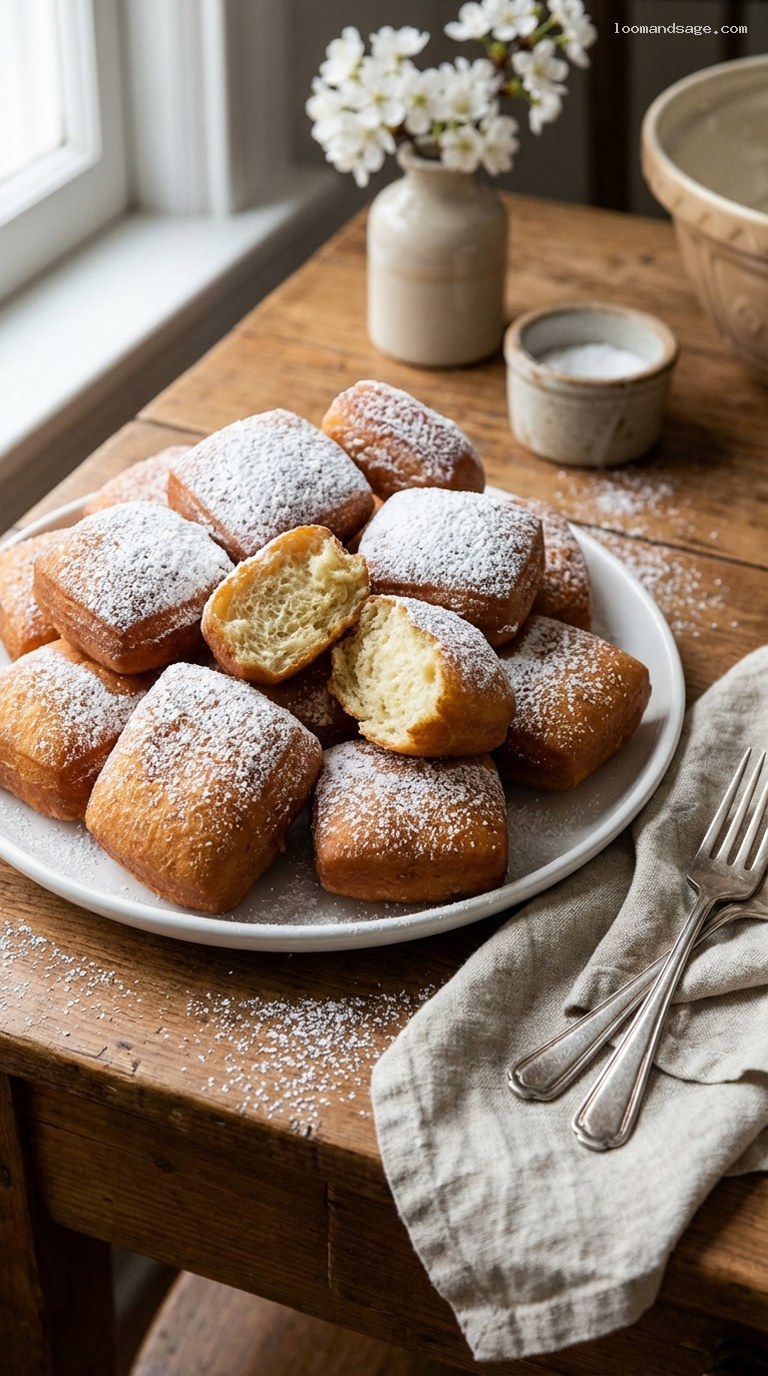
Quick Recipe Version (TL;DR)
Quick Ingredients
- 2 medium russet potatoes (about 12 oz / 340 g), peeled and cubed
- 1 cup (240 ml) whole milk, warmed to 105–115°F (40–46°C)
- 1/2 cup (100 g) granulated sugar
- 2 1/4 tsp (7 g) active dry or instant yeast
- 1/2 cup (113 g) unsalted butter, melted and cooled slightly
- 2 large eggs, room temperature
- 1 1/2 tsp fine salt
- 1/2 tsp ground nutmeg (optional)
- 4 1/2–5 cups (540–600 g) all-purpose flour
- 2–3 quarts (2–3 L) neutral frying oil
- 2 cups (240 g) powdered sugar, for coating
Do This
- 1. Boil potatoes until very tender, drain well, and mash until smooth. Cool until just warm.
- 2. Stir warm milk, sugar, and yeast; let stand 5–10 minutes until foamy. Beat in mashed potatoes, melted butter, eggs, salt, and nutmeg.
- 3. Mix in 4 1/2 cups flour to form a soft, slightly sticky dough, knead 5–7 minutes until smooth, adding a bit more flour only if needed.
- 4. Let dough rise in a greased bowl, covered, until doubled, about 1–1 1/2 hours.
- 5. Roll dough 1/2 inch thick, cut into squares or doughnut shapes, transfer to floured parchment, cover, and let rise again until puffy, 30–45 minutes.
- 6. Heat oil to 350°F (175°C). Fry fasnachts 1–2 minutes per side until deep golden brown; drain on a rack or paper towels.
- 7. While still warm, toss generously in powdered sugar and serve immediately.
Why You’ll Love This Recipe
- Pillowy-soft, yeast-raised doughnuts with old-fashioned Pennsylvania Dutch flavor and texture.
- Mashed potatoes in the dough keep them incredibly tender and moist, even after cooling.
- Simple, familiar ingredients and straightforward steps, perfect for home kitchens.
- Traditionally made just before Lent, but absolutely irresistible any time they are hot and fresh.
Grocery List
- Produce: 2 medium russet potatoes
- Dairy: Whole milk, unsalted butter, large eggs
- Pantry: All-purpose flour, granulated sugar, powdered sugar, active dry or instant yeast, fine salt, ground nutmeg (optional), neutral frying oil (vegetable, canola, or peanut)
Full Ingredients
For the Potato Yeast Dough
- 2 medium russet potatoes, peeled and cut into 1-inch chunks (about 12 oz / 340 g total)
- Water, for boiling potatoes
- 1 cup (240 ml) whole milk, warmed to 105–115°F (40–46°C)
- 1/2 cup (100 g) granulated sugar
- 2 1/4 tsp (7 g, one packet) active dry or instant yeast
- 1/2 cup (113 g) unsalted butter, melted and cooled until just warm
- 2 large eggs, at room temperature
- 1 1/2 tsp fine sea salt or table salt
- 1/2 tsp ground nutmeg (optional, but traditional and delicious)
- 4 1/2–5 cups (540–600 g) all-purpose flour, plus more for dusting
For Frying
- 2–3 quarts (2–3 L) neutral oil for deep-frying (vegetable, canola, or peanut oil)
For Finishing
- 2 cups (240 g) powdered sugar, sifted if lumpy
- Optional: 1/2 tsp ground cinnamon mixed into the powdered sugar
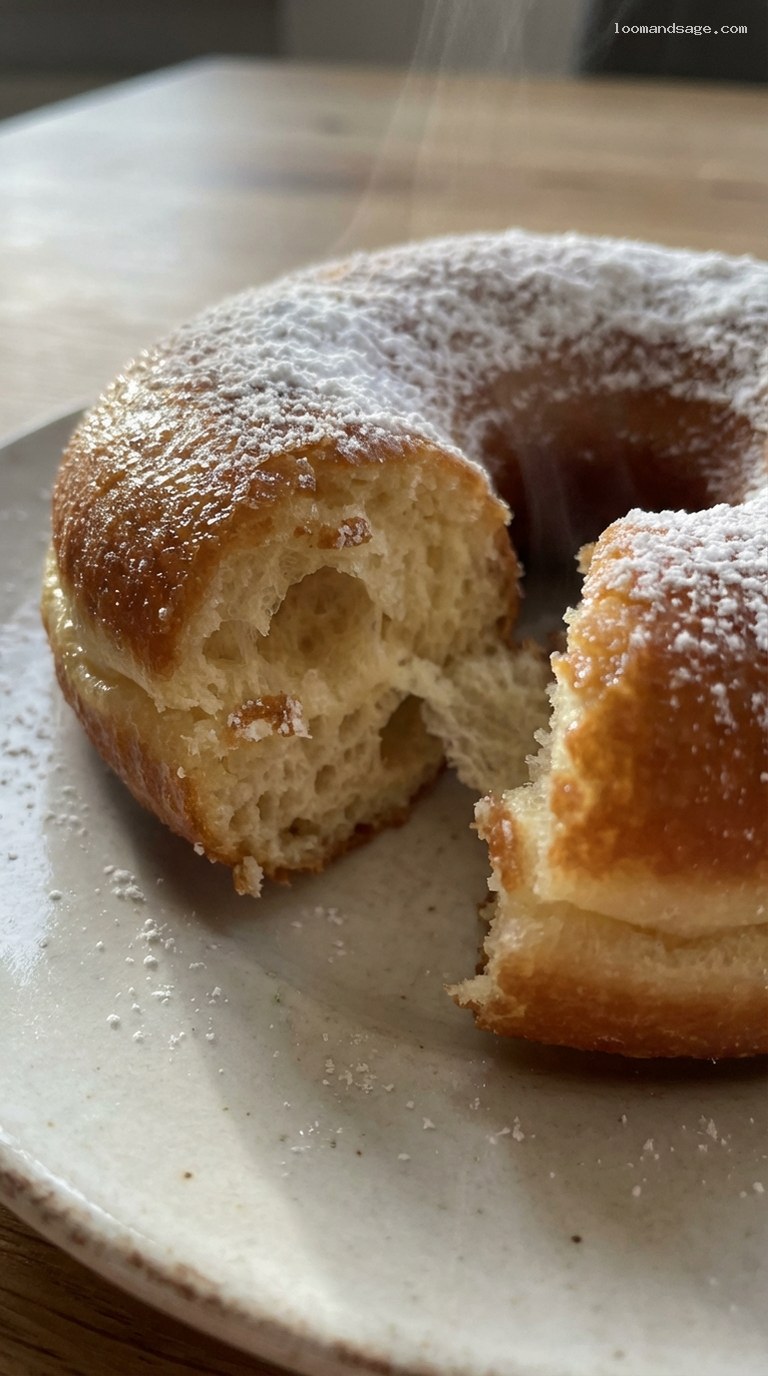
Step-by-Step Instructions
Step 1: Cook and Mash the Potatoes
Place the peeled, cubed potatoes in a medium saucepan and cover with cold water by about 1 inch. Add a pinch of salt if you like. Bring to a boil over medium-high heat, then reduce to a gentle simmer and cook until the potatoes are very tender, 12–15 minutes.
Drain thoroughly in a colander, shaking off as much moisture as possible. Return the potatoes to the warm pot and mash until completely smooth and lump-free. You should have about 1 cup of mashed potatoes. Let cool until just warm (not hot) before using, about 10–15 minutes. Warm potatoes are fine; hot potatoes can kill the yeast.
Step 2: Activate the Yeast and Make the Wet Base
In a large mixing bowl (or the bowl of a stand mixer), combine the warm milk (105–115°F / 40–46°C) and granulated sugar. Stir to dissolve. Sprinkle the yeast over the top and let it sit for 5–10 minutes until it looks foamy and creamy on the surface. If it does not foam, your yeast may be inactive; start over with fresh yeast.
Whisk in the mashed potatoes, melted (but not hot) butter, eggs, salt, and nutmeg (if using). Mix until smooth; a few tiny potato bits are fine, but it should look like a thick batter. This mixture will give your fasnachts their characteristic tender, slightly chewy texture.
Step 3: Add Flour and Knead the Dough
Add 4 1/2 cups (540 g) of the flour to the bowl. If using a stand mixer, fit it with the dough hook and mix on low until a soft dough forms and pulls away from the sides, 3–4 minutes. If mixing by hand, stir with a sturdy spoon until a shaggy dough forms, then turn out onto a lightly floured surface and knead.
Knead the dough (by machine on low speed, or by hand) for 5–7 minutes, adding only enough extra flour (up to 1/2 cup / 60 g) to keep it from sticking excessively. The finished dough should be smooth, elastic, and soft, with a slight tackiness but not truly sticky. Avoid adding too much flour; a softer dough makes lighter fasnachts.
Step 4: First Rise (Let the Dough Double)
Lightly oil or butter a large clean bowl. Shape the dough into a ball, place it in the bowl, and turn once to coat the surface with a thin layer of fat. Cover the bowl tightly with plastic wrap or a clean kitchen towel.
Let the dough rise in a warm, draft-free spot until doubled in size, about 1–1 1/2 hours. A slightly warm oven (turned off) with the light on works well. When ready, the dough will look puffed, and a gentle finger press will leave an indentation that slowly fills in.
Step 5: Roll, Cut, and Second Rise
Lightly flour your work surface and turn out the risen dough. Gently deflate it by pressing down with your hands. Roll it out with a floured rolling pin to about 1/2 inch (1.25 cm) thickness.
For traditional Pennsylvania Dutch fasnachts, use a sharp knife or bench scraper to cut the dough into 2 1/2-inch (6–7 cm) squares or diamonds. You can also cut them into rounds with a 2 1/2–3 inch (6–7.5 cm) cutter and optionally cut out a small center hole, doughnut-style.
Transfer the pieces to parchment-lined baking sheets lightly dusted with flour, leaving a little space between each. Cover loosely with lightly greased plastic wrap or a clean towel, and let rise until noticeably puffy, 30–45 minutes. They will not quite double, but should look light and airy.
Step 6: Fry Until Golden and Cooked Through
Toward the end of the second rise, pour 2–3 inches (5–7 cm) of oil into a heavy, deep pot or Dutch oven. Attach a deep-fry thermometer and heat over medium heat to 350°F (175°C). Line a baking sheet or tray with a wire rack or several layers of paper towels for draining.
Working in batches to avoid crowding, gently lift the risen dough pieces (using your hands or a flat spatula) and slip them into the hot oil. Fry 3–4 fasnachts at a time, depending on pot size. Fry for 1–2 minutes per side, turning once, until deep golden brown and well puffed. Adjust heat as needed to maintain 340–360°F (170–182°C).
Use a slotted spoon or spider to transfer the fried fasnachts to the prepared rack or paper towels to drain briefly. Let excess oil drip off for 1–2 minutes before coating in sugar.
Step 7: Coat in Powdered Sugar and Serve Warm
Place the powdered sugar (and cinnamon, if using) in a shallow bowl or paper bag. While the fasnachts are still warm but cool enough to handle, roll them generously in powdered sugar or add a few at a time to the bag and shake gently to coat all sides.
Serve immediately while warm and pillowy. Fasnachts are at their absolute best within the first couple of hours of frying, when the centers are soft and the sugary coating is just barely melting into the crust.
Pro Tips
- Keep the dough soft: Resist the urge to add too much flour. A slightly tacky dough yields lighter, fluffier fasnachts.
- Control the oil temperature: Oil that is too cool makes greasy doughnuts; too hot and they will brown before cooking through. Aim for 350°F (175°C) and adjust your burner as needed.
- Test one first: Fry a single fasnacht to check browning time and doneness. Cut it open to ensure the center is cooked, then adjust frying time or temperature accordingly.
- Work gently with risen dough: Handle the cut pieces carefully when transferring to hot oil so you do not deflate them and lose that beautiful rise.
- Powder while warm: The powdered sugar clings best when the fasnachts are warm, not hot and not completely cooled.
Variations
- Granulated Sugar Coating: Instead of powdered sugar, toss warm fasnachts in granulated sugar, or in a mix of sugar and cinnamon for a subtle crunch and spicy aroma.
- Plain Lenten Style: For a more traditional pre-Lent treat, skip the sugar coating and serve them plain or split and spread with butter or syrup.
- Citrus Scented: Add 1 tsp grated lemon zest or orange zest to the dough along with the nutmeg for a light, bright flavor that complements the rich fried dough.
Storage & Make-Ahead
Fasnachts are best enjoyed the day they are made, ideally within a few hours of frying. If you have leftovers, store them in an airtight container at room temperature for up to 1 day. The sugar may melt slightly; you can dust with a bit more powdered sugar just before serving.
To refresh, warm fasnachts in a 300°F (150°C) oven for 5–8 minutes until soft and slightly warmed through, then re-dust with powdered sugar if desired.
For make-ahead prep, you can refrigerate the shaped dough after the first rise: cover the cut pieces well and refrigerate up to 12 hours. Allow them to sit at room temperature until puffy (30–60 minutes, depending on your kitchen temperature) before frying. Do not refrigerate the fried fasnachts themselves, as this tends to dry them out.
Nutrition (per serving)
Approximate values for 1 serving (2 fasnachts), assuming 10 servings total: about 380–420 calories; 18–22 g fat; 48–52 g carbohydrates; 3–4 g protein; 2–3 g saturated fat; 220–260 mg sodium; 12–18 g sugar. Actual values will vary based on oil absorption, exact size of each fasnacht, and how generously you coat with sugar.