
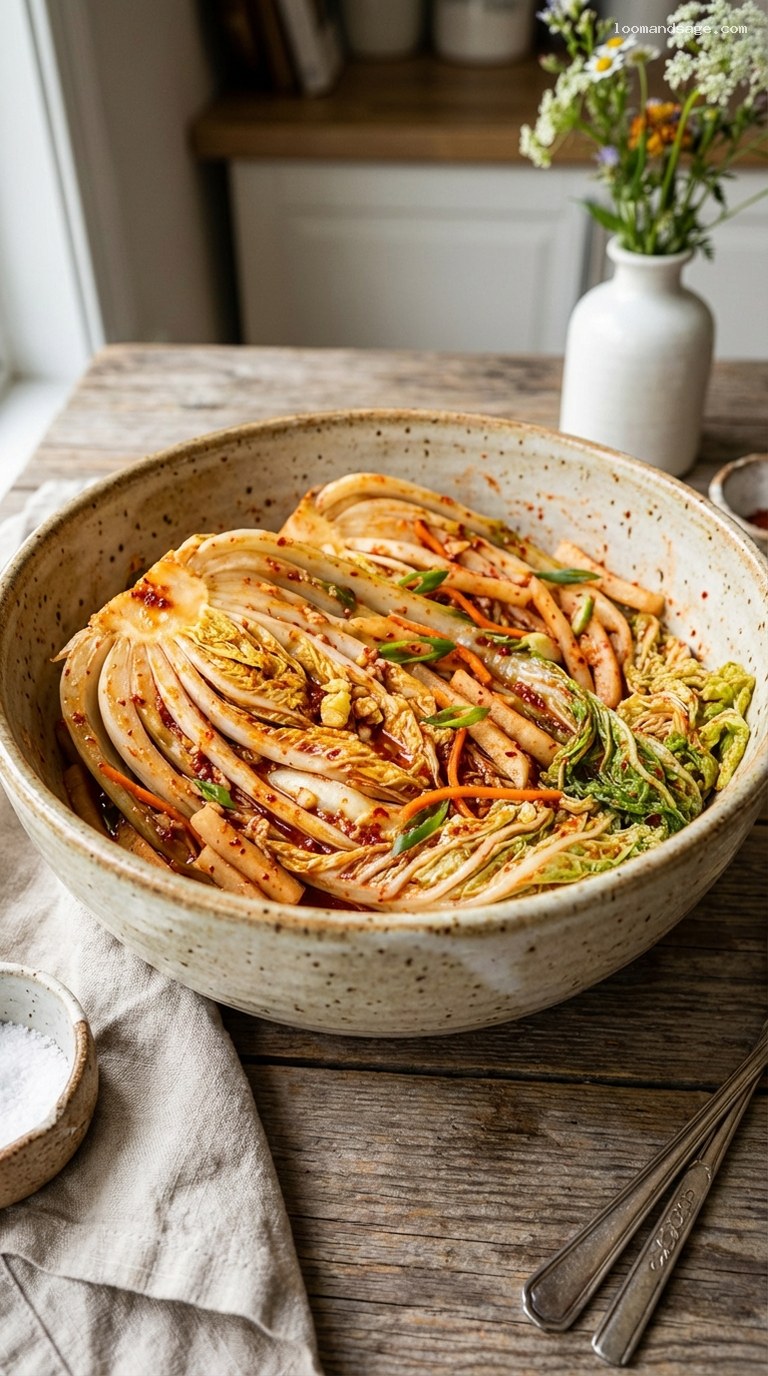
Quick Recipe Version (TL;DR)
Quick Ingredients
- 1 medium napa cabbage (2–2.5 lb / 900–1,100 g)
- 8 oz (225 g) Korean radish or daikon, peeled
- 1/4 cup (60 g) kosher or coarse sea salt (for salting)
- 5 cloves garlic, minced
- 1 in (2.5 cm) ginger, minced
- 3 scallions, thinly sliced
- 1/3–1/2 cup (20–30 g) gochugaru (Korean red pepper flakes), to taste
- 3 Tbsp fish sauce or 2 Tbsp soy sauce + 1 Tbsp mild miso (vegan)
- 1 Tbsp sugar (or grated apple/pear)
- 2–3 Tbsp water, as needed to loosen paste
Do This
- 1. Cut napa cabbage into bite-size pieces, rinse, then toss with salt and a little water. Let sit 30–45 minutes, tossing every 10–15 minutes until wilted.
- 2. Julienne the radish (and carrot if using) and slice scallions. Set aside.
- 3. Rinse cabbage very well 2–3 times to remove excess salt. Drain in a colander for at least 10 minutes.
- 4. In a bowl, mix garlic, ginger, gochugaru, fish sauce (or umami substitute), sugar, and water into a thick paste. Stir in scallions and radish.
- 5. Add drained cabbage to the bowl and gently massage until every piece is evenly coated with the red paste.
- 6. Pack tightly into a clean jar, pressing down to remove air pockets. Leave 1–2 inches headspace. Ferment at cool room temperature 12–24 hours, then refrigerate. Eat anytime from fresh (same day) to pleasantly tangy (3–5 days).
Why You’ll Love This Recipe
- Fast, homestyle method that gives you delicious kimchi with minimal effort.
- Uses easy-to-find ingredients and offers simple substitutions for a vegan version.
- Perfect as a spicy, crunchy side dish, in fried rice, or on eggs, noodles, and sandwiches.
- Scales well and keeps for weeks, so you can make a batch and enjoy it again and again.
Grocery List
- Produce: 1 medium napa cabbage, Korean radish or daikon, scallions, garlic, fresh ginger, carrot (optional), Asian pear or apple (optional)
- Dairy: None
- Pantry: Kosher or coarse sea salt, gochugaru (Korean red pepper flakes) or mild chili flakes, fish sauce (or soy sauce and miso for vegan), sugar or sweetener of choice
Full Ingredients
Vegetables
- 1 medium napa cabbage (2–2.5 lb / 900–1,100 g)
- 8 oz (225 g) Korean radish (mu) or daikon, peeled and cut into matchsticks
- 3 scallions, trimmed and thinly sliced (whites and greens)
- 1 small carrot, peeled and cut into matchsticks (optional, for extra crunch and color)
For Salting the Cabbage
- 1/4 cup (60 g) kosher salt or coarse sea salt (non-iodized)
- 4 cups (960 ml) cold water, for lightly wetting the cabbage and helping the salt distribute
Seasoning Paste
- 5 cloves garlic, finely minced (about 2 1/2 Tbsp)
- 1 in (2.5 cm) piece fresh ginger, peeled and finely minced (about 1 Tbsp)
- 1/3–1/2 cup (20–30 g) gochugaru (Korean red pepper flakes), to taste
- Use 1/3 cup for medium heat, 1/2 cup for spicier kimchi.
- If using regular chili flakes instead, start with 2 Tbsp and adjust.
- 3 Tbsp fish sauce
- Vegan alternative: 2 Tbsp soy sauce + 1 Tbsp mild white or yellow miso, in place of fish sauce
- 1 Tbsp sugar (white, brown, or cane) or 2 Tbsp grated Asian pear or apple for natural sweetness
- 2–3 Tbsp water, as needed to make a spreadable paste
Optional Umami Boosters (Use Any You Like)
- 1 Tbsp salted fermented shrimp (saeujeot), finely chopped
- 1 tsp fish sauce extra, for deeper savoriness
- 1 tsp toasted sesame seeds for a nutty finish (stir in right before serving, not during fermentation)
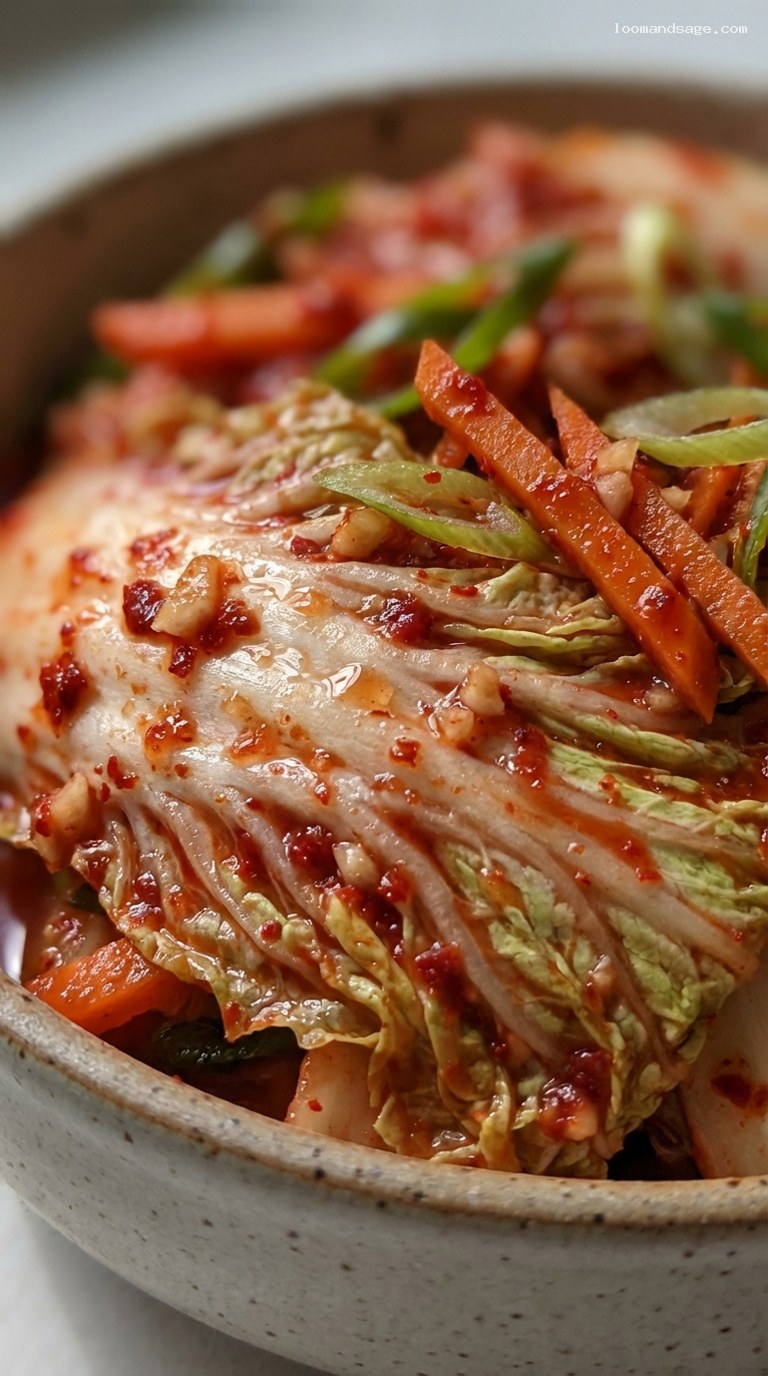
Step-by-Step Instructions
Step 1: Prep and cut the napa cabbage
Remove any wilted or damaged outer leaves from the napa cabbage. Rinse the cabbage under cold running water to remove any dirt, especially near the base.
Slice the cabbage lengthwise into quarters through the core. Cut out the tough core from each quarter. Then cut the cabbage crosswise into bite-size pieces about 1–1 1/2 inches (2.5–4 cm) wide. Place all the cut cabbage into a large mixing bowl.
Step 2: Salt the cabbage to draw out moisture
Sprinkle the 1/4 cup (60 g) salt evenly over the cabbage. Pour in about 4 cups (960 ml) cold water to help distribute the salt and slightly moisten the leaves. Use your hands to gently toss and massage the cabbage so the salt and water coat everything.
Let the cabbage sit at room temperature for 30–45 minutes. Every 10–15 minutes, toss and massage it again so it wilts evenly. You are aiming for the cabbage to soften, release liquid, and become flexible but still crunchy when you bite into a piece.
Step 3: Rinse and drain the cabbage
When the cabbage is wilted and tastes pleasantly salty (but not overwhelmingly so), pour it into a colander. Rinse thoroughly under cold running water, using your hands to turn and gently squeeze the cabbage to remove excess salt. Rinse 2–3 times until it tastes just lightly seasoned.
Let the cabbage drain in the colander for at least 10 minutes while you prepare the seasoning paste. A bit of extra draining helps prevent overly watery kimchi.
Step 4: Prepare the radish, scallions, and aromatics
While the cabbage drains, cut the Korean radish (or daikon) and carrot (if using) into thin matchsticks, about 1 1/2–2 inches (4–5 cm) long. Place them in a large clean mixing bowl.
Slice the scallions thinly on a slight angle and add them to the bowl. Mince the garlic and ginger finely if you have not already done so.
Step 5: Mix the seasoning paste
To the bowl with radish, carrot, and scallions, add the minced garlic and ginger, gochugaru, fish sauce (or soy sauce and miso if using the vegan option), sugar or grated fruit, and 2–3 Tbsp water. If you are using salted shrimp or extra fish sauce for more umami, add them now as well.
Use a spoon or gloved hand to mix everything into a thick, vibrant red paste. It should be spreadable, not soupy. If it feels too dry or powdery, add another tablespoon of water at a time until it forms a cohesive paste that clings to the vegetables.
Step 6: Combine cabbage with the paste
Shake any excess water from the drained cabbage, then transfer it to the bowl with the seasoning paste. Using clean hands (food-safe gloves are helpful because of the chiles), gently massage and toss the cabbage with the paste until every piece is evenly coated. Take your time so the cabbage, radish, and scallions are well distributed and look consistently red.
Taste a small piece. It should be quite salty and intense at this stage, because fermentation will mellow and balance the flavors. If it seems too bland, you can add a small splash (1–2 tsp) of fish sauce or soy sauce; if it is very salty, do not worry yet, as the brine that forms will dilute some of that intensity.
Step 7: Pack into jars and ferment
Pack the kimchi mixture firmly into one or more clean glass jars or a non-reactive container. Press down with your fist or a spoon as you go to remove air pockets and help draw out liquid. The vegetables should start releasing brine and look slightly wet.
Leave about 1–2 inches (2.5–5 cm) of headspace at the top of the jar to allow for expansion during fermentation. Wipe the rim clean, then loosely cover with a lid (not screwed on super tight) so gas can escape, or use a fermentation lid if you have one.
Let the jar sit at cool room temperature (68–72°F / 20–22°C) for 12–24 hours. Place it on a plate or tray in case any brine bubbles over. Once or twice during this time, open the jar briefly to release gas and press the vegetables down so they stay submerged in their own brine.
After 12–24 hours, taste a piece. If you like a fresher, lightly fermented flavor, move the kimchi to the refrigerator now. If you prefer more tang, leave it at room temperature another 12–24 hours, tasting daily, then refrigerate when it reaches your ideal sourness.
The kimchi will continue to slowly ferment in the fridge and usually tastes best between days 3 and 7 for this quick style.
Pro Tips
- Use non-iodized salt: Iodized table salt can affect fermentation flavor and make the brine cloudy. Stick with kosher or coarse sea salt.
- Wear gloves: Gochugaru and garlic are potent. Gloves protect your skin and prevent accidental chili in your eyes.
- Adjust heat to taste: Start with less gochugaru if you are unsure, then add more after tasting the paste. It is easier to add heat than to take it away.
- Keep it submerged: During fermentation, the vegetables should stay under the brine as much as possible. Press them down daily to reduce the risk of surface mold.
- For super-quick kimchi salad: After mixing with the seasoning paste, you can eat it right away as a fresh kimchi (geotjeori). It will be bright, crisp, and less sour.
Variations
- Vegan kimchi: Replace fish sauce with 2 Tbsp soy sauce plus 1 Tbsp mild miso. Add a splash of extra soy sauce if you want more saltiness after tasting the paste.
- Extra-garlicky or mild: Add up to 2 more cloves of garlic for a bolder flavor, or reduce to 3 cloves and 1/2 in ginger if you prefer a gentler profile.
- Fruit-forward: Use grated Asian pear or apple instead of sugar for natural sweetness and a softer, rounder flavor. This is especially nice if you like a slightly sweeter kimchi.
Storage & Make-Ahead
Store the kimchi in tightly covered glass jars or food-safe containers. After the initial 12–48 hours of room-temperature fermentation (depending on how tangy you like it), keep it refrigerated.
In the refrigerator, this quick kimchi is best within 3–4 weeks. It will gradually become more sour and softer over time. If you see a bit of harmless white film (kahm yeast) on the surface, you can skim it off; discard the kimchi only if you see fuzzy mold, smell anything off, or notice an unpleasant slimy texture.
You can make this kimchi entirely ahead: mix, pack, ferment to your liking, and chill. It is often at its best flavor between day 3 and day 7 after refrigeration. Older, more sour kimchi is perfect for stews, pancakes, and fried rice.
Nutrition (per serving)
Approximate values per 1/2-cup (about 100 g) serving, assuming 10 servings total: about 25–30 calories, 1 g protein, 5 g carbohydrates, 1 g fiber, 0–1 g fat, and roughly 500–700 mg sodium (depending on how much salt is rinsed away and how much fish sauce or soy sauce is used). Values will vary based on exact ingredients and fermentation time.