
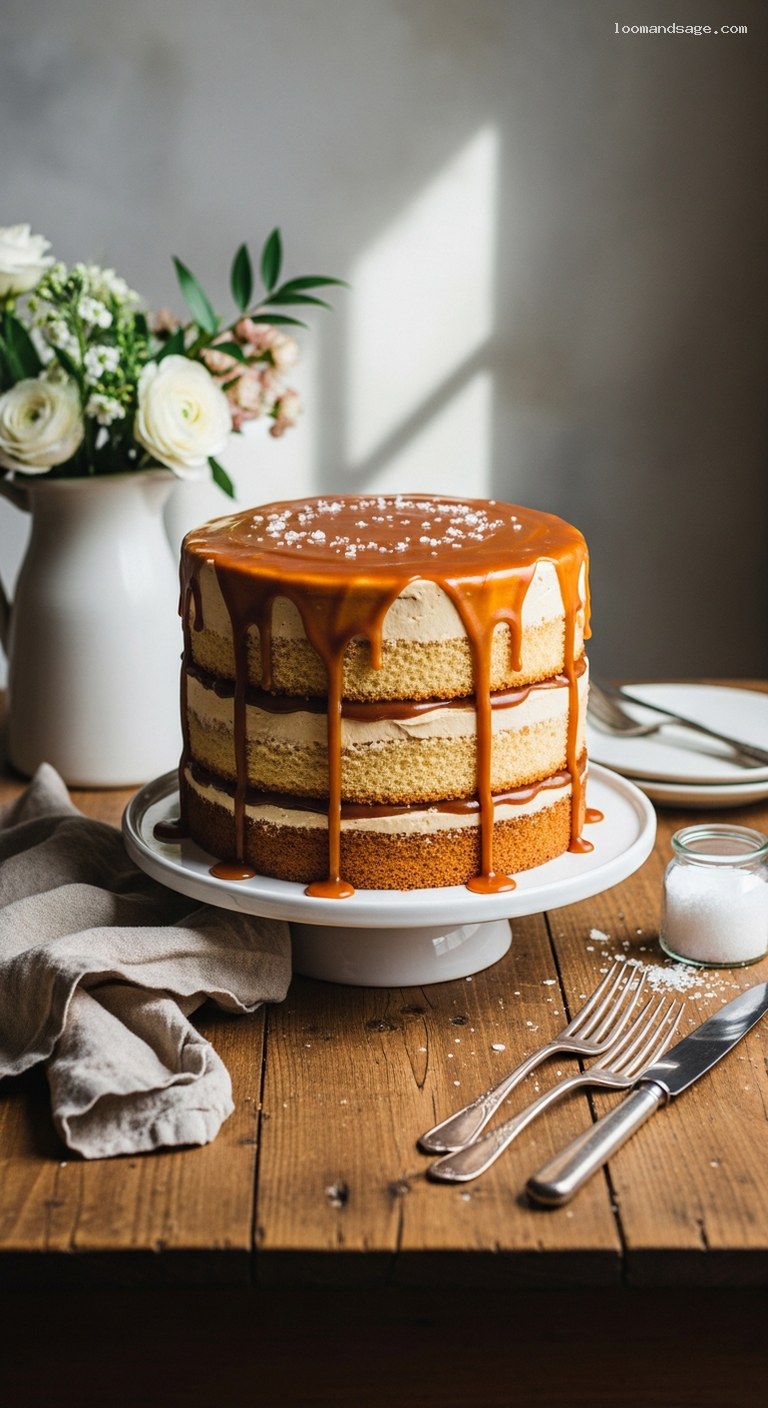
Quick Recipe Version (TL;DR)
Quick Ingredients
- Cake: 2 3/4 cups (330 g) all-purpose flour, 2 1/2 tsp baking powder, 1/2 tsp baking soda, 3/4 tsp fine sea salt, 1 cup (230 g) unsalted butter (soft), 1 3/4 cups (350 g) sugar, 3 large eggs + 2 egg whites, 1 Tbsp vanilla, 1 1/4 cups (300 ml) whole milk, 1/4 cup (60 ml) sour cream.
- Salted caramel: 1 1/2 cups (300 g) sugar, 1/3 cup (80 ml) water, 3/4 cup (180 ml) heavy cream, 6 Tbsp (85 g) butter, 1 1/2 tsp fine sea salt, 1 tsp vanilla.
- Caramel buttercream: 1 1/2 cups (340 g) butter (soft), 5 cups (600 g) powdered sugar, 1/2 cup (120 ml) cooled salted caramel, 2–4 Tbsp heavy cream, 1 tsp vanilla, pinch salt.
- Assembly: Extra salted caramel for filling and drip (about 1 cup / 240 ml), flaky sea salt to finish.
Do This
- 1. Preheat oven to 350°F (180°C). Grease and line three 8-inch (20 cm) round pans. Whisk dry cake ingredients.
- 2. Cream butter and sugar until fluffy. Beat in eggs, egg whites, and vanilla. Mix in dry ingredients alternately with milk and sour cream. Divide into pans and bake 20–25 minutes. Cool completely.
- 3. Make caramel: Boil sugar and water without stirring until deep amber. Carefully whisk in warm cream, then butter, salt, and vanilla. Cool until thick but pourable.
- 4. Make buttercream: Beat butter until creamy. Gradually add powdered sugar, then 1/2 cup caramel, vanilla, salt, and enough cream for a smooth, spreadable frosting.
- 5. Level cooled cakes. Fill each layer with a ring of buttercream and a thin layer of caramel inside the ring. Stack.
- 6. Crumb-coat the cake with a thin layer of buttercream; chill 20–30 minutes. Frost the outside smoothly.
- 7. Warm remaining caramel slightly and drizzle over top so it drips down sides. Sprinkle with flaky sea salt. Slice and serve.
Why You’ll Love This Recipe
- Moist, tender vanilla butter cake that stays soft for days.
- Homemade salted caramel sauce that is rich, silky, and deeply flavored.
- Caramel buttercream that is creamy, pipeable, and not cloyingly sweet.
- Showstopping drip effect with a sprinkle of flaky sea salt for that irresistible sweet-salty finish.
Grocery List
- Produce: None required.
- Dairy: Unsalted butter, whole milk, sour cream (or full-fat Greek yogurt), heavy cream, large eggs.
- Pantry: All-purpose flour, granulated sugar, powdered (confectioners’) sugar, baking powder, baking soda, fine sea salt, flaky sea salt, pure vanilla extract, water.
Full Ingredients
Vanilla Butter Cake Layers (three 8-inch / 20 cm rounds)
- 2 3/4 cups (330 g) all-purpose flour
- 2 1/2 teaspoons baking powder
- 1/2 teaspoon baking soda
- 3/4 teaspoon fine sea salt
- 1 cup (230 g) unsalted butter, softened to room temperature
- 1 3/4 cups (350 g) granulated sugar
- 3 large eggs, at room temperature
- 2 large egg whites, at room temperature
- 1 tablespoon pure vanilla extract
- 1 1/4 cups (300 ml) whole milk, at room temperature
- 1/4 cup (60 ml) sour cream or full-fat Greek yogurt, at room temperature
Salted Caramel Sauce
- 1 1/2 cups (300 g) granulated sugar
- 1/3 cup (80 ml) water
- 3/4 cup (180 ml) heavy cream, warmed
- 6 tablespoons (85 g) unsalted butter, cut into cubes, at room temperature
- 1 1/2 teaspoons fine sea salt (adjust to taste)
- 1 teaspoon pure vanilla extract (optional but recommended)
Caramel Buttercream Frosting
- 1 1/2 cups (340 g) unsalted butter, softened to room temperature
- 5 cups (600 g) powdered (confectioners’) sugar, sifted
- 1/2 cup (120 ml) cooled salted caramel sauce (from above), thick but pourable
- 2–4 tablespoons heavy cream, at room temperature
- 1 teaspoon pure vanilla extract
- 1/4 teaspoon fine sea salt (optional, to taste, depending on caramel saltiness)
For Assembly & Garnish
- About 1/2 cup (120 ml) salted caramel sauce for filling between layers
- About 1/3–1/2 cup (80–120 ml) salted caramel sauce for drip and finishing the top
- Flaky sea salt (such as Maldon) for sprinkling on top
Step-by-Step Instructions
Step 1: Prepare pans and preheat the oven
Preheat your oven to 350°F (180°C), with a rack in the center. Grease three 8-inch (20 cm) round cake pans with butter or nonstick spray. Line the bottoms with rounds of parchment paper, then grease the parchment as well. Lightly flour the sides of the pans, tapping out any excess. Properly prepared pans help your cakes release cleanly and maintain their shape.
Step 2: Make the vanilla butter cake batter
In a medium bowl, whisk together the flour, baking powder, baking soda, and fine sea salt. Set aside.
In a large mixing bowl (or the bowl of a stand mixer fitted with the paddle attachment), beat the softened butter and granulated sugar on medium-high speed for 3–4 minutes, until very light and fluffy. Scrape down the bowl as needed.
Add the eggs and egg whites one at a time, beating well after each addition. Mix in the vanilla extract.
In a measuring jug, whisk together the whole milk and sour cream. With the mixer on low speed, add the dry ingredients in three additions, alternating with the milk mixture (dry-wet-dry-wet-dry). Mix just until combined; do not overmix. The batter will be thick but smooth.
Step 3: Bake and cool the cake layers
Divide the batter evenly among the three prepared pans (a kitchen scale helps here, but eyeballing is fine). Smooth the tops with a spatula.
Bake for 20–25 minutes, or until the tops are lightly golden, the edges pull slightly away from the pans, and a toothpick inserted into the center comes out clean or with a few moist crumbs.
Cool the cakes in the pans on a wire rack for 10–15 minutes. Then run a thin knife around the edges, carefully turn out the cakes, peel off the parchment, and let them cool completely on the rack. Do not assemble or frost while warm, or the buttercream will melt.
Step 4: Make the salted caramel sauce
While the cakes bake or cool, make the caramel. Warm the heavy cream gently in a small saucepan or in the microwave until just warm to the touch; set aside.
In a medium, heavy-bottomed saucepan, combine the granulated sugar and water. Stir gently just to moisten all the sugar, then stop stirring. Cook over medium heat, swirling the pan occasionally, until the sugar dissolves and the syrup turns from clear to a deep amber color, 8–12 minutes. Watch carefully at the end, as caramel can go from perfect to burnt quickly.
Once the syrup reaches a deep amber color and smells nutty, remove the pan from the heat. Carefully and slowly pour in the warm heavy cream while whisking constantly. The mixture will bubble up vigorously; keep whisking until it smooths out.
Add the butter cubes and whisk until completely melted and incorporated. Stir in the fine sea salt and vanilla extract. Taste carefully (it is very hot) and adjust the salt to your liking.
Pour the caramel into a heatproof bowl and let it cool to room temperature. It will thicken as it cools. For the buttercream, you want it thick but still spoonable. If it becomes too thick, you can gently rewarm it later.
Step 5: Make the caramel buttercream frosting
In a large bowl or stand mixer fitted with the paddle attachment, beat the softened butter on medium speed for 2–3 minutes, until pale and creamy. Gradually add the sifted powdered sugar, 1 cup (120 g) at a time, mixing on low after each addition until mostly incorporated, then increasing the speed briefly to fully combine. Scrape down the bowl as needed.
Add 1/2 cup (120 ml) of the cooled salted caramel sauce, the vanilla extract, and the fine sea salt (if using). Beat on medium speed for 1–2 minutes, until the frosting is smooth, fluffy, and well combined.
Adjust the consistency by adding heavy cream, 1 tablespoon at a time, beating after each addition until the buttercream is silky and spreadable, but thick enough to hold peaks. If it becomes too soft, chill it for 10–15 minutes, then beat again briefly.
Step 6: Level, fill, and stack the cake
Once the cake layers are completely cool, use a long serrated knife to level any domed tops so the layers are flat. Brush or gently wipe away loose crumbs.
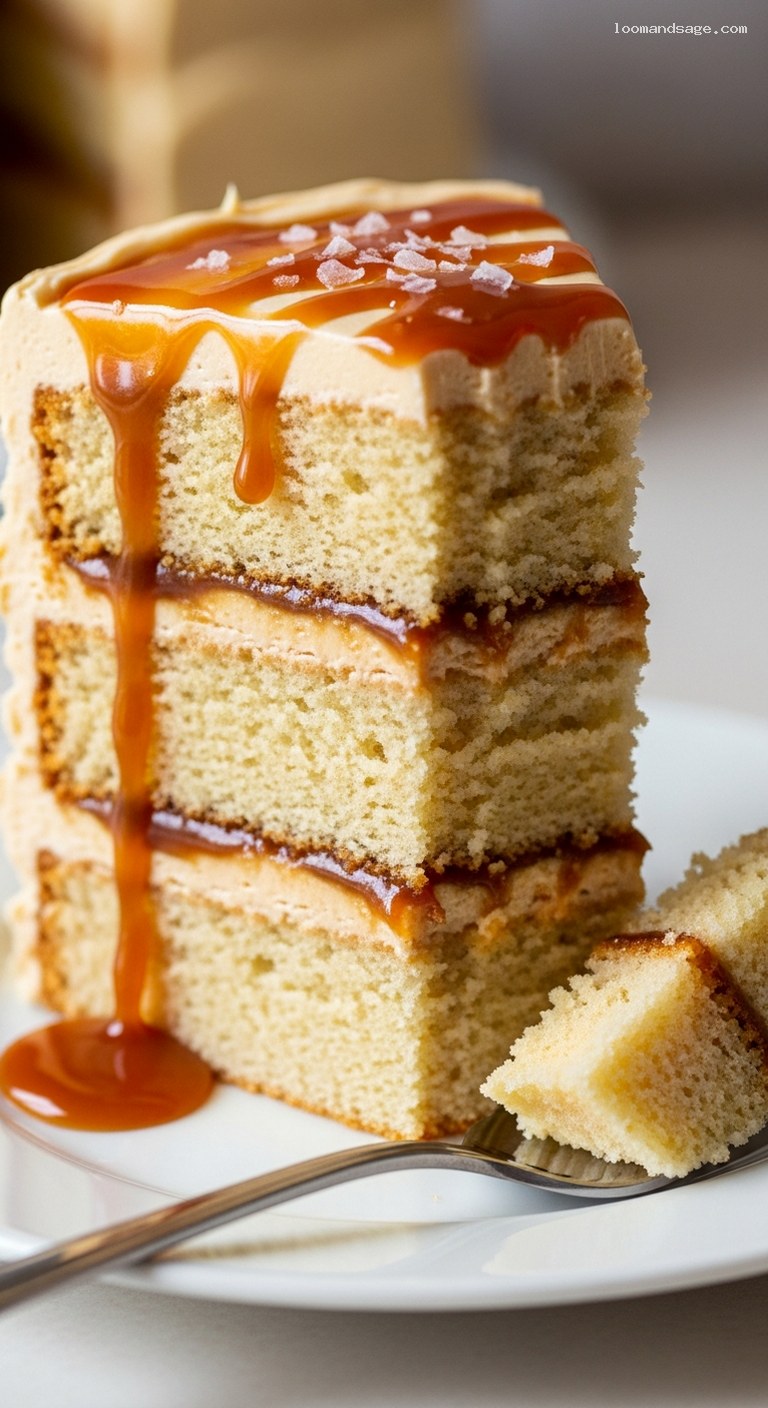
Place one cake layer on a serving plate or cake board. Spread a thin layer of caramel buttercream over the top. Using a piping bag (or a zip-top bag with the corner snipped), pipe a ring (a “dam”) of buttercream around the outer edge of the layer. Spoon 2–3 tablespoons of salted caramel sauce into the center and spread it evenly, keeping it inside the buttercream ring so it does not leak out.
Top with the second cake layer, pressing down gently to secure. Repeat with another layer of buttercream, a piped dam, and 2–3 tablespoons of caramel. Place the final cake layer on top, flat side up for a smooth surface.
Step 7: Crumb coat, chill, and final frost
Spread a thin layer of caramel buttercream over the top and sides of the stacked cake to create a crumb coat; this layer traps crumbs and creates a smooth base. Do not worry if this coat looks imperfect. Chill the crumb-coated cake in the refrigerator for 20–30 minutes, until the buttercream is firm to the touch.
Apply a generous final layer of buttercream over the top and sides, smoothing with an offset spatula or bench scraper. You can leave rustic swoops or go for a smooth, modern finish. Once frosted, chill the cake again for about 15 minutes to help set the surface before adding the caramel drip.
Step 8: Add the caramel drip and finish with flaky salt
If the remaining salted caramel is very thick, gently warm it in short bursts in the microwave, stirring between each, until it flows like warm honey but is not hot. Transfer to a small jug, squeeze bottle, or use a spoon.
Working with a chilled cake, slowly drip caramel around the top edge, letting it run naturally down the sides. Then fill in the center top with more caramel, spreading it gently to meet the drips without overflowing.
While the caramel is still slightly tacky, sprinkle the top with flaky sea salt. You can add extra decorative swoops of buttercream, rosettes, or a light drizzle of caramel on the sides if you like.
Refrigerate the assembled cake for at least 20 minutes to help everything set, then slice with a sharp, warm knife for clean layers. Allow slices to come to cool room temperature for the best texture and flavor.
Pro Tips
- Measure ingredients accurately, ideally by weight. Small differences in flour or sugar can noticeably affect cake texture.
- Use room-temperature dairy and eggs for the cake and buttercream; cold ingredients can cause batter to curdle or frosting to split.
- Watch the caramel closely once it starts to color; swirling, not stirring, helps prevent crystallization and ensures even browning.
- For ultra-smooth sides, dip your spatula or scraper in hot water, wipe dry, and then smooth the frosting.
- If the caramel drip runs too far down, your caramel is too warm; let it cool and thicken slightly before continuing.
Variations
- Chocolate caramel twist: Replace 1/2 cup (60 g) of the flour with unsweetened cocoa powder for a chocolate-caramel layer cake. Keep everything else the same.
- Brown butter cake layers: Brown the cake’s butter first, then cool until just barely solid before creaming with sugar for a deeper, nutty flavor that pairs beautifully with caramel.
- Caramel pecan crunch: Sprinkle chopped toasted pecans between the layers along with the caramel for added texture and a pecan-pie-style vibe.
Storage & Make-Ahead
The fully assembled cake can be stored, covered, in the refrigerator for up to 3 days. For the best texture and flavor, let it sit at room temperature for 30–45 minutes before serving so the cake and buttercream soften slightly.
You can make the cake layers up to 2 days ahead: wrap them well in plastic once completely cool and keep at room temperature, or freeze for up to 2 months (double-wrap and place in a freezer bag). Thaw wrapped at room temperature before assembling.
The salted caramel sauce can be made up to 1–2 weeks in advance and kept in an airtight container in the refrigerator. Gently warm to loosen before using.
The caramel buttercream can be made a day ahead and stored in an airtight container in the refrigerator. Bring to room temperature and rebeat briefly to restore its smooth, fluffy texture before frosting the cake.
Nutrition (per serving)
Approximate values for 1 of 12 servings: about 780 calories; 10 g protein; 95 g carbohydrates; 3 g fiber; 75 g total sugars; 40 g fat (24 g saturated); 200 mg cholesterol; 520 mg sodium. These numbers are estimates and will vary depending on ingredient brands and exact portion sizes.