Quick Recipe Version (TL;DR)
Quick Ingredients
- 2 1/2 cups (310 g) all-purpose flour
- 2 1/2 tsp baking powder + 1/2 tsp fine salt
- 1/2 cup (113 g) unsalted butter, softened
- 1/4 cup (60 ml) neutral oil
- 1 1/4 cups (250 g) granulated sugar
- 4 large eggs, room temperature
- 2 tsp vanilla extract
- 1 cup (240 ml) whole milk, room temperature
- 1/2 cup + 1/2 cup + 3/4 cup dulce de leche (separated: batter, soak/drizzle, buttercream)
- 1 1/2 cups (340 g) unsalted butter, softened (for buttercream)
- 4 cups (480 g) powdered sugar
- 2–4 tbsp heavy cream or milk
- Flaky sea salt, for sprinkling
Do This
- 1. Preheat oven to 350°F (180°C). Grease and line two 8-inch (20 cm) round cake pans with parchment.
- 2. Whisk flour, baking powder, and salt. Cream butter, oil, and sugar; beat in eggs and vanilla. Alternate adding dry ingredients with milk, then mix in 1/2 cup dulce de leche.
- 3. Divide batter between pans and bake 25–30 minutes, until a toothpick comes out clean. Cool completely.
- 4. Make soak: whisk 1/4 cup dulce de leche with 1/4 cup warm milk and 1/2 tsp vanilla. Make buttercream: beat 1 1/2 cups butter until fluffy, add powdered sugar, 3/4 cup dulce de leche, pinch of salt, and enough cream to get a smooth, spreadable consistency.
- 5. Level cooled cakes if needed, poke with a skewer, and brush each layer with the dulce de leche soak.
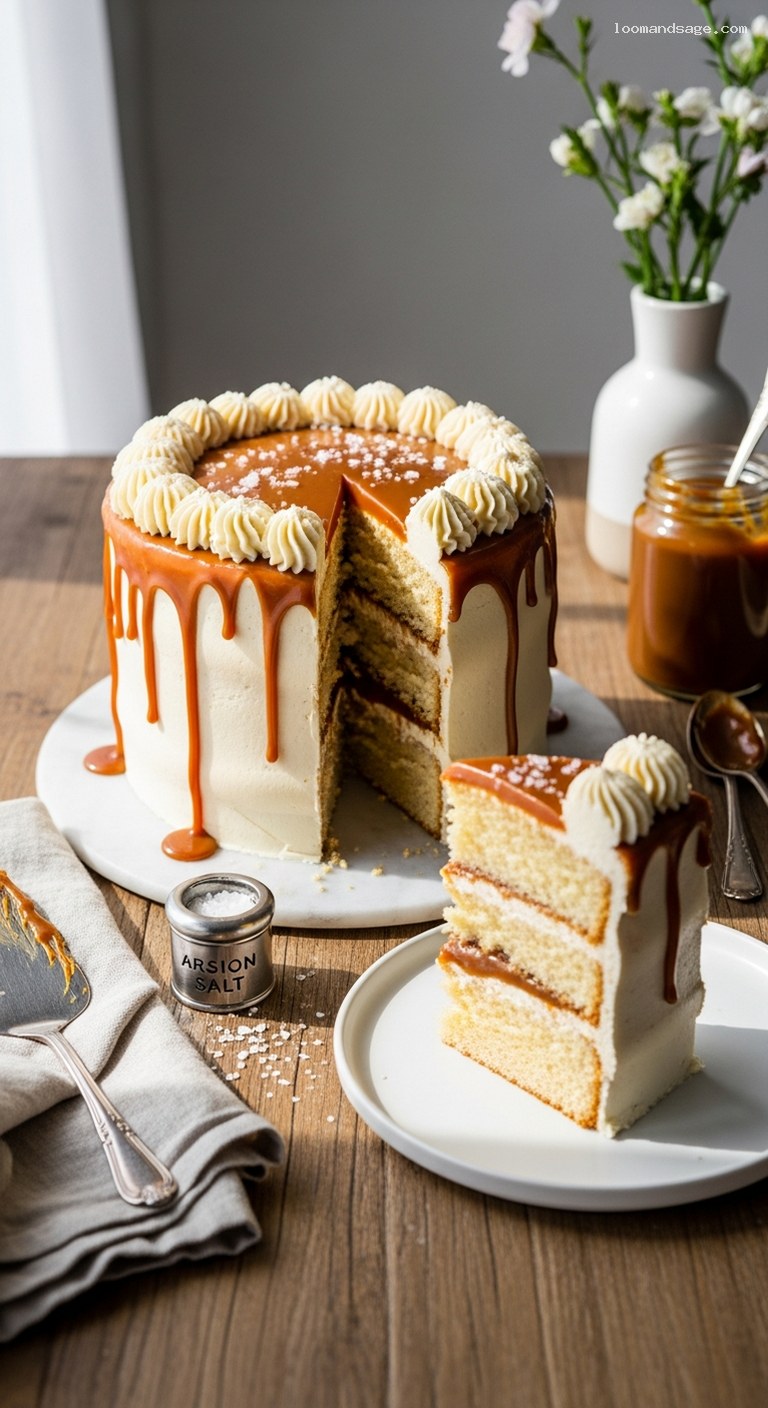
- 6. Fill and frost cake with buttercream. Warm remaining dulce de leche until pourable; drizzle over the top and down the sides. Sprinkle with flaky sea salt. Chill 20–30 minutes to set, then slice and serve.
Why You’ll Love This Recipe
- Every bite is soaked in rich dulce de leche for a deep, caramel flavor inspired by classic Latin American desserts.
- Soft vanilla-caramel cake layers meet silky dulce de leche buttercream and a glossy caramel drizzle.
- Flaky sea salt on top balances the sweetness and makes the caramel flavors pop.
- Impressive enough for celebrations, but simple enough for any home baker with basic equipment.
Grocery List
- Produce: None (a stress-free, pantry-friendly dessert).
- Dairy: Unsalted butter, whole milk, heavy cream (or extra milk), large eggs.
- Pantry: All-purpose flour, baking powder, fine salt, granulated sugar, powdered sugar, vanilla extract, neutral oil (such as canola or sunflower), dulce de leche (canned or jarred), flaky sea salt.
Full Ingredients
For the Vanilla Dulce de Leche Cake Layers
- 2 1/2 cups (310 g) all-purpose flour
- 2 1/2 tsp baking powder
- 1/2 tsp fine sea salt
- 1/2 cup (113 g) unsalted butter, softened to room temperature
- 1/4 cup (60 ml) neutral oil (canola, vegetable, or sunflower)
- 1 1/4 cups (250 g) granulated sugar
- 4 large eggs, at room temperature
- 2 tsp pure vanilla extract
- 1 cup (240 ml) whole milk, at room temperature
- 1/2 cup (150 g) dulce de leche (stirred until smooth)
For the Dulce de Leche Soak
- 1/2 cup (150 g) dulce de leche
- 1/4 cup (60 ml) whole milk, warmed
- 1/2 tsp vanilla extract
- Pinch of fine salt (optional, to balance sweetness)
For the Dulce de Leche Buttercream
- 1 1/2 cups (340 g) unsalted butter, softened to room temperature
- 4 cups (480 g) powdered sugar, sifted if lumpy
- 3/4 cup (225 g) dulce de leche
- 1/4 tsp fine sea salt
- 2–4 tbsp (30–60 ml) heavy cream or whole milk, as needed for consistency
- 1 tsp vanilla extract (optional, but recommended for depth of flavor)
For Decorating
- 1/2 cup (150 g) dulce de leche, gently warmed until pourable (for drizzling)
- Flaky sea salt (such as Maldon), to taste
- Optional: extra swirls of buttercream or small rosettes on top
Step-by-Step Instructions
Step 1: Prepare your pans and preheat the oven
Preheat your oven to 350°F (180°C). Grease two 8-inch (20 cm) round cake pans with butter or nonstick spray. Line the bottoms with parchment paper circles and lightly grease the parchment as well. This helps ensure the cakes release cleanly and stay intact.
Set the prepared pans aside. Make sure your butter and eggs are at room temperature; this helps the batter emulsify properly and creates a tender, even crumb.
Step 2: Mix the dry ingredients
In a medium bowl, whisk together the all-purpose flour, baking powder, and salt until well combined and lump-free. This step evenly distributes the leavening so your cake rises uniformly. Set the dry mixture aside.
Step 3: Make the cake batter
In a large mixing bowl (or the bowl of a stand mixer fitted with a paddle attachment), beat the softened butter, neutral oil, and granulated sugar on medium-high speed for about 3–4 minutes, until the mixture looks pale and fluffy. Scrape down the sides of the bowl once or twice to make sure everything is well incorporated.
Add the eggs, one at a time, beating well after each addition. Mix in the vanilla extract. The mixture may look slightly thick; that is normal.
With the mixer on low speed, add the dry ingredients in three additions, alternating with the milk in two additions (dry, milk, dry, milk, dry). Mix just until combined after each addition; do not overmix. Scrape down the bowl again.
Finally, add the 1/2 cup (150 g) dulce de leche and fold it in gently by hand or mix on low until just incorporated. You can fully blend it in for an even caramel flavor or leave a few gentle streaks for a subtle marbled look.
Step 4: Bake the cake layers
Divide the batter evenly between the two prepared pans (use a scale for precision if you like). Smooth the tops with a spatula so they bake flat.
Bake on the center rack at 350°F (180°C) for 25–30 minutes, or until the tops are lightly golden, the edges pull slightly away from the pan, and a toothpick inserted into the center comes out clean or with a few moist crumbs.
Remove the pans from the oven and let the cakes cool in the pans for 10–15 minutes. Then run a knife around the edges, carefully invert onto a wire rack, peel off the parchment, and cool completely for at least 45–60 minutes. The cakes must be fully cool before soaking and frosting, or the buttercream will melt.
Step 5: Make the dulce de leche soak and buttercream
While the cakes cool, prepare the soak. In a small bowl, whisk together 1/2 cup (150 g) dulce de leche, 1/4 cup (60 ml) warm milk, 1/2 tsp vanilla, and a tiny pinch of salt until smooth and pourable. If it is too thick, add an extra spoonful of warm milk. Set aside.
For the buttercream, place the 1 1/2 cups (340 g) softened butter in a large bowl or stand mixer. Beat on medium-high speed for 2–3 minutes until very creamy and slightly lighter in color.
Add the powdered sugar gradually, about 1 cup at a time, mixing on low to avoid a sugar cloud, then increasing to medium until smooth. Scrape down the bowl as needed. Add the 3/4 cup (225 g) dulce de leche, 1/4 tsp salt, and vanilla extract (if using). Beat again on medium-high for 1–2 minutes until light and fluffy.
Add 2–4 tbsp heavy cream or milk, a little at a time, beating until the buttercream is smooth, silky, and spreadable. If it becomes too soft, chill it in the refrigerator for 10–15 minutes, then rewhip briefly.
Step 6: Level, soak, and layer the cake
Once the cakes are completely cool, use a long serrated knife to gently trim off any domed tops so the layers are flat. Brush away loose crumbs.
Place the first cake layer, cut side up, on a serving plate or cake board. Using a skewer or fork, poke small holes all over the surface, going about halfway down. Gently spoon or brush about half of the dulce de leche soak over the cake, letting it seep into the holes. The cake should be moist but not falling apart.
Spread a generous layer of dulce de leche buttercream (about 1/3 of the batch) over the soaked layer. If you like, add a few small dollops of extra dulce de leche on top and swirl lightly with a knife for extra pockets of caramel.
Place the second cake layer on top, cut side up. Repeat the poking and soaking with the remaining dulce de leche mixture, letting it absorb fully.
Step 7: Crumb-coat and frost the cake
Apply a thin layer of buttercream over the top and sides of the cake to create a crumb coat. This seals in any loose crumbs. Smooth it with an offset spatula or bench scraper. Chill the crumb-coated cake in the refrigerator for 15–20 minutes to firm up.
Once chilled, use the remaining buttercream to frost the cake more generously, smoothing the sides and top or creating rustic swirls—whatever style you prefer. Save a little buttercream if you want to pipe small rosettes or borders later.
Step 8: Drizzle with dulce de leche and sprinkle sea salt
Warm the remaining 1/2 cup (150 g) dulce de leche in a microwave-safe bowl or small saucepan just until fluid and pourable, but not hot (about 10–20 seconds in the microwave). Stir until completely smooth. If it is very thick, thin with 1–2 tsp warm milk.
With the cake on a turntable or a steady surface, use a spoon or small piping bag to drizzle the dulce de leche over the top, nudging some over the edges so it drips down the sides in slow, luxurious ribbons.
If desired, pipe a few rosettes or small mounds of buttercream around the top edge and drizzle a little more dulce de leche between them for contrast.
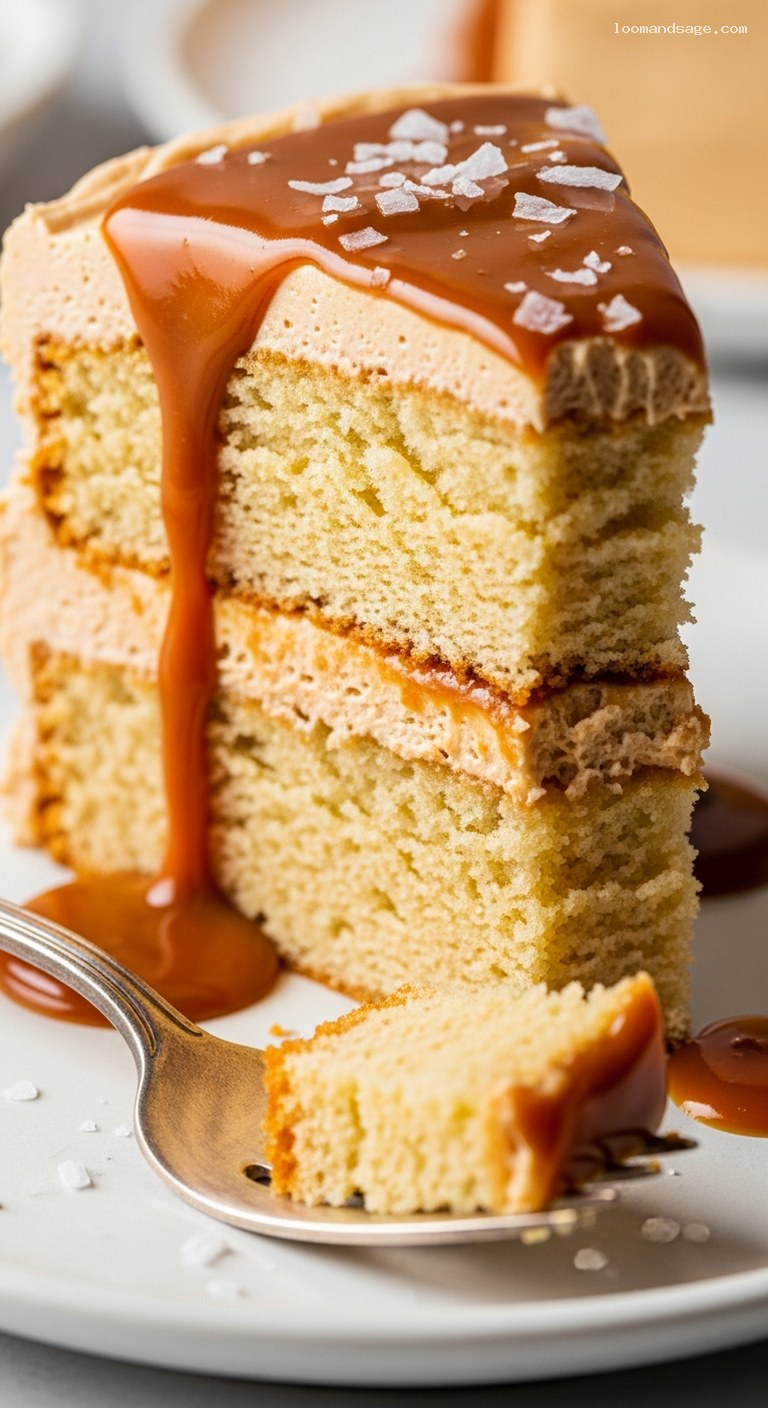
Finish with a generous sprinkle of flaky sea salt over the top—focus on the center and dulce de leche drips. Chill the finished cake for 20–30 minutes before slicing for the cleanest cuts. Serve slightly cool or at room temperature for the best texture and flavor.
Pro Tips
- Room-temperature ingredients are key: Soft butter and room-temperature eggs and milk help the batter blend smoothly and make a lighter cake.
- Control the soak: Add the dulce de leche soak gradually. The cake should be very moist but still hold its structure when sliced.
- Adjust sweetness with salt: Dulce de leche is naturally very sweet. Do not skip the pinch of salt in the soak and buttercream, and finish with flaky sea salt for balance.
- Chill between stages: A short chill after crumb-coating and again after decorating sets the buttercream and helps prevent slipping or bulging layers.
- Smooth dulce de leche: If your dulce de leche is very thick or grainy, warm it gently and stir or whisk to a silky consistency before adding it to the batter, soak, or buttercream.
Variations
- Three-layer cake: Bake the batter in three 8-inch pans instead of two and reduce the bake time slightly (about 20–24 minutes). You will have thinner, more dramatic layers with extra buttercream in between.
- Nutty crunch: Add a layer of finely chopped toasted pecans, walnuts, or hazelnuts on top of the buttercream between the layers for texture and a praline-like flavor.
- Mocha twist: Stir 1–2 tsp instant espresso powder into the dulce de leche buttercream to create a coffee-caramel frosting that complements the sweetness beautifully.
Storage & Make-Ahead
The assembled cake can be stored, covered, in the refrigerator for up to 3 days. For the best texture, let slices sit at room temperature for about 30–45 minutes before serving so the buttercream softens and the flavors bloom.
You can bake the cake layers up to 2 days in advance. Once completely cool, wrap each layer tightly in plastic wrap and store at room temperature, or freeze for up to 1 month. Thaw wrapped layers at room temperature before soaking and frosting.
The buttercream can be made up to 3 days ahead and stored in an airtight container in the refrigerator. Bring it back to room temperature and rewhip briefly to restore its fluffy texture before using.
Nutrition (per serving)
Approximate values per serving (1/12 of the cake): about 850–900 calories, 45–50 g fat, 105–110 g carbohydrates, 3–4 g protein. This cake is rich and indulgent, so smaller slices go a long way. Values will vary based on exact brands and portion sizes.