Quick Recipe Version (TL;DR)
Quick Ingredients
- 8 oz soba noodles
- 1 cup shelled edamame (frozen is fine)
- 1 1/2 cups shredded carrots (about 2 medium)
- 1 1/2 cups thinly sliced cucumber half-moons (about 1 small English cucumber)
- 3 green onions, thinly sliced
- 1/4 cup chopped fresh cilantro (optional but recommended)
- 1/4 cup low-sodium soy sauce or tamari
- 3 tbsp unseasoned rice vinegar
- 2 tbsp toasted sesame oil
- 1 tbsp neutral oil (avocado, canola, or grapeseed)
- 1 1/2 tbsp honey or maple syrup
- 1 tbsp finely grated fresh ginger
- 1 small garlic clove, finely grated or minced
- 1 tsp sriracha or chili-garlic sauce (optional)
- 2 tbsp toasted sesame seeds (for mixing and garnish)
- Lime wedges, for serving (optional)
Do This
- 1. Whisk soy sauce, rice vinegar, sesame oil, neutral oil, honey, ginger, garlic, and sriracha in a bowl; set aside.
- 2. Boil soba noodles according to package (about 5–6 minutes). During the last 2 minutes, add edamame to the pot.
- 3. Drain noodles and edamame; rinse under cold water until cool. Drain very well.
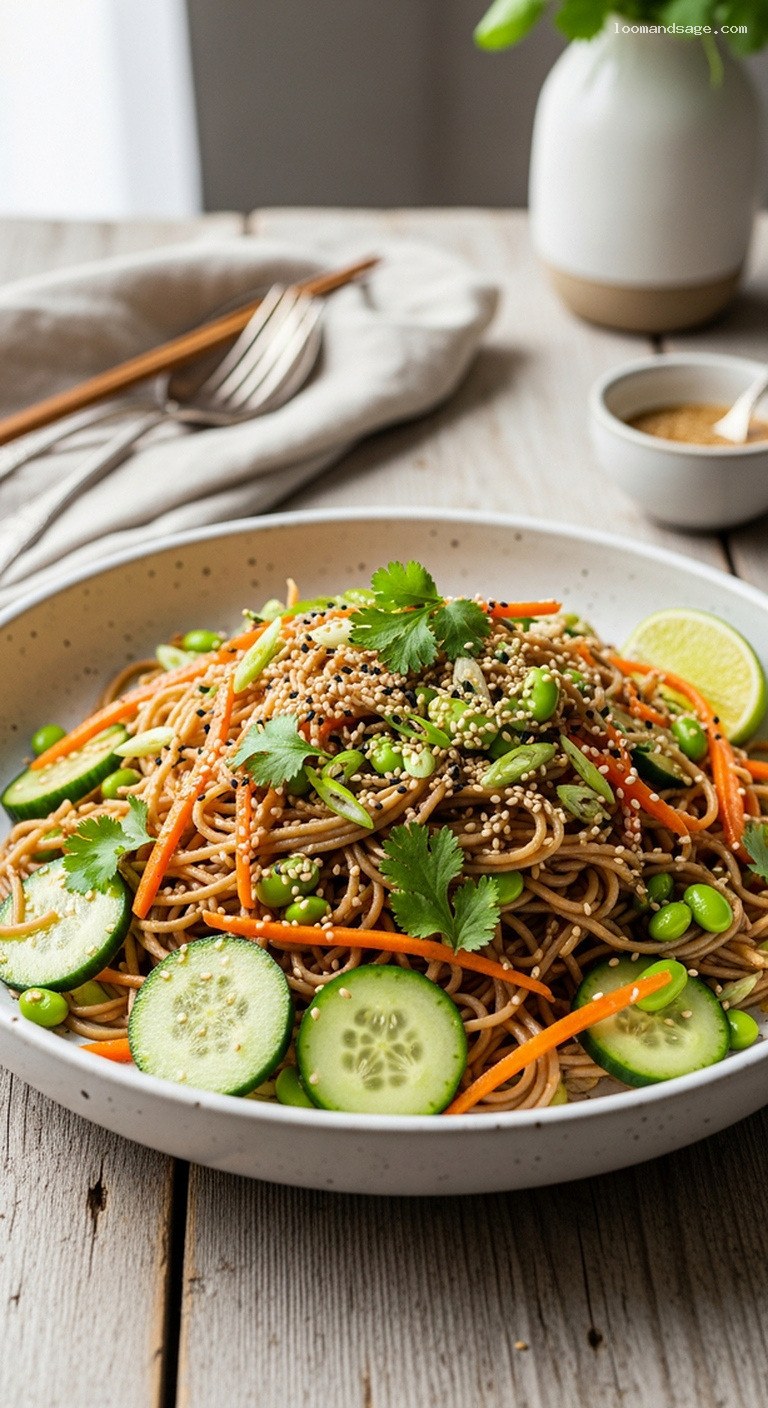
- 4. In a large bowl, combine cooled noodles, edamame, shredded carrots, cucumber, green onions, and cilantro.
- 5. Pour dressing over salad, add sesame seeds, and toss until everything is evenly coated.
- 6. Taste and adjust with more vinegar, soy sauce, or honey as needed. Add a squeeze of lime if using.
- 7. Serve right away or chill 15–30 minutes for flavors to meld. Garnish with extra sesame seeds and herbs.
Why You’ll Love This Recipe
- Light, fresh, and packed with crunchy vegetables, yet still satisfying enough for a full meal.
- Comes together in under 30 minutes with simple, easy-to-find ingredients.
- Perfect served cold or at room temperature, making it ideal for meal prep, picnics, or work lunches.
- Flexible and customizable: add protein, swap veggies, or make it gluten-free with buckwheat soba and tamari.
Grocery List
- Produce: Fresh ginger, garlic, 2 medium carrots, 1 small English cucumber, 3 green onions, fresh cilantro, 1 lime (optional)
- Dairy: None required
- Pantry: Soba noodles, frozen shelled edamame, low-sodium soy sauce or tamari, unseasoned rice vinegar, toasted sesame oil, neutral oil (avocado, canola, or grapeseed), honey or maple syrup, sriracha or chili-garlic sauce (optional), toasted sesame seeds, salt (if needed)
Full Ingredients
Sesame-Ginger Dressing
- 1/4 cup low-sodium soy sauce or tamari
- 3 tbsp unseasoned rice vinegar
- 2 tbsp toasted sesame oil
- 1 tbsp neutral oil (avocado, canola, or grapeseed)
- 1 1/2 tbsp honey or maple syrup
- 1 tbsp finely grated fresh ginger (about a 1-inch knob)
- 1 small garlic clove, finely grated or minced
- 1 tsp sriracha or chili-garlic sauce, to taste (optional for mild heat)
Soba Noodle Salad
- 8 oz soba noodles (buckwheat or buckwheat-wheat blend)
- 1 cup shelled edamame (from frozen; no need to thaw ahead)
- 1 1/2 cups shredded carrots (about 2 medium carrots, peeled)
- 1 1/2 cups thinly sliced cucumber half-moons (about 1 small English cucumber)
- 3 green onions, thinly sliced (white and green parts)
- 1/4 cup chopped fresh cilantro leaves and tender stems
- 2 tbsp toasted sesame seeds (white, black, or a mix)
Optional Toppings & Add-Ins
- Lime wedges, for serving
- Extra toasted sesame seeds, for garnish
- Extra chopped cilantro or thinly sliced green onion tops
- Chopped roasted peanuts or cashews, for crunch
- Thinly sliced red bell pepper, for extra color and sweetness
- Cooked protein (such as shredded rotisserie chicken, pan-seared tofu, or shrimp), if you want to make it heartier
Step-by-Step Instructions
Step 1: Make the sesame-ginger dressing
In a medium bowl or liquid measuring cup, combine the soy sauce (or tamari), rice vinegar, toasted sesame oil, neutral oil, and honey or maple syrup. Whisk until the honey is mostly dissolved.
Add the grated ginger, garlic, and sriracha or chili-garlic sauce (if using). Whisk again until the dressing looks smooth and slightly thickened. Taste a small spoonful: it should be salty, tangy, and a little sweet with a warm gingery kick. Adjust to your liking by adding a touch more vinegar for brightness, soy sauce for salt, or honey for sweetness.
Set the dressing aside at room temperature while you prepare the noodles and vegetables, so the flavors have a moment to mingle.
Step 2: Cook the soba noodles
Bring a large pot of water to a rolling boil. Unlike Italian pasta, soba can turn starchy and soft quickly, so do not salt the water heavily. Add the 8 oz soba noodles and stir gently to prevent sticking. Cook according to package directions, usually 5–6 minutes, until just tender but not mushy.
Keep an eye on them: soba can go from perfect to overcooked in under a minute. Start tasting a strand at the 4-minute mark. You are aiming for a slight chew.
Step 3: Blanch the edamame and cool the noodles
About 2 minutes before the noodles are done, add the 1 cup shelled edamame directly to the boiling water. This quickly blanches the edamame so it becomes bright green and tender.
When the noodles are cooked and the edamame is hot and vibrant, drain everything into a colander. Immediately rinse under cold running water, using your hands or tongs to gently separate the noodles and help wash away excess starch. Continue rinsing until the noodles are cool to the touch.
Shake the colander well and let the noodles and edamame sit for a couple of minutes to drain as thoroughly as possible. Excess water will dilute the dressing, so this step is key for great flavor.
Step 4: Prep the vegetables and herbs
While the noodles drain, prepare the vegetables and herbs. Peel and shred the carrots (use a box grater or julienne peeler) until you have about 1 1/2 cups. Cut the English cucumber in half lengthwise, scrape out any large seeds if needed, then slice into thin half-moons to get about 1 1/2 cups.
Thinly slice the green onions (both white and green parts). Roughly chop the cilantro. If using optional add-ins like red bell pepper, slice them into thin strips now as well.
Step 5: Assemble the soba noodle salad
Transfer the cooled, well-drained soba noodles and edamame to a large mixing bowl. Add the shredded carrots, sliced cucumber, green onions, and cilantro.
Give the dressing a quick whisk (the ginger and garlic like to settle at the bottom), then pour it over the noodles and vegetables. Sprinkle in the 2 tbsp toasted sesame seeds.
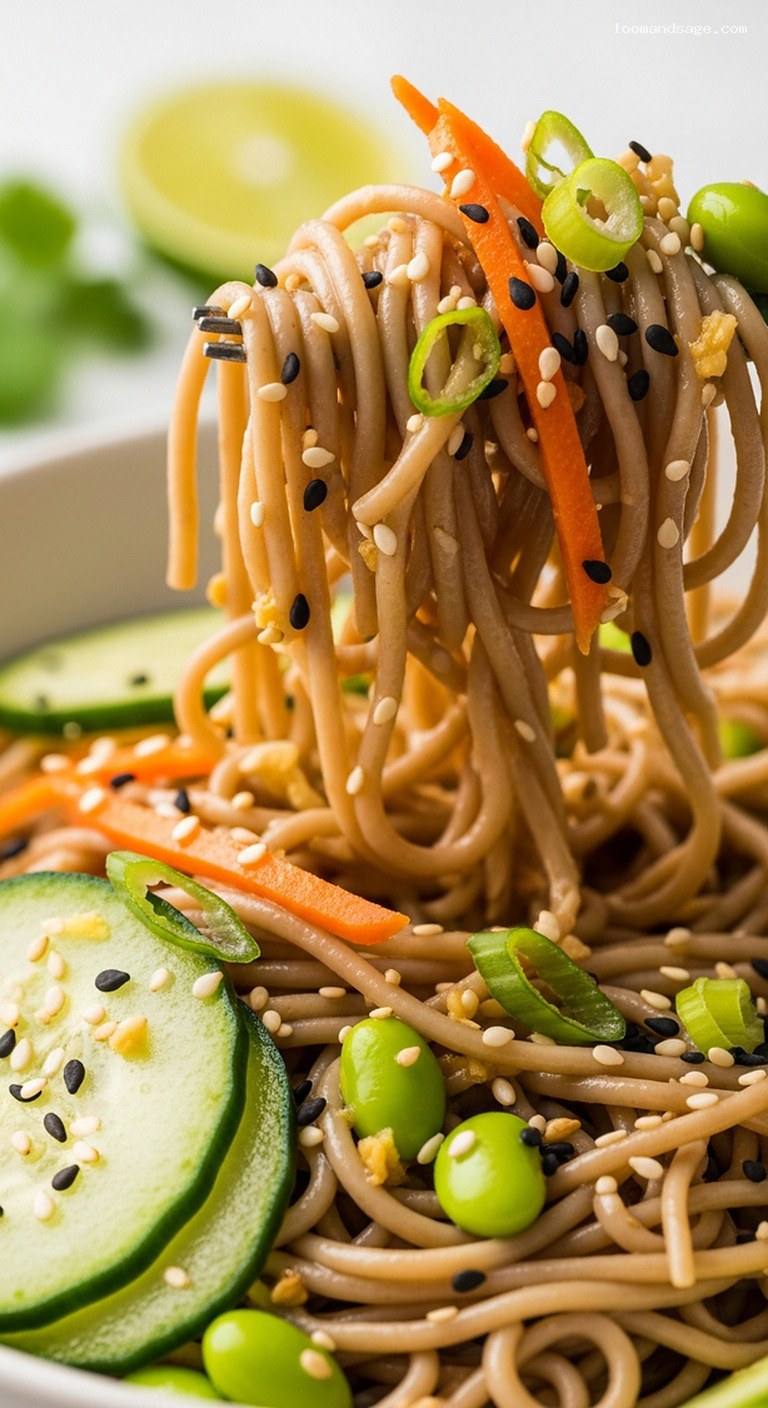
Using tongs or clean hands, gently toss everything together until the noodles are evenly coated and the veggies are distributed throughout. Take your time here to avoid breaking the noodles too much and to make sure every bite gets a good amount of dressing.
Step 6: Taste and adjust the seasoning
Taste a forkful of the salad. If it tastes flat, you likely need a bit more acid or salt. Add another teaspoon or two of rice vinegar for brightness, or a splash more soy sauce or tamari for salinity. If it is too sharp, balance it with an extra drizzle of honey or maple syrup.
For extra freshness, squeeze in a wedge of lime if you have it, and toss again. At this point you can also add more sesame seeds or cilantro if you like a more herb-forward or nutty flavor.
Step 7: Chill briefly or serve right away
You can serve the salad immediately at room temperature, or cover the bowl and chill it in the refrigerator for 15–30 minutes to allow the flavors to meld and the noodles to soak up more dressing.
To serve, mound the soba salad into shallow bowls or plates. Garnish with extra toasted sesame seeds, a few leaves of cilantro, more green onion tops, and lime wedges on the side. If using peanuts or cashews, sprinkle them over just before serving so they stay crunchy.
Pro Tips
- Rinse the soba thoroughly. This is essential for removing excess starch, which can make the salad gummy. Rinse under cold water while gently separating the noodles with your fingers or tongs.
- Dry the noodles well. After rinsing, let the noodles and edamame drain for several minutes and shake the colander. Too much water will dilute the dressing and mute the flavors.
- Use toasted sesame oil, not regular. Toasted sesame oil has a deep, nutty aroma that is key to the overall flavor. A little goes a long way, so measure rather than free-pouring.
- Taste and tweak at the end. Small adjustments of soy sauce, vinegar, or sweetener at the very end can make the difference between good and great.
- Serve slightly chilled, not icy cold. The flavors are brightest when the salad is cool but not very cold. If it has been in the fridge, let it sit at room temperature for 10–15 minutes before serving.
Variations
- Protein boost: Add grilled or rotisserie chicken, seared tofu cubes, baked salmon, or sautéed shrimp on top to turn this into a higher-protein main dish.
- Gluten-free version: Use 100% buckwheat soba (check the label) and tamari instead of soy sauce to keep the salad fully gluten-free.
- Crunchy peanut twist: Stir 1–2 tbsp creamy peanut butter into the dressing, thinning with a splash of water as needed, and top the salad with chopped roasted peanuts.
Storage & Make-Ahead
This soba noodle salad keeps well, making it excellent for meal prep. Store leftovers in an airtight container in the refrigerator for up to 3 days. The noodles will continue to soak up the dressing, so if the salad seems a bit dry when you are ready to eat, refresh it with a splash of soy sauce, rice vinegar, and a drizzle of sesame oil. For the best texture, add any crunchy toppings (like peanuts or cashews) just before serving. You can also prepare the dressing up to 4 days in advance and keep it refrigerated; give it a good whisk before using.
Nutrition (per serving)
Estimated for 1 of 4 servings, without optional toppings or added protein: approximately 400 calories, 14 g fat, 56 g carbohydrates, 13 g protein, 5 g fiber, and 850 mg sodium. Actual values will vary based on the specific brands and exact amounts you use.