
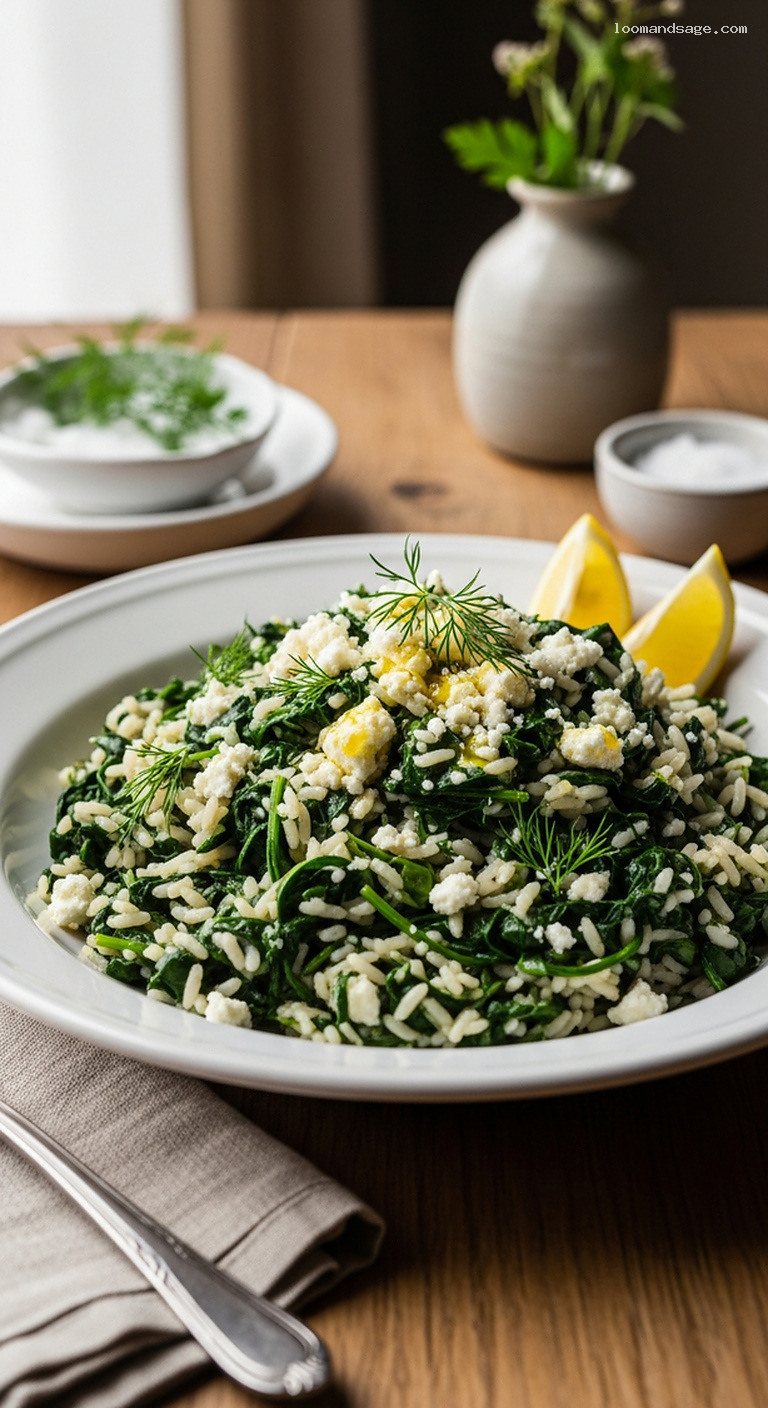
Quick Recipe Version (TL;DR)
Quick Ingredients
- 1/4 cup extra-virgin olive oil, plus more to finish
- 1 large yellow onion, finely chopped
- 3 green onions, thinly sliced
- 3 garlic cloves, minced
- 1 lb (450 g) fresh spinach, roughly chopped (or 16 oz frozen, thawed and squeezed dry)
- 1 cup (190 g) long-grain white rice, rinsed
- 2 cups (480 ml) vegetable broth + 1/2 cup (120 ml) water
- Zest and juice of 1 large lemon (about 1 tbsp zest, 1/4 cup juice)
- 1/2 cup chopped fresh dill
- 1/4 cup chopped fresh flat-leaf parsley (optional)
- 1–1 1/4 tsp fine sea salt, plus more to taste
- 1/2 tsp freshly ground black pepper
- Crumbled feta, extra lemon wedges, and olive oil for serving (optional)
Do This
- 1. Rinse the rice under cold water until the water runs mostly clear; drain well.
- 2. In a wide pot, warm 1/4 cup olive oil over medium heat; sauté onion and green onions for 6–8 minutes until soft and translucent.
- 3. Add garlic and cook 30 seconds, then stir in spinach a few handfuls at a time until wilted.
- 4. Stir in rice, salt, and pepper, then add broth and water; bring to a gentle simmer.
- 5. Cover, reduce heat to low, and cook 18–20 minutes until the rice is tender and mixture is thick but still slightly saucy.
- 6. Off the heat, stir in dill, parsley, lemon zest, and lemon juice; rest 5 minutes, then taste and adjust seasoning. Serve warm with feta, extra lemon, and a drizzle of olive oil.
Why You’ll Love This Recipe
- Comforting and light at the same time: silky, lemony, and full of tender spinach.
- One-pot and weeknight-friendly, with simple, easy-to-find ingredients.
- Naturally vegetarian and easily made vegan, yet hearty enough as a main dish.
- Even better the next day; the flavors deepen and the lemon and dill really shine.
Grocery List
- Produce: Yellow onion, green onions, garlic, fresh spinach (or frozen chopped spinach), fresh dill, fresh flat-leaf parsley, lemons
- Dairy: Feta cheese (optional, for serving)
- Pantry: Extra-virgin olive oil, long-grain white rice, vegetable broth (or chicken broth), fine sea salt, black pepper
Full Ingredients
Spanakorizo (Spinach and Rice)
- 1/4 cup (60 ml) extra-virgin olive oil, plus more to finish
- 1 large yellow onion, finely chopped (about 1 1/2 cups)
- 3 green onions, thinly sliced (white and green parts)
- 3 garlic cloves, minced
- 1 lb (450 g) fresh spinach, stems trimmed and roughly chopped
- Or: 16 oz (450 g) frozen chopped spinach, fully thawed and squeezed very dry
- 1 cup (190 g) long-grain white rice, rinsed until water runs mostly clear and drained well
- 2 cups (480 ml) vegetable broth (or light chicken broth)
- 1/2 cup (120 ml) water
- 1–1 1/4 tsp fine sea salt, plus more to taste (amount depends on saltiness of your broth)
- 1/2 tsp freshly ground black pepper
- Zest of 1 large lemon (about 1 tbsp, finely grated)
- 1/4 cup (60 ml) freshly squeezed lemon juice (from about 1 large lemon), plus more to taste
- 1/2 cup (15 g) fresh dill, finely chopped (loosely packed)
- 1/4 cup (8 g) fresh flat-leaf parsley, finely chopped (optional but recommended)
To Serve (Optional but Delicious)
- 1/2–3/4 cup (75–110 g) feta cheese, crumbled
- Extra lemon wedges
- Extra-virgin olive oil, for drizzling
- Freshly ground black pepper
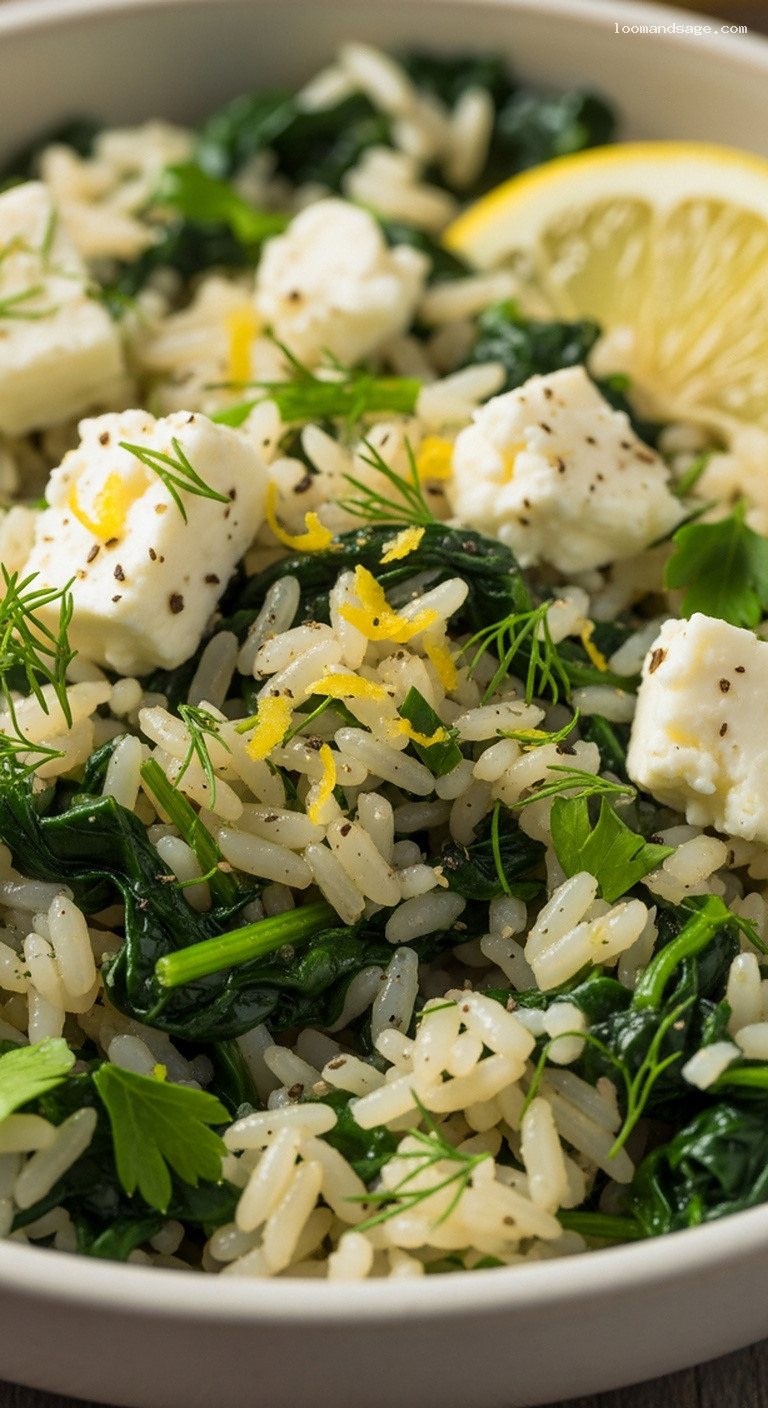
Step-by-Step Instructions
Step 1: Prep your ingredients and rinse the rice
Start by rinsing the rice: place 1 cup long-grain white rice in a fine-mesh sieve and rinse under cold running water, stirring with your fingers, until the water runs mostly clear. This removes excess starch and helps the finished dish stay silky rather than gummy. Drain well and set aside.
Meanwhile, finely chop the yellow onion, slice the green onions, mince the garlic, and roughly chop the spinach if using fresh. Finely chop the dill and parsley. Zest the lemon first, then juice it. Having everything ready makes the cooking process smooth, since the dish comes together in one pot.
Step 2: Soften the onions in olive oil
In a wide, heavy-bottomed pot or deep sauté pan with a lid (about 3–4 quarts), warm 1/4 cup olive oil over medium heat for 1–2 minutes. Add the chopped yellow onion and green onions along with a pinch of salt. Cook, stirring occasionally, for 6–8 minutes until the onions are very soft, translucent, and just starting to turn golden at the edges. Adjust the heat down slightly if they begin to brown too quickly; they should gently soften rather than crisp.
Add the minced garlic and cook for 30–45 seconds, stirring, until fragrant. Do not let the garlic brown, as that will introduce a bitter taste.
Step 3: Wilt the spinach
If using fresh spinach, add it to the pot in large handfuls, stirring after each addition. It will look like too much at first, but it quickly collapses. Continue adding and stirring over medium heat for 3–5 minutes until all the spinach is wilted and dark green, and most of the liquid it releases has evaporated.
If using frozen spinach, be sure it is fully thawed and squeezed very dry. Add it to the softened onions and garlic and cook for 3–4 minutes, stirring frequently, to warm it through and cook off any excess moisture. The spinach mixture should be glossy with oil, not watery.
Step 4: Toast the rice with the aromatics
Add the well-drained rice to the pot and sprinkle with 1 tsp of the salt and the 1/2 tsp black pepper. Stir well for 1–2 minutes so that the rice is coated in the olive oil and mixed thoroughly with the spinach and onions. This brief toasting step helps the grains stay separate and deepens the overall flavor.
Check the bottom of the pot: if it looks dry, you can drizzle in an extra tablespoon of olive oil so that the rice glistens lightly but is not swimming in oil.
Step 5: Add liquid and gently simmer
Pour in 2 cups vegetable broth and 1/2 cup water. Stir well, scraping up any bits from the bottom of the pot. Increase the heat to medium-high and bring the mixture just to a gentle boil.
Once it reaches a gentle boil, give it one last stir, then reduce the heat to low, cover tightly with a lid, and let it simmer undisturbed for 18–20 minutes. Avoid lifting the lid; the steam is what cooks the rice evenly. When it is done, the rice should be tender and the mixture thick and almost creamy, with just a little loose, saucy liquid remaining. If your stove runs hot, start checking at 16 minutes.
Step 6: Finish with lemon and fresh herbs
Turn off the heat and remove the lid. The spanakorizo will look slightly compact at first. Fluff gently with a fork, then stir in the lemon zest, lemon juice, chopped dill, and parsley (if using). Taste and adjust seasoning, adding more salt, pepper, or lemon juice as needed. You are aiming for a bright, lemony flavor balanced by the sweetness of the onions and the richness of the olive oil.
If the mixture seems a bit dry or the rice has absorbed more liquid than you like, stir in 2–4 tablespoons hot water or broth until it reaches a loose, silky, risotto-like consistency. Cover again and let it rest off the heat for 5 minutes to allow the flavors to meld.
Step 7: Serve warm and garnish generously
After resting, give the spanakorizo a final gentle stir. Spoon it into shallow bowls or onto plates. Drizzle each serving with a little extra-virgin olive oil for sheen and richness. Top with a generous handful of crumbled feta, if using, and a grind of black pepper.
Serve with lemon wedges on the side so everyone can add an extra squeeze at the table. Spanakorizo is wonderful on its own, or alongside grilled fish, roasted chicken, or a simple tomato salad.
Pro Tips
- Control the texture: Traditional spanakorizo is slightly loose and silky, not dry like plain pilaf. If it looks too stiff, stir in hot water or broth a tablespoon at a time until it softens.
- Use good olive oil: The flavor of the olive oil really comes through. A fruity extra-virgin oil will give the dish a luxurious, restaurant-quality finish.
- Do not rush the onions: Take the full 6–8 minutes to soften the onions; their sweetness is the backbone of the dish and balances the lemon and greens.
- Lemon last: Always add the lemon juice at the end, off the heat. Cooking it too long can dull its brightness.
- Rest before serving: Those 5 minutes off the heat help the rice relax and absorb flavors, leading to a creamier, more cohesive dish.
Variations
- Tomato spanakorizo: Add 1/2 cup canned crushed tomatoes or tomato passata with the broth. Reduce the water to 1/4 cup so the dish does not become too loose. This creates a slightly richer, more tangy version.
- Brown rice version: Substitute 1 cup brown long-grain rice and increase the broth to 2 1/2 cups plus 1/2 cup water. Simmer, covered, over low heat for 35–40 minutes, adding a splash more hot water if needed.
- Extra-green herb boost: Stir in a handful of chopped fresh mint or extra parsley along with the dill for a more herb-forward, garden-fresh flavor.
Storage & Make-Ahead
Let the spanakorizo cool to room temperature, then transfer it to an airtight container. Refrigerate for up to 4 days. The rice will continue to absorb liquid as it sits, so it may thicken.
To reheat on the stovetop, place the desired amount in a small pot or skillet with a splash of water or broth (1–2 tablespoons per cup of rice). Warm gently over low to medium-low heat, stirring occasionally, until hot and creamy again. You can also reheat in the microwave, covered, with a small splash of water or broth, stirring halfway through.
Freezing is possible for up to 2 months, though the texture of the rice may become slightly softer. Thaw overnight in the refrigerator, then reheat as above, adding fresh lemon juice and herbs at the end to refresh the flavors.
Nutrition (per serving)
Approximate values for 1 of 4 main-dish servings (without feta): about 340 calories; 8 g protein; 50 g carbohydrates; 12 g fat; 2 g saturated fat; 5 g fiber; 4 g sugar; 580 mg sodium (will vary based on broth and added salt). Adding 2 tablespoons crumbled feta per serving adds roughly 50–60 calories, 3 g protein, and 3–4 g fat.