
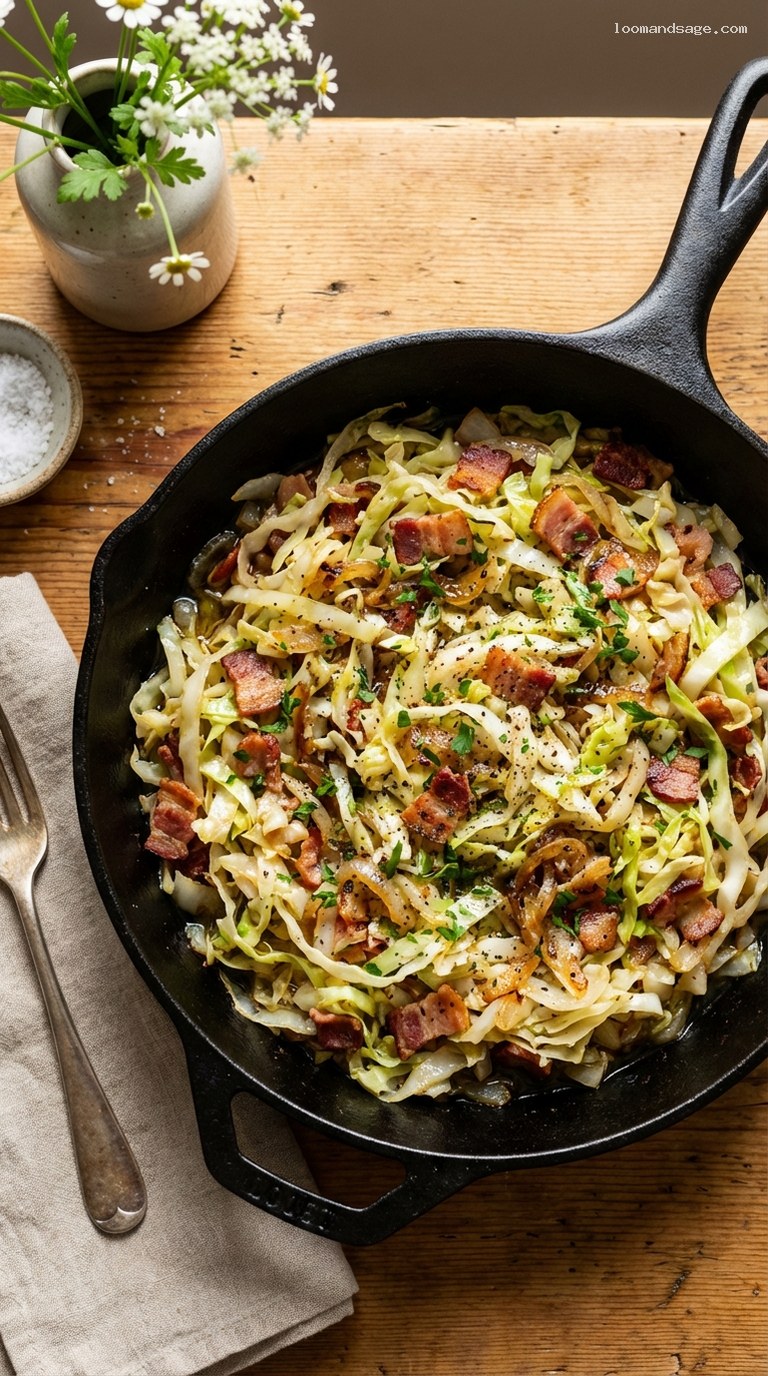
Quick Recipe Version (TL;DR)
Quick Ingredients
- 1 medium head green cabbage (about 2 lb / 900 g), cored and very thinly shredded
- 6 slices thick-cut bacon (about 6 oz / 170 g), cut into 1/2-inch pieces
- 1 large yellow onion, thinly sliced
- 1 tbsp unsalted butter (optional, for richness)
- 2 tbsp apple cider vinegar, plus more to taste
- 1 tsp kosher salt, plus more to taste
- 1½ tsp freshly ground black pepper, divided
- ¼ tsp red pepper flakes (optional)
- 2 tbsp water or low-sodium chicken broth (optional, for deglazing)
- Chopped fresh parsley or chives, for serving (optional)
Do This
- 1. Shred cabbage, slice onion, and cut bacon into small pieces.
- 2. In a large skillet over medium heat, cook bacon until crisp, 7–9 minutes. Transfer bacon to a plate; leave about 2–3 tbsp drippings in the pan.
- 3. Add onion to the drippings and cook over medium heat until soft and golden at the edges, 5–7 minutes.
- 4. Add cabbage, salt, and about 1 tsp of the pepper. Toss and cook, stirring often, until wilted and reduced in volume, 8–10 minutes.
- 5. Increase heat to medium-high and cook another 5–8 minutes, letting cabbage brown and caramelize. Add a splash of water or broth if the pan gets too dry.
- 6. Stir in bacon, remaining pepper, red pepper flakes (if using), and apple cider vinegar. Cook 1–2 minutes, taste, and adjust salt, pepper, and vinegar. Finish with butter if using; serve hot.
Why You’ll Love This Recipe
- Deep, savory flavor from smoky bacon, sweet caramelized onions, and tender cabbage.
- Uses simple, inexpensive ingredients you can find at any grocery store.
- Flexible: works as a hearty side dish or a light main with crusty bread or sausages.
- Make-ahead friendly and even tastier the next day as the flavors meld.
Grocery List
- Produce: 1 medium green cabbage, 1 large yellow onion, fresh parsley or chives (optional)
- Dairy: Unsalted butter (optional, for finishing)
- Pantry: Thick-cut bacon, apple cider vinegar, kosher salt, freshly ground black pepper, red pepper flakes (optional), water or low-sodium chicken broth (for deglazing, optional)
Full Ingredients
For the Fried Pepper-Cabbage
- 1 medium head green cabbage (about 2 lb / 900 g), cored and very thinly shredded
- 6 slices thick-cut bacon (about 6 oz / 170 g), cut into 1/2-inch pieces
- 1 large yellow onion, thinly sliced from root to tip
- 1 tbsp unsalted butter (optional, for extra richness at the end)
- 2 tbsp apple cider vinegar, plus more to taste
- 1 tsp kosher salt, plus more to taste
- 1½ tsp freshly ground black pepper, divided (use a medium-coarse grind if possible)
- ¼ tsp red pepper flakes (optional, for gentle heat)
- 2 tbsp water or low-sodium chicken broth (optional, for deglazing the pan if it gets too dry)
Optional Garnish & Serving
- 1 tbsp chopped fresh parsley or chives
- Additional freshly ground black pepper
- Flaky sea salt, for finishing (optional)
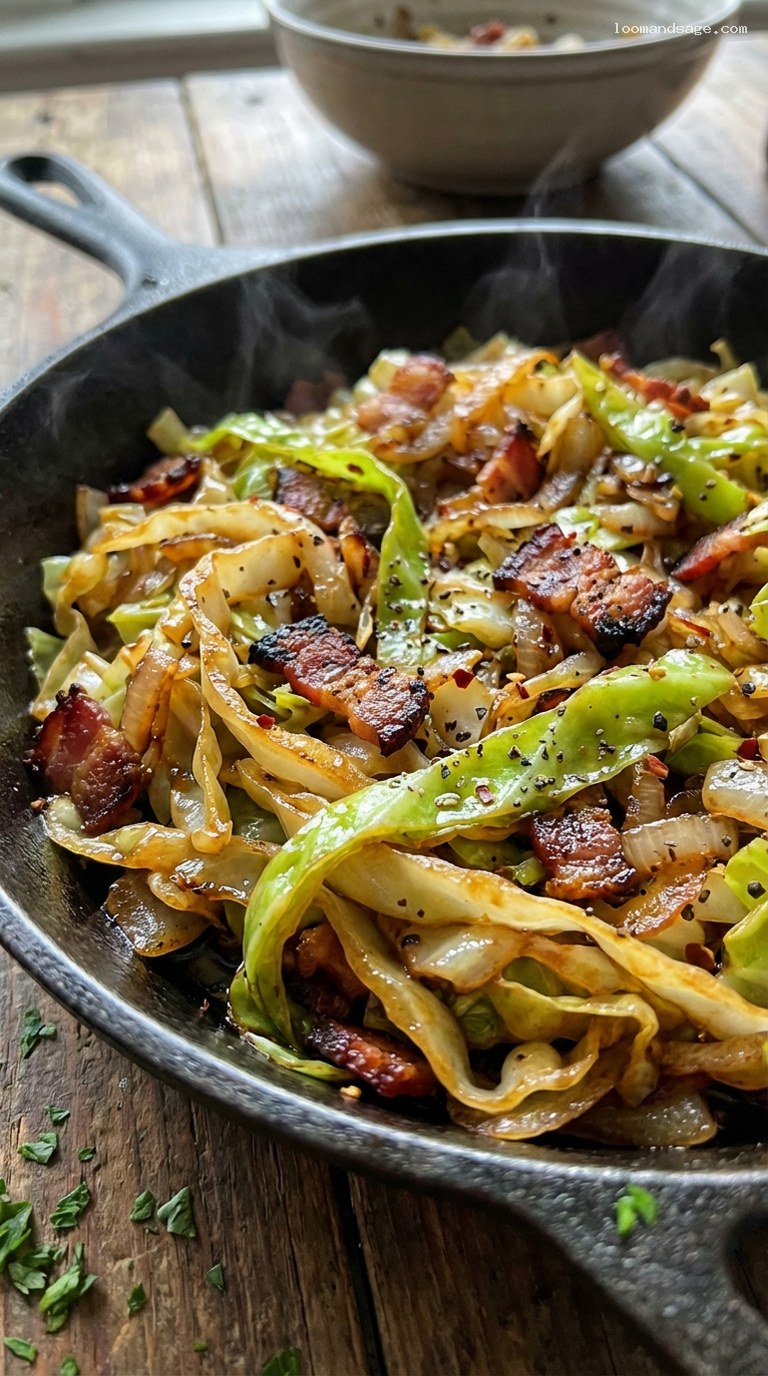
Step-by-Step Instructions
Step 1: Prep the cabbage, onion, and bacon
Remove any damaged outer leaves from the cabbage. Cut it into quarters through the core, then slice out the hard core from each quarter. Lay each wedge flat and slice it as thinly as you comfortably can, aiming for fine shreds about 1/8 inch thick. This helps the cabbage cook quickly and turn silky-tender.
Slice the onion thinly from root to tip so it softens and caramelizes evenly. Cut the bacon into 1/2-inch pieces; they do not have to be perfect, but aim for similar sizes so they cook at the same rate. Set everything within arm’s reach of the stove.
Step 2: Render the bacon
Place a large, heavy skillet (about 12 inches wide; cast iron or stainless steel works well) over medium heat. Add the bacon pieces in a single layer. Cook, stirring occasionally, until the fat has rendered and the bacon is crisp and browned, about 7–9 minutes.
Using a slotted spoon, transfer the bacon to a paper towel–lined plate. Carefully pour off any excess fat, leaving about 2–3 tablespoons in the pan. If you accidentally pour off too much, you can add a little back in, or plan to use the butter in the next step to make up the difference.
Step 3: Soften and lightly caramelize the onions
Keep the skillet over medium heat. Add the sliced onion to the hot bacon fat and stir to coat. Cook, stirring occasionally, until the onion softens and turns translucent with golden edges, about 5–7 minutes.
Season the onions with a small pinch of salt and about 1/2 teaspoon of the black pepper. If at any point the pan looks dry or the onions start to scorch, stir in 1 tablespoon of water or broth to loosen any browned bits. The onions should smell sweet and toasty, not burned.
Step 4: Wilt the cabbage
Add about half of the shredded cabbage to the skillet. It will look like too much at first, but it will quickly cook down. Toss well with tongs or a wooden spoon to coat in the bacon fat and onions, then add the remaining cabbage on top.
Sprinkle the cabbage with 1 teaspoon kosher salt, another 1/2 teaspoon of black pepper, and the red pepper flakes if using. Cook over medium heat, stirring frequently, until the cabbage has wilted and significantly reduced in volume, about 8–10 minutes. The strands will turn more translucent and start to pick up a little color on the edges.
Step 5: Deeply caramelize and pepper the cabbage
Once the cabbage is wilted, increase the heat slightly to medium-high. Continue cooking, stirring every minute or so, for another 5–8 minutes. Your goal here is to develop flavorful browned spots without burning.
Let the cabbage sit undisturbed for 30–60 seconds at a time so it can sear and caramelize on the bottom, then stir and redistribute. If the pan starts to look very dry or there is a risk of scorching, add 1–2 tablespoons of water or broth and scrape up the browned bits with a wooden spoon. Taste a strand of cabbage; it should be tender, sweet, and nicely browned in places. Add more black pepper if you love a very peppery bite.
Step 6: Finish with vinegar and bacon
Reduce the heat to low. Return the crisp bacon to the skillet and toss it through the cabbage and onions. Pour in 2 tablespoons of apple cider vinegar and stir well to coat everything. The vinegar will quickly sizzle and help lift up any remaining browned bits from the bottom of the pan, adding tang and depth.
If you are using the butter, add the 1 tablespoon now and stir until it melts and glosses the cabbage. Taste and adjust the seasoning: add more salt if needed, more black pepper for extra punch, and an additional teaspoon or two of vinegar if you like a brighter, tangier finish.
Step 7: Serve hot
Once the flavors taste balanced and the cabbage is tender with caramelized edges, remove the pan from the heat. Sprinkle with chopped fresh parsley or chives and a final pinch of flaky sea salt and black pepper, if you like.
Serve the fried pepper-cabbage straight from the skillet or transfer it to a warm serving dish. It is excellent alongside roasted chicken, pork chops, sausages, or simply with a slice of good bread to soak up the flavorful juices.
Pro Tips
- Slice the cabbage thinly: The thinner the shreds, the faster the cabbage cooks and the silkier the final texture. Aim for about 1/8 inch thick slices.
- Do not rush the browning: Medium to medium-high heat with occasional stirring gives you deep caramelization without burning. Let the cabbage sit for short bursts so it can sear.
- Taste and adjust at the end: The balance of salt, pepper, and vinegar is personal. Always taste just before serving and tweak the seasoning to your liking.
- Use a heavy skillet: Cast iron or a good stainless-steel pan holds heat well and develops better browning (and flavor) than a very thin pan.
- Save extra bacon fat: If you pour off excess bacon drippings, save them in a jar in the fridge. They are excellent for frying potatoes, eggs, or future batches of cabbage.
Variations
- Smoky sausage version: Add 6–8 oz sliced smoked sausage or kielbasa along with or instead of some of the bacon. Brown the sausage after the bacon, then proceed with the onions and cabbage.
- Vegetarian (but still smoky): Skip the bacon and cook the onions and cabbage in 3 tbsp butter or olive oil. Add 1/2 tsp smoked paprika and a splash of soy sauce for a savory, smoky note.
- German-inspired twist: Add 1 tsp caraway seeds when you add the cabbage, and a small pinch of sugar along with the vinegar for a flavor reminiscent of braised German cabbage.
Storage & Make-Ahead
Cool the fried cabbage completely, then transfer it to an airtight container and refrigerate for up to 4 days. The flavors often deepen and improve overnight. Reheat gently in a skillet over medium heat with a splash of water or broth, stirring until hot, or warm it in the microwave in 30-second bursts, stirring in between. While you can freeze it for up to 2 months, the texture will soften more; if frozen, thaw overnight in the fridge and reheat in a skillet to cook off any excess moisture. For prep-ahead, you can shred the cabbage, slice the onion, and cut the bacon up to 2 days in advance and store them separately in the fridge so cooking day is mostly hands-off.
Nutrition (per serving)
Approximate values per serving (1/4 of the recipe): about 300 calories, 19 g fat, 17 g protein, 17 g carbohydrates, 4 g fiber, and 700 mg sodium. Actual values will vary based on the exact bacon used, how much fat remains in the pan, and your final seasoning.