
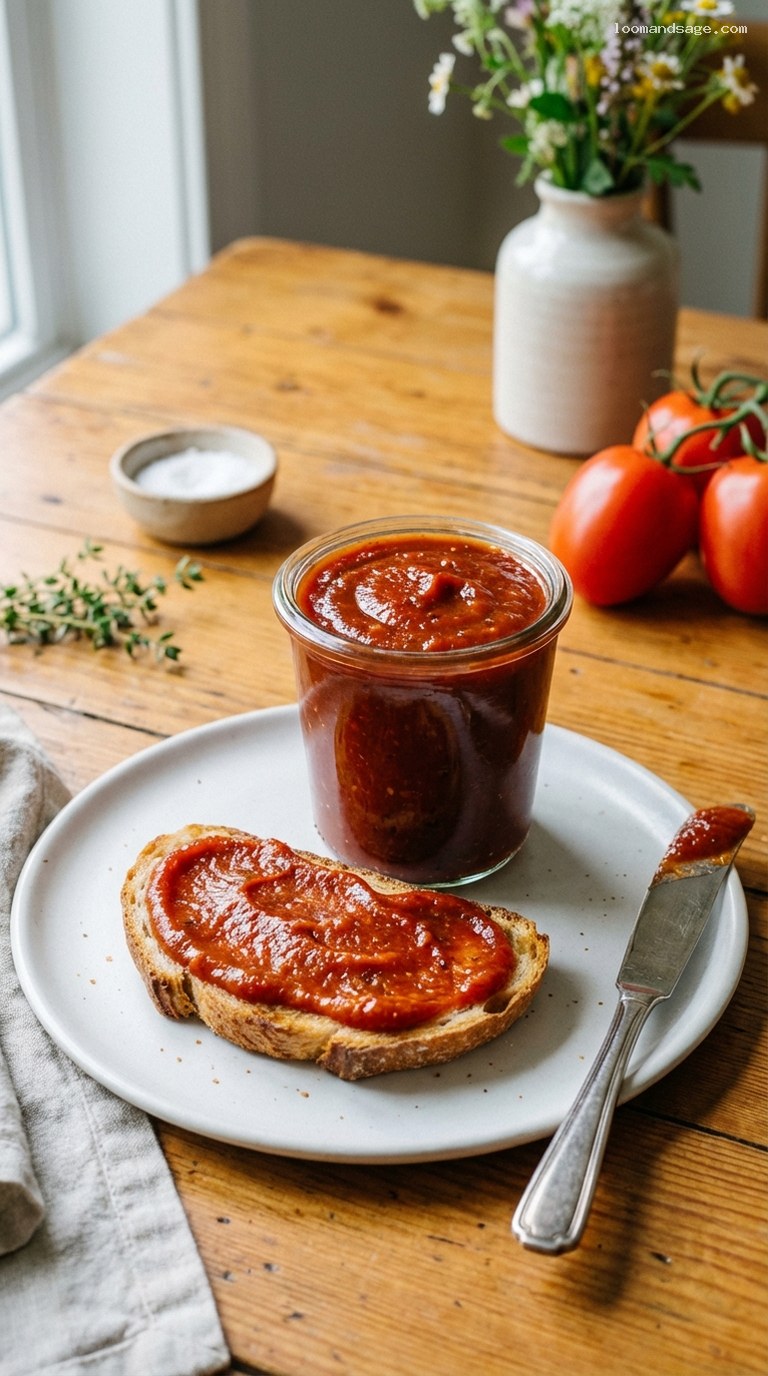
Quick Recipe Version (TL;DR)
Quick Ingredients
- 6 lb ripe plum (Roma) tomatoes, cored and chopped
- 1 medium tart apple, peeled and chopped (optional but traditional)
- 1 cup granulated sugar
- 1 cup light brown sugar, packed
- 1/2 cup apple cider vinegar (5% acidity)
- 2 tbsp lemon juice
- 1 tsp fine sea salt
- 1 1/2 tsp ground cinnamon, 1/2 tsp ground cloves
- 1/2 tsp ground allspice, 1/4 tsp nutmeg, 1/2 tsp ground ginger (optional)
- 1 tsp vanilla extract
- 1–2 tbsp unsalted butter, optional for gloss (omit if canning)
Do This
- 1. Prep tomatoes (and apple, if using): wash, core, and chop into chunks.
- 2. Simmer tomatoes and apple with 1/4 cup water in a large heavy pot until very soft, 20–30 minutes.
- 3. Purée until smooth with an immersion blender (or in batches in a blender), then return to the pot.
- 4. Stir in sugars, cider vinegar, lemon juice, salt, and all spices; bring back to a gentle simmer.
- 5. Cook uncovered over low heat, stirring often, 1 1/2–2 hours until thick, glossy, and jam-like.
- 6. Blend again for extra smoothness if desired; stir in vanilla and butter (if using), adjust seasoning, cool, and jar.
Why You’ll Love This Recipe
- Classic Amish-style tomato butter: sweet, tangy, warmly spiced, and deeply comforting.
- Slow-cooked until thick and glossy, perfect for spreading on toast, biscuits, or cornbread.
- Equally at home as a savory-sweet glaze for pork, chicken, or roasted vegetables.
- Make once, enjoy for weeks: it keeps beautifully and makes a lovely homemade gift.
Grocery List
- Produce: 6 lb ripe plum (Roma) tomatoes, 1 tart apple (such as Granny Smith), 1 lemon (if using fresh juice).
- Dairy: Unsalted butter (optional, for finishing).
- Pantry: Granulated sugar, light brown sugar, apple cider vinegar (5% acidity), fine sea salt, ground cinnamon, ground cloves, ground allspice, ground nutmeg, ground ginger (optional), vanilla extract.
Full Ingredients
Tomato Butter Base
- 6 lb ripe plum (Roma) or other paste tomatoes, cored and roughly chopped
- 1 medium tart apple, such as Granny Smith, peeled, cored, and chopped (about 1 cup; optional but recommended)
- 1 cup granulated sugar
- 1 cup light brown sugar, packed
- 1/2 cup apple cider vinegar (5% acidity)
- 2 tbsp lemon juice (bottled for consistent acidity if you plan to can; fresh is fine for refrigerator use)
- 1 tsp fine sea salt
- 1/4 cup water (to help start the simmer and prevent scorching)
Warm Spice Mix
- 1 1/2 tsp ground cinnamon
- 1/2 tsp ground cloves
- 1/2 tsp ground allspice
- 1/4 tsp freshly grated or ground nutmeg
- 1/2 tsp ground ginger (optional, for a gentle warmth)
- 1 tsp vanilla extract (stirred in at the end)
Finishing (Optional but Lovely)
- 1–2 tbsp unsalted butter, at room temperature (for extra gloss and smoothness; omit if water-bath canning)
- Additional sugar, lemon juice, or salt to taste
Step-by-Step Instructions
Step 1: Prep the Tomatoes (and Apple)
Wash the tomatoes thoroughly and remove any stems. Core each tomato and cut into rough chunks, about 1–2 inches in size. Because this tomato butter will be puréed, precision is not important here, but smaller pieces cook down more quickly.
If using the apple, peel it, remove the core, and chop into small chunks. The apple adds natural sweetness and body, helping the tomato butter thicken to a luscious, spreadable texture in a traditional Amish style.
Peeling the tomatoes is not strictly necessary because everything will be blended smooth later. If you prefer an ultra-smooth texture, you can blanch the tomatoes in boiling water for 30–45 seconds, then slip off the skins before chopping.
Step 2: Soften the Tomatoes and Apple
Place the chopped tomatoes and chopped apple into a large, heavy-bottomed pot or Dutch oven. Add 1/4 cup water to help prevent sticking during the first few minutes of cooking.
Set the pot over medium heat and bring the mixture to a gentle boil, stirring occasionally. Once it begins to bubble, reduce the heat to medium-low and simmer, uncovered, for 20–30 minutes. Stir every few minutes until the tomatoes and apple are very soft and releasing lots of juice.
The goal in this step is simply to soften everything so it blends easily and starts to develop a mellow, cooked-tomato flavor without scorching.
Step 3: Purée Until Smooth
Once the tomatoes and apple are very soft, remove the pot from the heat. Use an immersion blender directly in the pot to purée the mixture until completely smooth and no noticeable chunks remain.
If you do not have an immersion blender, carefully ladle the hot mixture into a countertop blender in batches, filling it no more than halfway each time. Vent the lid slightly and cover with a kitchen towel to allow steam to escape, then blend until smooth. Return each blended batch to the pot.
At this point you should have a smooth tomato purée. If it seems extremely watery and fills the pot more than halfway, you will simply need to simmer a bit longer in later steps to reach a jammy consistency.
Step 4: Add Sugar, Vinegar, and Warm Spices
Place the pot with the puréed tomatoes back over medium-low heat. Stir in the granulated sugar, brown sugar, apple cider vinegar, lemon juice, and salt until fully dissolved.
Add the ground cinnamon, cloves, allspice, nutmeg, and ground ginger (if using). Stir very well to distribute the spices evenly. The mixture will smell like a cross between tomato sauce and cozy apple butter at this stage.
Bring the mixture back to a gentle simmer over medium heat, stirring frequently. Once it is bubbling softly, reduce the heat to low. The goal is a quiet, steady simmer with only occasional soft bubbles so the sugars do not scorch.
Step 5: Slow-Cook to Thick, Glossy Tomato Butter
Simmer the mixture over low heat, uncovered, for 1 1/2 to 2 hours, stirring every 5–10 minutes at first, then more frequently as it thickens. Use a heatproof spatula or wooden spoon to scrape the bottom and corners of the pot to prevent sticking.
As the tomato butter reduces, it will darken to a deep brick-red color and become thicker and glossier. If it splatters, you can partially cover the pot with a lid set slightly ajar, or use a splatter screen, but do not cover it fully or the moisture will not evaporate properly.
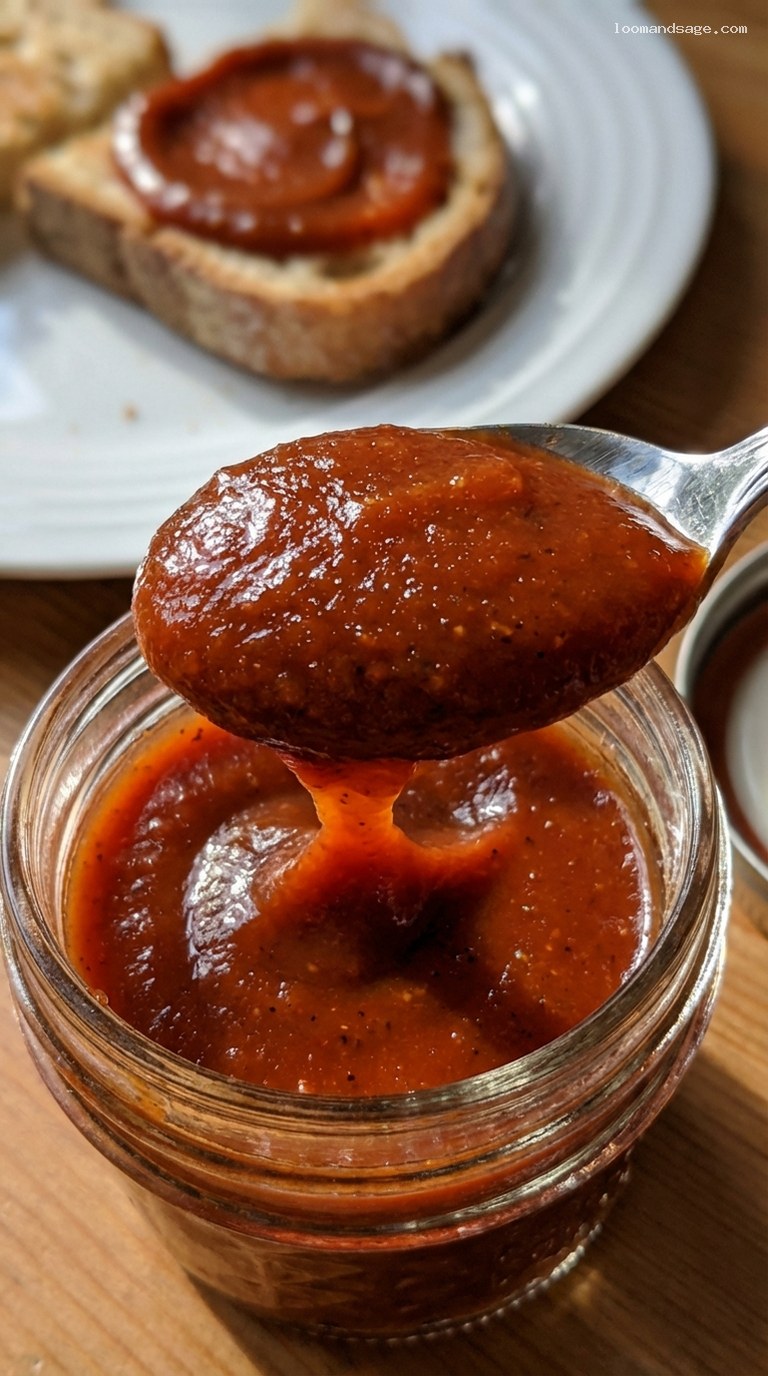
You will know it is nearly ready when a spoon drawn through the mixture leaves a trail on the bottom of the pot for 1–2 seconds before closing up. Another test: place a small spoonful on a chilled plate; if it holds its shape and no watery ring forms around it after a minute, it is thick enough.
Step 6: Refine the Texture and Finish the Flavor
Once the tomato butter is thick, remove the pot from the heat. For an ultra-smooth, velvety texture, use an immersion blender again to purée the mixture until completely silky. This second blending step is what gives the butter a refined, jammy finish.
Stir in the vanilla extract. If you are not planning to water-bath can this tomato butter, you can also stir in 1–2 tablespoons of unsalted butter until melted and fully incorporated. This optional addition gives the tomato butter extra gloss and a luxurious mouthfeel.
Taste carefully (it will be hot) and adjust the seasoning: add a pinch more salt to deepen the flavor, a teaspoon or two more lemon juice for brightness, or a tablespoon or two of sugar if you want it sweeter. Return to low heat for a few minutes if needed to dissolve any added sugar fully.
Step 7: Cool, Jar, and Store
Let the tomato butter cool in the pot for about 15–20 minutes, stirring occasionally to release steam. While it cools slightly, prepare clean glass jars or containers with tight-fitting lids.
Ladle the warm tomato butter into the jars, leaving about 1/2 inch of headspace at the top. Wipe the rims clean, then seal the jars and allow them to cool to room temperature.
For refrigerator storage, once fully cooled, refrigerate for up to 3 weeks. For longer storage, freeze for up to 6 months, leaving at least 3/4 inch of headspace to allow for expansion.
If you wish to make this shelf-stable by water-bath canning, use sterilized canning jars and follow a trusted, tested tomato butter canning recipe for exact acidity and processing times. Do not add butter if you plan to can; stir that in only after opening a jar.
Pro Tips
- Use paste tomatoes: Plum or Roma tomatoes have less water and more flesh, which means your tomato butter thickens faster and has a deeper flavor.
- Choose a wide pot: A broad, heavy-bottomed pot (like a Dutch oven) gives more surface area for evaporation, helping the mixture reduce evenly and preventing scorching.
- Stir more as it thickens: In the last 30–45 minutes, sugars concentrate and can burn. Stir often, especially around the edges and bottom.
- Control the sweetness: Start with the listed sugar, then adjust at the end. Tart tomatoes may need a touch more sugar; very sweet, summer-ripe tomatoes may not.
- Test for doneness: The chilled plate test is your friend: if the tomato butter mounds softly and no liquid halo forms, you have reached the right consistency.
Variations
- Smoky Tomato Butter: Add 1/2 tsp smoked paprika and a pinch of chipotle powder along with the spices in Step 4. This version is excellent with grilled pork chops, chicken, or burgers.
- Honey-Sweetened Tomato Butter: Replace half of the granulated sugar (1/2 cup) with mild honey. Add the honey toward the end of cooking (last 20–30 minutes) to preserve its aroma and prevent over-darkening.
- Savory-Herb Tomato Butter: Reduce the total sugar to 1 1/4 cups, increase the salt slightly, and stir in 1–2 tsp finely minced fresh thyme or rosemary at the very end. This less-sweet version makes a beautiful glaze for roasted vegetables and meats.
Storage & Make-Ahead
Once fully cooled, store the tomato butter in clean, airtight jars or containers in the refrigerator for up to 3 weeks. For longer storage, freeze in small portions (such as half-pint or ice cube tray portions) for up to 6 months. Be sure to leave extra headspace in any container going into the freezer to allow for expansion.
This recipe is ideal for making ahead: the flavors actually meld and deepen after a day or two in the refrigerator. If frozen, thaw a jar overnight in the refrigerator, then stir before using. For shelf-stable canning, consult a reliable, tested tomato butter canning guide to ensure proper acidity and processing times, and omit the butter from the base recipe.
Nutrition (per serving)
Approximate values per 2-tablespoon (about 30 g) serving: 100 calories; 0.5 g protein; 0.5 g fat; 25 g carbohydrates; 24 g sugars; 0.5 g fiber; 70 mg sodium. Actual values will vary based on tomato variety, exact cooking reduction, and any ingredient variations.